Phrasing

Maybe he meant, Young man you don’t understand how good you really got it.

Do you remember when you were in high school and the whole English class had to take turns reading Shakespeare’s Macbeth out loud? Our teacher assigned a different cast for each scene so we could all get a chance to experience public speaking anxiety. You never knew when it was your turn; you just waited in agony; your only consolation was how bad your classmates were doing. Everyone was saying the right words, but hardly anyone was really confident in their understanding of the text, despite any confidence they pretended to have in pronunciation. They were simply words without meaning: noise. It would’ve been painful to endure if we weren’t so clueless. I have a feeling that some of us thought we were doing a good job, but I don’t think anyone in my class went on to pursue an acting career. As bad as it was, I still enjoy hearing people read out loud.

I can hear us now just droning on…

Macbeth: If we should fail?

Lady Macbeth: -We fail?

But screw your courage to the sticking place

And we’ll not fail.

Now think for a minute of the old man you used to see at the grocery store—it helps if you had a job at a little grocery store while you were in high school—who had worked as a mechanic for 50 years and had to drop out of middle school to help out on the farm. He couldn’t pass an English class if his life depended on it, but it didn’t really matter; even with atrocious grammar and a vocabulary half consisting of words that could not be found in the dictionary, he could still create a sentence that would stay with you for 20 years because he knew exactly what he was talking about.

“How you doing today Mr. Wallace?”

“I’m doing fine, and you?”

“Pretty good.”

“Pretty good hard to beat.”

Pretty good hard to beat has been incorporated into my language. It may seem just like words on paper-or a screen-but it was the way he said it that let you know there was a lot more meaning that went into that sentence. Maybe he meant, Young man you don’t understand how good you really got it. I think about that old man whenever I chance to use this phrase. Whatever he may have intended, it certainly resonated with me.

That is what we call in music phrasing. Phrasing is how a musician puts a sequence of notes together into a musical thought, and how they interpret written music. It is the reason that Blues musicians could limit their musical vocabulary to the 5 note pentatonic scale and make people cry. It is why folk music can be so simple in its form, but still able to make us recall memories of places we’ve never been and times in which we never lived. And the same reason that beginner musicians sound like beginner musicians: their phrasing is off somehow. They may be playing the right notes-even reading the right notes from a master composer-but still unable to convey the real meaning of what the composer was trying to say.

The blues is feeling good about feeling bad.

Phrasing is more than having a nice voice, or tone. But I imagine that won’t hurt, but I’m not convinced it helps all the time either. It doesn’t matter how nice your voice is if you don’t have anything to say. Or if you are only going to regurgitate words that came from someone else’s heart.

It took me a while to really appreciate Shakespeare, and the closest I have come to understanding it was to see a play performed by actors who understood it at least better than me. I took Sarah to Blackfriars Theatre in Staunton, VA to see a All’s Well That Ends Well and Two Gentlemen of Verona. It was a far cry from bending over the text book following along as your buddy in class-who had never read a book for pleasure in his life and barely had a grasp on 21st century American English-stumble through his assigned lines without the faintest idea of the plot. Those Blackfriars performances have stuck with me and I would like to go back again some day.

Phrasing isn’t any one thing, but a host of subtle things like tone, dynamics, timing, space, and feel. These are all musical terms that could each have their own textbook and university course. So whether speaking or playing and instrument, how do you learn to phrase well? For a start, I think it is important to know what you want to say. For a musician, the most important part of phrasing is to get emotionally involved with the music. I think the best way to do that is to pay attention to the lyrics. And that means you need to understand the lyrics. People can tell when you don’t know what you are talking about. You don’t have to master the language of music-or the English language for that matter- to say something that will connect with a listener, but you do need to master your vocabulary, no matter its size. You don’t want to sound like someone who picked a random $40 word out of a dictionary and tried to force it into a $15 vocabulary. It will stick out like a Ferrari in a trailer park. If you want to build your vocabulary you need to read good stories-and listen to good music. A well written novel has the power to increase your emotional intelligence. Good readers understand empathy.

Even a fool, when he holdeth his peace, is counted wise: and he that shutteth his lips is esteemed a man of understanding. Proverbs 17:28

If you want your words to carry weight, don’t waste them.

Rich People Things

Rich people sometimes have the dog on the Christmas Card. That’s another one of the things that they have in common with rednecks.

What would you do if you were rich? I mean so rich that you could eat slow food anytime you wanted. If I were rich and famous I’d only drink ice cold Topo-Chico in glass bottles. I’d wear a brand new pair of socks to church every service. Rich people can do things like that. I’d probably get a gold tooth too. Not right in the front, but off to the side where you could still see it but only when I smiled. That’s so I could stay modest. I would smile a lot though. And have a pair of crocodile skin cowboy boots. I’d drive a big old Cadillac with a pair of longhorns on the front.

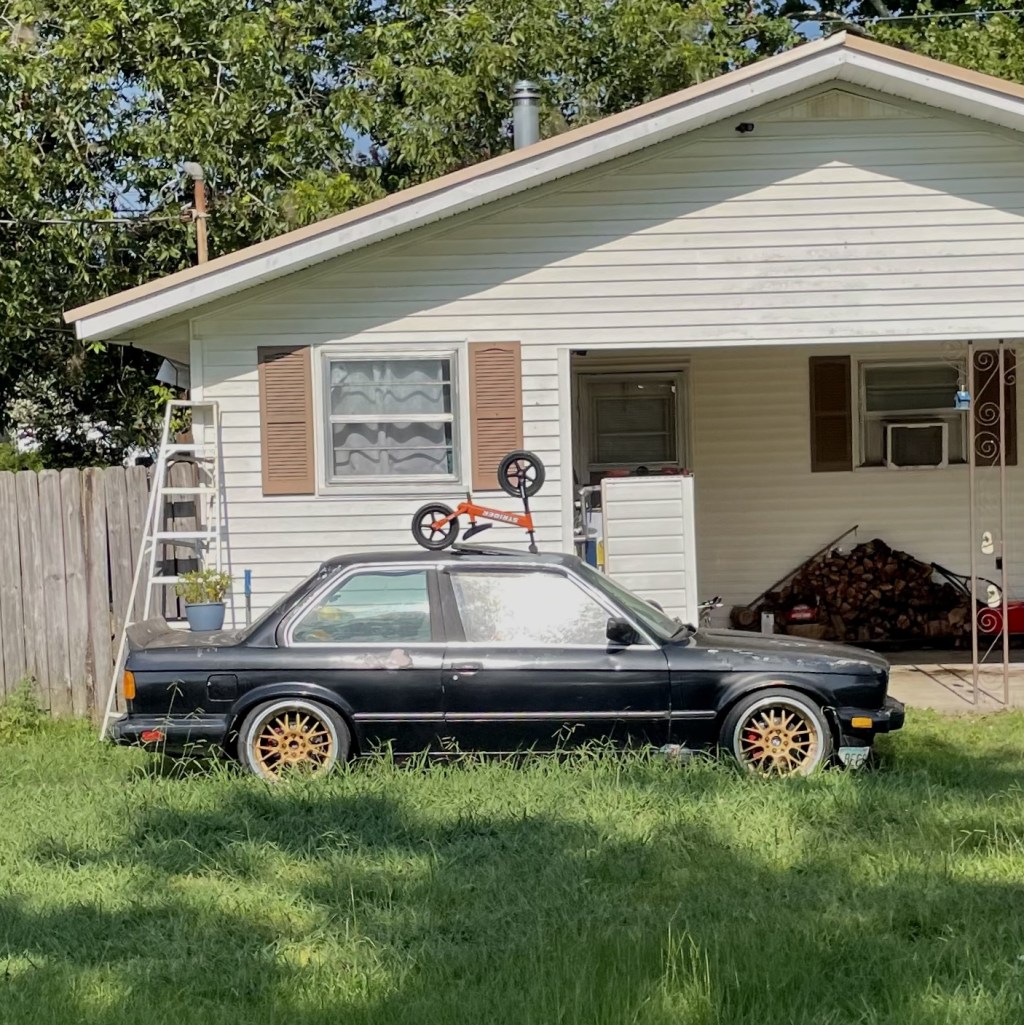
I sometimes struggle to know if people are rich or not. Not that it is really any of my business, but I wonder just the same. I often get rich people and rednecks confused. For instance rich people and rednecks both have lots of cars. But rich people will have a garage, and the rednecks just park their cars all over the yard. And the rich people cars all run.

I met some rich people that had a swimming pool in the ground with a fence and everything. That’s how I knew in my eight year old mind that they were rich. But rednecks sometimes have swimming pools too, but its usually in the front yard. Or in the backyard surrounded by all the cars with busted windows and engines that don’t start.

Some folks have got it all.

Rich people sometimes have the dog on the Christmas Card. That’s another one of the many things that they have in common with rednecks. The dog might have a different name though, like Beaumont, or Charlemagne. That’s a rich people dog name. Sassy is a redneck dog name. Also, rich people sometimes take their dog to the vet for no reason.

“The clothes make the man. Naked people have little or no influence on society.”

Mark Twain

Rich people and rednecks both like to go to the beach. When they don’t have a lot of clothes on its hard to tell them apart. I am neither rich nor a redneck so I don’t go to the beach that often. Which means I don’t have any tips for telling them apart at the beach. Wesley said that Rich people “Have a big ole tent, or something, and nice chairs. And a condo. At the beach.” He’s been to the beach a lot more than I have. I didn’t ask him about rednecks at the beach.

Some other ways to spot rich people is to go to the local airport. Not the big commercial airport at the closest big city, but the little rinky-dink municipal airport. The people who own airplanes are rich. Rednecks don’t typically have airplanes. I think I’d have me an airplane if I was rich. I’d paint teeth and eyeballs on the nose like they did back in WWII. I’d get a leather jacket and a big long white scarf for flying.

All the happiness in the world can’t buy you money.”

I would like to be rich, but I don’t really want to quit shopping at thrift stores. So I don’t really want to be filthy rich, just regular rich. If I came into money real sudden like, I think I would keep shopping at thrift stores so I could keep my cover since it is sometimes hard to tell rich people from rednecks anyway. Even if I was rich, people would see me at the thrift store and think, “He ain’t rich. He’s just another redneck.” It would also help me practice modesty. I wouldn’t smile when I went in there.

When I recall my biggest life decisions, money has not been the principle influence. For instance, having children is not necessarily a wise financial decision. But you don’t really worry about money when you decide to have a child. There is a stronger force than money at play. Moving without a job is not a wise financial decision. But money doesn’t get to make all of the decisions for me. This is probably why I am not a rich man. Money is not the only currency in life. I just read the book Creative Confidence by Tom and David Kelley and I really liked an illustration that the authors often use when making decisions. A see-saw, or balance, with a heart on one side and a dollar sign on the other. To paraphrase the author, the money is almost always easier to measure, the heart-the unquantifiable values, relationships, sense of calling, principles, and intuition- takes a little more time. The message is clear, money is not the only thing that should be considered when making decisions.

This blog for example; the motivation to write does not come from money. Or extrinsic motivation as I learned in college. There is another, stronger source of intrinsic motivation that compels me to write. It is the desire to connect on an unseen level with a reader. The urge to communicate an idea that will provoke deep personal insight in hopes that they can see themselves more clearly. There is the need of going out of one’s self that motivates me to write. This is not to say that I couldn’t be motivated by money to write. I have written on commission and gratefully cashed the check. But if I am honest with myself, I have never felt that any of my best efforts have come from being given an assignment. I have felt this way since a child in art class. I suppose that all creative people wrestle with the tension between creating what they want and getting paid to create what someone else wants. There is also the question of does anyone else want what I want to create? That can only be answered after the thing is created.

On my wedding day my father-in-law gave me some of the best advice I ever received about money. “Don’t ever fight about money.” At the time it was almost like saying, “Don’t fight about nothing.” This is a principle that my wife and I still share in our personal finances.

Money has always been a chore to me. I am getting better at doing chores the older I get. I have some friends that look at money differently than I do. And I am trying to learn from them. They can’t help but make money. Its fun to them. It is not a chore at all, but something that just comes natural. At the same time, they seemed to not be controlled by it. I have observed other people, extremely wealthy people-filthy rich people-be destitute when it comes to personal relationships. Billionaires who are vicious about money yet who are in poverty when it come to love. Cold blooded killers to quote a friend who has met more of them than me. When I take a closer look at their lives, it is pretty clear that these people do not have the same values as me.

Faith, and not money, is the currency of God’s economy.

II Timothy 6:6 But godliness with contentment is great gain. 7 For we brought nothing into this world, and it is certain we can carry nothing out. 8 And having food and raiment let us be therewith content. 9 But they that will be rich fall into temptation and a snare, and into many foolish and hurtful lusts, which drown men in destruction and perdition.

But they that will be rich. I am reminded of Rudyard Kipling’s The Man Who Would Be King. I won’t spoil it for you, but if you have read it then you know what I’m talking about. I’m also reminded of someone else that said I will be like the most High. What you commit your will to has profound consequences.

I am less concerned with being rich and more focused on doing something in life that matters. Furthermore, I think it is more important to God that what I do with my life matters. Fortunately God delights in blessing his children and this includes, but is not limited to, financial blessings. With this in mind, If I were regular rich I doubt I would drink more Topo-Chico than I do now. I would take care of quite a few church projects though.