
How To Go To College As An Adult

I can’t slay your college giant, but I can tell you how I killed mine.

I started my higher education career at Gateway College of Evangelism back in 2005. Fresh out of high school. But I left at the end of the semester to go work in youth ministry in Virginia. I did that for 12 years. I have no regrets. But I have always felt like college was a big ugly giant following me around every day. I knew that if I didn’t square up with him and whip him then he would never leave me alone.

Maybe that’s how you feel. If so, I can’t slay your college giant. But I can tell you how I killed mine: Slowly.

Zane, you’re too smart to not go to college.

Pastor Jeremy Wilbanks. (And a bunch of other people)

Make a Decision

This is where you confront college. I am going to engage in mortal combat with this giant. I am not going to give up until I kill him. And when I am done I am going to hang him on the wall in my office.

Have a Plan

You don’t just pick a fight with a giant without having some kind of plan. You need to know what you are going to study. You need a plan for when you will study. You need to know how much time you can allot for study so you don’t overwhelm yourself.

“College is really just a lot of reading.”

Non-traditional student. That is the label that college puts on you when you work a full-time job, are raising a family, and have many commitments outside of work. A traditional student has little or no responsibilities and is able to tackle college full-time straight out of high school. While non-traditional students do have more work and family responsibilities, they are not bound by traditional expectations. I guess I have always been a non-traditional student since I went year-round k-12. I also did a stint at Wilson University where you could only take one class at a time, but at your own pace. So if you wanted to complete a course in a month you had the freedom to do it. You could even test out of some subjects. This confused the tar out of my employer when I took advantage of their tuition reimbursement program.

There is a freedom in being able to make your own attack plan. I found that I was able to take two classes per semester and one each summer. It was a war of attrition.

College is expensive. You need to have a plan for paying for college. I have several friends that are still harrowed by student loan debt. For years I avoided going to college because I felt that it was irresponsible to accumulate debt. And I still feel that way. But it turns out if you are broke enough there is a strong chance that you can get a Pell Grant. And If you are persistent in applying, you could very well be granted a scholarship. I received a scholarship for Business Administration because I wrote an essay. Which makes me wonder how I earned a C in English Composition II.
Stay Motivated

And let us not be weary in well doing: for in due season we shall reap, if we faint not. Galatians 6:9

One of the biggest motivators for me was a promise that I made to my Dad.

“I’m going to go back to college Dad.” This was one of the last things I told Dad while he was still lucid. He died a few days later. That was in 2018. It is 2023 now and I have finally graduated with a Associate in Science, Business Administration degree. Magna cum laude. This degree would only take a traditional student a couple of years at the most to complete. But I was and will always be a non-traditional student.

I really wish I could tell my Dad about this. But he is gone so I am telling you. I did something that no other Wells that I know has ever done. Something that not many of them even had the chance to do. My great-grandfather was simply uneducated. Pop (my grandfather) had to drop out of middle school to help make ends meet, but he valued education. So when my father graduated high school it was monumental for the Wells family. I strongly believe that Pop could have excelled as a mechanical engineer had he been able to continue his studies. There was hardly any machine that he couldn’t fix. He was also quick with mental math. I feel the same way about Dad. He had a brilliant mind. He could recall things he read decades before. He also had the remarkable ability to put abstract concepts into language that simple people could understand. Without a doubt, my father would have excelled in academia. But we can do nothing for the dead, and must address the living.

The other motivating factor for me to finish college was my children. I want my children to know that education is not something to fear. I do not want them to be destroyed for a lack of knowledge. I want them to know that hard things can be done, and they can be done with excellence.

There is a good chance that I will resume formal study again in the future. But currently I am sizing up a different giant.

Irregular Hours

Even when things were not busy in the office, we pretend they are and look busy.

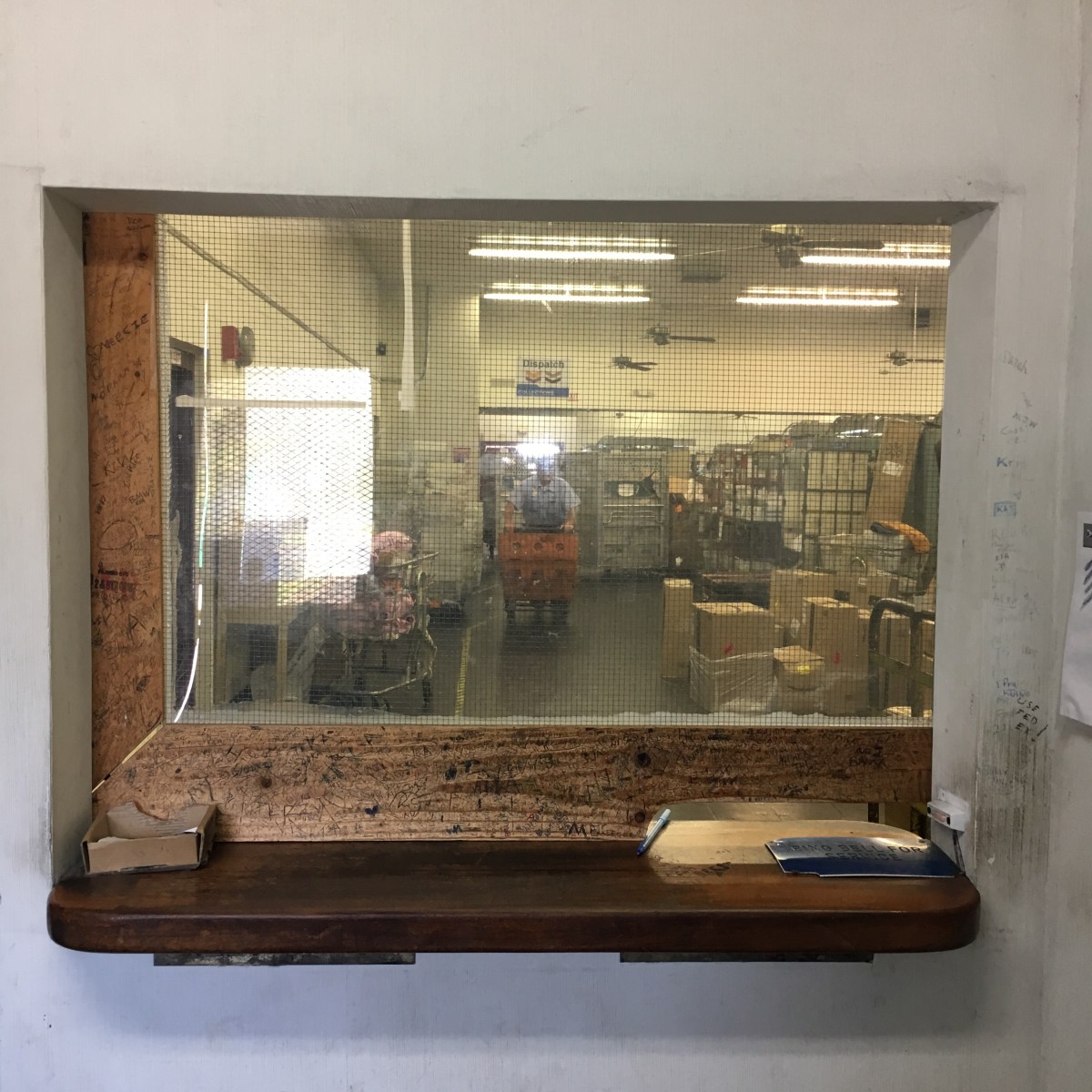
For the better part of 15 years I have worked the rigid hours prescribed by HR departments of the County and State governments that employed me. 40 hour weeks. 1 hour lunch breaks. 15 minute breaks. Even when things were not busy in the office, we pretend they are and look busy. This is one of the reasons why I started writing. I had to fake being busy. Looking back, my supervisors were pretending to be busy by being concerned that I looked busy. Nobody really verbalizes this phenomenon at work, but everyone understands it.

At my most recent State job, we decided that we would try out four ten hour shifts. The idea was we were too busy answering phone calls during business hours to get any work done. So if we could have a few hours each day to work without the phone ringing we could get the work done. And have an extra day off.

After I made it through the allotted trial period, and consequently the busiest season of the year, I realized that the four ten hour shift was too taxing on my energy when I included my one hour commute and trying to do some important things every day. So I decided to switch back to five eight hour shifts.

I was talking to my coworker about how glad I was to switch back. The conversation went something like this.

“I am glad that I switched back to five eights. leaving the house at 5am and getting home at 6pm was wearing me out. But I might switch back next busy season.”

“They probably won’t let you.”

“Why not?”

“Because that would be too much like making your own schedule and they don’t want that.”

This conversation rattled me. For years I had wanted a job with regular predictable hours and now I had one. I had hated showing up to work to check the schedule and seeing that some boneheaded manager had me working on a church night. Or worse, being sent home because they were cutting hours. Now here I was working like a borrowed mule for three months out of the year, never seeing an end to the work. Then for nine months doing 15 hours of work per week and pretending to look busy for the other 25 hours. I wondered how productive I could be if I in fact did make my own schedule.

It was not long after this that I left that job. No hard feelings. No bitterness. No parting shots. But this conversation helped me make the decision to leave. When I was offered a new job one of the most attractive aspects was that I would indeed make my own schedule. So now I work irregular hours. And it is one of the best things that has ever happened to me.

I never could make any money. I was always too busy working.

Perry Wells

Thoughts on Efficiency

Perhaps I’m lazy, but I like to find the most efficient way to do a thing.

Did you ever listen to Car Talk ? I used to listen every Saturday morning as a teenager. There was one caller that had a question about a car problem and a possible solution. It turned out, that the proposed solution would indeed work but, as Ray said, “It wouldn’t be the cowboy way.” I still laugh about this from time to time, especially when I see someone doing something inefficiently.

Perhaps I’m lazy, but I like to find the most efficient way to do a thing. This, I believe, is a learned trait. I learned it in a roundabout way while working for hire as a second grader. We would do anything from landscaping and construction clean up, to farm work where I learned how to drive. Pop, or his business partner Marion, would give specific instructions about a task-often the grunt work in a larger process-and expect us-Zach and I- to do exactly what they told us, precisely how we were shown, while rarely-if ever-explaining the whole system.

We didn’t complain, after all they hired us to do the simple work, not to understand the whole process. “You get paid from the neck down.” Marion would remind us if we ever “had an idea”. This labor without understanding is the basest type of working. All you need to do is show up and breath. I’m not throwing off on this kind of work, it’s necessary. I also think it is important to learn how to follow instructions. Maybe you know a coworker that has never really learned how to meet the most basic of requirements.

After working at this level for a while you begin to ask yourself questions. Why am I doing this? The first answer is money. I’m working for money. That is usually a good enough answer to keep most people working, until you ask yourself, Why am I doing this this way? This is when you start thinking about efficiency. You’ll start wanting to understand how the whole system works instead of just your task.

From here a stream of questions will begin to flow rapidly, How does this all work? Can it work better? What is important? Are we wasting time doing things that do not matter? How can we streamline this?

I’m not sure what to call it, but I’m pretty sure this is another level of working, understanding the whole process. And making that process or system more efficient is another level I’m sure.

“There is the right way, the wrong way, and the Navy way.”

Everyone I ever met who served in the US Navy

If there has been one thing I’ve learned as an adult in the work force it has been, not everyone wants things to be more efficient and there is always resistance to change. “If it ain’t broke, don’t fix it.” I’ve often heard this response when someone would rather stick with an inefficient process than take the time to learn a more efficient way. Let me be clear, efficiency is not the same as cutting corners.

I remember my Dad dealing with a situation like this when he managed a machine shop. He met resistance while introducing a more efficient system, particularly from one man who had been working there for quite a while. My Dad had a unique way with people.

“What is the best vehicle ever made?” Dad asked the belligerent man.

Without hesitation the man said ” The 1956 Chevrolet pickup truck.

“What did you drive to work this morning?” Dad asked the man.

“A 96′ Chevrolet pickup truck.”

“Why didn’t you drive the 1956 Chevy truck?”

“Well the 1956 gets real bad gas mileage, and the ’96 can has a much larger towing capacity…” He rattled on like car people do until he realized that Dad was making a point about the new process.

A big part of my current job is helping people use the internet. Occasionally someone will walk into the office and smart off to me about not having a computer.

“I ain’t got one and ain’t ever planning to have one. Don’t need one.” It’s a point of pride to them. Well you needed one today or you wouldn’t be here, I think to myself.

“Yeah, I’m sure there were a lot of people that kept on riding horses after the automobile was invented.” This has become my stock response to the nastiest of these customers.

There is a slight part of me that admires someone who can live free of the internet, but on the other hand, we are twenty years into the twenty-first century. Unfortunately, these people are being left behind. I think the key to not being left behind is to remain a student for life.

I understand that some things are unchangeable and cannot be improved upon. In general though, I’m for making a task easier, simpler, and more efficient.

Support

Your financial support helps cover my website expenses.

$5.00

Faulty Equipment

“Y’all boys are rough on equipment.” That’s what Mr. LaDuke said after my cousin Kent had broken three ax handles, a weed-eater and wrecked a moped. I guess we were pretty rough on equipment, that’s why half the every day tools and gear that we used in the hay field were broken to some degree. Pop was forever adjusting the square baler, which was always shearing pins, whatever that means. Most of the trailer jacks were bent. The old Ford truck had a tricky clutch that I never could get to cooperate. For every piece of faulty equipment, there would be a new oral operating manual that must be followed in order to get that particular item into proper working condition. These instructions were far from intuitive, and in some cases nothing close to the original manual, but I guess it was cheaper than replacement.

This rings true for every other place that I’ve worked over the past twenty years. The copier at one job requires you to jiggle drawer A before you can print. The computer at another place requires a restart before you can use the audio. The espresso machine at another place requires additional warm up time. There are always locks that require an odd key angle and a prayer. And vehicles that require you rev the engine to keep from overheating at a stoplight. I’m sure you’re thinking of a piece of equipment at work that you’d like to hit with a sledge hammer.

Probably the most dangerous faulty equipment that I have worked with were vehicles that required you to start them by bypassing the solenoid. I’m not dead certain what that even means, or why we had to do it, but basically, instead of cranking the engine with a key, like a normal person, you lay a screwdriver across the positive battery terminal and the negative terminal into the solenoid. This bypasses the solenoid relay switch and starts the car. Oh, and the key needs to be in the on positing in your ignition. 70% of the time it works 100% of the time.

This process is pretty simple on a lawnmower. Sometimes you see sparks fly off, but that’s part of the fun. If you have long arms and longer screwdriver, you don’t even have to get out of the seat of a zero turn to start it with this method. It’s a little bit trickier when you’re doing it on a truck. At one particular job, there was an old Ford Bronco that required this staring method. We were in downtown Winchester, VA getting a new lawn mower tire installed when my boss, Shawn, first showed me how to jump start the solenoid to start the truck.

I was so proud of myself when it fired right up and I got ready to back out into the street, with my lawn mowers on the trailer behind me. As soon as I put the Bronco in reverse, the engine stalled. I had to pop the hood, crawl out of the vehicle, and jump the solenoid with a pair of pliers. It fired right up this time. In reverse. The Bronco began backing out into the busy street. Panicking, I flung the pliers down and raced to catch the runaway vehicle. Fortunately I had left the door open and only had to run about twenty feet before I jumped into the moving vehicle. Once I got into the drivers seat and got the truck stopped I started breathing again. I was going to play it cool and just keep driving, but as I put the vehicle into gear I realized that the hood was still popped. I’m sure the people in the tire shop got a good laugh seeing me scramble so. I’d have laughed too. A couple of years later that Bronco burnt to the ground in a Wal Mart parking lot.

Equipment tends to wear out with normal use. But sometimes it gets help from clumsy employees, abuse and misuse. I can hear Mother’s everywhere saying, “This is why we can’t have nothing nice!”