Communication: Implicit & Explicit.

“I know we’re not supposed to bully people, but that works with me. I have been inspired to make life changes because someone talked rough to me. I hate it when people don’t tell me something plain. I feel like I’m being lied to if they afraid to say something because they think it may hurt my feelings. That doesn’t help.” This is what a young man told me recently. And I have been thinking about it a lot since then. Thinking deep.

He was being genuine in his desire for explicit understanding and straightforward verbal communication. Say exactly what you mean. Please don’t make me guess. Essentially, he told about some miscommunications that he had with someone with powerful influence in his life who it seemed prefers implicit communication. Although I am not sure that he realized that the person he was frustrated with was probably equally-if not more- frustrated with him. Instead the young man most likely entirely missed the implicit communication-the subtle nonverbal cues-and perceived the economic verbal communication as dishonesty. At the heart of this problem is a mismatch between high and low context communication.

Americans, in general, are low context communicators. We principally communicate with words. We like clear instructions and contracts. If you are an American you may be thinking well duh Zane, how else am I supposed to communicate?

Actions speak louder than words but not nearly as often.

Mark Twain

A high context communication culture like the Japanese, would depend heavily on implicit, nonverbal communication like body language, tone of voice, and especially silence in order to understand the message. High context communication cultures rely on a shared background of beliefs and principles-sort of reminds me of the church-and place a special importance on relationship in communication. The level of relationship they share with a person will have tremendous bearing on the level of communication. In contrast low context cultures are willing to enter into 30 year contracts with total strangers.

In my college courses, there was an emphasis on this being a cultural characteristic. Asian, Latin American, Mediterranean, and Middle-Eastern cultures tend to prefer high context communication. The whole reason that this was important to learn is because there is often profound misunderstanding in the business world between these cultures and low context communication cultures found in Europe and North America. Since this material was covered in more than one class it leads me to believe that this is a very real issue. Indeed it was manifested in my conversation with a frustrated young man.

I want to emphasize that this is true in general; and like any generalization or stereotype, there are exceptions. Low context communicators can be found in high context cultures and vice versa. As I was studying this material in college I found myself relating more to the high context than the low context communicators. Perhaps our young man would find himself in the low context camp.

What should we do about this problem of mismatched explicit and implicit communication?

Jesus spoke in parables to the multitude, but spoke plainly to his disciples. This means that the disciples heard both implicit and explicit communication from God.

Matthew 13 is a great example of this. I encourage you to read the whole chapter, then reread it in sections pausing to reflect after each section. Then reread the whole chapter. I want to focus on this one portion though that outlines the issue at hand.

Matthew 13:10-17 And the disciples came, and said unto him, Why speakest thou unto them in parables? He answered and said unto them, Because it is given unto you to know the mysteries of the kingdom of heaven, but to them it is not given. For whosoever hath, to him shall be given, and he shall have more abundance: but whosoever hath not, from him shall be taken away even that he hath. Therefore speak I to them in parables: because they seeing see not; and hearing they hear not, neither do they understand. And in them is fulfilled the prophecy of Esaias, which saith, By hearing ye shall hear, and shall not understand; and seeing ye shall see, and shall not perceive: For this people’s heart is waxed gross, and their ears are dull of hearing, and their eyes they have closed; lest at any time they should see with their eyes and hear with their ears, and should understand with their heart, and should be converted, and I should heal them. But blessed are your eyes, for they see: and your ears, for they hear. For verily I say unto you, That many prophets and righteous men have desired to see those things which ye see, and have not seen them; and to hear those things which ye hear, and have not heard them.

This section falls between the Parable of the sower and the explanation of the parable of the sower. It is Jesus’s answer to his disciple’s question Why don’t you just tell these people explicitly what you mean? Jesus essentially answers that he used parables to give these people the option of hearing, seeing, understanding, and being converted and healed.

Jesus did speak explicitly to his disciples in private. I find it interesting that he often gave correction via explicit communication.

Matthew 16:23 But he turned, and said unto Peter, Get thee behind me, Satan: thou art an offence unto me: for thou savourest not the things that be of God, but those that be of men.

Jesus openly and explicitly rebuked Peter. You have to really be a true disciple of someone for them to call you Satan and you not get offended.

John 14:9 Jesus saith unto him, Have I been so long time with you, and yet hast thou not known me, Philip? he that hath seen me hath seen the Father; and how sayest thou then, Show us the Father?

You can almost hear the frustration in Jesus’s explicit response to Phillip’s question. Phillip, how long have you been my disciple and you don’t know that I am the Mighty God, The everlasting Father, The Prince of Peace (Isaiah 9:6)…don’t remember that I and my father are one (John 10:30)?

I really believe that you have to want it to receive implicit communication.

Proverbs 1:1-6 The proverbs of Solomon the son of David, king of Israel; To know wisdom and instruction; to perceive the words of understanding; To receive the instruction of wisdom, justice, and judgment, and equity; To give subtilty to the simple, to the young man knowledge and discretion. A wise man will hear, and will increase learning; and a man of understanding shall attain unto wise counsels: To understand a proverb, and the interpretation; the words of the wise, and their dark sayings.

Subtilty and discretion will help you know the difference between dark sayings and deception.

In order to receive the instruction of wisdom, justice, and judgment, and equitysubtilty and discretion from the Book of Proverbs you are going to have to read it. And reread it. With open ears. Fast and slow. Pausing and reflecting. Meditating. And you’ll also have to practice what you’ve read.


Broken

It may not work, but I am going to do my best to fix it.

“This guitar is broken!” I said in exasperation to the young man I was helping move across town.

“You can have it.” He said, looking nonchalantly at the tired old instrument with a large crack in the heel of the neck. I laid it in the back of my truck like a wounded soldier amongst the mirrors and pictures wrapped in moving blankets. This guitar had been neglected if not abused. I winced as I thought back to things that I had not cared for properly as a child.

I took the guitar home and surgically removed the dirty strings and cleaned it thoroughly. Under the light of my work bench I could see that the crack wasn’t all the way through, but still substantial enough to make the guitar unplayable. I felt like the doctor when they say things like, It may not work, but I am going to do my best to fix it.

I inserted wood glue into the crack with a needle and syringe and clamped the body and neck down to the work bench to hold tension on the crack. This will only hurt for a little bit. Then I turned out the lights and didn’t look at it for three days. When I finally came back to it I could still see a black line where I probably didn’t clean the crack sufficiently, but the joint felt solid. Now I just needed some strings. Before I took the time to take a trip to the Guitar Dungeon, I happened to be at a friend’s house as he was changing his guitar strings. I noticed that he had an interesting string removal ritual. I usually clip my old strings-which have been played to death, black with grime and riddled with divots and dents- with a pair of wire cutters, and then to avoid a finger injury from the sharp string end under tension, I unwrap the bit still attached to the tuning post with a pair of pliers. He was taking his time and unwinding the string gently from the tuning post, so the entire string was still intact. Then he carefully placed each string in a neat little line, as if he too could still feel the life pulsing in those sparkly bits of metal, just waiting to be touched so they could burst forth singing. It works out nicely because the strings could be reused if you break one of the new ones. He did poke his finger with a sharp string end and there was a bit of bleeding. As he took the last string off he tied the whole bundle in a single knot. That’s when I asked him if I could have them. And he obliged. I have a hard time throwing some things away. Or seeing things thrown away. And those strings had been watching me like a puppy at the pound.

The next day I put the used strings on the old broken guitar and gave each another chance at life. I decided to leave the guitar tuned down a whole step, because I wasn’t sure if it could handle the tension of standard tuning. I held my breath as I got the last string tuned, then I cautiously inspected the crack. It was still solid. I played an F chord-not the first choice of most guitar players. And not the easiest chord to play in standard tuning. But we weren’t in standard tuning, and the F chord seemed so natural now and it rang out beautifully, deep and rich.

I have wondered what to do with this instrument brought back from the gates of death. I can’t in good conscience sell it. Because it was a gift, and also because I feel like I need to stay close to it in case in needs further repair. And maybe no one would want to pay for a broken instrument. This instrument has already served its time in the heavy hands of a careless owner. It now needs the gentle touch of a seasoned musician. Someone who has lived enough to know what pain feels like. I feel like I want to keep this resurrected instrument where I can see it every day and be reminded of the many second chances that I have been given. I want to be able to pick it up and make sweet music with something that came so near being cast off.

A bruised reed shall he not break, and the smoking flax shall he not quench: he shall bring forth judgment unto truth. Isaiah 42:3

Controlled Burn

I still get the itch to set the yard on fire.

“Is this a controlled burn?” The volunteer fireman asked my dad as he looked out across the kudzu patch with flames leaping halfway up the ancient pecan tree.

“Does it look like a controlled burn? Don’t drive on my new field lines!” My dad replied.

I still get the itch to set the yard on fire. It has been welling up in me since the last church men’s cookout we had. We have kind of given up on calling it a men’s campout since most of the men swore off camping after that year it rained all night. I guess not everyone is cut out for roughing it. So we have resigned to having a big fire at the church and eating until we can barely stay awake and then driving back home. Or staying up all night, but we have the option. This past year though something interesting happened that gave me the fire itch like I have never experienced.

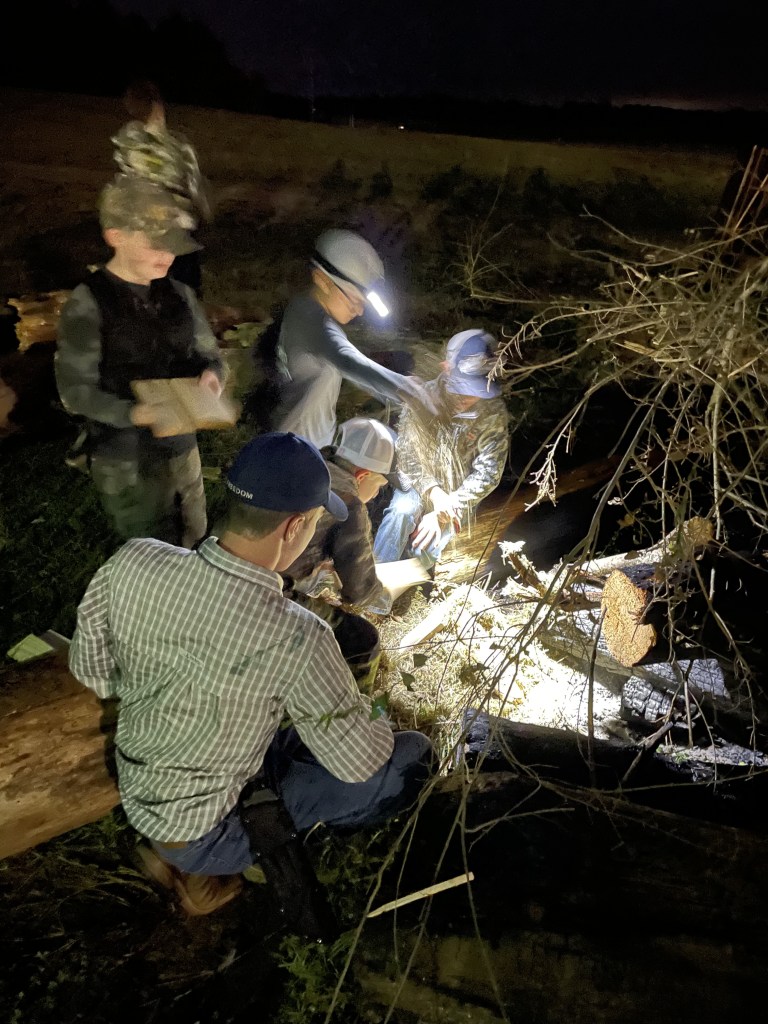
We had just gotten the fire started good where all the folks on the highway in front of the church could start blowing the horn, wishing that they were a part of something so exciting, when all of the sudden here comes the volunteer fire department in one of their trucks, sirens a wailing. We watched him go by on the highway but were surprised when he pulled into the church parking lot. It was only one fireman. Now that I think back, I’m not sure he was a real fireman because he didn’t have a uniform. That would also explain his behavior that followed. He said something about receiving a call about an out of control fire and then that [REDACTED] proceeded to unroll a firehose and thoroughly dowse our campfire. I wanted to say a lot of things and do a few more, but I let Pastor do the talking because I didn’t feel like it was the best time to give the younger boys a vocabulary lesson. I’m not sure what pastor told him, but he didn’t listen.

Volunteer work; it just doesn’t pay.

So there we were; the men and the boys just sitting around the dripping firewood. Like we all just found out that Santa Claus ain’t real, and the person that told us had run over our dog and run off with our girlfriend. We were in a bad way. The only thing that really matters about the men’s cookout is the fire, and now we didn’t have one. You could see it on every face from the boys fresh out of diapers to the grey headed retirees: pure disappointment. We were downcast. Something had to be done.

I waited until I was pretty sure that the hasty volunteer had made it all the way back to the fire station before I said, “$10 to the boy that gets this fire started again.” You’d have thought I said $100,000,000 by the way those boys got after it. I wasn’t really concerned about the fireman coming back, but I wanted to waste his whole evening if he decided to. It took the eager boys about five minutes to get the fire rekindled, and just like that, morale was restored.

The boys getting the fire restarted.

I have been wanting to burn something bad since then. So I set the yard on fire this week. It was glorious. My dad would’ve enjoyed watching it slowly burn off the dead grass from last year. It was the perfect day to set the yard on fire.

There are not many things as satisfying to me as burning the yard.

When I told my friend that I was going to burn the yard he asked me, “How do you keep the fire from spreading?”

I didn’t really have a good answer for that. You can’t really control a fire. You can pretend like you are controlling it, and that may make you feel better, but I suppose if the fire wants to burn something then you can’t really stop it. Any time you set a fire, you are risking it burning a lot more than you had intended. In my case this week, it didn’t burn all of what I intended. I was less in control of the fire than the wind. But I still stood there coughing in the smoke with a shovel and brazen confidence.

The horseleach hath two daughters, crying, Give, give. There are three things that are never satisfied, yea, four things say not, It is enough: The grave; and the barren womb; the earth that is not filled with water; and the fire that saith not, It is enough. Proverbs 30:15-16

After I got the fire stopped where I felt was sufficient, one of my friends called me and said, “Man is everything ok? Looks like your yard caught on fire.”

I just told him it was a controlled burn.