I don’t really want to be defined simply by what I like to do.
Strange things have been happening to me in Louisiana. I’ll introduce myself to people and then they’ll start speaking to me in French.
“Zane Wells.”
“Jean-Claude Villeramerette.”
People that speak French talk in italics.
Aside from that, I also get point blank existential questions like when the lady at the tamale stand in Zwolle glanced at my camera and asked if I was a photographer.
I said, “Well kind of, but I’m more of a writer.”
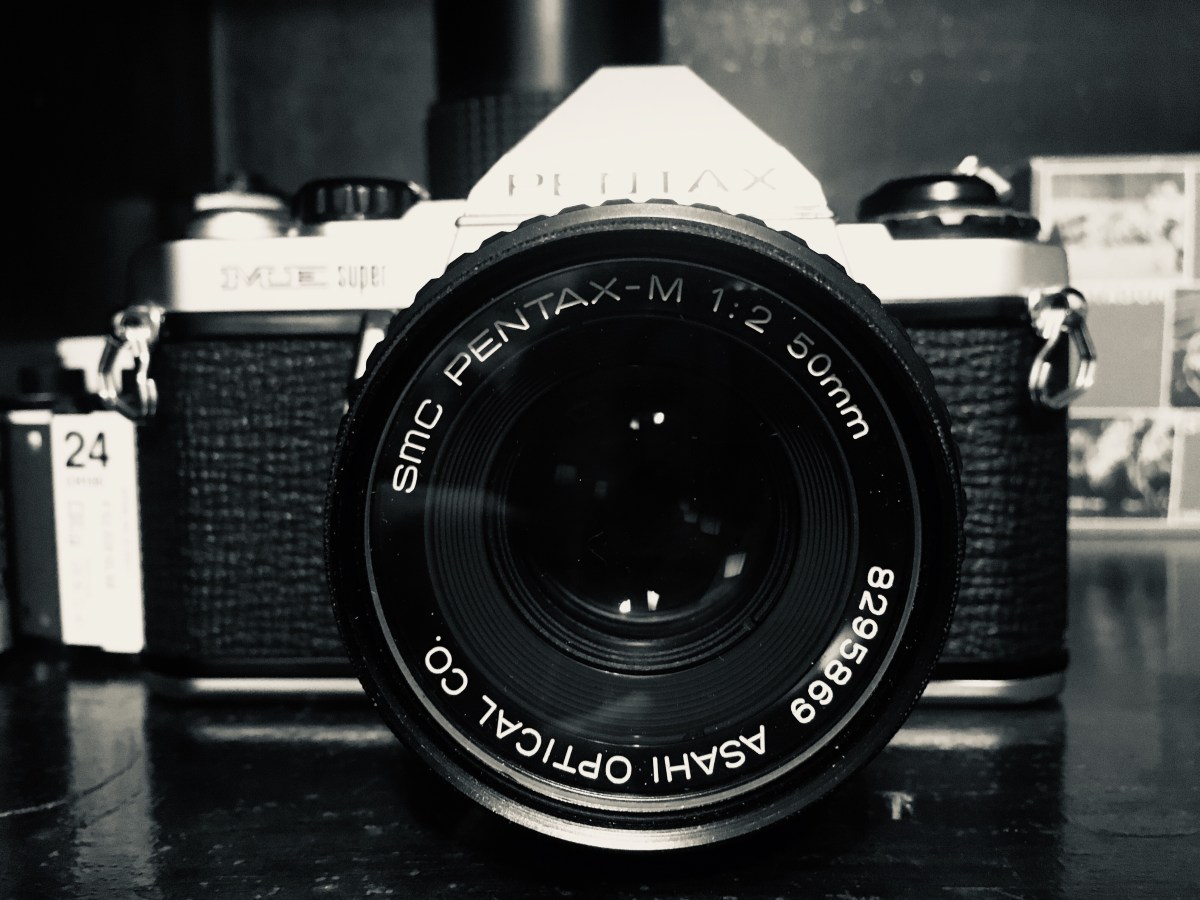
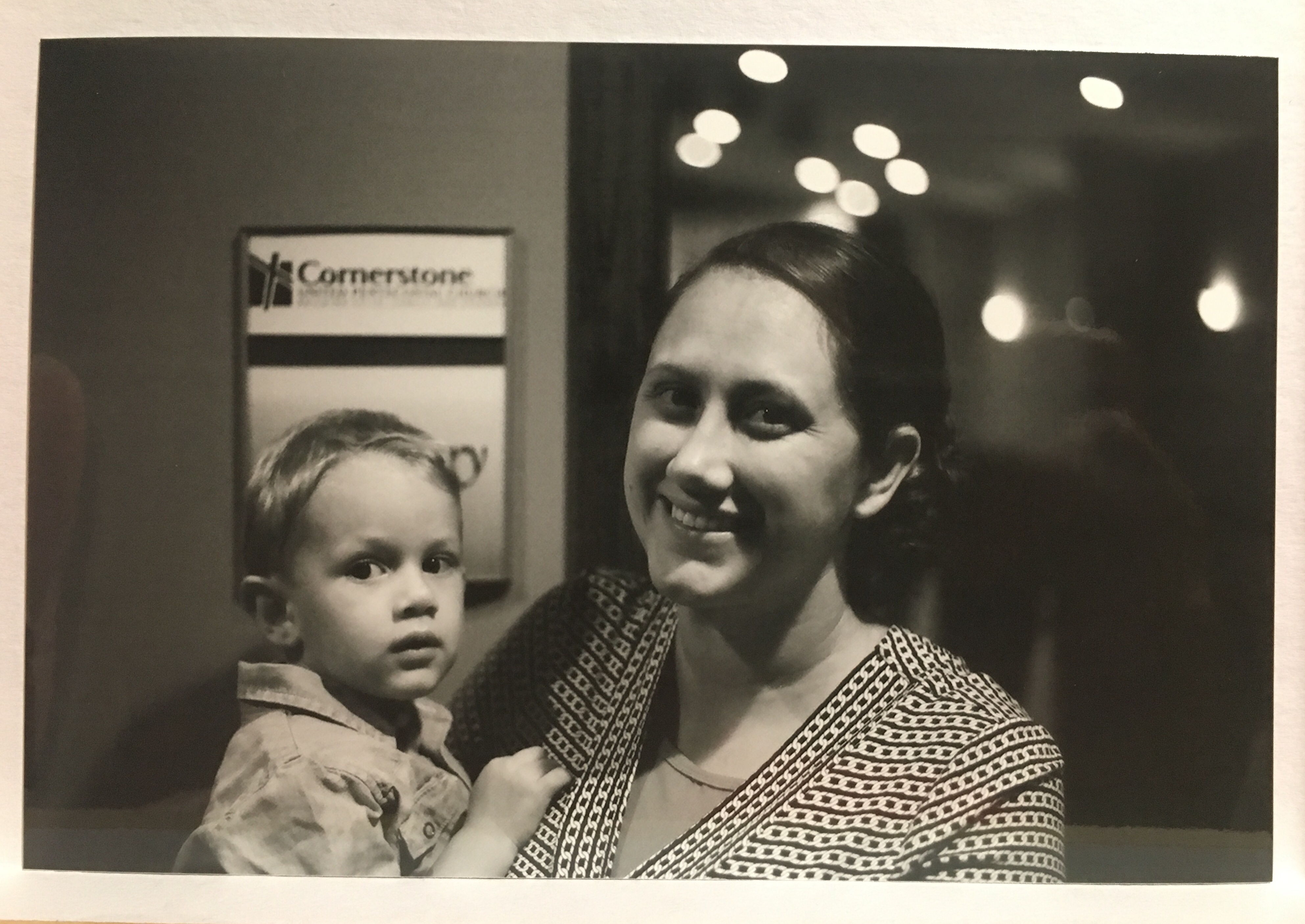
When she found out I was a writer the whole kitchen wanted me to take their picture with their blue ribbon. I obliged. I think it was a good enough picture. But I’m not sure I am a photographer. After all, I forgot to take off the lens cap twice while I was talking to these people. That’s not the kind of thing that photographer does.
I don’t really want to be defined simply by what I like to do.
I do like like taking photographs, but I’m not sure that makes me a photographer. And I haven’t made any money taking pictures, but does making money really have a bearing on your identity? I’ve done a lot of things for money that I did not enjoy. Maybe most of the things I have done for money I did not enjoy. Then there are some things I do whether I get paid or not.
A few years ago Sarah asked Miriam what she wanted to be when she grew up. She said, “A lady with pets.”
On occasion I forget my camera as I rush out the door and it bothers me nearly all day. Those are the days that I see the most interesting compositions. Like the man demolishing a water tower with an acetylene torch in Hodge, LA. It was one of those water towers with only one central column holding the whole thing up. The kind with clean flowing lines and no sharp edges, like one of those old enameled door knobs in an ancient house. The tank was halfway gone and a shower of sparks was raining down from the lift from which the man with the torch blazed away at the thick rusty metal. I would’ve liked to have had that picture. Another time recently I saw a freshly cut hayfield and about a thousand of those pure white cattle egrets swarming around the tractor which was still laying the hay down in a neat hearing-bone pattern. Oh it was glorious! I wish you could’ve seen it. The most recent composition that I missed was also in a pasture: A longhorn bull, a donkey, and a cattle egret in congress around an ancient live oak. I imagine that these were elected officials who had met together to discuss grazing rights and what to do about the interloping deer. But I missed it and I’m not sure a thousand words could let you see it.
What I really like is story telling. And photography allows you to tell a story without any words. I only really feel like a photographer when I don’t have my camera, but I feel like a writer all of the time.
I love yard sales. Previously loved merchandise. Everything you never knew you couldn’t live without can be found at a yard sale. Part of the fun of a yard sale is digging through the junk to find the treasure. Sometimes it’s only digging through junk. Even when you do find treasure, it sometimes only seems like treasure because the junk makes it look better. This is how I got back into film photography.
I have a recurring dream that I find a cache of treasure (usually guitars) for sale dirt cheap at some yard sale or thrift store. From time to time it comes true. Like the time I found a bunch of pocket knives at an estate sale. Today I’m thinking about the time I stumbled upon the motherlode of film camera equipment at the church yard sale. The yard sale itself had a half acre of merchandise spilling off of tables and onto tarps. There was an entire table full of lenses, filters, flashes, and bulbs. On the edge of the table was whicker basket full of film cameras. My mind went back to photography class when I spotted a pristine Canon A-1 Camera with a 50mm lens. I picked it up and instinctively focused the lens on one of the yard sale characters walking around. I advanced the film lever and clicked the shutter release button. There was the unmistakable whir of a shutter quickly opening and closing. A sound that even kids born in the 21st century will recognize from their iPhone camera.
I was hooked. Camera in hand, I walked over to Sis. Tina Updike, who was running the cash register that day. “How much for the camera Sis. Tina?” I asked. She frowned at me like she’d never seen a camera before she asked, “Is $10 too much?” I quickly paid for the camera before I had a chance to talk myself out of taking up a new hobby. I also went and scooped a couple of lenses, another SLR camera, and an enlarger so I could develop my own film.
As I fiddled with the camera and did a little bit of research to refresh my new found venture in to film photography, I began to think abstractly how film photography is more like life than the convenient digital photography that has cemented it’s place in our culture over the past twenty or so years. There was a time when cameras were investments, now they are just features on our phones. Camera phones have made us all photographers.
Think about when you were a kid. Unless you don’t remember having to take pictures with a camera, take your undeveloped film to Wal-Mart, shop around for an hour until you could finally pick up an envelope of actual pictures. Not only did you have to purchase film, but you had to pay for the pictures before you could decide that you were a terrible photographer. You kept the pictures anyway, and couldn’t wait to show them to your friends. The next time you had company, you’d pass around your pictures and you’d all laugh at the ones that didn’t come out like you wanted. The few pictures that came out great got an elevated frame or refrigerator status.
The first roll of film that I shot with my Canon A-1 was interesting. There were 24 frames. It made me stop and think before I snapped the shutter. I had to manually focus each picture. I had to wait a couple of weeks before I could see the fruit of my labor. Long enough to almost forget what I’d shot. Opening that first envelope of pictures was quite emotional. I sat down and looked through them with my wife. Like any roll of film, there were some duds. An image with uninteresting subject material, a poorly focused shot, or improper exposure. Even so, there were few really good pictures that I framed.
A photograph is frozen moment in time. Henri Cartier-Bresson spoke of the decisive moment, or the perfect moment to freeze in time. You can’t retake the same picture, because time will move forward. You’ll stop and refocus, changing the composition. Life is much more like a roll of film with a set amount of frames than a digital phone camera where we can take endless pictures in order to capture an image of how we think we should look. It’s a sobering thought, time.
Mostly From Memory is me sharing with you my life’s roll of film. Sure, I get to edit the pictures a little bit to make the subject material shine, but I can’t go back and take more pictures. Neither can you. Each season in our life is a frame of time on a limited roll. I wish that we could simply “delete” some pictures in life because of uninteresting or embarrassing subject material. Or a poorly focused shot. Or improper exposure.
I have a strong desire to make each season in my life count.
I can’t remember if I was thinking along these lines as I loaded the second roll of film into my now beloved Canon A-1, but I did know that I hoped to make every shot count. I think I took a few pictures of my kids, who wouldn’t be still to for anything in the world. The next day I took my camera to work so I could take pictures of downtown Winchester on my lunch break. There was one shot that I planned on taking. Every day I looked out from the fourth floor of the parking garage across the alley to the fire escape of the George Washington Hotel. The metal staircase against the backdrop of brick formed a perfect Z.
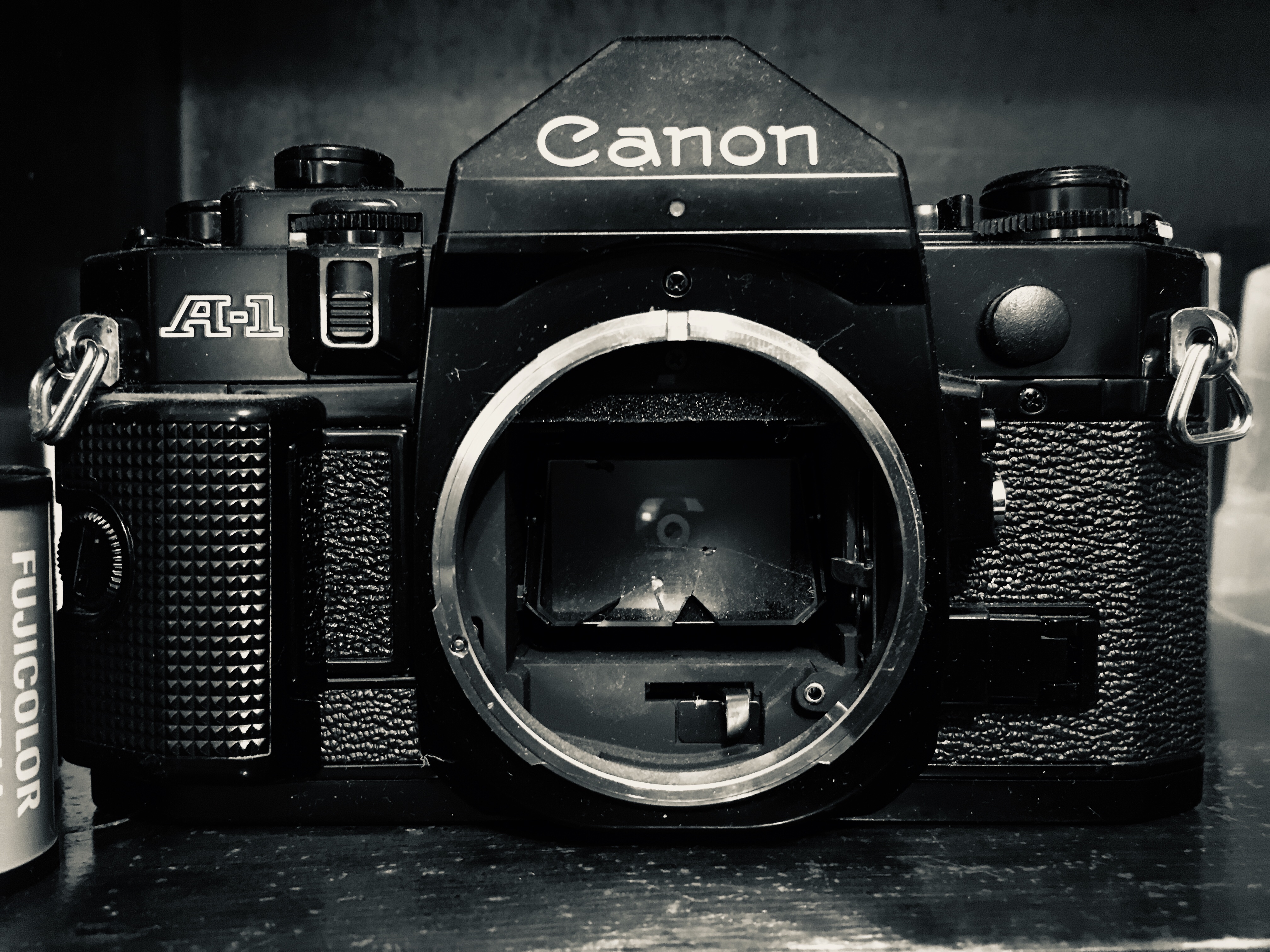
Z for Zane. I focused my camera on the target, but to get the composition just right required me to stand on the concrete barrier a foot from off of ground and lean against the railing with my knees. I took my time focusing and double checked my exposure before I firmly pressed the shutter release. Satisfied that I had not wasted a frame of film, I stepped back from my perch into reality. I was a hair higher than I expected and when my foot didn’t reach solid ground I grabbed for the rail, which was only barely above my knee. I panicked. In my desperation to regain my balance, my prized camera slipped from my hand. I watched it tumble through the air from four stories up. It fell for a long time, almost in slow motion, getting smaller and smaller until it smashed into the concrete and burst into pieces that fled the impact. I stared at the wreckage for quite a while before I realized that I could never take another picture with that camera. Then I walked down the stairs and picked up the pieces.
My busted Canon A-1. A testament to fragility of life.





 Mostly From Memory