Fog

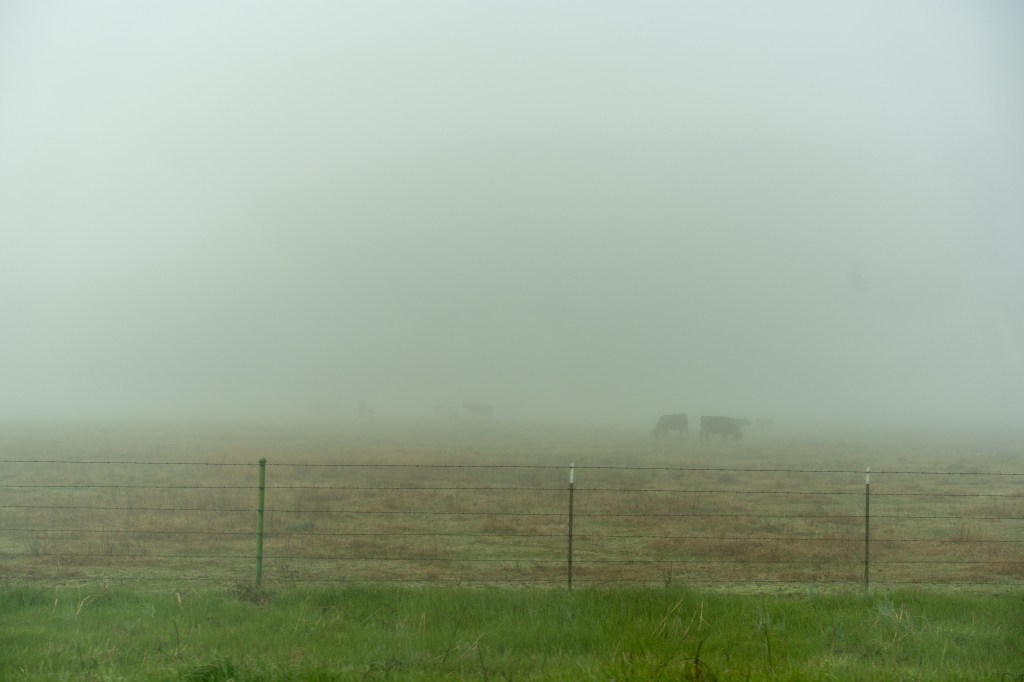
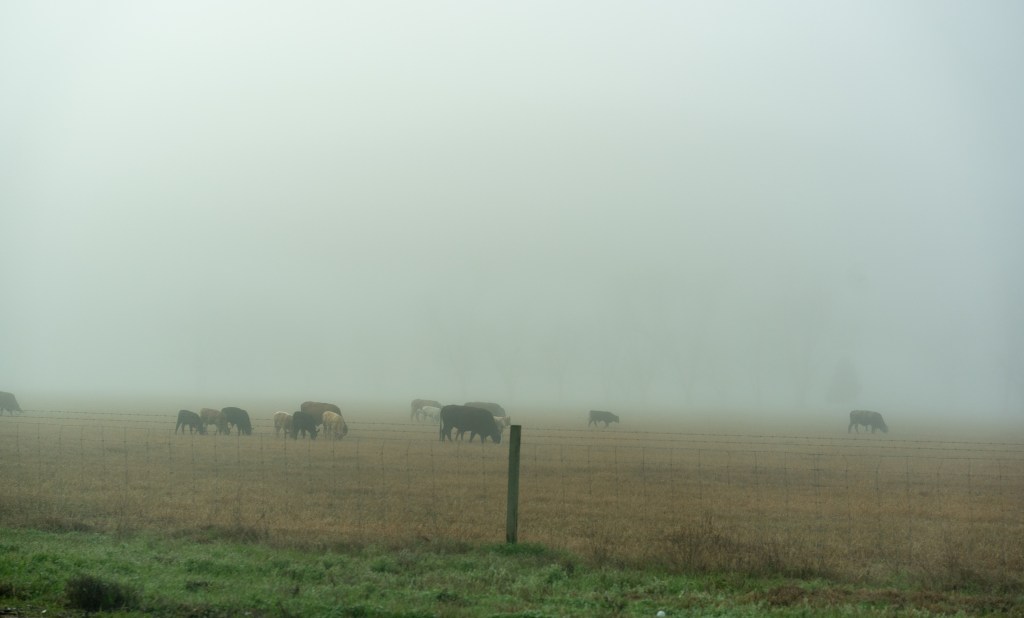
I had to drive in the fog this week. I’m not talking about the kind of patchy fog you drive through while you’re crossing a bridge and then you are back in the sunshine. No. I drove for two and half hours through the kind of fog in which Edgar Allan Poe set all of his stories.

I had to drive in the fog this week. I’m not talking about the kind of patchy fog you drive through while you’re crossing a bridge and then you are back in the sunshine. No. I drove for two and a half hours through the kind of fog in which Edgar Allan Poe set all of his stories. At least that’s the thick fog that I imagine when I read him. So naturally, I decided to do some drive-by photography. I love a good foggy morning; it makes me feel like Sherlock Holmes. A damp haze like this gives me a craving for a good mystery. For whatever reason, fog pulls on my creative nature. I was feeling pretty inspired and artistic in this dreamy landscape until I passed a big chicken truck that had turned over in the ditch just outside of Natchitoches. That wreck halted my daydreaming and caused me to slow down and give my undivided attention to the road, at least for a little while. Then I began to wonder if any of those chickens made their escape into the mist. I hope they did. I love a good escape story as much as I love a foggy morning. Maybe they took up with the herons in the swamp.

As much as the fog tugs on my imagination, I’m glad that it isn’t foggy all of the time. It can be stressful when you cannot see very far ahead of you. I imagine that’s what happened to that poor truck driver. He probably had to take evasive action to avoid killing someone he only saw at the last split second. Who knows?

The wrecked truck reminded me of something I learned about as a teenager following the progress of Operation Iraqi Freedom in the newspaper; The Fog of War. Originally a German term, it describes how the chaos of battle brings confusion and situational uncertainty to soldiers—and even top brass—who often become disoriented and are unsure of what to do next. I have never been in combat, but I have been in a lot of fog, and I can appreciate the analogy. My cousin Mark got disoriented in the fog on the Coosa River once during a fishing tournament. He navigated his bass boat by GPS right up out of the river and into the woods. I think the problem with disorientation is you don’t know you are disoriented until it is too late.

The vicissitudes of life can put us in a fog. The beauty of that fog and the creativity that it inspires is hardly ever seen in the moment except by the rare longsighted optimists, or the visionaries who are gifts to humanity. The rest of us only see the beauty in hindsight-that is if we make it through. There have been a few-and thank God only a few-truly foggy patches in my life. Times when you can only see as far as the next step and you aren’t fully sure of that; when you have all but lost direction; and when the mist has nearly halted any progress you thought you were making. It may take a while, but eventually we can look back and see the beauty of those times. And, with a twinkle in our eye and compassion in our voice, even recall them with joy and hope, and tell about them to someone going through their own fog.

We are often tossed and driven on the restless seas of time

Somber skies and howling tempests oft succeed the bright sunshine

But in that land of perfect day, when the mist has rolled away

We will understand it better by and by

This fog the other day covered a large swath of Louisiana. A friend who was working on the other side of the State that morning was telling me how foggy it was for him too. I’m glad I wasn’t in it alone. Eventually the fog “burnt off” as he put it, and it turned out to be a bright sunny day. But I’m glad I got these pictures. I didn’t want you to think I was exaggerating.
New Beginnings

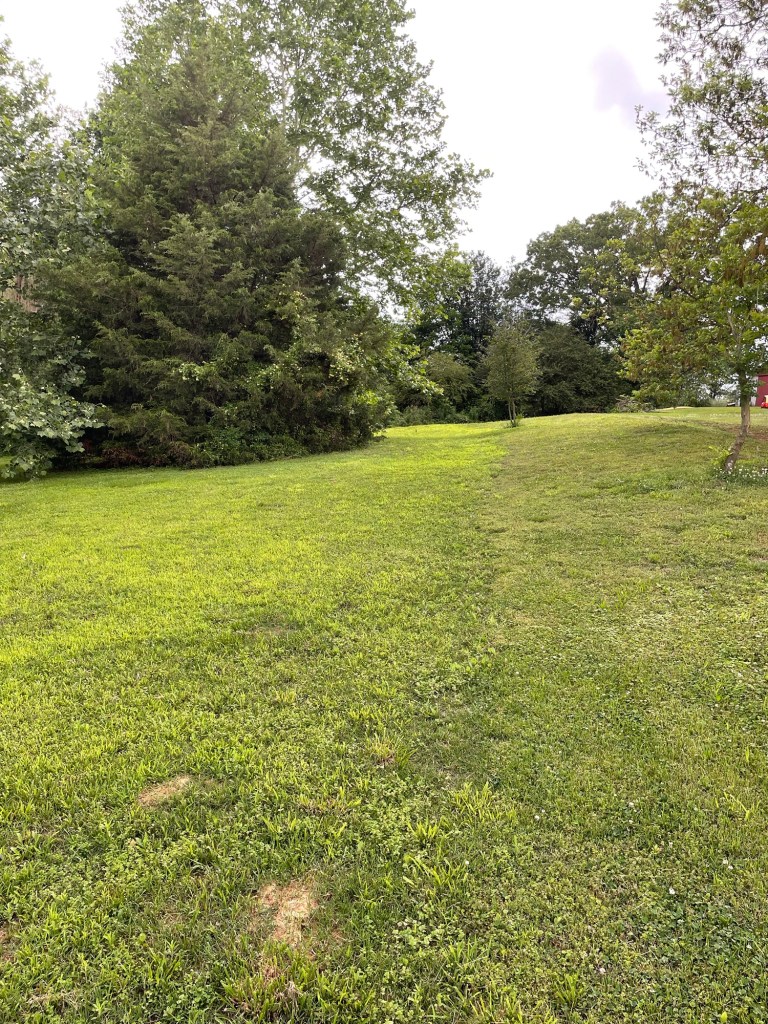
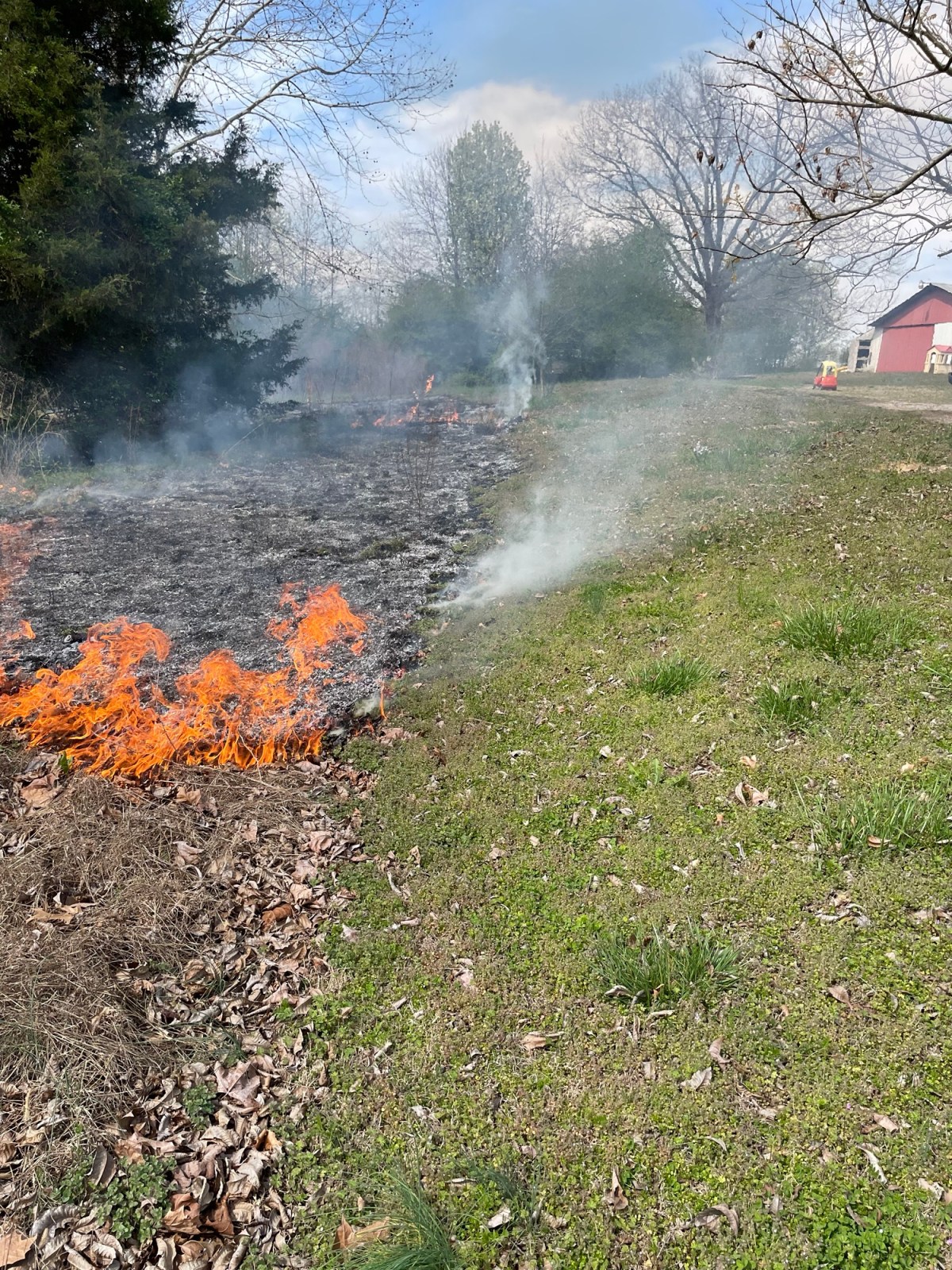
I burnt off half of my yard earlier this year. Because I did not want to mow it, I allowed the brush to grow up to the point where I could not mow it. While it is not the only way to tidy up a yard, burning is perhaps the best way to begin a clean start. It is a conflicting feeling to watch the fire take over the yard. The flames will not selectively burn just the overgrown, stubborn weeds that have begun to harden into pithy stalks, it also consumes the tender grass. And then there is the waiting. And in the waiting the questions. How long will this lay waste in ashes? Will it come back?

It does come back. And better.

During The Fire.
After The Fire.

This is a follow up to Controlled Burn.

Salt Life

Bumper stickers are a mystery to me. You would think that you could tell a lot about about a person by what kind of bumper stickers they have, but really you can only tell that they are bumper sticker people. And that is the mystery for me: is this bumper sticker accurate? I’ve always thought it would be funny to put bumper stickers on the vehicles of unsuspecting Wal-Mart shoppers at random. But I cannot bring myself to act upon these low juvenile thoughts. Although it does prove the point that a sticker does not necessarily define an individual. It is simply a label that has been applied by the driver. Or perhaps by hooligans in the Wal-Mart parking lot. You can label a jar of peanut butter chicken noodle soup or hominy but it will just be mislabeled peanut butter.

The label that I am most suspicious of is Salt Life. Especially if I see it on a car a long way from the beach. I have a hard time reconciling Salt Life bumper stickers and Tennessee license plates. How much of the Salt Life can this person really be living? People that are indeed living the Salt Life are probably on boats-or golf carts- and certainly not sitting in rush hour traffic seven hours from the coast. But we as people feel like that the bigger the sticker the more true it is. You’ll see a whole back window of a truck letting everyone know that the driver of this Silverado in Fort Payne, AL is living the Salt Life.

When I see a vehicle with a Salt Life sticker I usually make up a story for that driver. And then I imagine that story as a bumper sticker in place of Salt Life.

I went to the beach on vacation in 2016 and we chartered a fishing boat and I caught the biggest fish in my life and I really enjoyed my trip.

I go to Gulf Shores every year for this conference at work and I think it would be cool to live there.

I go fishing every year in Pensacola with my cousins and that is the only real fun thing that I do since my divorce.

I went to Panama City for my Senior Trip last year.

I am thinking about launching my own bumper sticker enterprise: Realist Bumper Stickers. Among other things we will offer a more accurate alternative to Salt Life. It is going to say: I Wish I Lived On The Coast. Alas, they probably wouldn’t sell. Bumper stickers are not the media of facts, but of ideals. We put them on our cars to in an effort to convince ourselves that things are not as they are but as they could be.

Broken

It may not work, but I am going to do my best to fix it.

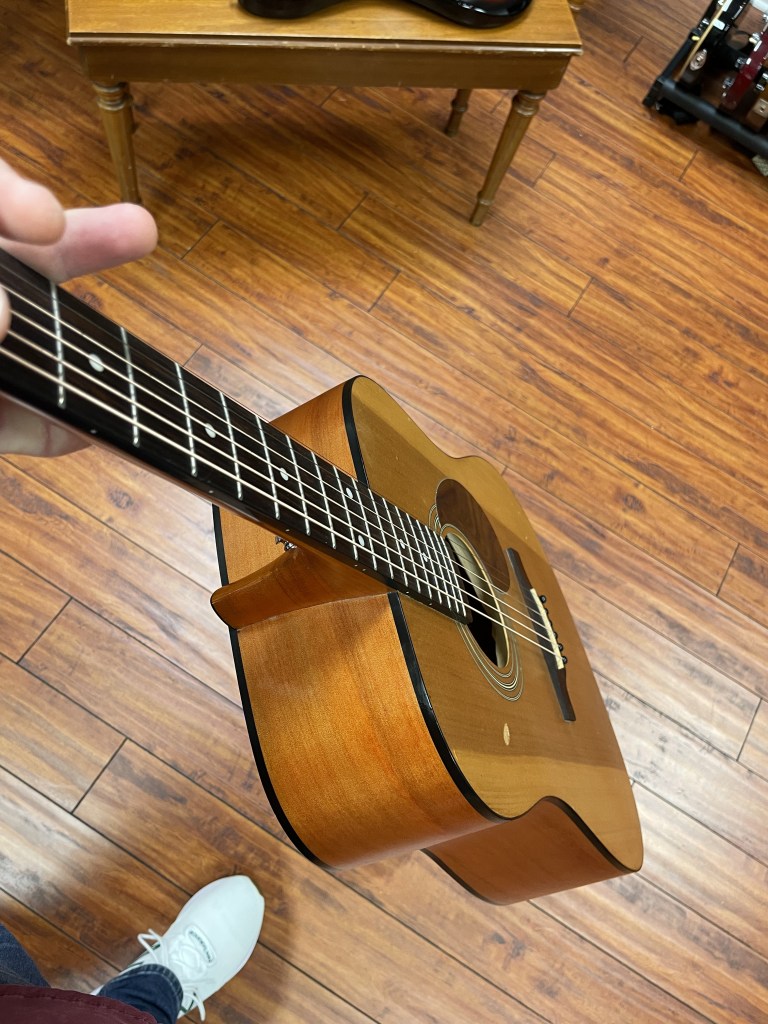
“This guitar is broken!” I said in exasperation to the young man I was helping move across town.

“You can have it.” He said, looking nonchalantly at the tired old instrument with a large crack in the heel of the neck. I laid it in the back of my truck like a wounded soldier amongst the mirrors and pictures wrapped in moving blankets. This guitar had been neglected if not abused. I winced as I thought back to things that I had not cared for properly as a child.

I took the guitar home and surgically removed the dirty strings and cleaned it thoroughly. Under the light of my work bench I could see that the crack wasn’t all the way through, but still substantial enough to make the guitar unplayable. I felt like the doctor when they say things like, It may not work, but I am going to do my best to fix it.

I inserted wood glue into the crack with a needle and syringe and clamped the body and neck down to the work bench to hold tension on the crack. This will only hurt for a little bit. Then I turned out the lights and didn’t look at it for three days. When I finally came back to it I could still see a black line where I probably didn’t clean the crack sufficiently, but the joint felt solid. Now I just needed some strings. Before I took the time to take a trip to the Guitar Dungeon, I happened to be at a friend’s house as he was changing his guitar strings. I noticed that he had an interesting string removal ritual. I usually clip my old strings-which have been played to death, black with grime and riddled with divots and dents- with a pair of wire cutters, and then to avoid a finger injury from the sharp string end under tension, I unwrap the bit still attached to the tuning post with a pair of pliers. He was taking his time and unwinding the string gently from the tuning post, so the entire string was still intact. Then he carefully placed each string in a neat little line, as if he too could still feel the life pulsing in those sparkly bits of metal, just waiting to be touched so they could burst forth singing. It works out nicely because the strings could be reused if you break one of the new ones. He did poke his finger with a sharp string end and there was a bit of bleeding. As he took the last string off he tied the whole bundle in a single knot. That’s when I asked him if I could have them. And he obliged. I have a hard time throwing some things away. Or seeing things thrown away. And those strings had been watching me like a puppy at the pound.

The next day I put the used strings on the old broken guitar and gave each another chance at life. I decided to leave the guitar tuned down a whole step, because I wasn’t sure if it could handle the tension of standard tuning. I held my breath as I got the last string tuned, then I cautiously inspected the crack. It was still solid. I played an F chord-not the first choice of most guitar players. And not the easiest chord to play in standard tuning. But we weren’t in standard tuning, and the F chord seemed so natural now and it rang out beautifully, deep and rich.

I have wondered what to do with this instrument brought back from the gates of death. I can’t in good conscience sell it. Because it was a gift, and also because I feel like I need to stay close to it in case in needs further repair. And maybe no one would want to pay for a broken instrument. This instrument has already served its time in the heavy hands of a careless owner. It now needs the gentle touch of a seasoned musician. Someone who has lived enough to know what pain feels like. I feel like I want to keep this resurrected instrument where I can see it every day and be reminded of the many second chances that I have been given. I want to be able to pick it up and make sweet music with something that came so near being cast off.

A bruised reed shall he not break, and the smoking flax shall he not quench: he shall bring forth judgment unto truth. Isaiah 42:3