New Beginnings

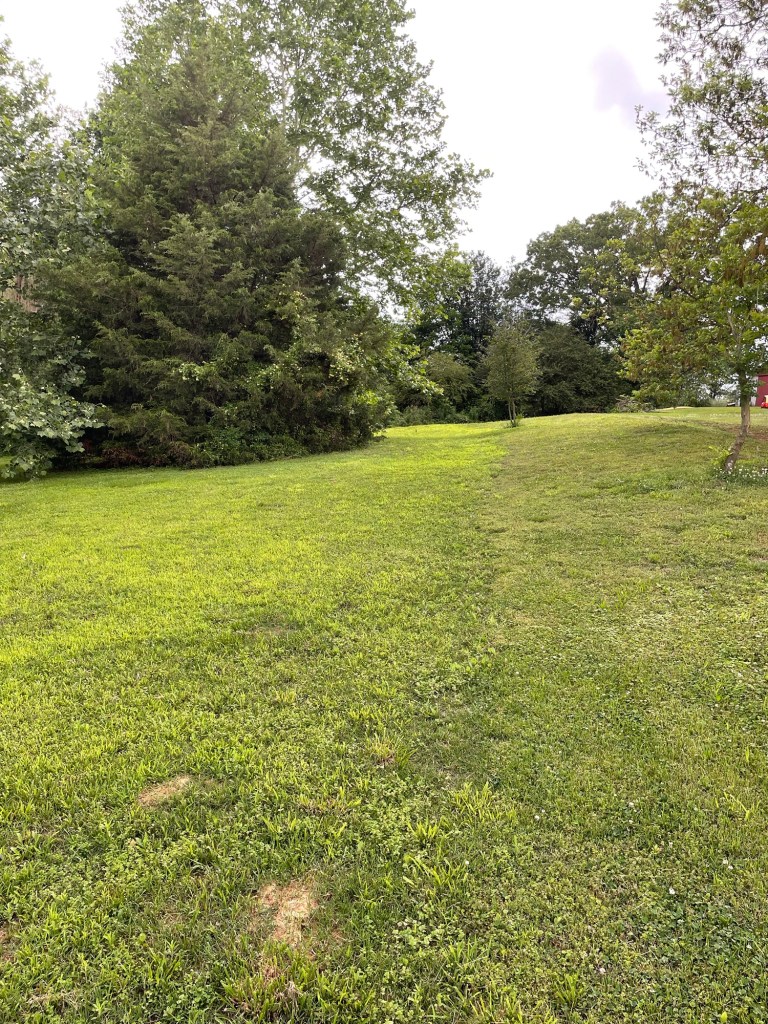
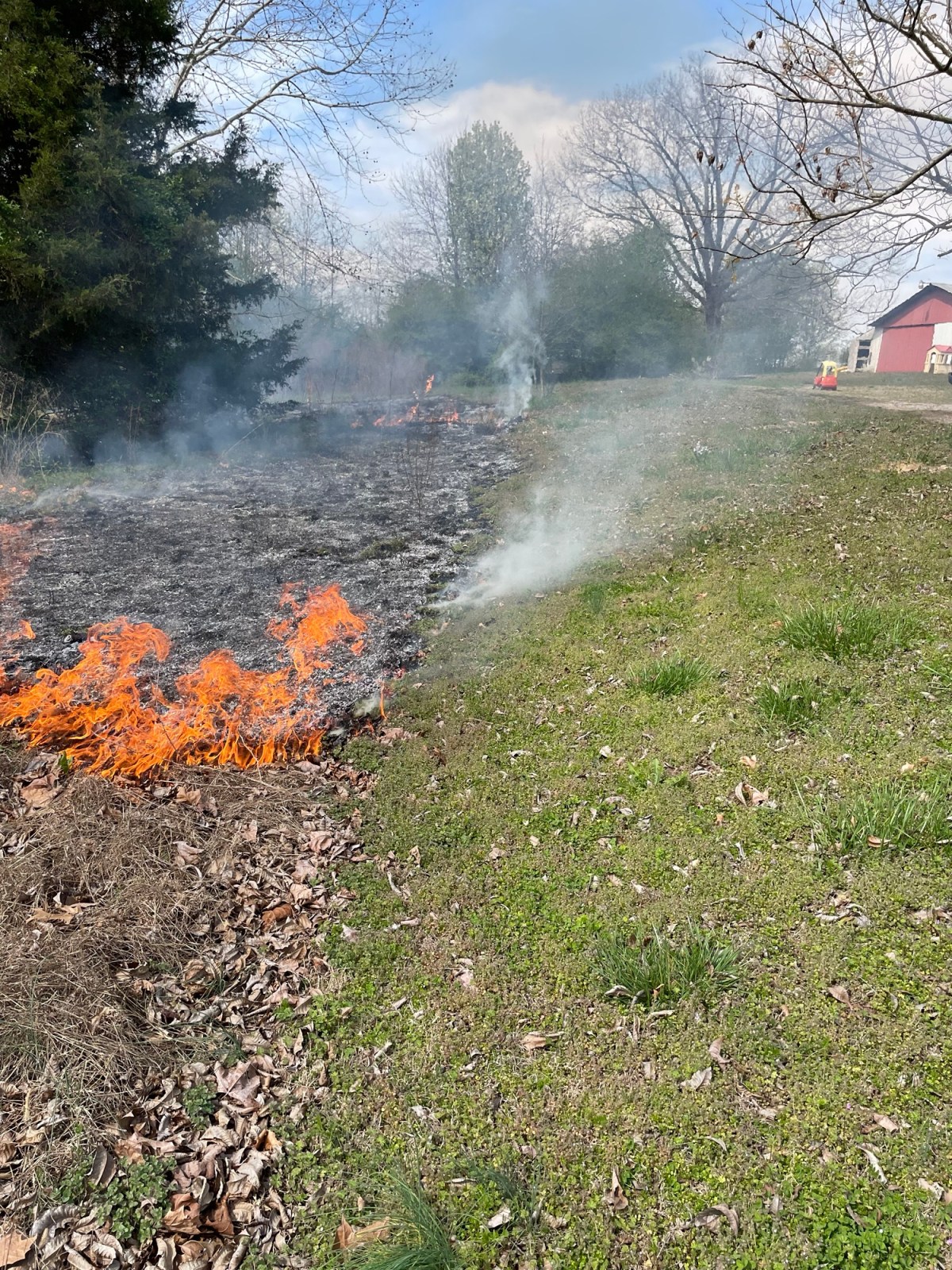
I burnt off half of my yard earlier this year. Because I did not want to mow it, I allowed the brush to grow up to the point where I could not mow it. While it is not the only way to tidy up a yard, burning is perhaps the best way to begin a clean start. It is a conflicting feeling to watch the fire take over the yard. The flames will not selectively burn just the overgrown, stubborn weeds that have begun to harden into pithy stalks, it also consumes the tender grass. And then there is the waiting. And in the waiting the questions. How long will this lay waste in ashes? Will it come back?

It does come back. And better.

During The Fire.
After The Fire.

This is a follow up to Controlled Burn.

How To Write About Grief

I have been working on this draft for almost a year. The fact is, I don’t want to write about grief. I would rather write something that will make you laugh. Laughter, as the scripture says, does good like a medicine. But I feel compelled to write about grief. And reluctance to write about it won’t make it go away anymore than ignoring makes actual grief go away. It is natural to want to avoid anything to do with grief. This is a truth: We cannot avoid the events in life that will bring us grief. Dealing with grief is part of living.

Blessed are they that mourn: for they shall be comforted. Matthew 5:4

Do you remember when you were a little kid and lost your parents at the grocery store because you were not paying attention? Losing your parents as an adult feels the same way except you are little embarrassed about calling out for them. That crying out is grief. I understand that everyone grieves differently. What has helped me has been writing my feelings. Maybe that can help you grieve too.

Stages of grief: denial, anger, bargaining, depression, acceptance.

When an event happens that triggers grief it is natural to feel these emotions, but that doesn’t change the fact that we can often feel embarrassed because we are experiencing them. After all, aren’t we adults who have everything together? Being shocked is an uncomfortable feeling. Especially for us who enjoy stability, quiet, and don’t like change. Denial can make us begin to question things we know are true. Being angry can also be humiliating because we feel like we have lost our self composure. It is where we say things like This is not fair! This is wrong! and we are further frustrated because we know what we are saying is true, but there is nothing we can do about it. Bargaining when you are unstable will usually get you a bad deal. You’ll end to doing something rash or in haste. Depression is a life sucking monster that strangles us to inaction. I’m not a licensed counselor, but I believe that one of the reasons that people end up going to counseling for grief is because they never complete the process but get hung up in one of the stages. Whenever that happens, no matter the stage, bitterness can develop.

Follow peace with all men, and holiness, without which no man shall see the Lord: Looking diligently lest any man fail of the grace of God; lest any root of bitterness springing up trouble you, and thereby many be defiled; Lest there be any fornicator, or profane person, as Esau, who for one morsel of meat sold his birthright. Hebrews 12:14-16

Bitterness is not merely an emotion, it is a parasitic root that gets in your spirit. The things that grow out of this root can’t be dealt with on the surface. Dealing with the surface is like cutting a stubborn hedge down to the ground only to realize that you simply pruned it and now it is destined to grow back even more unruly. Bitterness is a deeply inward issue that not only troubles you, but defiles many around you.

In the case of my Dad I believe I began the grief process as soon as he received the cancer diagnosis. I was shocked and tried to deny it: Cancer was something we heard about other people getting. I was scared to death of cancer as a child. I didn’t know exactly what it was and that made it even scarier. Shock and fear are not the same. I was not afraid when I heard the news, I was paralyzed with shock. I think I walked around numb for a few days.

I don’t remember being angry, but that doesn’t mean I wasn’t. And probably a big part of that is I believe in the power of prayer. I should say that although this article is about how writing about your feelings can help you through grief, it is my ardent conviction that prayer works far better. Prayer is where I did all my bargaining.

I do remember the depression stage. I didn’t want to do anything. I knew there was nothing I could do, yet I felt guilty for not doing anything and not being able to do anything. Whenever I experience depression, I eat. I think I gained 20 or 30 pounds following my Dad’s death.

I reached the acceptance stage one night before he died and while he was still coherent. That’s when I sat down and wrote this article in acceptance of his imminent death. Portrait of a Southern Gentleman, or Things I Learned From My Dad. It is a great comfort to know that he was able to read it. And he was able to brag on me a little bit, which is a source of laughter for me. I can tell you now that when I wrote that article I poured all of my emotions into those words. I cried the whole time. There was something special that happened when I was able to share those words with everyone. To know that someone else was able to experience my grief somehow made the burden lighter.

I will never forget the feeling of release when my Dad finally passed. It was as if I had been walking around carrying a couple of cross ties and somehow they just floated away.

From the end of the earth will I cry unto thee, when my heart is overwhelmed: lead me to the rock that is higher that I. Psalm 61:2

“You need someone to walk with you through the valley of the shadow of death. And when your heart is overwhelmed you will need someone to lead you to the rock, because you can’t find the way yourself.”

I did the same thing when my Mom died but she didn’t get a chance to read it, and knowing this I think allowed me to achieve a greater degree of acceptance.

Since then, I have made writing a part of my grief process. Which seems like an odd thing to say. I never thought about death as a child, but it is a steady growing part of my life now that I look more and more like Alfred and less and less like Bruce Wayne. Writing has helped me grieve the loss kids that were in my youth group-Oh Brandon!, family-Funeral Processions , Dan Theo Wells 1935-2021 , and dear friends- J.L. Parker. Not to mention countless things I have written in my journal.

So how do you write about grief? I think it is important to establish that putting your feelings and thoughts into written words while you are grieving is one of the most honest and genuine expressions of yourself. There should be no pressure to write to impress someone. This is you and your feelings. Putting those thoughts onto paper is a conscious going out of yourself. You have captured and placed in the visible an idea that has been floating around in the invisible. You have conquered that thought, and it can never escape. No one is grading you on content, grammar, or proper punctuation. And you do not have to share it with anyone. No one may ever see it. But it may help to allow a friend to help bear your burden. I know it does for me.

I still miss my parents every day. And I probably always will. I feel strong emotions every once in a while, but never denial, anger, or bargaining, only acceptance, peace, and most often sadness. If it gets bad I’ll go back and read what I wrote when it was still fresh and that helps.

I wish I could’ve talked to my Dad this week, because I am in a new process of grieving. But I already feel better having written this.

Radio Kid

I’m not out to defend parents who allow the iPad or the Television to “babysit” their children. I’m here to talk to you about the radio.

You hear the term iPad kids these days. Or children who learned how to operate iPads before they learned to speak. Consequently, they develop an addiction to this device. It doesn’t seem to be a term of endearment, but rather a derogatory term. These iPad kids don’t have a clue about how the real word is. I remember hearing the same kind of language when I was a kid but attached to Television. All these kids know how to do is watch TV. When I was a kid we were out riding bikes and throwing rocks at trains. I suppose every generation in many ways thinks that the following generation doesn’t have sense enough to “pour pee out of a boot” as my Dad used to say. And out of convenience perhaps we humans site the most recently adopted technology as the cause for a child’s …well a child’s natural childish behavior. I’m not out to defend parents who allow the iPad or the Television to “babysit” their children. I’m here to talk to you about the radio.

I was a radio kid amongst a bunch of television kids. We didn’t have a TV in our home. In the 90s this was unique. I’m not even sure if TV is still a relevant medium for entertainment, so it may no longer be strange to not have a TV today. But we did have a radio, and I liked to listen to it.

The AM/FM receiver, turn-table, and tape deck were all one and the same for me. The noise came out of the same source: The Radio.

Records

I think my earliest memory of recorded music was from the record player. We had a record of The Drifters singing Charlie Brown. I remember listening to that a lot. And dancing in the living room. We also had a Justin Wilson record I guarantee. Gram had a lot more records than we did. My favorite was the Disney Robin Hood record. It skipped on Friar Tuck saying No, but there’s somebody who will be very disappointed if you don’t come, don’t come, don’t come, don’t come… Gram would have to come and fix the needle so we could get on with the story.

I don’t remember many more records in particular that I had such a strong attachment to-excepting that there was a lot of country music. The old stuff like Hank Williams and Jim Reeves. I remember the audible artifacts of that old vinyl. The pleasant white noise and the occasional crackle and pop of the needle bouncing over debris. It is still a pleasant noise to me.

Tapes

Someone always had to load a record for me, but I was able to figure out the tape deck by myself. I listened to a lot of preaching tapes on the radio. One of my favorites was a Bro. Mahuron preaching at Alabama Camp Meeting. I kind of feel like that lightning bug that got caught in the ceiling fan. I am delighted to be here. He also told a story about playing baseball with Fred Blosser. He was a big ole boy, he had to hit a home run to get a base hit. I would request this preaching tape-especially on car rides-not for the theological substance of the sermon, but for these humorous preliminary remarks and sermon illustrations. Then I would settle in for a pleasant nap.

I got a Johnny Horton tape for Christmas when I was about seven years old. They probably bought it just for The Battle of New Orleans, but I ended up liking Whispering Pines, Comanche, and Sink The Bismarck just as much. It really took me a long time to realize that there were other genres of music besides country. I am slowly coming to terms with how much of my musical foundation is this early post-war country music. I still appreciate the storytelling aspect of real country music. And maybe that is why the guitar has always had a stronger pull on me than the piano.

Mom bought me a Merle Haggard tape at Food World one time. This is what I hear when someone plays a Telecaster. This was electric country. With electric bass that faked an airplane on Fighting Side of Me. Hearing these musicians create sound effects with their instruments made a lasting impression on me and shaped the way I interpret music.

AM Radio

Dad listened to a lot of AM radio in the truck. Mainly Sports Radio 690 WJOX-Birmingham! Skip Carey would call the Braves broadcast on this channel. It’s a high pop-fly foul into the stands, and a fan from Del Rio, Texas makes the catch! We’d listen to those games while we were in the hayfield with the truck windows down and the radio up. That’s when The Braves were going to the World Series in the 90s. There was also a radio show with two former basketball coaches-one from Auburn, one from Alabama-called Sonny and Wimp. Wimp and Sonny, one thinks he’s smart, one thinks he’s funny, They used to be coaches they used to have clout, do they really know what they’re talking about? And another show with a man named Herb Winches that Dad listened to pretty regular. It was all sports so I really wasn’t paying attention. I did get a kick out of the commercials though. The original Budweiser frogs and lizards were funny to me. The Real Men of Genius Bud Light commercials were also funny. It made alcohol seem like something you can laugh about. What a dangerous idea.

Dad used to say, “Boy you know that must have had some fun making this commercial!” One of his favorites was the Southern LINC cellular telephone commercials. Earl, a fictitious Southern LINC customer, told how Southern LINC had allowed him to expanded his business.

Thanks to you I’m branching out…Just the thought of it makes me shivery, Earl’s Septic Tank Repair, and Flower Delivery.

There was also a jewelry store somewhere in Birmingham that had a commercial where lovesick men would call in and ask for advice from a motherly character named Deadre. Talk to Deadre Darlin’. I still laugh about that. It was so funny that my cousin Kim named her dog Deadre. Gram run over that dog while backing out of the driveway. She heard it yell, then accidentally run over it again as she pulled back into the driveway. Poor Deadre.

Talk Radio was the forefather to PodCasts. The appeal of Talk Radio, at least for me, was that it was live. And they would take callers. Just ordinary people could call in and talk on the radio. This is the kind of entertainment that cannot be scripted. Even if you don’t like sports, you’d probably appreciate the drunk people who called in on the radio. Herb Winches took a drunk caller once who started out talking about some relevant sports topic and he got overwhelmed and just started saying You know, you good at what you do Herb. Dad laughed about this for months.

AM Radio had a distinct sound to me, and because of this I found it hard to listen to music on AM Radio. I now realize that there is less information coming through on AM than FM, so some frequencies are missing in the music. This is probably why audiophiles are willing to spend $50,000 on hi-fi stereo systems to listen to their record collections. So I never experimented much with AM Radio outside of listening to it with Dad.

FM Radio

I did experiment with FM Radio a lot. One of the first radio stations I remember hearing was Oldies 106.9. At that time they were playing everything from Elvis and Roy Orbison, to Motown and British Invasion. I remember hearing Love Me Do by The Beatles and being mesmerized by the harmonica sound. Dad told me the story of Delbert McClinton teaching John Lennon to play the harmonica. I didn’t realize that this was the music of rebellion in the 1960s. To me it was just like they were marketing it on the radio Feel Good Music.

We also listened to the Christian station out of Birmingham, 93.7 WDJC. Specifically The Dixie Gospel Caravan. Which was the evening Southern Gospel program. I used to love the song, I’ve Got a Feeling Everything’s Gonna Be Alright. This program was mainly Southern Gospel quartet music. And I imagined the bass singer as a face in the wall singing. That can’t be a real person. I also imagined the high tenor as tall and thin. I had a hard time telling the different quartet groups apart because the sound was so similar to me. And that is one of the reasons that I still don’t relish quartet music. Maybe I reached my quota of quartet music by the age of 9. Who knows?

I must confess, aside from The Dixie Gospel Caravan, I listened to the Oldies and Classic Country stations a lot more than I did the daytime contemporary offerings from WDJC. So there is a large gap in my Christian music canon. This is sometimes embarrassing to me when someone-usually a minister-wants me to remember-or even worse play-a Christian song from the 1980s which I have never heard. Or they ask me about a particular Southern Gospel Quartet. Did you used to listen to The Anointed Spoonbill Singers? No, Brother. I listened to The Beatles, The Rolling Stones, Sam Cooke, and Marvin Gaye though. I ain’t saying it’s right, I’m just saying it’s the truth.

When I started learning guitar I would sit by the radio and try to play along with the Classic Rock station. For hours. The radio taught me how to play guitar. I still prefer to try to work out a song guitar in hand while I listen before I resort to the sheet music.

Public Radio

At some point during my teenage years I was introduced to Public Radio. It fueled my curiosity about classical music and introduced me to opera. For years I listened to NPR’s World of Opera while I was cutting the church grass every Saturday. Public radio also had some cool shows on Saturday’s too. Car Talk, What a classic show. I still shift my manual transmission truck into reverse when I park because of Car Talk. I also enjoyed A Prairie Home Companion with Garrison Keillor. Which was a variety show sort in the style of Jack Benny or Phil Harris. Keillor’s show served up a healthy dose of Americana music. Which is to say a thick soup of gospel, bluegrass, country, blues, and swing. And it was live.

One of the strangest shows I remember was Hearts of Space, an electronic-new-age-ambient-music program. It featured artists like Klaus Schulze and focused heavily on synthesizers. My Mom didn’t like that show. Even though I didn’t fully understand it, I liked it. I didn’t know how those sounds were being created and I just accepted that it was with computers. I have learned a lot about synthesizers since first hearing Hearts of Space.

When I lived in Virginia I discovered The Big Broadcast with Ed Walker. This was my introduction to the golden age of radio shows from the 1930s-1950s. Ed was blind, and he made me wonder how much those old radio shows must have meant to someone who couldn’t see. I listened to that show until he died. I still listen to vintage radio shows on the Old Time Radio app with Wesley, but it isn’t the same without Ed introducing them.

Today

I suppose that you could find everything today on an iPad that I found on the radio, if you look in the right place. That’s just the thing though: the iPad is a very visual medium. While kids may still be listening, they are doing a lot of looking. And who can say what they are looking at? Radio and Television were pretty rigid in their programming. There was a time when you had to be good to be on the Radio. You may have just had to be good looking to be on Television. But now, anyone with a pulse can start a YouTube channel. And they don’t have to worry about getting dropped by a sponsor or advertisers because many people don’t make one red cent on YouTube but still churn out mindless videos of just about anything you can imagine. I think about this sort of thing when I see a child glued to an iPad. Time will tell how these children will turn out. I think they’ll be a lot like the Television kids. Which I don’t know if I have done a great job communicating with for most of my life.

I can’t remember the last time I turned on FM radio. I grew weary of the commercials long ago. And many of my favorite show hosts are now passed on. The Radio changed on me. But I still listen to something every day. In that sense I will always be a Radio Kid.

Broken

It may not work, but I am going to do my best to fix it.

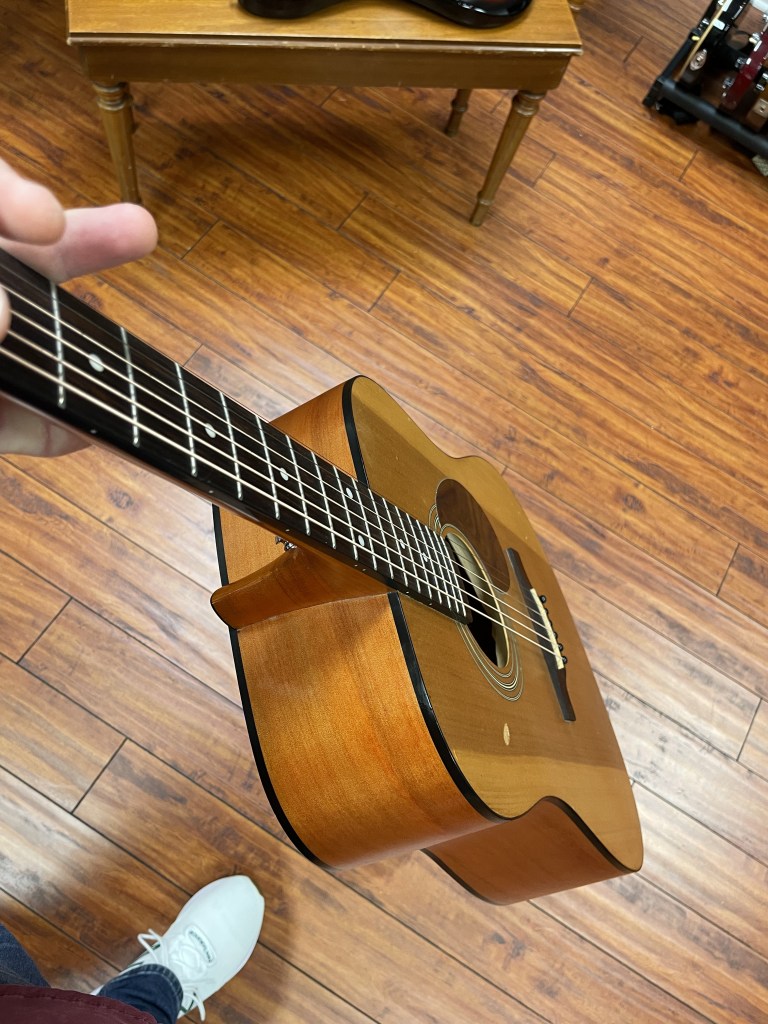
“This guitar is broken!” I said in exasperation to the young man I was helping move across town.

“You can have it.” He said, looking nonchalantly at the tired old instrument with a large crack in the heel of the neck. I laid it in the back of my truck like a wounded soldier amongst the mirrors and pictures wrapped in moving blankets. This guitar had been neglected if not abused. I winced as I thought back to things that I had not cared for properly as a child.

I took the guitar home and surgically removed the dirty strings and cleaned it thoroughly. Under the light of my work bench I could see that the crack wasn’t all the way through, but still substantial enough to make the guitar unplayable. I felt like the doctor when they say things like, It may not work, but I am going to do my best to fix it.

I inserted wood glue into the crack with a needle and syringe and clamped the body and neck down to the work bench to hold tension on the crack. This will only hurt for a little bit. Then I turned out the lights and didn’t look at it for three days. When I finally came back to it I could still see a black line where I probably didn’t clean the crack sufficiently, but the joint felt solid. Now I just needed some strings. Before I took the time to take a trip to the Guitar Dungeon, I happened to be at a friend’s house as he was changing his guitar strings. I noticed that he had an interesting string removal ritual. I usually clip my old strings-which have been played to death, black with grime and riddled with divots and dents- with a pair of wire cutters, and then to avoid a finger injury from the sharp string end under tension, I unwrap the bit still attached to the tuning post with a pair of pliers. He was taking his time and unwinding the string gently from the tuning post, so the entire string was still intact. Then he carefully placed each string in a neat little line, as if he too could still feel the life pulsing in those sparkly bits of metal, just waiting to be touched so they could burst forth singing. It works out nicely because the strings could be reused if you break one of the new ones. He did poke his finger with a sharp string end and there was a bit of bleeding. As he took the last string off he tied the whole bundle in a single knot. That’s when I asked him if I could have them. And he obliged. I have a hard time throwing some things away. Or seeing things thrown away. And those strings had been watching me like a puppy at the pound.

The next day I put the used strings on the old broken guitar and gave each another chance at life. I decided to leave the guitar tuned down a whole step, because I wasn’t sure if it could handle the tension of standard tuning. I held my breath as I got the last string tuned, then I cautiously inspected the crack. It was still solid. I played an F chord-not the first choice of most guitar players. And not the easiest chord to play in standard tuning. But we weren’t in standard tuning, and the F chord seemed so natural now and it rang out beautifully, deep and rich.

I have wondered what to do with this instrument brought back from the gates of death. I can’t in good conscience sell it. Because it was a gift, and also because I feel like I need to stay close to it in case in needs further repair. And maybe no one would want to pay for a broken instrument. This instrument has already served its time in the heavy hands of a careless owner. It now needs the gentle touch of a seasoned musician. Someone who has lived enough to know what pain feels like. I feel like I want to keep this resurrected instrument where I can see it every day and be reminded of the many second chances that I have been given. I want to be able to pick it up and make sweet music with something that came so near being cast off.

A bruised reed shall he not break, and the smoking flax shall he not quench: he shall bring forth judgment unto truth. Isaiah 42:3

Downhill Uphill

“He went downhill fast.” That’s the kind of thing we say when someone gets terminally ill and doesn’t recover. It is a difficult thing to watch people go downhill. This is one of the reasons that I dread visiting nursing homes.

I was thinking about this phrase this morning as I was going down a steep hill on my bicycle. It really doesn’t take much effort at all to go downhill. Everyone can go fast downhill. You just keep it in the road, if that is the course that is set before you. But it takes real work to go uphill. And to go uphill fast demands an extraordinary amount of energy.

Do you ever get caught in this situation? You are riding shotgun and the driver answers the phone and the phone call plays through the vehicles sound system. You become an involuntary, nonspeaking party to the phone call. It is not that you are intruding by listening, but you would be intruding by talking. You go through something similar in real life watching people make decisions. I guess that is some how wrapped up in minding your own business. Anyway, It is hard for me to not pay attention to a conversation. By the way, do you ever quit listening to someone that is talking to you because you overhear a more interesting conversation off to the side? That is something that I struggle with. I won’t go into the finer details of what the conversation was about but this line stood out to me.

Things are going well but its all uphill.

I guess that means that they are putting in the effort. It sure sounded like it. And that is the point I am trying to make: making progress is really just a gentler way of saying that you are doing a lot of hard work and it is paying off. And you know, work is fun to watch. Especially if someone else is doing it.

I remember when we added an education wing to the church in Winchester. Cecil and I met every morning just down the hill from the church before we started our mowing rounds. I was not the early riser that I am today and Cecil always beat me to work. I’d pull in and start getting the truck and mowers in order before I almost had to drag him away from the construction site. He would be up there talking to the workers, pointing at things, telling them God knows what. Checking on that construction site really made him grin. Old men and little boys can watch bulldozers all day. I think we all like to watch work because it is inspiring.

I catch myself doing it now. Man they didn’t waste any time getting that house built! (Is this how you talk to yourself?) Progress is exciting. My community is patiently waiting for our Chick Fil A to be rebuilt. We are all emotionally invested in the progress of that building. We celebrate at each milestone. They got the sign on the wall!

When you are actually working on the construction site, or really any kind of project it can be difficult to appreciate your progress because you are constantly seeing it. Watching children grow up is a similar phenomenon. You hardly notice it when you see them every day, but the folks that just see them at Thanksgiving are shocked by their growth. If you are working on something that matters, it is good to remind yourself every once that your labor is not in vain.

Galatian 6:9 And let us not be weary in well doing: for in due season we shall reap, if we faint not.

The Kind of Person I Want to Be

Loving people is something that is hard to fake.

I took a group of Young People to Youth Camp a couple of weeks ago. I am just now getting over the jet lag from staying up until 3am every morning. If everyone had as much fun as I did then I think we could call it a smashing success. We had to convince a couple of them that it would have a good time if they went. Some times it takes years before I can talk someone into trying something new. But even the Hobbits who left the Shire this week seemed to have a great time.

I noticed a young man at camp who had the peculiar characteristic of being endearing to everyone he spoke with. What makes people like this so magnetic? They are not necessarily popular because they are cool, although I guess you could say that many of them are cool. And maybe that is the only way we know how describe them because it is hard to articulate what they really are. It is more that cool. Not all cool people make folks feel good about themselves. These are popular because they make people feel special. They make you feel like that they sincerely care about you.

I have this ongoing quest with a dear friend to crack the code behind being the kind of person that I am trying to write about. A person you makes other people feel special. There is a question about whether or not this quality can be learned, or is it a gift that you either have or you don’t. I tend to think, or at least hope, that it can be developed. I believe that to be this kind of person, an endearing person, you really have to love people. Loving people is something that is hard to fake. Not that people cannot be faked into believe that you love them. But if you don’t love people, faking it is not going to be enjoyable. And it will be obvious to most of us. People can sense fake. People do not like fake.

Loving people is something that we are commanded to do. So that strengthens my hope that it can be learned.

There was a man in the book of Acts named Joses, but the everyone called him Barnabas. Barnabas means the Son of Consolation. When you give someone consolation, you make them feel better. It could also be translated Son of Encouragement. I just imagine that Barnabas had the kind of characteristics that I noticed last week. This is the man that connected with the newly converted Paul and introduced him to the Apostles. What was that conversation like? He was the pastor of the church in Antioch, where they were first called Christians. There is a strong chance that many of the congregants had relatives who were murdered at Saul’s orders. Barnabas believed in the young John Mark even after Paul lost confidence with him. Barnabas also understood sacrificial giving

There are a few people in my life that have played the roll of Barnabas in that they make me want to be better at everything that really matters. This is the kind of person I really want to be.