Old Men

I want to be an old man one day. I want to drive a squeaky clean pickup truck to meet my friends for breakfast at Jack’s at 5:30 in the morning. I’ll eat a steak biscuit unless the bologna biscuits are on sale. We’ll sit at the round table and laugh about the good old days when gas was only .89¢ when we started driving. When a stranger walks in we’ll ask if anybody knows him. And if they don’t, we’ll get to know him. We’ll have nicknames for all the little kids because we might not remember their real names. That will endear them to us. After breakfast we will piddle in our gardens, or go horse trade old guitars and guns.

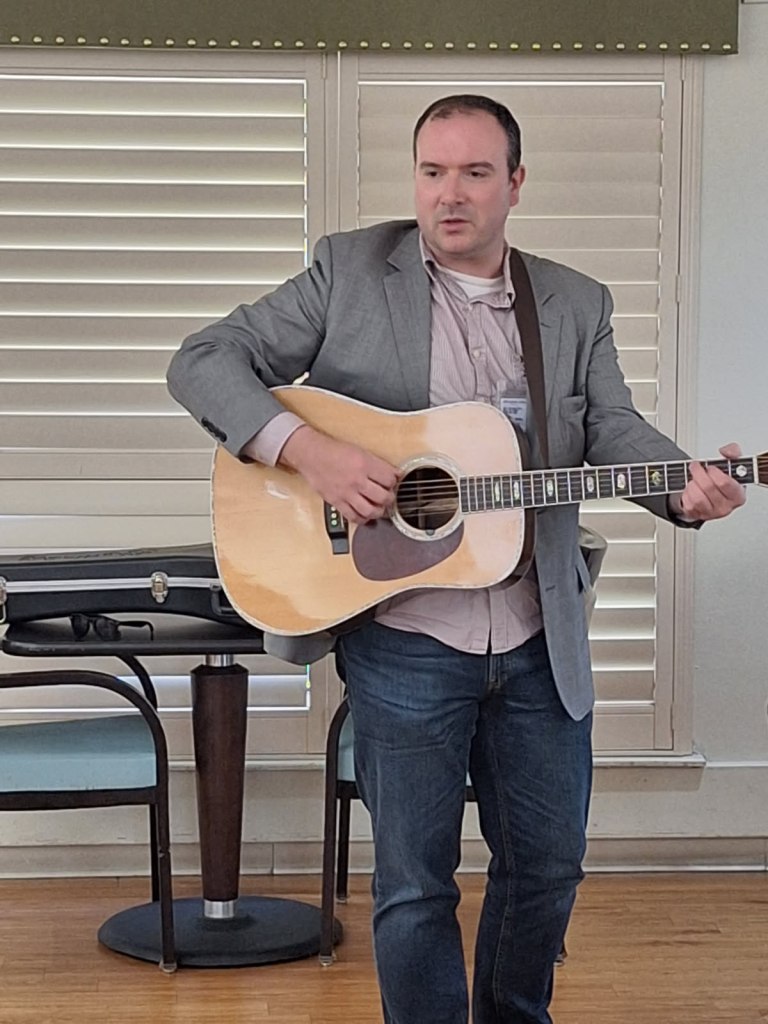
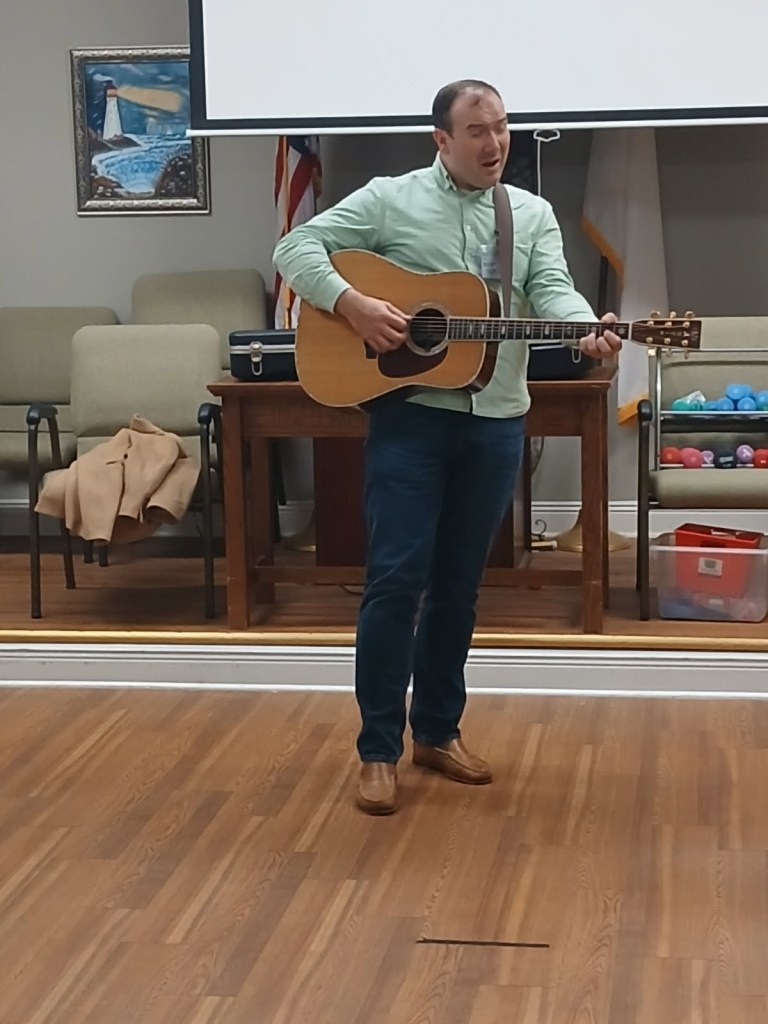
I met a man yesterday who was 98 years old. He drove himself to the Council on Aging. I’m not sure if he came to hear me sing, or if he just came out of habit because old men have routines. But he stayed and talked to me in the atmosphere that lingers after the songs are over but everyone remains quiet, intently listening. He was still sharp in his mind. That’s the kind of old man I want to be.

I met another old man that cycled 100 miles when he turned 90. A spry old sinewy man, tough as woodpecker lips-that is the kind of thing that old men say. I hope to be a fit old man. Not the kind that wears shorts so everyone has to look their old nasty bird legs. There are some things in life a man ought not have to look at.

I want to be an old man that can tell a good story. Can’t nobody tell a story like an old man. And I might start carrying around little candies to hand out at church for children in case my eyebrows scare them.

I just lost one of my favorite old men, Bro. Boney. I wasn’t expecting it, and I’m still not over it. He was one the kind of old men that shook everyone’s hand at the church. He did that with purpose. He had a way of making people feel like they belonged there. He’d been coming to Thanksgiving with my family for the past few years. He’d sing snatches of those old hymns and I’d accompany on the guitar in the corner until our wives would calm us down. One year the power went out, so we couldn’t be ignored. Everyone joined in and sang along. It was a good night.

One year he brought a BB Gun to the church while we cooked a bunch of turkey breasts for Thanksgiving. It was something that you would expect an 8 year old boy to do, but there he was, the oldest man present, plinking away at cans. I just thought that was hilarious. I kept this picture as his contact picture on my phone. I always have the hardest time deleting contacts of friends that have died.

The hoary head is a crown of glory, if it be found in the way of righteousness. Proverbs 16:31

Old men are a blessing, otherwise God would not have cursed the house of Eli by denying them old men.

Wherefore the Lord God of Israel saith, I said indeed that thy house, and the house of thy father, should walk before me for ever: but now the Lord saith, Be it far from me; for them that honour me I will honour, and they that despise me shall be lightly esteemed. Behold, the days come, that I will cut off thine arm, and the arm of thy father’s house, that there shall not be an old man in thine house. And thou shalt see an enemy in my habitation, in all the wealth which God shall give Israel: and there shall not be an old man in thine house for ever. And the man of thine, whom I shall not cut off from mine altar, shall be to consume thine eyes, and to grieve thine heart: and all the increase of thine house shall die in the flower of their age. I Samuel 2:30-33

I want to be the kind of old man that young men want to get next to in the prayer room before church. The kind of old man that makes children laugh. That gives good gifts. That speaks the truth in love. That cares. That loves the same woman for decades and raises godly children.

I guess the best way to be the kind of old man you want to be is to be the kind of young man you ought to be.

Is ‘at You Earl?

There was a time when Hardee’s had a marketing campaign for a Monster Burger, and it worked on Dad and me. So we drove down to Childersburg, Alabama to our nearest Hardees to have one. I can remember the booth we were sitting in was near the front which gave a commanding view of the entire restaurant. You could see the counter and the kitchen beyond, as well as the dining room all the way back to the bathroom. As we set there eating our big old cheeseburgers, and just generally enjoying our fine dining experience, the side door opened. A voice from the kitchen called out: “Is ‘at you Earl?”

It was Earl, a slovenly dark-haired young man reporting for duty. He confirmed this with a mumbled reply. Then braced himself as a volley of admonishments was hurled his way. It was a woman’s voice, clearly his manager. She was not berating as I recall, but smooth and comical. It seemed like she had been working on Earl for a while.

Where you been Earl? Tuck your shirt in Earl. Did you wash your hands Earl? Where is your Apron Earl? You didn’t comb your hair Earl? Go to the bathroom and get yourself together. Be somebody Earl.

Earl was having a rough day. Being audience to this scene brought an immense amount of joy to my Dad.

“Poor Earl just ain’t got it together does he?”

He recalled this episode for nearly the rest of his life. “Is ‘at you Earl?” became something that he would say to me from then on.

My Dad wanted us to have the experience of working with the general public. Principally, so we would know how to treat people. And to know how to behave when you have been mistreated. Maybe that manager was the first person that ever took time to try to help Earl.

I always think about Earl when I see a Hardee’s. I think about a high school teenager getting their first experience in the workforce. Maybe for the first time in their life they are having do things that were never taught at home. Like tucking their shirt. And being somebody.

Classical Music

There is a feeling that comes to me in the fall when the light is shining through the window just so, kind of sideways in the morning after all the kids are off to school. There must be a window where I can see the rest of the world, busy about their work. And there must be classical music creating a little bubble of peace.

Classical music to me is not sitting in a stuffy hall in your uncomfortable church clothes watching a bunch of musicians in their uncomfortable church clothes play music that everyone pretends to like. To me classical music is anesthesia for a job that I don’t enjoy very much. Sometimes I listen to classical music and I am in a concert hall, watching musicians play, but most of the time, the music is just the soundtrack to my imagination.

It works without a window too. I used to listen classical music seriously when I had a job cutting grass. It became a great escape for me. I had these radio headphones that allowed the music to take me far away from the tedious and laborious tasks of weed-eating. And when I finally got a job in the air conditioning, I would listen to classical music from the comfort of my desk as I watched the hustle and bustle of traffic just outside my window. That is the feeling that I am trying so hard to describe to you. It is as if I am looking at the rest of the world in a little glass terrarium, the music allows me to be an outside observer.

I was introduced to classical music when Mom bought our first CD player and a few CDs. The one I remember was a collection of classical music favorites. I listened to that album a lot in my bedroom. And if I hear one of those pieces today, like Schubert’s unfinished symphony, I am transported back to my little bedroom with my octagonal window.

Maybe it was because of the record player that listening to music became a ritual for me. I needed help from an adult with the record player. And once the record started, I would be left alone to be tended by the music. I just had to listen to the whole thing, there was no turning back. So I think that sense of commitment carried over to CDs. Anytime I got a new CD, I would sit down and listen to the whole thing front to back without stopping. I still think this is the best way to listen to music.

For all my love for classical music, I have only ever been to one concert. It was when I was a teenager. We went to a beautiful concert hall somewhere in Birmingham to see-and hear-the Alabama Symphony Orchestra play Variations on Haydn. At the beginning of the concert, the conductor gave a speech to the audience. And for some reason, the first chair violin was chatting with his neighbor. The conductor turned around to say something to him out of the microphone. When the conductor turned back to the audience, the first chair violin shook his bow at the conductor. That has always stood out to me. Was there bad blood between these two? Jealousy? Was this simply a joke? Who can know? I remember liking the music though and just staring at the orchestra. I could’ve watched it all night. My Uncle Tony elbowed me to point out a man who had fallen asleep. I guess it would be good music for sleeping.

I have been listening to a lot of classical music lately because the weather is just asking for it. And perhaps maybe because I like to daydream.

Unpredictable Days

I enjoy a daily routine to an extent. I don’t necessarily want to do the exact same thing every single day for the rest of my life, but I enjoy a reliable structure otherwise I’d never get anything done. That is not to say that I always know what is going to happen through the day, I think most of us don’t. It is those nuances that make life interesting. These little encounters can crash into your routine, sometimes changing the course of things, sometimes in a big way. Sometimes they cause us to refocus and get back on track. Take the past Monday for instance.

The first encounter happened by phone before I even made it to work.

“Yes, Mr. Zane. We do a birthday party on the first Thursday of the month for all of the residents and the man who has been leading the band is retiring. Would you be interested in leading?”

This is the kind of thing that I do in my marketing role. It seems a bunch of assorted staff from the hospital get together and play music at the adjacent nursing and rehab facility. I have never met any of these people. I don’t even know how many musicians there are, but I am assuming there are no singers or they wouldn’t have asked the activities lady to give me a call.

When she asked me, I couldn’t help but laugh. I imagined a group guys in scrubs, moping like a teenage musicians because their lead singer up and quit on them. A band in existential crisis. I’ll keep y’all posted on how it goes.

The second encounter happed as I walked past the council on aging. A BMW with out of state license plates passed me as I was walking on the sidewalk , then it backed up and rolled down the window. The man in the passenger seat leaned out and asked if I would be interested in painting a mural on the side of his restaurant. It smelled like they had a pet baby skunk riding in there with them.

“I noticed you were photographing that mural, you do that kind of work?”

I told him I was capable of doing that kind of work, and I have never actually painted a mural…but I always wanted to. He said he would do it himself, but he was color blind. I got caught up in the moment and we exchanged numbers. It would be a fun job. Something that you could drive your kids past and say, “See that giant alligator eating a bucket of fried chicken painted on the side of that restaurant? I painted that.”

I think I could design a nice mural. I would paint a big guitar on fire with a snake crawling out of the sound hole. And some firefighters spraying it down with Coca Cola. Or maybe some ducks wearing WWII fighter helmets and goggles, flying in formation as batteries of duck hunters sent up volleys of anti-aircraft flak. I think that would go over well in Louisiana.

I don’t really have time to do all the things I am trying to do right now, but the draw to do something creative has always had a heavy influence on me.

I’d been thinking about that all day when I had my third encounter. I held the door open for a Thai lady in a mobility scooter at the Dollar Tree. She thanked me and then immediately began to tell me about a 72 year old lady who was working on a zero-turn lawnmower when it fell on top of her.

“She laid their for three days and three nights. A thousand pounds. She died.”

I did not know why she felt compelled to tell me this story. It is a tragic story. I was reminded of my friend Cecil who died in a zero-turn mower accident. Life is so unpredictable and sometimes we get unpleasant surprises. I couldn’t have predicted any of these three encounters if you had paid me $50,000, but really I enjoyed my day.

Photos of The Week: September 27th, 2025

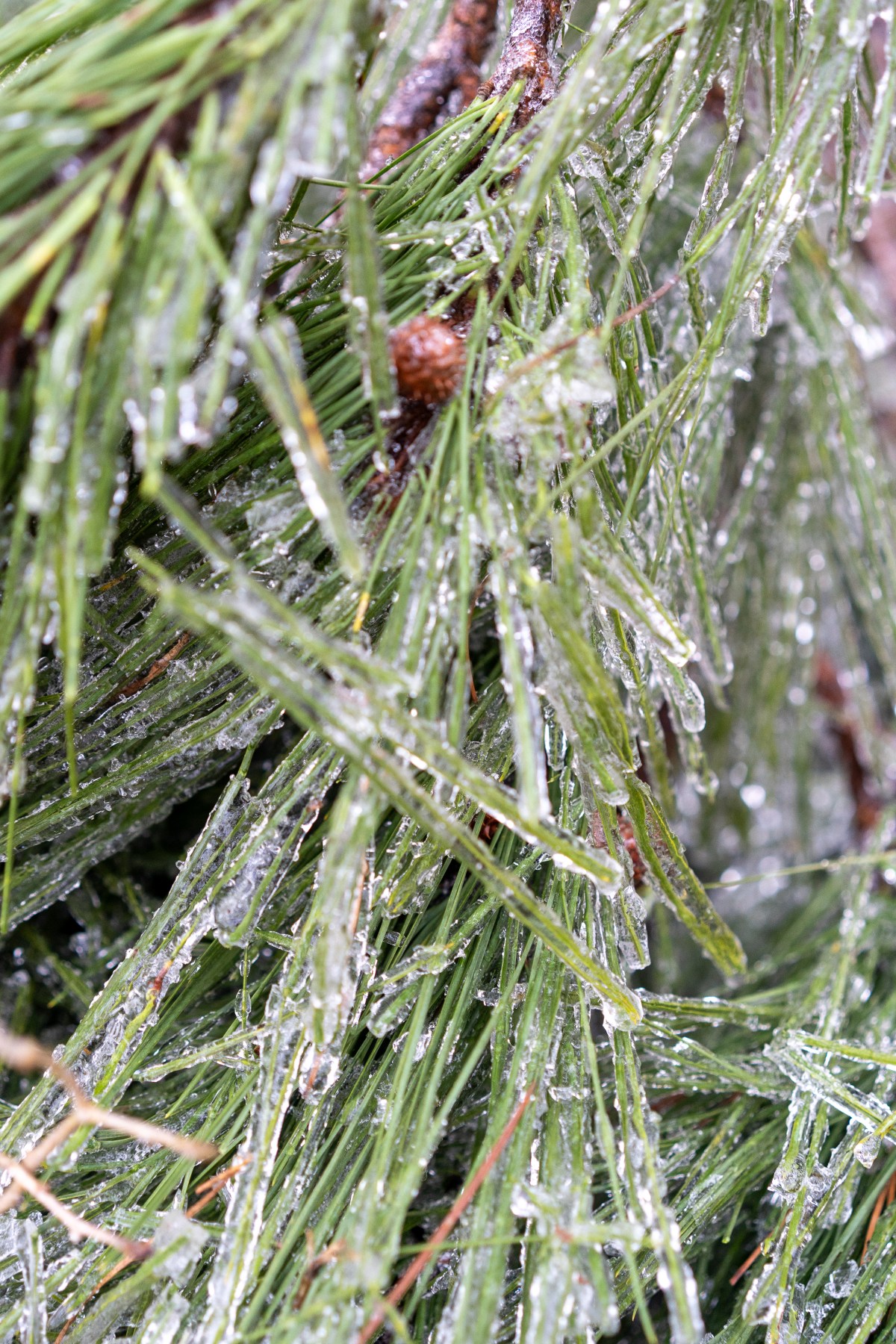
These are the photographs I took this week.

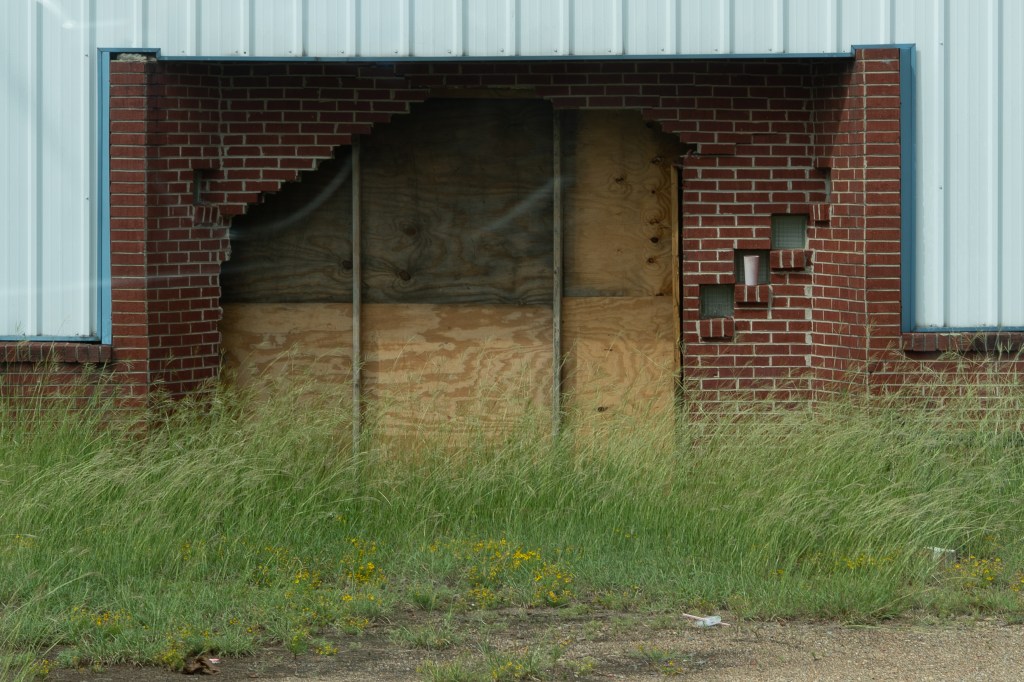
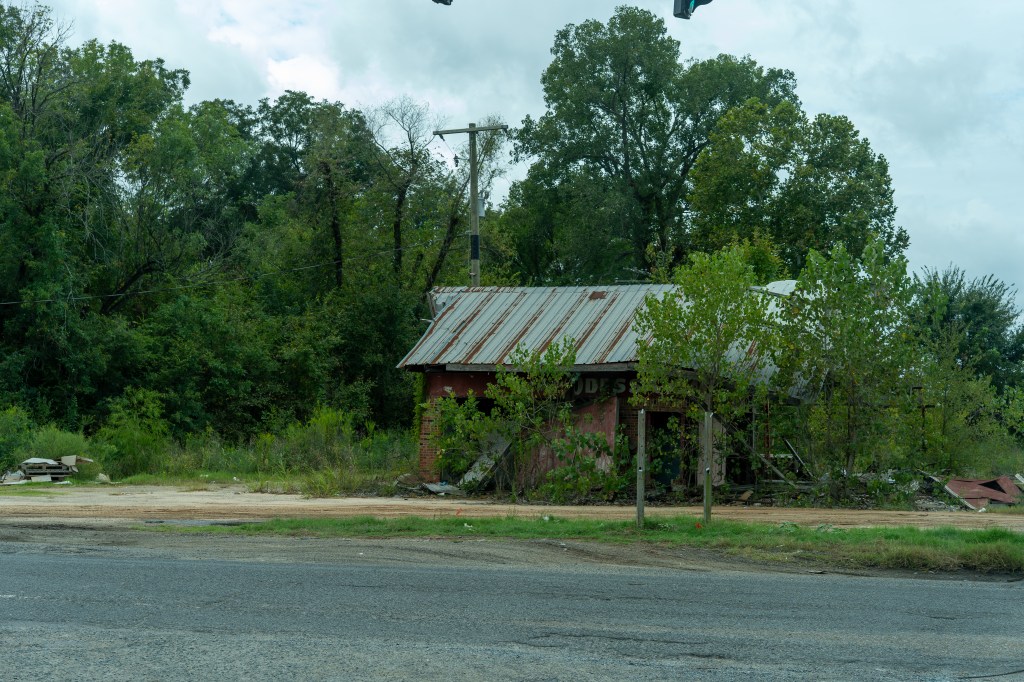
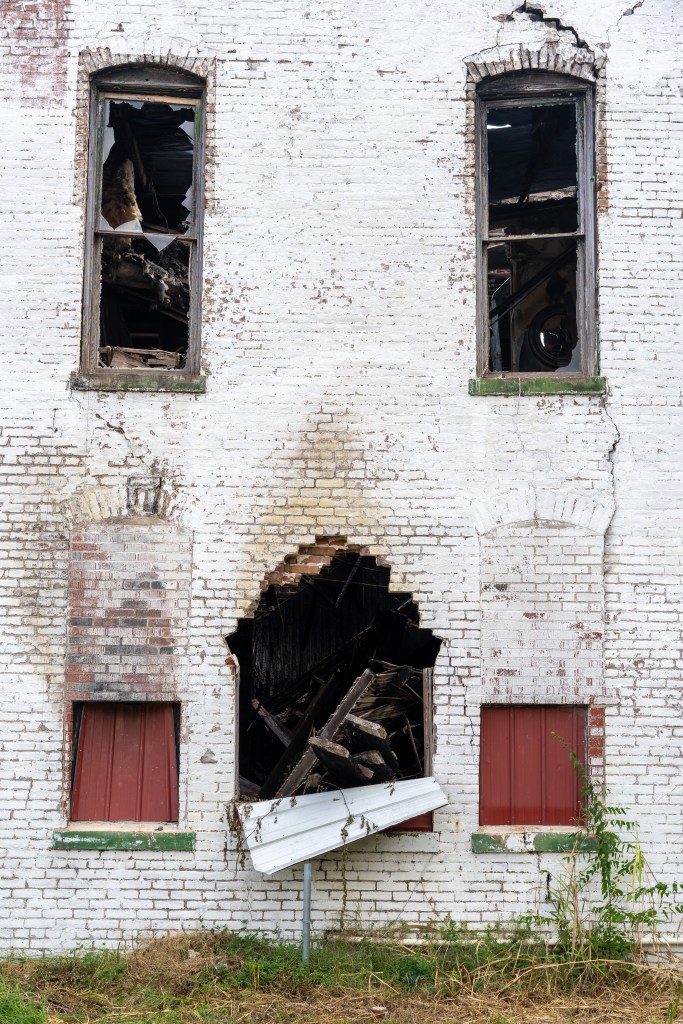
I get to travel a lot for my job. So I take my camera along for drive-by photography. It seems to me that the economy in Louisiana moves East and West along I-20 and I-10. And I live in Central Louisiana. One of the recurring themes in these photographs is decaying buildings. I don’t go out of the way to find them, I have to go out of my why to find new construction. One of the things I like to imagine is what these buildings were like in their prime, with people bustling in an out of them. What kind of clothes did they wear? How did they talk? What did they eat for lunch?

I imagine this was once a thriving little grocery store. The painting makes the pain worse for me: It is fake.
I thought this man was interesting. He was shuffling material from one medical building to another across the street.
The crack in my windshield somehow makes this picture better. The kind of obscure photograph that you imagine a special agent gets on those old detective radio shows.
Cows have a special place in my heart.
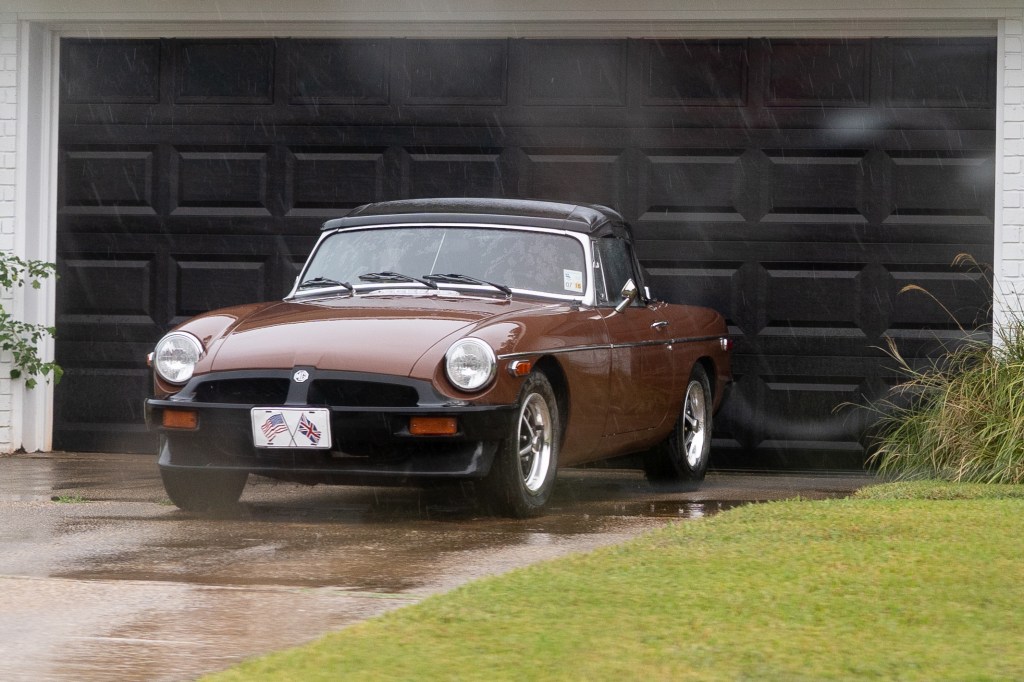
“These cars always reminded me of fighter planes.” That’s what the man driving one told me once at a gas station 20 years ago. His was green though.
I wonder what kind of art is produced here. I like that old chair.
Something about the colors on this building speaks to me.
It was exhilarating being this close to a train.
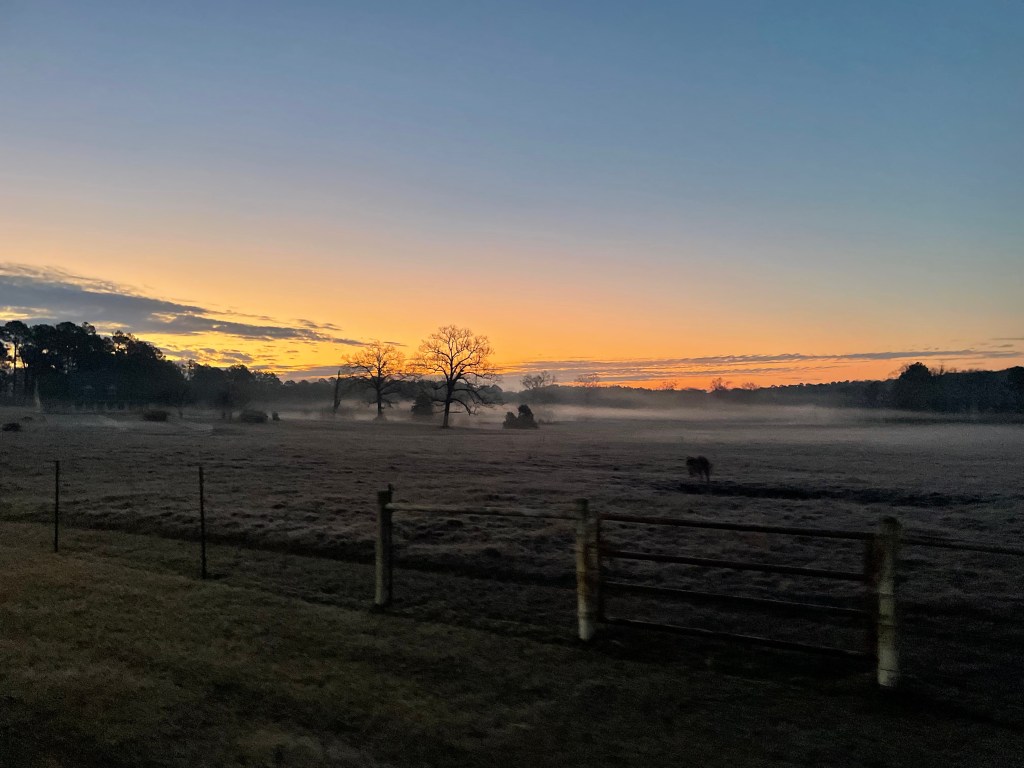
This is probably my favorite picture from this week. I love this time of the morning. I imagine this is a scene from a book that you can’t put down.
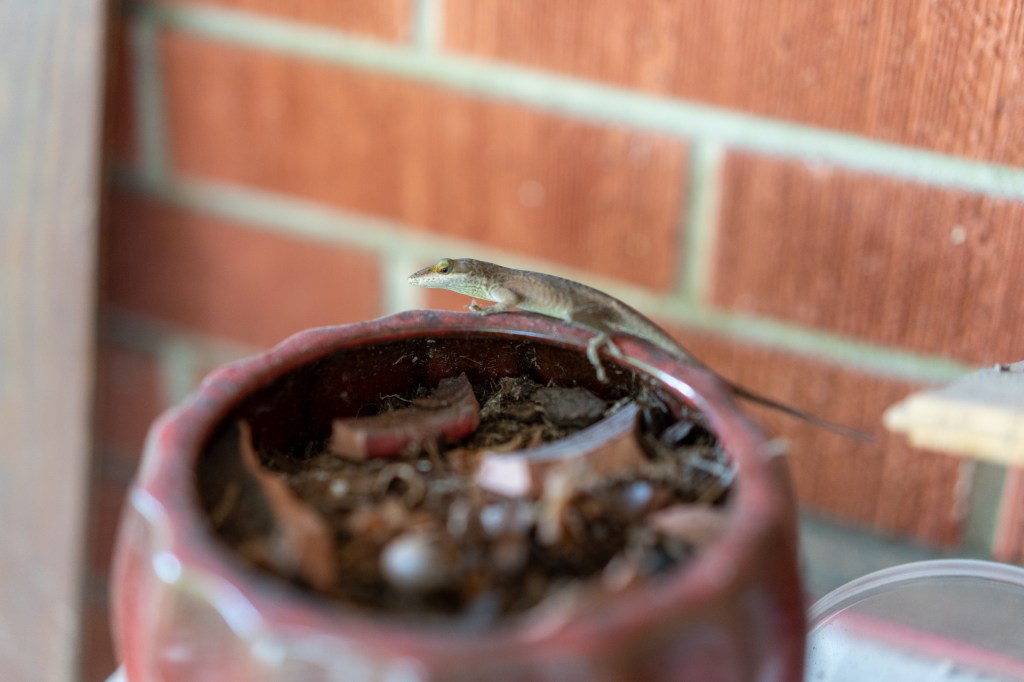
I love these little lizards. Anything that eats bugs can hang around my house.
Name the title of the book that this could be the dust jacket for. That’s the kind of thing I think about when I am composing a shot.
Another good cover for a book about a haunted house.

Are You A Photographer? And Other Existential Questions

I don’t really want to be defined simply by what I like to do.

Strange things have been happening to me in Louisiana. I’ll introduce myself to people and then they’ll start speaking to me in French.

“Zane Wells.”

Jean-Claude Villeramerette.”

People that speak French talk in italics.

Aside from that, I also get point blank existential questions like when the lady at the tamale stand in Zwolle glanced at my camera and asked if I was a photographer.

I said, “Well kind of, but I’m more of a writer.”

When she found out I was a writer the whole kitchen wanted me to take their picture with their blue ribbon. I obliged. I think it was a good enough picture. But I’m not sure I am a photographer. After all, I forgot to take off the lens cap twice while I was talking to these people. That’s not the kind of thing that photographer does.

I don’t really want to be defined simply by what I like to do.

I do like like taking photographs, but I’m not sure that makes me a photographer. And I haven’t made any money taking pictures, but does making money really have a bearing on your identity? I’ve done a lot of things for money that I did not enjoy. Maybe most of the things I have done for money I did not enjoy. Then there are some things I do whether I get paid or not.

A few years ago Sarah asked Miriam what she wanted to be when she grew up. She said, “A lady with pets.”

On occasion I forget my camera as I rush out the door and it bothers me nearly all day. Those are the days that I see the most interesting compositions. Like the man demolishing a water tower with an acetylene torch in Hodge, LA. It was one of those water towers with only one central column holding the whole thing up. The kind with clean flowing lines and no sharp edges, like one of those old enameled door knobs in an ancient house. The tank was halfway gone and a shower of sparks was raining down from the lift from which the man with the torch blazed away at the thick rusty metal. I would’ve liked to have had that picture. Another time recently I saw a freshly cut hayfield and about a thousand of those pure white cattle egrets swarming around the tractor which was still laying the hay down in a neat hearing-bone pattern. Oh it was glorious! I wish you could’ve seen it. The most recent composition that I missed was also in a pasture: A longhorn bull, a donkey, and a cattle egret in congress around an ancient live oak. I imagine that these were elected officials who had met together to discuss grazing rights and what to do about the interloping deer. But I missed it and I’m not sure a thousand words could let you see it.

What I really like is story telling. And photography allows you to tell a story without any words. I only really feel like a photographer when I don’t have my camera, but I feel like a writer all of the time.

On Learning of the Death of Charlie Kirk

I was reminded of the scripture where the angels heralded the birth of Jesus Christ.

 And suddenly there was with the angel a multitude of the heavenly host praising God, and saying, Glory to God in the highest, and on earth peace, good will toward men. Luke 2:13-14

No one else in history received an angelic concert like this at birth, because no one else had ever brought peace and good will. After all these years, there was peace on earth and good will toward men. Only because the Prince of Peace came to earth was there ever a chance of peace. It was a manifestation of God’s good will towards us: the Word made flesh. Without Jesus there is no peace and there is no good will. Alas, we rejected peace and good will, and we crucified the Lord of Glory.

And here we are today, with the same hate and venom we had then spewing out of our mouths and onto each other and everything around us. No peace. No good will. We think we know what we’re mad about, but we only know what we’d like to be mad about. Deep down in the essence of our being we know what it really is, but we don’t like to talk about it.


Because that, when they knew God, they glorified him not as God, neither were thankful; but became vain in their imaginations, and their foolish heart was darkened. Romans 1:21

We can get mad-not just mad, but cutthroat vicious-about politics and try to make the issue conservative against liberal, but that is not the issue, so no political solution will ever work. We can get parade marching angry about gun rights, but that isn’t the issue either. We can push the limits on free speech, arguing ourselves into circles and corners high on hate, but the issue isn’t about free speech. We can get fist-fighting furious about racism and social inequality; trying to blame the world’s problems on white people, or rich people, or rich white people like they are trying to teach me in college. But if there were never any white people, the issue would remain. These are all just saplings growing out of an ancient root: Sin.

I have not studied world religions because I think there is another way, I am persuaded that Jesus is the way, but I have studied them because I am interested in humanity. Understanding someone’s religious beliefs will help you understand the way that person thinks. Outside of what we can call Abrahamic religions, there is no religion with a doctrine of sinning against a deity. Hinduism, a broad, amorphous, non-codified religion is practiced in many different ways and has a concept of not following your dharma or personal destiny, but this is not sin against God. Buddhism and Jainism, both offshoots of Hinduism also do not preach sin. Many Eastern religions involve ancestor worship, and while one can bring shame upon themselves and their families, there is nothing about Sin.

We don’t like to be told that something we are doing is something that displeases God. We don’t even like to be told that there is a God. As Paul wrote in Romans 1, we do not like to retain God in our knowledge. It is no wonder when the Apostles preached repentance that they were often stoned to death. Sin is still the issue. Many of us like our sin, and we want everyone else to like it too.

Because of Sin, we live in a broken world. But thank God, where there is sin, there is so much more Grace.

…But where sin abounded, grace did much more abound… Romans 5:20

Phrasing

Maybe he meant, Young man you don’t understand how good you really got it.

Do you remember when you were in high school and the whole English class had to take turns reading Shakespeare’s Macbeth out loud? Our teacher assigned a different cast for each scene so we could all get a chance to experience public speaking anxiety. You never knew when it was your turn; you just waited in agony; your only consolation was how bad your classmates were doing. Everyone was saying the right words, but hardly anyone was really confident in their understanding of the text, despite any confidence they pretended to have in pronunciation. They were simply words without meaning: noise. It would’ve been painful to endure if we weren’t so clueless. I have a feeling that some of us thought we were doing a good job, but I don’t think anyone in my class went on to pursue an acting career. As bad as it was, I still enjoy hearing people read out loud.

I can hear us now just droning on…

Macbeth: If we should fail?

Lady Macbeth: -We fail?

But screw your courage to the sticking place

And we’ll not fail.

Now think for a minute of the old man you used to see at the grocery store—it helps if you had a job at a little grocery store while you were in high school—who had worked as a mechanic for 50 years and had to drop out of middle school to help out on the farm. He couldn’t pass an English class if his life depended on it, but it didn’t really matter; even with atrocious grammar and a vocabulary half consisting of words that could not be found in the dictionary, he could still create a sentence that would stay with you for 20 years because he knew exactly what he was talking about.

“How you doing today Mr. Wallace?”

“I’m doing fine, and you?”

“Pretty good.”

“Pretty good hard to beat.”

Pretty good hard to beat has been incorporated into my language. It may seem just like words on paper-or a screen-but it was the way he said it that let you know there was a lot more meaning that went into that sentence. Maybe he meant, Young man you don’t understand how good you really got it. I think about that old man whenever I chance to use this phrase. Whatever he may have intended, it certainly resonated with me.

That is what we call in music phrasing. Phrasing is how a musician puts a sequence of notes together into a musical thought, and how they interpret written music. It is the reason that Blues musicians could limit their musical vocabulary to the 5 note pentatonic scale and make people cry. It is why folk music can be so simple in its form, but still able to make us recall memories of places we’ve never been and times in which we never lived. And the same reason that beginner musicians sound like beginner musicians: their phrasing is off somehow. They may be playing the right notes-even reading the right notes from a master composer-but still unable to convey the real meaning of what the composer was trying to say.

The blues is feeling good about feeling bad.

Phrasing is more than having a nice voice, or tone. But I imagine that won’t hurt, but I’m not convinced it helps all the time either. It doesn’t matter how nice your voice is if you don’t have anything to say. Or if you are only going to regurgitate words that came from someone else’s heart.

It took me a while to really appreciate Shakespeare, and the closest I have come to understanding it was to see a play performed by actors who understood it at least better than me. I took Sarah to Blackfriars Theatre in Staunton, VA to see a All’s Well That Ends Well and Two Gentlemen of Verona. It was a far cry from bending over the text book following along as your buddy in class-who had never read a book for pleasure in his life and barely had a grasp on 21st century American English-stumble through his assigned lines without the faintest idea of the plot. Those Blackfriars performances have stuck with me and I would like to go back again some day.

Phrasing isn’t any one thing, but a host of subtle things like tone, dynamics, timing, space, and feel. These are all musical terms that could each have their own textbook and university course. So whether speaking or playing and instrument, how do you learn to phrase well? For a start, I think it is important to know what you want to say. For a musician, the most important part of phrasing is to get emotionally involved with the music. I think the best way to do that is to pay attention to the lyrics. And that means you need to understand the lyrics. People can tell when you don’t know what you are talking about. You don’t have to master the language of music-or the English language for that matter- to say something that will connect with a listener, but you do need to master your vocabulary, no matter its size. You don’t want to sound like someone who picked a random $40 word out of a dictionary and tried to force it into a $15 vocabulary. It will stick out like a Ferrari in a trailer park. If you want to build your vocabulary you need to read good stories-and listen to good music. A well written novel has the power to increase your emotional intelligence. Good readers understand empathy.

Even a fool, when he holdeth his peace, is counted wise: and he that shutteth his lips is esteemed a man of understanding. Proverbs 17:28

If you want your words to carry weight, don’t waste them.

200: A Milestone in Writing

This is my 200th article for what began in 2016 as Mostly From Memory, a blog where I started sharing short essays on my memories from growing up in a small town in Alabama. Since the statute of limitations has not run out on a few events, I am kind of out of material for the childhood stuff unless I want to run the risk of getting sued. Or I could start making stuff up. Which is how I think that some authors get into fiction. You take a piece of story that really happened, but you change the names of the people and move the location to somewhere far off like Pell City, Alabama, and describe some of the characters as prettier or uglier than they really were and add some extra details like an embezzling scheme, a murder, and some romance or dragons to spice up the plot a little bit. You know, just like cooking. You begin with a chicken breast—that’s the part that really happened—but it could really hurt someone if you serve it raw. The fiction part comes in with how you decide to present it: grilled, fried, boiled, fricasseed… And a good cook can make just about anything palatable, if not spectacular.

I haven’t gotten into fiction yet, but I have branched out and written about a lot of topics like grief, obituaries, music, biographical sketches, and social and cultural constructs, and how to overcome them. It is this sort of material that I am drawn to write about.

This makes me ask the question, has my writing style changed? I think it has changed in the same way that a person ages. If a man is still talking and behaving like a 20 year old at 40 then I think you would agree that something is off. And when a 40 year old takes measures to alter their physical features to appear 20, whether people pretend along with them or not, we all know that it is fake. I feel that my writing has aged with me.

And maybe my readers have come and gone just like friends in different in different stages of life. I may have lost some of my readers when my material shifted, and that is understandable. Just like when you take the last bicycle ride with your neighbor who is getting his driver’s license the next week. You’re still friends, but he is going places you can’t go now. And you spend less time together. Then when you get your license, you’ll probably go to different places than he went. And you meet new people who are less interested in your past than they are your future.

I did a lot of looking back when I first started writing. I felt the need to put some of those oral stories into writing. I am glad I did because I didn’t realize how quickly my sources would move on without warning to a place that I can’t go yet, taking their oral stories with them. I have been looking inward a lot of my recent material. But I am trying to practice looking out.

I think I am beginning to understand why older people say less.

If you have been with me since the beginning, thank you. You may not have noticed the shift because you’ve grown with me. But if you are an occasional reader, you may have noticed changes just like your great-aunt noticed when she only saw you twice a year at Easter and Christmas. And I guess that is what I want to talk about today: I really just want to write articles that make people want to think about things that matter.

I think people matter. I think how you treat people matters. I think motives and attitude matters. I think education matters. I think that morals matter. I think that mental health matters. I think that physical health matters.

Above all, I think truth matters.

Dementia

“Mr. Zane, that little old lady back there doesn’t even know her name. All she does is mumble, but she just sang I Saw The Light along with you.”

I have been blessed with a unique opportunity to sing at the nursing home as a part of my job. I have lost count of how many nursing homes I have visited. One of the most interesting and moving experiences I have had so far is singing in the memory care units. The memory care units I have visited have been in assisted living centers, not nursing homes, and are for residents who are dealing with memory loss due to Alzheimers or dementia. These units are usually locked down so the residents won’t wonder off and get lost. As I am being escorted through the halls, the workers always try to mentally prepare me for what I might expect as they punch in secret codes that take us deep into heart of the building. They don’t realize that that kind of stuff doesn’t bother me. I’ve probably been to more nursing homes than they have, and even preached at the Methodist church. I always keep my eyes closed while I’m singing anyway.

I’m not a licensed music therapist, but I have seen the power of music first hand. When the director of the unit walks up bawling after a concert and says things like, I’ve never seen that man talk before after the man just talked to me for three minutes. Or There is a little old lady back there that doesn’t even know her name. All she does is mumble, but she just sang I Saw The Light along with you. This kind of thing happens often. I cannot tell you what these people are diagnosed with, but I can tell you that there is a moment when the light comes on in their eyes. And it is a moving experience.

I often leave from these brief concerts thinking about those people, locked up in a wing of some multimillion dollar facility. Each person represents a heart wrenching story of children coming to grips with a parent whose mental state has deteriorated to an unrecognizable point. When did the children notice? Did their parent, who once possessed a sharp intellect and a profound pool of wisdom become foggy in their memory and erratic in judgment? Was there a sudden change in personality from a caring and compassionate nurturer to a mean and selfish miser, or was the change gradual? At what point did a brother call a sister and say, I think something is going on with Dad? And I wonder about perhaps the hardest conversation of all, Dad, we’re concerned about you, I think we need to get you some help.

I imagine a lot of that depends on the state of the relationship between children and parents. Disfunction, strained relationships, and estrangement is the sad reality for many families, and would make an already extremely difficult situation nearly impossible to navigate.

I have talked to quite a few people who have had this experience with a parent. They tell me that looking back they could remember odd changes in behavior from years before that now made sense. They talk about the parent leaving long before the body expired. And the sense of relief after their parents’ death, accompanied by a slight sense of guilt for being relieved. They also speak of the relief of knowing that the unkind words spoken to them were the disease and not the parent.

These are all the things I think about when I tune up my guitar in a memory care unit. I look for that light to come on. I try to sing a wide variety of hymns and gospel songs in hopes that one of them will resonate with a lingering memory behind a set of blank eyes. I also am painfully aware that I may not be able to reach someone if they have no memories of any of these spiritual songs. Or maybe the music has already died and there is no recalling them.

I sing anyway. I never know who is listening.