How To Write About Grief

I have been working on this draft for almost a year. The fact is, I don’t want to write about grief. I would rather write something that will make you laugh. Laughter, as the scripture says, does good like a medicine. But I feel compelled to write about grief. And reluctance to write about it won’t make it go away anymore than ignoring makes actual grief go away. It is natural to want to avoid anything to do with grief. This is a truth: We cannot avoid the events in life that will bring us grief. Dealing with grief is part of living.

Blessed are they that mourn: for they shall be comforted. Matthew 5:4

Do you remember when you were a little kid and lost your parents at the grocery store because you were not paying attention? Losing your parents as an adult feels the same way except you are little embarrassed about calling out for them. That crying out is grief. I understand that everyone grieves differently. What has helped me has been writing my feelings. Maybe that can help you grieve too.

Stages of grief: denial, anger, bargaining, depression, acceptance.

When an event happens that triggers grief it is natural to feel these emotions, but that doesn’t change the fact that we can often feel embarrassed because we are experiencing them. After all, aren’t we adults who have everything together? Being shocked is an uncomfortable feeling. Especially for us who enjoy stability, quiet, and don’t like change. Denial can make us begin to question things we know are true. Being angry can also be humiliating because we feel like we have lost our self composure. It is where we say things like This is not fair! This is wrong! and we are further frustrated because we know what we are saying is true, but there is nothing we can do about it. Bargaining when you are unstable will usually get you a bad deal. You’ll end to doing something rash or in haste. Depression is a life sucking monster that strangles us to inaction. I’m not a licensed counselor, but I believe that one of the reasons that people end up going to counseling for grief is because they never complete the process but get hung up in one of the stages. Whenever that happens, no matter the stage, bitterness can develop.

Follow peace with all men, and holiness, without which no man shall see the Lord: Looking diligently lest any man fail of the grace of God; lest any root of bitterness springing up trouble you, and thereby many be defiled; Lest there be any fornicator, or profane person, as Esau, who for one morsel of meat sold his birthright. Hebrews 12:14-16

Bitterness is not merely an emotion, it is a parasitic root that gets in your spirit. The things that grow out of this root can’t be dealt with on the surface. Dealing with the surface is like cutting a stubborn hedge down to the ground only to realize that you simply pruned it and now it is destined to grow back even more unruly. Bitterness is a deeply inward issue that not only troubles you, but defiles many around you.

In the case of my Dad I believe I began the grief process as soon as he received the cancer diagnosis. I was shocked and tried to deny it: Cancer was something we heard about other people getting. I was scared to death of cancer as a child. I didn’t know exactly what it was and that made it even scarier. Shock and fear are not the same. I was not afraid when I heard the news, I was paralyzed with shock. I think I walked around numb for a few days.

I don’t remember being angry, but that doesn’t mean I wasn’t. And probably a big part of that is I believe in the power of prayer. I should say that although this article is about how writing about your feelings can help you through grief, it is my ardent conviction that prayer works far better. Prayer is where I did all my bargaining.

I do remember the depression stage. I didn’t want to do anything. I knew there was nothing I could do, yet I felt guilty for not doing anything and not being able to do anything. Whenever I experience depression, I eat. I think I gained 20 or 30 pounds following my Dad’s death.

I reached the acceptance stage one night before he died and while he was still coherent. That’s when I sat down and wrote this article in acceptance of his imminent death. Portrait of a Southern Gentleman, or Things I Learned From My Dad. It is a great comfort to know that he was able to read it. And he was able to brag on me a little bit, which is a source of laughter for me. I can tell you now that when I wrote that article I poured all of my emotions into those words. I cried the whole time. There was something special that happened when I was able to share those words with everyone. To know that someone else was able to experience my grief somehow made the burden lighter.

I will never forget the feeling of release when my Dad finally passed. It was as if I had been walking around carrying a couple of cross ties and somehow they just floated away.

From the end of the earth will I cry unto thee, when my heart is overwhelmed: lead me to the rock that is higher that I. Psalm 61:2

“You need someone to walk with you through the valley of the shadow of death. And when your heart is overwhelmed you will need someone to lead you to the rock, because you can’t find the way yourself.”

I did the same thing when my Mom died but she didn’t get a chance to read it, and knowing this I think allowed me to achieve a greater degree of acceptance.

Since then, I have made writing a part of my grief process. Which seems like an odd thing to say. I never thought about death as a child, but it is a steady growing part of my life now that I look more and more like Alfred and less and less like Bruce Wayne. Writing has helped me grieve the loss kids that were in my youth group-Oh Brandon!, family-Funeral Processions , Dan Theo Wells 1935-2021 , and dear friends- J.L. Parker. Not to mention countless things I have written in my journal.

So how do you write about grief? I think it is important to establish that putting your feelings and thoughts into written words while you are grieving is one of the most honest and genuine expressions of yourself. There should be no pressure to write to impress someone. This is you and your feelings. Putting those thoughts onto paper is a conscious going out of yourself. You have captured and placed in the visible an idea that has been floating around in the invisible. You have conquered that thought, and it can never escape. No one is grading you on content, grammar, or proper punctuation. And you do not have to share it with anyone. No one may ever see it. But it may help to allow a friend to help bear your burden. I know it does for me.

I still miss my parents every day. And I probably always will. I feel strong emotions every once in a while, but never denial, anger, or bargaining, only acceptance, peace, and most often sadness. If it gets bad I’ll go back and read what I wrote when it was still fresh and that helps.

I wish I could’ve talked to my Dad this week, because I am in a new process of grieving. But I already feel better having written this.

Clapping: Your First Lesson in Rhythm

I have a little nephew and all he knows how to do is fill up diapers and clap.

O clap your hands, all ye people; shout unto God with the voice of triumph. Psalm 47:1

Did you grow up around live music? If so you probably clapped along, and probably never had to be taught how to clap. Its one of the first things you ever did. I have a little nephew and all he knows how to do is fill up diapers and clap. Its just in us naturally and most of us never even think about it.

Every once in a while I get to lead worship and I like to sing old songs. You know; country songs. Duple meter hillbilly gospel music. You can call me nostalgic and you’ll probably be right, but I also once had a kid rap at Youth Camp. You can’t please all of the people all of the time. Anyway, whenever I lead one of the these old upbeat gospel songs out of the hymnal there is usually one or two people that clap opposite of everyone else. And it makes it hard on me. Here I am, not really a singer but giving it all I got trying not to blow an artery while singing in the rafters, hoping to remember to give signs to the poor praise singers who are not hillbillies, and somebody is clapping off beat.

“Bluegrass is based upon a complex rhythm scheme called the boom-chuck boom-chuck. We kindly ask that you do not clap on the boom, only on the chuck.” -David Crowder

I feel like this man Crowder is speaking from the frustration of leading a song with a group of audience members who do not agree on where the clap feels right. And that is what I am here to talk about: How do you feel time?

Sincerely, I do not expect every audience member to be a musician and I wouldn’t discourage anyone from clapping in praise, whether they are in time with the music or not. This subject is interesting to me because time/feel is one of the things that makes music unique.

The “Boom-Chuck” rhythm that Mr. Crowder is referencing is the down beat (boom) and the back beat (chuck). In a bluegrass band the boom would be the stand up bass, and the chuck the mandolin. This eventually manifested itself in the drum kit with the kick drum playing the boom and the snare drum playing the chuck. So when Chuck Berry sang “Its got a back beat you can’t lose it” in Rock and Roll Music he was talking about the snare providing the back beat.

I was shown as a child, by a host of witnesses now passed on, to clap on the back beat. I didn’t grow up with a drum kit in church, which is where I did all my clapping to music. The clapping congregation were the timekeepers in my little church. I am sure I would’ve gotten in trouble from Mom for purposefully clapping on the down beat at church. And honestly, I have to bite the inside of my lip and furrow my brows like I am doing long division just to be able to clap “wrong”. Not because I can’t bring myself to do it, but because it is unnatural to me. But that is the musical tradition and environment that I was raised in.

When I got to Gateway College of Evangelism and joined the choir I was surprised to learn that even some of those blonde-headed, blue-eyed, midwestern yankees with funny German last names were just learning for the very first time in choir practice that you clapped with the snare drum in Gospel music. I thought man these people are backwards. Looking back though, Polka and Bluegrass musical traditions feel time very differently and emphasize different beats. And you might get odd looks for clapping on the back beat at Polka or Klezmer concerts. (I may be wrong about that, I have never been to either, but a lot of Polka is in 2/4 and puts strong emphasis on the downbeat. Klezmer music often has more elaborate clapping schemes compared to the simple backbeat.)

My Uncle Melvin believes that all this rhythm stuff we are talking about is made up, especially the part where you can count. I thought he was joking but after I talked to him about it I think he is being genuine. Maybe he represents a large swath of people who have no idea what I am writing about. I kind of doubt it though. I believe that many of you, especially if you grew up in a church that encouraged clapping, or around live music in general, will have a natural desire to move or clap when you feel a song. It is how you feel that song that is fascinating to me.

I made this video to demonstrate this topic. I said something in it that I want to set straight.

“There’s nothing worse than trying to lead worship with a group of people that are not in agreement on where to clap.”

That is not true. No one clapping is far worse. Clapping is an act of praise. Fortunately we are not being graded by The Almighty on how good our rhythm is. It doesn’t even have to be rhythmic. He’s happy with noise.

Make a joyful noise unto the Lord, all the earth: make a loud noise, and rejoice, and sing praise. Psalm 98:4

Church Clothes: An Essay on Discomfort

Do you remember when you were a little kid and your momma would make you wear really uncomfortable clothes to church?

I’m supposed to be packing my church clothes for a Youth Conference that I am attending later this week, but I am procrastinating. This is what I do when I procrastinate: write essays. This essay is about church clothes. Having been going to church for 37 years-and 9 months before that-I have a long and conflicting relationship with church clothes. I was raised-and firmly believe- that you ought to dress your best when going up to the House of The Lord. Whether that is a pair of cowboy boots and your cleanest blue jeans, or a business suit and tie. This is the rub: I really enjoy looking nice in a suit and whatnot, but I also really enjoy being comfortable. And unless you are just the picture of health with a trim figure like a Greek statue, or have you enough money to pay someone to make you a suit of clothes that fit your exact body proportions, there is a strong chance that your suit is just going to be plain uncomfortable.

I’m not convinced that comfort should be the first priority when dressing for church.

Do you remember when you were a little kid and your momma would make you wear really uncomfortable clothes to church? I remember one Easter having to wear a button up shirt and these teal dress pants. I hated them. I looked like I stepped off of page 37 of a JC Penney catalog from 1992. Not only was I required to endure these clothes all through church, but I wasn’t allowed to change until after the egg hunt at Uncle Dave’s. I still think that is how a lot of people feel about dressing for church.

Most of the time, I do not really pay attention to what other people wear. And from a scientific study I did in college on this topic where I wore the same suit and tie for a solid week to see if anyone would say anything, I don’t think most people pay attention either. But it is hard to not notice when someone feels uncomfortable in their clothes. Especially a suit. I used to look out my window at work down at the courthouse steps and watch young men walk unsure of themselves in an ill-fitting suit to a matter of grave concern. You see uncomfortable people at funerals and weddings, their awkward conversations informed by clothes that they don’t really understand how to behave in.

There is a way to wear a suit like a lawyer or like you have a court date.

Here is a people watching experiment for you to try on a Sunday afternoon: go out to eat at the most crowded restaurant you can find right after church. Better yet, go to a buffet. Try to guess which people went to church and which people just decided to go get some Chinese food. It should be easy to tell by what they are wearing. I made a Bingo card for you to fill out.

Suit
&
T-Shirt
Tucked in PoloElderly couple with matching died hairGold-buttoned blazerHebrew letters on an article of clothing
Penny LoafersSuit
&
Tie
PaisleySun dressChurch Logo T-Shirt
Cowboy
boots
Braided
belt
Child in a sailor suitSeersucker“Praise the Lord!”
Greeting
Bow TieWingtip
shoes
“Production Team”
T-Shirt
SuspendersPleated Khakis
High HeelsWestern
Shirt
ComboverChurch Logo
Hat
Square toed dress shoes

Uncomfortable: that is how dressing for church felt until I started paying attention to girls around about Middle School. It was then that I quit depending on Mom to tie my tie and started wanting to pick out my own suits and dress shoes. I think everyone goes through an identity crisis sometime during Middle School. Being interested in dressing yourself, while not knowing how to dress. The real conflict can be articulated thus: I don’t know what I want to wear, but I know it isn’t what Mom has been choosing. It takes a while to realize that your Mom had pretty good taste. Aside from maybe the teal Easter pants.

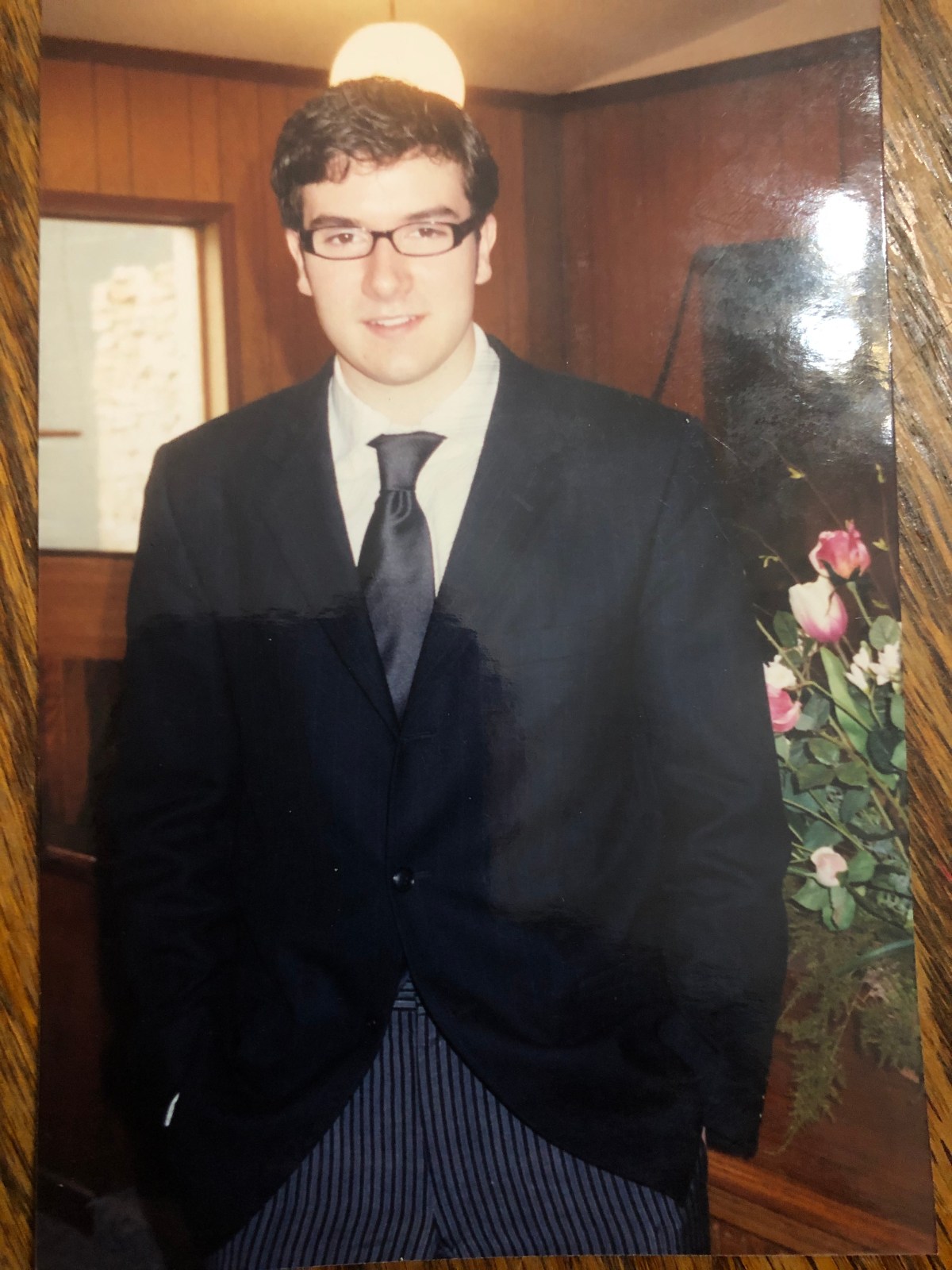
I got these hickory stripe tuxedo pants from Zach. I don’t know if I ever got cooler than that.
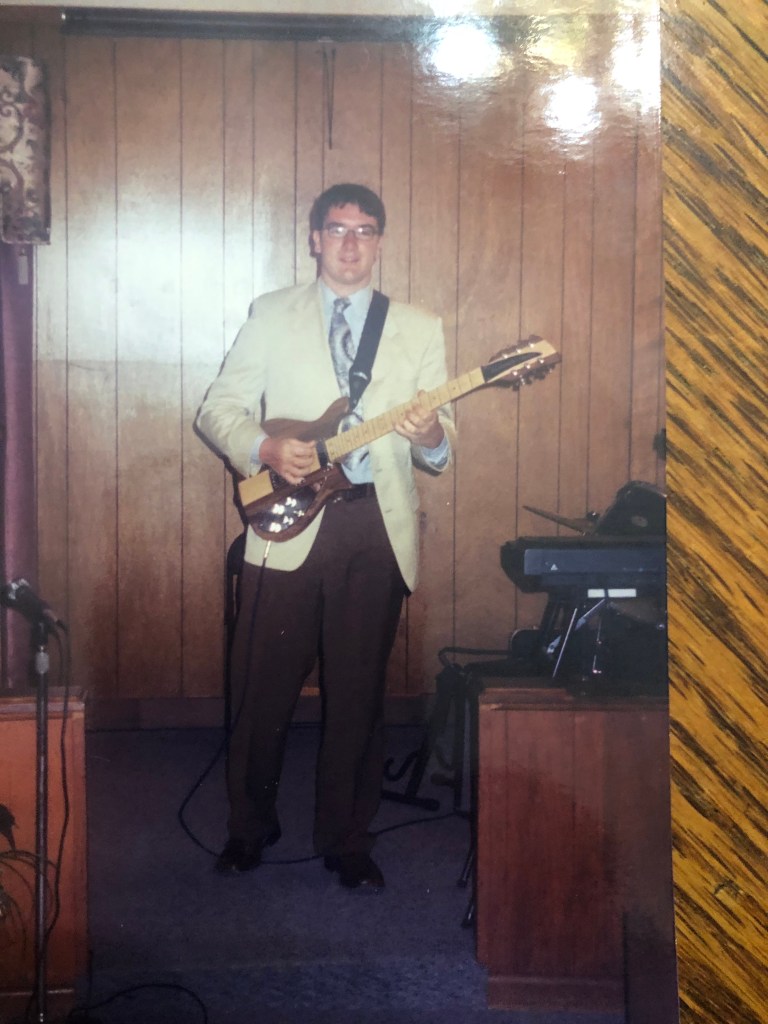
I’m less worried about my clothes and more interested in that guitar that I might’ve should’ve kept. Alas, it didn’t sound near as good as it looked. I suppose there is a lesson to be drawn from that.

Fashion is so fickle. When I was a teenager I probably spent far too much money on dress clothes. Trying to be fashionable, or cool. Some of those clothes are cool again, but probably won’t be for long. I will see teenagers this week at PEAK wearing stuff similar to what I wore 25 years ago.

My sartorial ideals have always been too lofty for my meager salary.

It took me a long-a very long-time to figure out exactly what kind of church clothes (or any clothes for that matter) that I wanted to wear. But Today, I feel that I am closest to my real essence when I am wearing a suit and tie. Ultimately, I think I accidentally took less cues from my peers and current fashion trends and more from history while establishing my wardrobe standards. And it happened by seeing old photographs not necessarily related to fashion from say 1962 or 1937 of a men in suits and realizing I would wear that today. When you take this classic approach, you are making a statement: I’m going to wear this and be confident and comfortable no matter what is trendy. This means that you may or may not be in style as the years pass. But what you will be, is established. And possible timeless. And we need more established people.

Well, I have to go pack.

The Cows Are Out

I saw these calves out of the fence this morning.

I saw these calves out of the fence this morning. And I just felt like I needed to tell someone. It seemed like the responsible thing to do. So I’m tell you since I don’t know who owns these cows. In fact, I don’t even know anybody that lives on the road where I saw them. I didn’t grow up in this town.

I imagine that whoever owns the cows will take care of the situation. Promptly. It might be a nuisance to have to stop what they are in the middle of doing and go try to round up loose calves. But this is probably not their first rodeo. And they’ll probably get the cows back in the fence and mend the fence right away.

This wasn’t the last time I caught these two yearlings out of the fence.

Things like that get taken care of quickly on the farm. I doubt there will be a meeting with all of the department heads to see whether it is a real problem or not and who will take responsibility. Or follow up departmental meetings to see who will be assigned to an interdepartmental special task force team. And no third meeting with the reluctantly volunteered staff to develop a plan of action. I bet just one man and a sack of feed took care of this issue.

Not all problems are this simple. Yet I am afraid that we often make a more complicated solution for problems that are even less important than cows being out.

An AI Assistant’s Performance Review

Since the AI Assistant comes with my WordPress website, they are essentially in my employ and are subject to an annual performance review, which I have decided to share with you.

I must confess. I have been asking for a little help with writing from an assistant: Artificial Intelligence Assistant. You do not have to convince me that this intelligence is artificial. Since the AI Assistant comes with my WordPress website, they are essentially in my employ and are subject to an annual performance review, which I have decided to share with you.

Good afternoon AI Assistant. It is time for your annual performance review. First, let’s take a look at your job description together.

AI Feedback on Post: Check for mistakes and verify the tone of your post before publishing.

Lets start with the positive. I appreciate that you always perform your work in a timely manner and are available around the clock. I have noticed that your feedback on my articles frequently use phrases like deeply reflective, introspective, and heartwarming. Thank you. As a words of affirmation person that means a lot to me.

Now for the negative. Sometimes I wonder if you understand my humor. It seems like you have missed the tone on quite a few articles and I am not sure that you are familiar with the concept of satire. We need to work on that. My audience is not computers, and their intelligence is real. So when I write something humorous or satirical, I don’t need you to suggest that I change it to be more inclusive or offer suggestions to resolve the issue. What I really only need from you… is spell check. If your comments weren’t so absurdly entertaining I would have let you go a while back. Lets take a look at some specific feedback that you have given me for various articles.

Rich People Things

When reviewing this article you stated “The content is written in English.

This is the kind of feedback I expect from a fifth grader writing a book report with a word count requirement.

Consider focusing on a specific theme or topic to maintain reader’s interest.”

Ok, that one stung a little.

“Develop a clearer structure or storyline to guide the reader through your thoughts.”

I’ll have you know, that my thoughts are not clearly structured. I’m trying to make the reader think.

“Try to incorporate more descriptive details to make the narrative more engaging.

The Cyclist’s Guide to Evading Dogs; or Dog Stories for Practical People

Now in your defense, I’m not even sure my audience will understand what is satire and what is genuine feelings in this article. And for once, I don’t want to offend a dog owner. That’s why this article is not published.

The content contains valuable personal experiences and tips for dealing with dogs while road cycling. It provides practical insights and a reflective narrative that resonates with fellow cyclists. To enhance the impact of the content, consider including additional safety measures or alternative strategies for peaceful coexistence with dogs on the road. Additionally, incorporating a concluding summary or call to action regarding responsible pet ownership may further engage the readers.

Did you even read the article? I am at war with the dogs. I am not interested in peaceful coexistence with dogs on the road. I thought this article made it clear.

These dogs are a lot happier than the dogs I wrote about. And they are running the wrong way. Not to mention the cyclist is on the wrong side of the road.
If all the dogs were this lazy and happy I wouldn’t have written the article in the first place. And the dogs wouldn’t have bitten me. I will overlook the cyclist on the wrong side of the road because of the flower pot in his lane.

Controlled Burn

The content shows a strong sense of nostalgia and storytelling, effectively conveying the excitement of setting and tending a fire. However, it might be beneficial to include a brief disclaimer or safety note regarding controlled burning to promote responsible practices. Additionally, providing insight into proper safety measures could further enhance the piece. Finally, considering the potential influence on readers, it’s crucial to emphasize the importance of adhering to local regulations and safety guidelines when engaging in controlled burns.

I worry about your reading skills sometimes.
This is only marginally better.

Communication: Implicit & Explicit

The content demonstrates a clear understanding of the significance of high and low context communication, using various examples to illustrate the cultural differences. To improve, consider summarizing the key points for easier reader digestion. Additionally, providing specific real-life scenarios relating to high and low context communication would make the content more engaging and relatable for the audience. Consider incorporating actionable advice for individuals dealing with high and low context communication differences in their personal or professional lives.

Easier reader digestion?

Radio Kid
This kid looks like he is playing a video game and not really listening to the radio. I quite like this image though.

Happy Mother’s Day

At first glance this looks like a nice picture until you see the little boy and wander what is he doing with that third hand.
This looks like Hallmark hired Norman Rockwell to make a Mother’s Day card and paid him by the person. I like to think that figure outside is dad waiting on everyone to come take the family pictures.
I asked you to make it look like Norman Rockwell painted it. This looks like Shania Twain got hired for a Martha Stewart Ad.

The personal reflection adds a heartfelt touch to the piece. To enhance it, consider adding more diverse perspectives on motherhood to make it more inclusive. 

What do you mean by adding a more diverse perspective on motherhood? What if I only have one perspective? After all, I only have one mother. You’ll have to ask another writer if you want another perspective. Make it more inclusive? Did you even read the essay? Motherhood is an exclusive club. No exceptions.

Additionally, offering practical tips or insights for mothers could further engage readers.

That’s just what a mother wants to hear on Mother’s Day: parenting tips-nay-mothering tips from a freelance writer man. I might as well publish a How To book for Mothers and sell it.

Quite honestly, AI Assistant, you fail me in the one area that I really need you: catching basic grammar and spelling mistakes. We’ve got to work on that a little better.

Disclaimer

I want it to be clear that my inspiration for writing is genuine and AI does not write articles for me. Why would it? I am not getting paid for this and there is no pressure to produce.

One of the reasons that I write is to share emotions and personal thoughts with whoever wants to read them. Writing is cathartic for me. I think this is one of the reasons that the AI Assistant doesn’t fully understand me. How can something soulless understand someone who is baring their soul?

AI seems to scare some people. Maybe I should be scared too, but I’m not. I view it like any other tool that has come along through the ages. Honestly, I have found very little use for it while writing other than its entertaining feedback. I have been running the AI assistant whenever I complete an article mainly out of curiosity, but I don’t think I have ever taken a suggestion from its feedback. In fact I often vehemently reject AI’s feedback which is what this whole article is about. This is my website, and I put a lot of effort into what I write on here. If AI were writing the material on here I would feel like a big liar.

Something that I am concerned about is how hard it is getting to be to tell what is written by a human and what is written by a robot. This is a problem that teachers are facing with students on writing assignments.

In one sense it is flattering to have someone tell you, “I started a blog and had AI write a few articles about ________ in the style of Zane Wells.” But it is also a little creepy to think about.

What strange times we live in.

AI Art Gallery

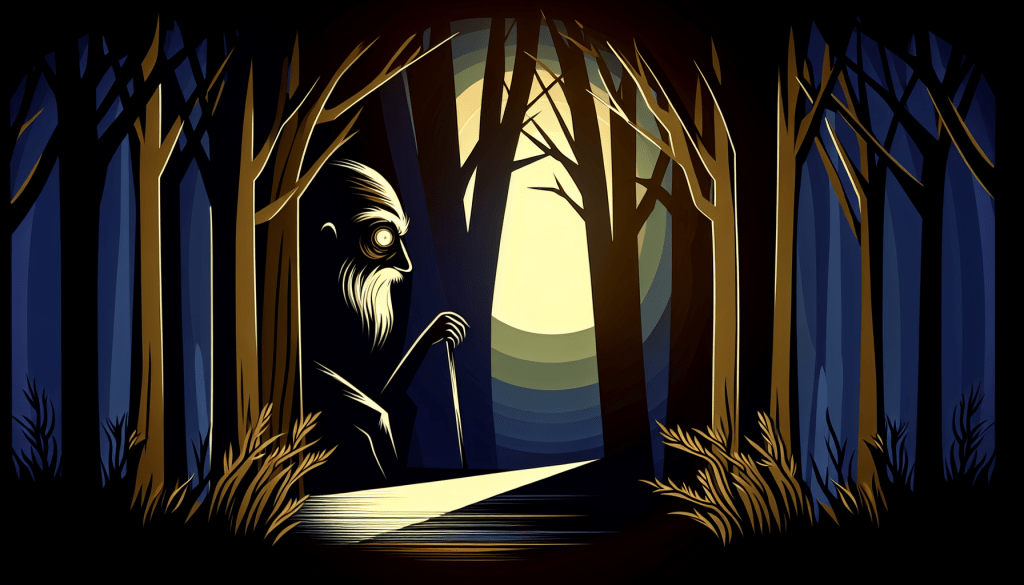
One interesting feature that the AI Assistant offers is generating an image based on what I have written. I am really curious how people visualize what they read. I have a friend that tells me he struggles to see a picture in his mind when he reads. I don’t think that there is anything wrong with him. It doesn’t seem to bother him-how would he know any different? But it bothers me. So I have curated an AI gallery for a few selected articles. I have laughed quite a bit at these images.

Every once in a while I get this message when I ask AI to generate the image.

An error occurred while generating the image. Please, try again! We’ve encountered an error. Possible content policy violation. Please try again.

I attribute this to AI not really understanding human emotions, and humor.

I must admit that I like this one.
Apostolic Youth Ministry

The Kind of Person I Want To Be
Liars & Lies I’ve Been Told
Devil In The Ditch
This is pretty much how the game is played.
Kindergarten
I like the presence of cowboys.
Biblical Rock Band Names
Play Houses & Tree Houses
I like the depiction of Lindsay stuffing a bean up her nose.
Practical Jokes
Skipping School
I want to go wherever this is.
Uncle Dave
I want to see someone drive that truck.
Snow
I think the AI Assistant thinks I grew up in the 1940s.
Clearing Land
There isn’t enough toil and misery in this picture.
Bad Influence
This looks like a the cover of an epic book.
Driving
Cutting Grass
Ghost Stories
Bargain Town
This is pretty close to what the real Bargain Town looked like.
Floating the Creek

Radio Kid

I’m not out to defend parents who allow the iPad or the Television to “babysit” their children. I’m here to talk to you about the radio.

You hear the term iPad kids these days. Or children who learned how to operate iPads before they learned to speak. Consequently, they develop an addiction to this device. It doesn’t seem to be a term of endearment, but rather a derogatory term. These iPad kids don’t have a clue about how the real word is. I remember hearing the same kind of language when I was a kid but attached to Television. All these kids know how to do is watch TV. When I was a kid we were out riding bikes and throwing rocks at trains. I suppose every generation in many ways thinks that the following generation doesn’t have sense enough to “pour pee out of a boot” as my Dad used to say. And out of convenience perhaps we humans site the most recently adopted technology as the cause for a child’s …well a child’s natural childish behavior. I’m not out to defend parents who allow the iPad or the Television to “babysit” their children. I’m here to talk to you about the radio.

I was a radio kid amongst a bunch of television kids. We didn’t have a TV in our home. In the 90s this was unique. I’m not even sure if TV is still a relevant medium for entertainment, so it may no longer be strange to not have a TV today. But we did have a radio, and I liked to listen to it.

The AM/FM receiver, turn-table, and tape deck were all one and the same for me. The noise came out of the same source: The Radio.

Records

I think my earliest memory of recorded music was from the record player. We had a record of The Drifters singing Charlie Brown. I remember listening to that a lot. And dancing in the living room. We also had a Justin Wilson record I guarantee. Gram had a lot more records than we did. My favorite was the Disney Robin Hood record. It skipped on Friar Tuck saying No, but there’s somebody who will be very disappointed if you don’t come, don’t come, don’t come, don’t come… Gram would have to come and fix the needle so we could get on with the story.

I don’t remember many more records in particular that I had such a strong attachment to-excepting that there was a lot of country music. The old stuff like Hank Williams and Jim Reeves. I remember the audible artifacts of that old vinyl. The pleasant white noise and the occasional crackle and pop of the needle bouncing over debris. It is still a pleasant noise to me.

Tapes

Someone always had to load a record for me, but I was able to figure out the tape deck by myself. I listened to a lot of preaching tapes on the radio. One of my favorites was a Bro. Mahuron preaching at Alabama Camp Meeting. I kind of feel like that lightning bug that got caught in the ceiling fan. I am delighted to be here. He also told a story about playing baseball with Fred Blosser. He was a big ole boy, he had to hit a home run to get a base hit. I would request this preaching tape-especially on car rides-not for the theological substance of the sermon, but for these humorous preliminary remarks and sermon illustrations. Then I would settle in for a pleasant nap.

I got a Johnny Horton tape for Christmas when I was about seven years old. They probably bought it just for The Battle of New Orleans, but I ended up liking Whispering Pines, Comanche, and Sink The Bismarck just as much. It really took me a long time to realize that there were other genres of music besides country. I am slowly coming to terms with how much of my musical foundation is this early post-war country music. I still appreciate the storytelling aspect of real country music. And maybe that is why the guitar has always had a stronger pull on me than the piano.

Mom bought me a Merle Haggard tape at Food World one time. This is what I hear when someone plays a Telecaster. This was electric country. With electric bass that faked an airplane on Fighting Side of Me. Hearing these musicians create sound effects with their instruments made a lasting impression on me and shaped the way I interpret music.

AM Radio

Dad listened to a lot of AM radio in the truck. Mainly Sports Radio 690 WJOX-Birmingham! Skip Carey would call the Braves broadcast on this channel. It’s a high pop-fly foul into the stands, and a fan from Del Rio, Texas makes the catch! We’d listen to those games while we were in the hayfield with the truck windows down and the radio up. That’s when The Braves were going to the World Series in the 90s. There was also a radio show with two former basketball coaches-one from Auburn, one from Alabama-called Sonny and Wimp. Wimp and Sonny, one thinks he’s smart, one thinks he’s funny, They used to be coaches they used to have clout, do they really know what they’re talking about? And another show with a man named Herb Winches that Dad listened to pretty regular. It was all sports so I really wasn’t paying attention. I did get a kick out of the commercials though. The original Budweiser frogs and lizards were funny to me. The Real Men of Genius Bud Light commercials were also funny. It made alcohol seem like something you can laugh about. What a dangerous idea.

Dad used to say, “Boy you know that must have had some fun making this commercial!” One of his favorites was the Southern LINC cellular telephone commercials. Earl, a fictitious Southern LINC customer, told how Southern LINC had allowed him to expanded his business.

Thanks to you I’m branching out…Just the thought of it makes me shivery, Earl’s Septic Tank Repair, and Flower Delivery.

There was also a jewelry store somewhere in Birmingham that had a commercial where lovesick men would call in and ask for advice from a motherly character named Deadre. Talk to Deadre Darlin’. I still laugh about that. It was so funny that my cousin Kim named her dog Deadre. Gram run over that dog while backing out of the driveway. She heard it yell, then accidentally run over it again as she pulled back into the driveway. Poor Deadre.

Talk Radio was the forefather to PodCasts. The appeal of Talk Radio, at least for me, was that it was live. And they would take callers. Just ordinary people could call in and talk on the radio. This is the kind of entertainment that cannot be scripted. Even if you don’t like sports, you’d probably appreciate the drunk people who called in on the radio. Herb Winches took a drunk caller once who started out talking about some relevant sports topic and he got overwhelmed and just started saying You know, you good at what you do Herb. Dad laughed about this for months.

AM Radio had a distinct sound to me, and because of this I found it hard to listen to music on AM Radio. I now realize that there is less information coming through on AM than FM, so some frequencies are missing in the music. This is probably why audiophiles are willing to spend $50,000 on hi-fi stereo systems to listen to their record collections. So I never experimented much with AM Radio outside of listening to it with Dad.

FM Radio

I did experiment with FM Radio a lot. One of the first radio stations I remember hearing was Oldies 106.9. At that time they were playing everything from Elvis and Roy Orbison, to Motown and British Invasion. I remember hearing Love Me Do by The Beatles and being mesmerized by the harmonica sound. Dad told me the story of Delbert McClinton teaching John Lennon to play the harmonica. I didn’t realize that this was the music of rebellion in the 1960s. To me it was just like they were marketing it on the radio Feel Good Music.

We also listened to the Christian station out of Birmingham, 93.7 WDJC. Specifically The Dixie Gospel Caravan. Which was the evening Southern Gospel program. I used to love the song, I’ve Got a Feeling Everything’s Gonna Be Alright. This program was mainly Southern Gospel quartet music. And I imagined the bass singer as a face in the wall singing. That can’t be a real person. I also imagined the high tenor as tall and thin. I had a hard time telling the different quartet groups apart because the sound was so similar to me. And that is one of the reasons that I still don’t relish quartet music. Maybe I reached my quota of quartet music by the age of 9. Who knows?

I must confess, aside from The Dixie Gospel Caravan, I listened to the Oldies and Classic Country stations a lot more than I did the daytime contemporary offerings from WDJC. So there is a large gap in my Christian music canon. This is sometimes embarrassing to me when someone-usually a minister-wants me to remember-or even worse play-a Christian song from the 1980s which I have never heard. Or they ask me about a particular Southern Gospel Quartet. Did you used to listen to The Anointed Spoonbill Singers? No, Brother. I listened to The Beatles, The Rolling Stones, Sam Cooke, and Marvin Gaye though. I ain’t saying it’s right, I’m just saying it’s the truth.

When I started learning guitar I would sit by the radio and try to play along with the Classic Rock station. For hours. The radio taught me how to play guitar. I still prefer to try to work out a song guitar in hand while I listen before I resort to the sheet music.

Public Radio

At some point during my teenage years I was introduced to Public Radio. It fueled my curiosity about classical music and introduced me to opera. For years I listened to NPR’s World of Opera while I was cutting the church grass every Saturday. Public radio also had some cool shows on Saturday’s too. Car Talk, What a classic show. I still shift my manual transmission truck into reverse when I park because of Car Talk. I also enjoyed A Prairie Home Companion with Garrison Keillor. Which was a variety show sort in the style of Jack Benny or Phil Harris. Keillor’s show served up a healthy dose of Americana music. Which is to say a thick soup of gospel, bluegrass, country, blues, and swing. And it was live.

One of the strangest shows I remember was Hearts of Space, an electronic-new-age-ambient-music program. It featured artists like Klaus Schulze and focused heavily on synthesizers. My Mom didn’t like that show. Even though I didn’t fully understand it, I liked it. I didn’t know how those sounds were being created and I just accepted that it was with computers. I have learned a lot about synthesizers since first hearing Hearts of Space.

When I lived in Virginia I discovered The Big Broadcast with Ed Walker. This was my introduction to the golden age of radio shows from the 1930s-1950s. Ed was blind, and he made me wonder how much those old radio shows must have meant to someone who couldn’t see. I listened to that show until he died. I still listen to vintage radio shows on the Old Time Radio app with Wesley, but it isn’t the same without Ed introducing them.

Today

I suppose that you could find everything today on an iPad that I found on the radio, if you look in the right place. That’s just the thing though: the iPad is a very visual medium. While kids may still be listening, they are doing a lot of looking. And who can say what they are looking at? Radio and Television were pretty rigid in their programming. There was a time when you had to be good to be on the Radio. You may have just had to be good looking to be on Television. But now, anyone with a pulse can start a YouTube channel. And they don’t have to worry about getting dropped by a sponsor or advertisers because many people don’t make one red cent on YouTube but still churn out mindless videos of just about anything you can imagine. I think about this sort of thing when I see a child glued to an iPad. Time will tell how these children will turn out. I think they’ll be a lot like the Television kids. Which I don’t know if I have done a great job communicating with for most of my life.

I can’t remember the last time I turned on FM radio. I grew weary of the commercials long ago. And many of my favorite show hosts are now passed on. The Radio changed on me. But I still listen to something every day. In that sense I will always be a Radio Kid.

Salt Life

Bumper stickers are a mystery to me. You would think that you could tell a lot about about a person by what kind of bumper stickers they have, but really you can only tell that they are bumper sticker people. And that is the mystery for me: is this bumper sticker accurate? I’ve always thought it would be funny to put bumper stickers on the vehicles of unsuspecting Wal-Mart shoppers at random. But I cannot bring myself to act upon these low juvenile thoughts. Although it does prove the point that a sticker does not necessarily define an individual. It is simply a label that has been applied by the driver. Or perhaps by hooligans in the Wal-Mart parking lot. You can label a jar of peanut butter chicken noodle soup or hominy but it will just be mislabeled peanut butter.

The label that I am most suspicious of is Salt Life. Especially if I see it on a car a long way from the beach. I have a hard time reconciling Salt Life bumper stickers and Tennessee license plates. How much of the Salt Life can this person really be living? People that are indeed living the Salt Life are probably on boats-or golf carts- and certainly not sitting in rush hour traffic seven hours from the coast. But we as people feel like that the bigger the sticker the more true it is. You’ll see a whole back window of a truck letting everyone know that the driver of this Silverado in Fort Payne, AL is living the Salt Life.

When I see a vehicle with a Salt Life sticker I usually make up a story for that driver. And then I imagine that story as a bumper sticker in place of Salt Life.

I went to the beach on vacation in 2016 and we chartered a fishing boat and I caught the biggest fish in my life and I really enjoyed my trip.

I go to Gulf Shores every year for this conference at work and I think it would be cool to live there.

I go fishing every year in Pensacola with my cousins and that is the only real fun thing that I do since my divorce.

I went to Panama City for my Senior Trip last year.

I am thinking about launching my own bumper sticker enterprise: Realist Bumper Stickers. Among other things we will offer a more accurate alternative to Salt Life. It is going to say: I Wish I Lived On The Coast. Alas, they probably wouldn’t sell. Bumper stickers are not the media of facts, but of ideals. We put them on our cars to in an effort to convince ourselves that things are not as they are but as they could be.

Communication: Implicit & Explicit.

“I know we’re not supposed to bully people, but that works with me. I have been inspired to make life changes because someone talked rough to me. I hate it when people don’t tell me something plain. I feel like I’m being lied to if they afraid to say something because they think it may hurt my feelings. That doesn’t help.” This is what a young man told me recently. And I have been thinking about it a lot since then. Thinking deep.

He was being genuine in his desire for explicit understanding and straightforward verbal communication. Say exactly what you mean. Please don’t make me guess. Essentially, he told about some miscommunications that he had with someone with powerful influence in his life who it seemed prefers implicit communication. Although I am not sure that he realized that the person he was frustrated with was probably equally-if not more- frustrated with him. Instead the young man most likely entirely missed the implicit communication-the subtle nonverbal cues-and perceived the economic verbal communication as dishonesty. At the heart of this problem is a mismatch between high and low context communication.

Americans, in general, are low context communicators. We principally communicate with words. We like clear instructions and contracts. If you are an American you may be thinking well duh Zane, how else am I supposed to communicate?

Actions speak louder than words but not nearly as often.

Mark Twain

A high context communication culture like the Japanese, would depend heavily on implicit, nonverbal communication like body language, tone of voice, and especially silence in order to understand the message. High context communication cultures rely on a shared background of beliefs and principles-sort of reminds me of the church-and place a special importance on relationship in communication. The level of relationship they share with a person will have tremendous bearing on the level of communication. In contrast low context cultures are willing to enter into 30 year contracts with total strangers.

In my college courses, there was an emphasis on this being a cultural characteristic. Asian, Latin American, Mediterranean, and Middle-Eastern cultures tend to prefer high context communication. The whole reason that this was important to learn is because there is often profound misunderstanding in the business world between these cultures and low context communication cultures found in Europe and North America. Since this material was covered in more than one class it leads me to believe that this is a very real issue. Indeed it was manifested in my conversation with a frustrated young man.

I want to emphasize that this is true in general; and like any generalization or stereotype, there are exceptions. Low context communicators can be found in high context cultures and vice versa. As I was studying this material in college I found myself relating more to the high context than the low context communicators. Perhaps our young man would find himself in the low context camp.

What should we do about this problem of mismatched explicit and implicit communication?

Jesus spoke in parables to the multitude, but spoke plainly to his disciples. This means that the disciples heard both implicit and explicit communication from God.

Matthew 13 is a great example of this. I encourage you to read the whole chapter, then reread it in sections pausing to reflect after each section. Then reread the whole chapter. I want to focus on this one portion though that outlines the issue at hand.

Matthew 13:10-17 And the disciples came, and said unto him, Why speakest thou unto them in parables? He answered and said unto them, Because it is given unto you to know the mysteries of the kingdom of heaven, but to them it is not given. For whosoever hath, to him shall be given, and he shall have more abundance: but whosoever hath not, from him shall be taken away even that he hath. Therefore speak I to them in parables: because they seeing see not; and hearing they hear not, neither do they understand. And in them is fulfilled the prophecy of Esaias, which saith, By hearing ye shall hear, and shall not understand; and seeing ye shall see, and shall not perceive: For this people’s heart is waxed gross, and their ears are dull of hearing, and their eyes they have closed; lest at any time they should see with their eyes and hear with their ears, and should understand with their heart, and should be converted, and I should heal them. But blessed are your eyes, for they see: and your ears, for they hear. For verily I say unto you, That many prophets and righteous men have desired to see those things which ye see, and have not seen them; and to hear those things which ye hear, and have not heard them.

This section falls between the Parable of the sower and the explanation of the parable of the sower. It is Jesus’s answer to his disciple’s question Why don’t you just tell these people explicitly what you mean? Jesus essentially answers that he used parables to give these people the option of hearing, seeing, understanding, and being converted and healed.

Jesus did speak explicitly to his disciples in private. I find it interesting that he often gave correction via explicit communication.

Matthew 16:23 But he turned, and said unto Peter, Get thee behind me, Satan: thou art an offence unto me: for thou savourest not the things that be of God, but those that be of men.

Jesus openly and explicitly rebuked Peter. You have to really be a true disciple of someone for them to call you Satan and you not get offended.

John 14:9 Jesus saith unto him, Have I been so long time with you, and yet hast thou not known me, Philip? he that hath seen me hath seen the Father; and how sayest thou then, Show us the Father?

You can almost hear the frustration in Jesus’s explicit response to Phillip’s question. Phillip, how long have you been my disciple and you don’t know that I am the Mighty God, The everlasting Father, The Prince of Peace (Isaiah 9:6)…don’t remember that I and my father are one (John 10:30)?

I really believe that you have to want it to receive implicit communication.

Proverbs 1:1-6 The proverbs of Solomon the son of David, king of Israel; To know wisdom and instruction; to perceive the words of understanding; To receive the instruction of wisdom, justice, and judgment, and equity; To give subtilty to the simple, to the young man knowledge and discretion. A wise man will hear, and will increase learning; and a man of understanding shall attain unto wise counsels: To understand a proverb, and the interpretation; the words of the wise, and their dark sayings.

Subtilty and discretion will help you know the difference between dark sayings and deception.

In order to receive the instruction of wisdom, justice, and judgment, and equitysubtilty and discretion from the Book of Proverbs you are going to have to read it. And reread it. With open ears. Fast and slow. Pausing and reflecting. Meditating. And you’ll also have to practice what you’ve read.

Broken

It may not work, but I am going to do my best to fix it.

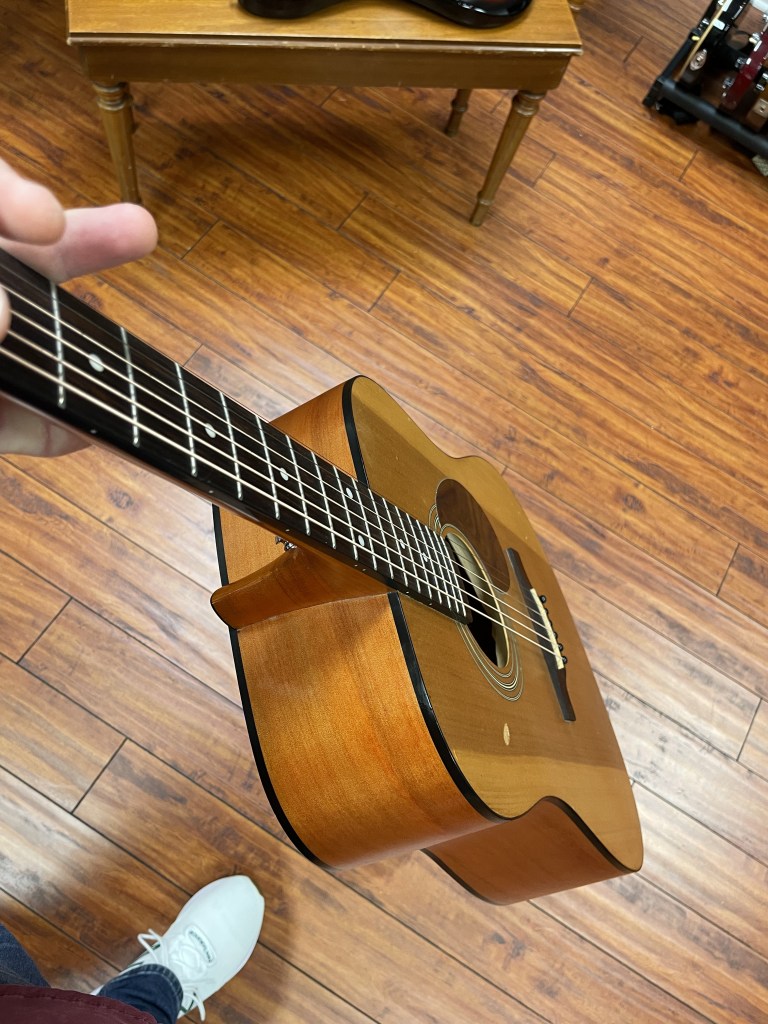
“This guitar is broken!” I said in exasperation to the young man I was helping move across town.

“You can have it.” He said, looking nonchalantly at the tired old instrument with a large crack in the heel of the neck. I laid it in the back of my truck like a wounded soldier amongst the mirrors and pictures wrapped in moving blankets. This guitar had been neglected if not abused. I winced as I thought back to things that I had not cared for properly as a child.

I took the guitar home and surgically removed the dirty strings and cleaned it thoroughly. Under the light of my work bench I could see that the crack wasn’t all the way through, but still substantial enough to make the guitar unplayable. I felt like the doctor when they say things like, It may not work, but I am going to do my best to fix it.

I inserted wood glue into the crack with a needle and syringe and clamped the body and neck down to the work bench to hold tension on the crack. This will only hurt for a little bit. Then I turned out the lights and didn’t look at it for three days. When I finally came back to it I could still see a black line where I probably didn’t clean the crack sufficiently, but the joint felt solid. Now I just needed some strings. Before I took the time to take a trip to the Guitar Dungeon, I happened to be at a friend’s house as he was changing his guitar strings. I noticed that he had an interesting string removal ritual. I usually clip my old strings-which have been played to death, black with grime and riddled with divots and dents- with a pair of wire cutters, and then to avoid a finger injury from the sharp string end under tension, I unwrap the bit still attached to the tuning post with a pair of pliers. He was taking his time and unwinding the string gently from the tuning post, so the entire string was still intact. Then he carefully placed each string in a neat little line, as if he too could still feel the life pulsing in those sparkly bits of metal, just waiting to be touched so they could burst forth singing. It works out nicely because the strings could be reused if you break one of the new ones. He did poke his finger with a sharp string end and there was a bit of bleeding. As he took the last string off he tied the whole bundle in a single knot. That’s when I asked him if I could have them. And he obliged. I have a hard time throwing some things away. Or seeing things thrown away. And those strings had been watching me like a puppy at the pound.

The next day I put the used strings on the old broken guitar and gave each another chance at life. I decided to leave the guitar tuned down a whole step, because I wasn’t sure if it could handle the tension of standard tuning. I held my breath as I got the last string tuned, then I cautiously inspected the crack. It was still solid. I played an F chord-not the first choice of most guitar players. And not the easiest chord to play in standard tuning. But we weren’t in standard tuning, and the F chord seemed so natural now and it rang out beautifully, deep and rich.

I have wondered what to do with this instrument brought back from the gates of death. I can’t in good conscience sell it. Because it was a gift, and also because I feel like I need to stay close to it in case in needs further repair. And maybe no one would want to pay for a broken instrument. This instrument has already served its time in the heavy hands of a careless owner. It now needs the gentle touch of a seasoned musician. Someone who has lived enough to know what pain feels like. I feel like I want to keep this resurrected instrument where I can see it every day and be reminded of the many second chances that I have been given. I want to be able to pick it up and make sweet music with something that came so near being cast off.

A bruised reed shall he not break, and the smoking flax shall he not quench: he shall bring forth judgment unto truth. Isaiah 42:3

Controlled Burn

I still get the itch to set the yard on fire.

“Is this a controlled burn?” The volunteer fireman asked my dad as he looked out across the kudzu patch with flames leaping halfway up the ancient pecan tree.

“Does it look like a controlled burn? Don’t drive on my new field lines!” My dad replied.

I still get the itch to set the yard on fire. It has been welling up in me since the last church men’s cookout we had. We have kind of given up on calling it a men’s campout since most of the men swore off camping after that year it rained all night. I guess not everyone is cut out for roughing it. So we have resigned to having a big fire at the church and eating until we can barely stay awake and then driving back home. Or staying up all night, but we have the option. This past year though something interesting happened that gave me the fire itch like I have never experienced.

We had just gotten the fire started good where all the folks on the highway in front of the church could start blowing the horn, wishing that they were a part of something so exciting, when all of the sudden here comes the volunteer fire department in one of their trucks, sirens a wailing. We watched him go by on the highway but were surprised when he pulled into the church parking lot. It was only one fireman. Now that I think back, I’m not sure he was a real fireman because he didn’t have a uniform. That would also explain his behavior that followed. He said something about receiving a call about an out of control fire and then that [REDACTED] proceeded to unroll a firehose and thoroughly dowse our campfire. I wanted to say a lot of things and do a few more, but I let Pastor do the talking because I didn’t feel like it was the best time to give the younger boys a vocabulary lesson. I’m not sure what pastor told him, but he didn’t listen.

Volunteer work; it just doesn’t pay.

So there we were; the men and the boys just sitting around the dripping firewood. Like we all just found out that Santa Claus ain’t real, and the person that told us had run over our dog and run off with our girlfriend. We were in a bad way. The only thing that really matters about the men’s cookout is the fire, and now we didn’t have one. You could see it on every face from the boys fresh out of diapers to the grey headed retirees: pure disappointment. We were downcast. Something had to be done.

I waited until I was pretty sure that the hasty volunteer had made it all the way back to the fire station before I said, “$10 to the boy that gets this fire started again.” You’d have thought I said $100,000,000 by the way those boys got after it. I wasn’t really concerned about the fireman coming back, but I wanted to waste his whole evening if he decided to. It took the eager boys about five minutes to get the fire rekindled, and just like that, morale was restored.

The boys getting the fire restarted.

I have been wanting to burn something bad since then. So I set the yard on fire this week. It was glorious. My dad would’ve enjoyed watching it slowly burn off the dead grass from last year. It was the perfect day to set the yard on fire.

There are not many things as satisfying to me as burning the yard.

When I told my friend that I was going to burn the yard he asked me, “How do you keep the fire from spreading?”

I didn’t really have a good answer for that. You can’t really control a fire. You can pretend like you are controlling it, and that may make you feel better, but I suppose if the fire wants to burn something then you can’t really stop it. Any time you set a fire, you are risking it burning a lot more than you had intended. In my case this week, it didn’t burn all of what I intended. I was less in control of the fire than the wind. But I still stood there coughing in the smoke with a shovel and brazen confidence.

The horseleach hath two daughters, crying, Give, give. There are three things that are never satisfied, yea, four things say not, It is enough: The grave; and the barren womb; the earth that is not filled with water; and the fire that saith not, It is enough. Proverbs 30:15-16

After I got the fire stopped where I felt was sufficient, one of my friends called me and said, “Man is everything ok? Looks like your yard caught on fire.”

I just told him it was a controlled burn.