Classical Music

There is a feeling that comes to me in the fall when the light is shining through the window just so, kind of sideways in the morning after all the kids are off to school. There must be a window where I can see the rest of the world, busy about their work. And there must be classical music creating a little bubble of peace.

Classical music to me is not sitting in a stuffy hall in your uncomfortable church clothes watching a bunch of musicians in their uncomfortable church clothes play music that everyone pretends to like. To me classical music is anesthesia for a job that I don’t enjoy very much. Sometimes I listen to classical music and I am in a concert hall, watching musicians play, but most of the time, the music is just the soundtrack to my imagination.

It works without a window too. I used to listen classical music seriously when I had a job cutting grass. It became a great escape for me. I had these radio headphones that allowed the music to take me far away from the tedious and laborious tasks of weed-eating. And when I finally got a job in the air conditioning, I would listen to classical music from the comfort of my desk as I watched the hustle and bustle of traffic just outside my window. That is the feeling that I am trying so hard to describe to you. It is as if I am looking at the rest of the world in a little glass terrarium, the music allows me to be an outside observer.

I was introduced to classical music when Mom bought our first CD player and a few CDs. The one I remember was a collection of classical music favorites. I listened to that album a lot in my bedroom. And if I hear one of those pieces today, like Schubert’s unfinished symphony, I am transported back to my little bedroom with my octagonal window.

Maybe it was because of the record player that listening to music became a ritual for me. I needed help from an adult with the record player. And once the record started, I would be left alone to be tended by the music. I just had to listen to the whole thing, there was no turning back. So I think that sense of commitment carried over to CDs. Anytime I got a new CD, I would sit down and listen to the whole thing front to back without stopping. I still think this is the best way to listen to music.

For all my love for classical music, I have only ever been to one concert. It was when I was a teenager. We went to a beautiful concert hall somewhere in Birmingham to see-and hear-the Alabama Symphony Orchestra play Variations on Haydn. At the beginning of the concert, the conductor gave a speech to the audience. And for some reason, the first chair violin was chatting with his neighbor. The conductor turned around to say something to him out of the microphone. When the conductor turned back to the audience, the first chair violin shook his bow at the conductor. That has always stood out to me. Was there bad blood between these two? Jealousy? Was this simply a joke? Who can know? I remember liking the music though and just staring at the orchestra. I could’ve watched it all night. My Uncle Tony elbowed me to point out a man who had fallen asleep. I guess it would be good music for sleeping.

I have been listening to a lot of classical music lately because the weather is just asking for it. And perhaps maybe because I like to daydream.

Photos of The Week: September 27th, 2025

These are the photographs I took this week.

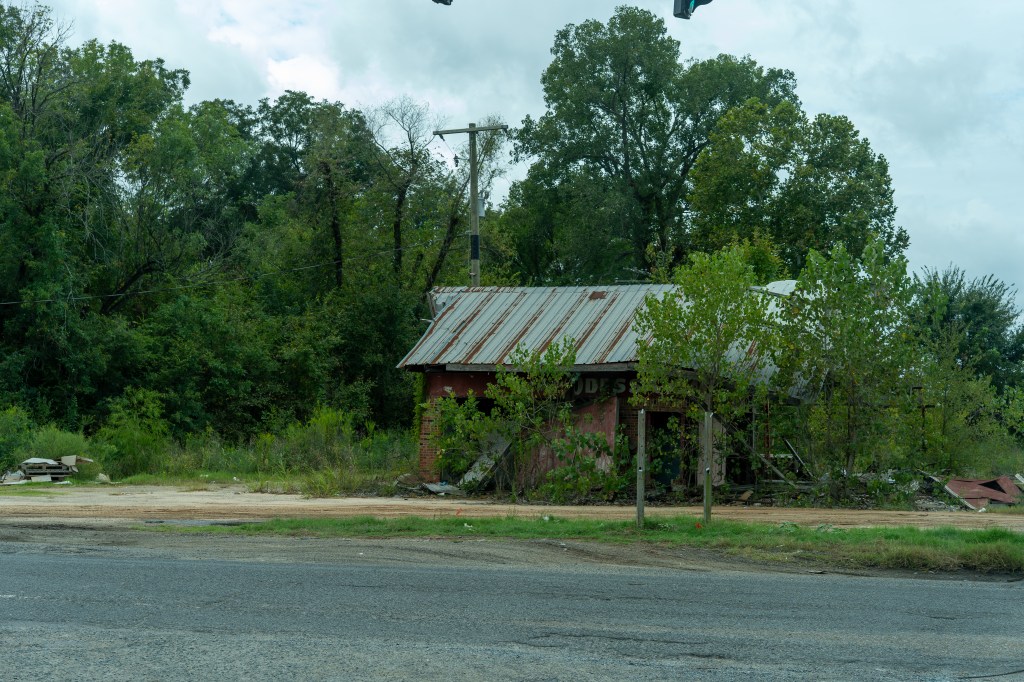
I get to travel a lot for my job. So I take my camera along for drive-by photography. It seems to me that the economy in Louisiana moves East and West along I-20 and I-10. And I live in Central Louisiana. One of the recurring themes in these photographs is decaying buildings. I don’t go out of the way to find them, I have to go out of my why to find new construction. One of the things I like to imagine is what these buildings were like in their prime, with people bustling in an out of them. What kind of clothes did they wear? How did they talk? What did they eat for lunch?

I imagine this was once a thriving little grocery store. The painting makes the pain worse for me: It is fake.
I thought this man was interesting. He was shuffling material from one medical building to another across the street.
The crack in my windshield somehow makes this picture better. The kind of obscure photograph that you imagine a special agent gets on those old detective radio shows.
Cows have a special place in my heart.
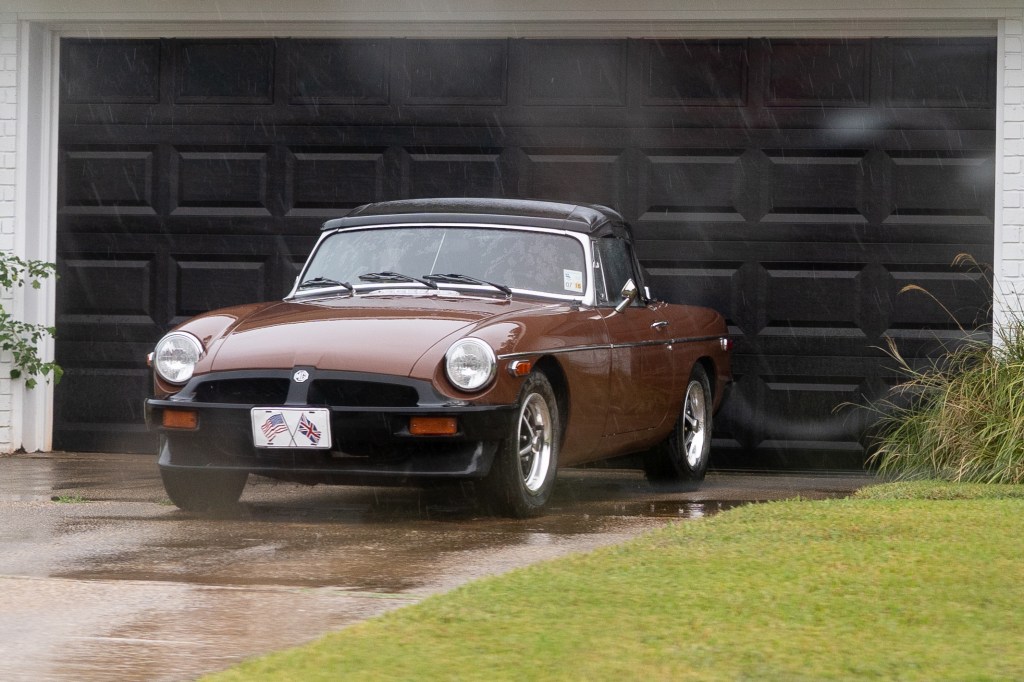
“These cars always reminded me of fighter planes.” That’s what the man driving one told me once at a gas station 20 years ago. His was green though.
I wonder what kind of art is produced here. I like that old chair.
Something about the colors on this building speaks to me.
It was exhilarating being this close to a train.
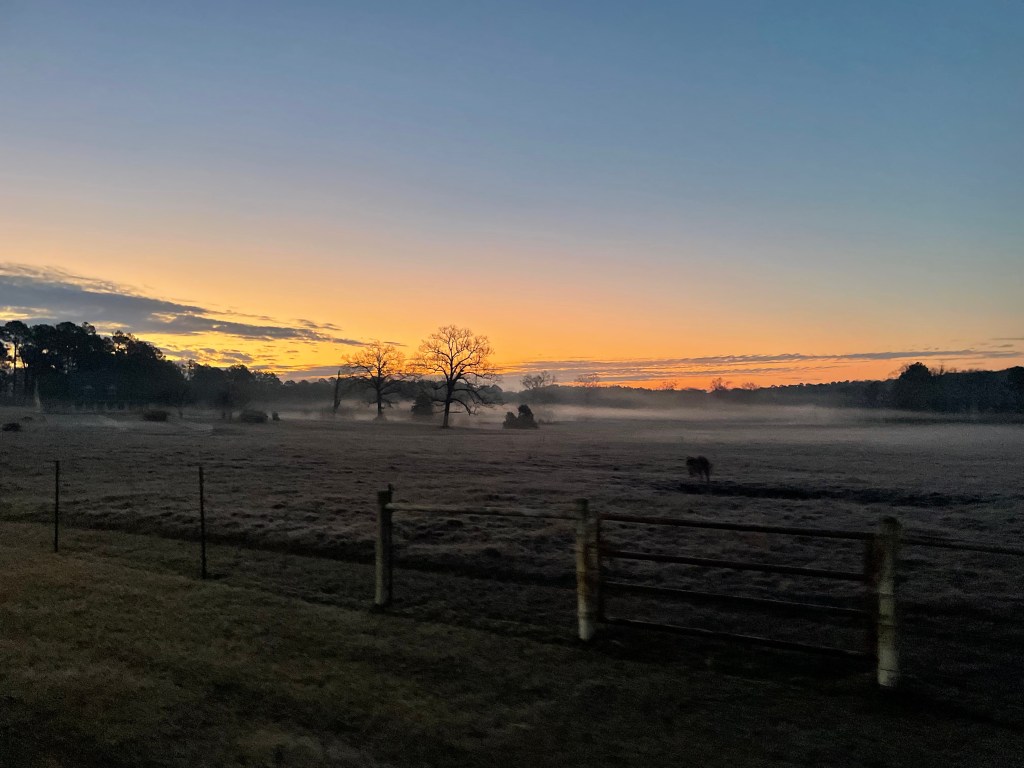
This is probably my favorite picture from this week. I love this time of the morning. I imagine this is a scene from a book that you can’t put down.
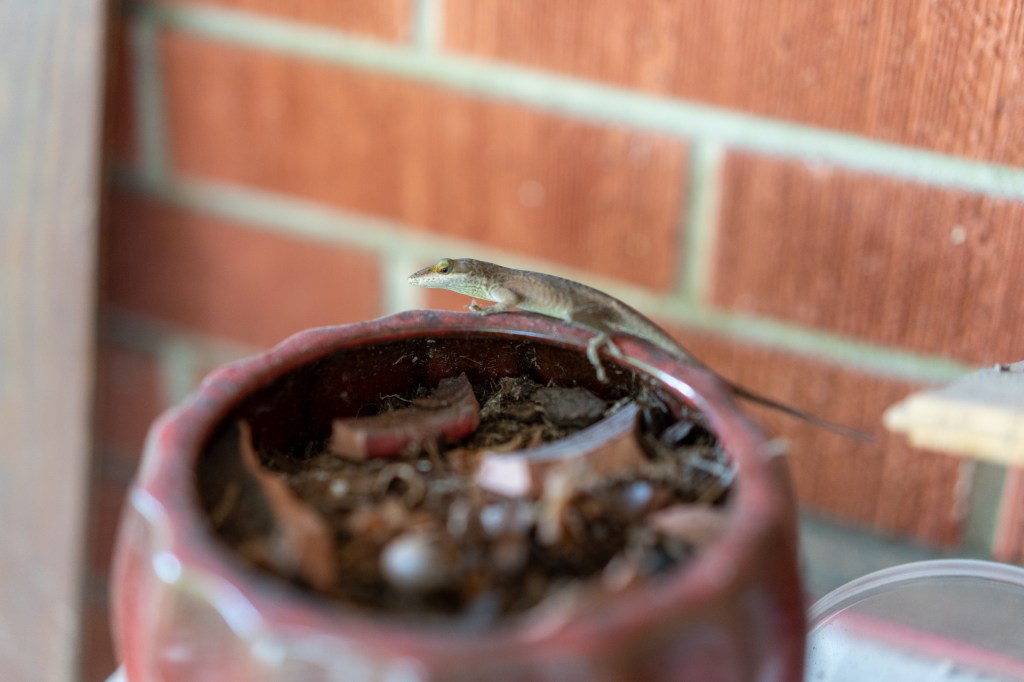
I love these little lizards. Anything that eats bugs can hang around my house.
Name the title of the book that this could be the dust jacket for. That’s the kind of thing I think about when I am composing a shot.
Another good cover for a book about a haunted house.

On Learning of the Death of Charlie Kirk

I was reminded of the scripture where the angels heralded the birth of Jesus Christ.

 And suddenly there was with the angel a multitude of the heavenly host praising God, and saying, Glory to God in the highest, and on earth peace, good will toward men. Luke 2:13-14

No one else in history received an angelic concert like this at birth, because no one else had ever brought peace and good will. After all these years, there was peace on earth and good will toward men. Only because the Prince of Peace came to earth was there ever a chance of peace. It was a manifestation of God’s good will towards us: the Word made flesh. Without Jesus there is no peace and there is no good will. Alas, we rejected peace and good will, and we crucified the Lord of Glory.

And here we are today, with the same hate and venom we had then spewing out of our mouths and onto each other and everything around us. No peace. No good will. We think we know what we’re mad about, but we only know what we’d like to be mad about. Deep down in the essence of our being we know what it really is, but we don’t like to talk about it.


Because that, when they knew God, they glorified him not as God, neither were thankful; but became vain in their imaginations, and their foolish heart was darkened. Romans 1:21

We can get mad-not just mad, but cutthroat vicious-about politics and try to make the issue conservative against liberal, but that is not the issue, so no political solution will ever work. We can get parade marching angry about gun rights, but that isn’t the issue either. We can push the limits on free speech, arguing ourselves into circles and corners high on hate, but the issue isn’t about free speech. We can get fist-fighting furious about racism and social inequality; trying to blame the world’s problems on white people, or rich people, or rich white people like they are trying to teach me in college. But if there were never any white people, the issue would remain. These are all just saplings growing out of an ancient root: Sin.

I have not studied world religions because I think there is another way, I am persuaded that Jesus is the way, but I have studied them because I am interested in humanity. Understanding someone’s religious beliefs will help you understand the way that person thinks. Outside of what we can call Abrahamic religions, there is no religion with a doctrine of sinning against a deity. Hinduism, a broad, amorphous, non-codified religion is practiced in many different ways and has a concept of not following your dharma or personal destiny, but this is not sin against God. Buddhism and Jainism, both offshoots of Hinduism also do not preach sin. Many Eastern religions involve ancestor worship, and while one can bring shame upon themselves and their families, there is nothing about Sin.

We don’t like to be told that something we are doing is something that displeases God. We don’t even like to be told that there is a God. As Paul wrote in Romans 1, we do not like to retain God in our knowledge. It is no wonder when the Apostles preached repentance that they were often stoned to death. Sin is still the issue. Many of us like our sin, and we want everyone else to like it too.

Because of Sin, we live in a broken world. But thank God, where there is sin, there is so much more Grace.

…But where sin abounded, grace did much more abound… Romans 5:20

Phrasing

Maybe he meant, Young man you don’t understand how good you really got it.

Do you remember when you were in high school and the whole English class had to take turns reading Shakespeare’s Macbeth out loud? Our teacher assigned a different cast for each scene so we could all get a chance to experience public speaking anxiety. You never knew when it was your turn; you just waited in agony; your only consolation was how bad your classmates were doing. Everyone was saying the right words, but hardly anyone was really confident in their understanding of the text, despite any confidence they pretended to have in pronunciation. They were simply words without meaning: noise. It would’ve been painful to endure if we weren’t so clueless. I have a feeling that some of us thought we were doing a good job, but I don’t think anyone in my class went on to pursue an acting career. As bad as it was, I still enjoy hearing people read out loud.

I can hear us now just droning on…

Macbeth: If we should fail?

Lady Macbeth: -We fail?

But screw your courage to the sticking place

And we’ll not fail.

Now think for a minute of the old man you used to see at the grocery store—it helps if you had a job at a little grocery store while you were in high school—who had worked as a mechanic for 50 years and had to drop out of middle school to help out on the farm. He couldn’t pass an English class if his life depended on it, but it didn’t really matter; even with atrocious grammar and a vocabulary half consisting of words that could not be found in the dictionary, he could still create a sentence that would stay with you for 20 years because he knew exactly what he was talking about.

“How you doing today Mr. Wallace?”

“I’m doing fine, and you?”

“Pretty good.”

“Pretty good hard to beat.”

Pretty good hard to beat has been incorporated into my language. It may seem just like words on paper-or a screen-but it was the way he said it that let you know there was a lot more meaning that went into that sentence. Maybe he meant, Young man you don’t understand how good you really got it. I think about that old man whenever I chance to use this phrase. Whatever he may have intended, it certainly resonated with me.

That is what we call in music phrasing. Phrasing is how a musician puts a sequence of notes together into a musical thought, and how they interpret written music. It is the reason that Blues musicians could limit their musical vocabulary to the 5 note pentatonic scale and make people cry. It is why folk music can be so simple in its form, but still able to make us recall memories of places we’ve never been and times in which we never lived. And the same reason that beginner musicians sound like beginner musicians: their phrasing is off somehow. They may be playing the right notes-even reading the right notes from a master composer-but still unable to convey the real meaning of what the composer was trying to say.

The blues is feeling good about feeling bad.

Phrasing is more than having a nice voice, or tone. But I imagine that won’t hurt, but I’m not convinced it helps all the time either. It doesn’t matter how nice your voice is if you don’t have anything to say. Or if you are only going to regurgitate words that came from someone else’s heart.

It took me a while to really appreciate Shakespeare, and the closest I have come to understanding it was to see a play performed by actors who understood it at least better than me. I took Sarah to Blackfriars Theatre in Staunton, VA to see a All’s Well That Ends Well and Two Gentlemen of Verona. It was a far cry from bending over the text book following along as your buddy in class-who had never read a book for pleasure in his life and barely had a grasp on 21st century American English-stumble through his assigned lines without the faintest idea of the plot. Those Blackfriars performances have stuck with me and I would like to go back again some day.

Phrasing isn’t any one thing, but a host of subtle things like tone, dynamics, timing, space, and feel. These are all musical terms that could each have their own textbook and university course. So whether speaking or playing and instrument, how do you learn to phrase well? For a start, I think it is important to know what you want to say. For a musician, the most important part of phrasing is to get emotionally involved with the music. I think the best way to do that is to pay attention to the lyrics. And that means you need to understand the lyrics. People can tell when you don’t know what you are talking about. You don’t have to master the language of music-or the English language for that matter- to say something that will connect with a listener, but you do need to master your vocabulary, no matter its size. You don’t want to sound like someone who picked a random $40 word out of a dictionary and tried to force it into a $15 vocabulary. It will stick out like a Ferrari in a trailer park. If you want to build your vocabulary you need to read good stories-and listen to good music. A well written novel has the power to increase your emotional intelligence. Good readers understand empathy.

Even a fool, when he holdeth his peace, is counted wise: and he that shutteth his lips is esteemed a man of understanding. Proverbs 17:28

If you want your words to carry weight, don’t waste them.

200: A Milestone in Writing

This is my 200th article for what began in 2016 as Mostly From Memory, a blog where I started sharing short essays on my memories from growing up in a small town in Alabama. Since the statute of limitations has not run out on a few events, I am kind of out of material for the childhood stuff unless I want to run the risk of getting sued. Or I could start making stuff up. Which is how I think that some authors get into fiction. You take a piece of story that really happened, but you change the names of the people and move the location to somewhere far off like Pell City, Alabama, and describe some of the characters as prettier or uglier than they really were and add some extra details like an embezzling scheme, a murder, and some romance or dragons to spice up the plot a little bit. You know, just like cooking. You begin with a chicken breast—that’s the part that really happened—but it could really hurt someone if you serve it raw. The fiction part comes in with how you decide to present it: grilled, fried, boiled, fricasseed… And a good cook can make just about anything palatable, if not spectacular.

I haven’t gotten into fiction yet, but I have branched out and written about a lot of topics like grief, obituaries, music, biographical sketches, and social and cultural constructs, and how to overcome them. It is this sort of material that I am drawn to write about.

This makes me ask the question, has my writing style changed? I think it has changed in the same way that a person ages. If a man is still talking and behaving like a 20 year old at 40 then I think you would agree that something is off. And when a 40 year old takes measures to alter their physical features to appear 20, whether people pretend along with them or not, we all know that it is fake. I feel that my writing has aged with me.

And maybe my readers have come and gone just like friends in different in different stages of life. I may have lost some of my readers when my material shifted, and that is understandable. Just like when you take the last bicycle ride with your neighbor who is getting his driver’s license the next week. You’re still friends, but he is going places you can’t go now. And you spend less time together. Then when you get your license, you’ll probably go to different places than he went. And you meet new people who are less interested in your past than they are your future.

I did a lot of looking back when I first started writing. I felt the need to put some of those oral stories into writing. I am glad I did because I didn’t realize how quickly my sources would move on without warning to a place that I can’t go yet, taking their oral stories with them. I have been looking inward a lot of my recent material. But I am trying to practice looking out.

I think I am beginning to understand why older people say less.

If you have been with me since the beginning, thank you. You may not have noticed the shift because you’ve grown with me. But if you are an occasional reader, you may have noticed changes just like your great-aunt noticed when she only saw you twice a year at Easter and Christmas. And I guess that is what I want to talk about today: I really just want to write articles that make people want to think about things that matter.

I think people matter. I think how you treat people matters. I think motives and attitude matters. I think education matters. I think that morals matter. I think that mental health matters. I think that physical health matters.

Above all, I think truth matters.

Neighbor, How Big is Your World?

I grew up in a small town, but for most of my adult life I’ve lived and worked in suburban areas. Having experienced both, I now live in the tension of wanting the business of a city and the quietness of the country. I imagine you could draw lines and each side could argue until Kingdom Come-I’m not trying to do that today- but I am going to endeavor to expose some aspects of human nature common to every one of us, but I tend to notice more in rural areas. Perhaps because it is hard to be anonymous in a small town where character and actions seem to be magnified. This is not an indictment of small town life, nor an endorsement of city life, but an honest attempt at addressing selfishness.

We have a couple of interesting words for selfish thinking: egocentrism-that is, the world revolves around me, and ethnocentrism-the world revolves around people like me. In a small town, it is easy to forget-or never even realize-that there is a world, indeed a much bigger world, beyond the city limits, or property lines. No matter how big the town, a small world is the breeding ground for self-centered thinking.

More people live in the city of Delhi, India than in the whole state of Texas.

I heard a lot about worldview in college. It was good for me, a country boy from central Alabama to learn things like American football is not even in the top 10 most popular sports in the world. That not everyone is an American. It challenged my worldview when I made friends with people who grew up in foreign places like Canada, Mexico, Thailand, Jamaica, South Africa, and California.

Jesus addresses egocentrism and ethnocentrism in the parable of the Good Samaritan. When we ask Who is my neighbor? We are asking, How big does my world really have to be?

Luke 10:25 And, behold, a certain lawyer stood up, and tempted him, saying, Master, what shall I do to inherit eternal life?

26 He said unto him, What is written in the law? how readest thou?

27 And he answering said, Thou shalt love the Lord thy God with all thy heart, and with all thy soul, and with all thy strength, and with all thy mind; and thy neighbour as thyself.

28 And he said unto him, Thou hast answered right: this do, and thou shalt live.

29 But he, willing to justify himself, said unto Jesus, And who is my neighbour?

More can be said of the story of the Good Samaritan than I am capable of writing. It is the story of humanity and I implore you to read it. The fall of man has left us in a cruel world, half dead, without help, until an outsider came along and saved us. Jesus did not have to show us mercy, but that is what neighbors do.

Luke 10:36 Which now of these three, thinkest thou, was neighbour unto him that fell among the thieves?

37 And he said, He that shewed mercy on him. Then said Jesus unto him, Go, and do thou likewise.

When I was a little boy I thought that my only neighbors were Rob and Karen, my next door neighbors. But there was a man in our church that challenged that mindset in the manner that he greeted people: “Howdy neighbor.” I remember my Dad preaching a message about this using the above text. I think about this whenever I read this portion of scripture. With a child’s understanding I began to realize every human on the planet is my neighbor.

This kind of broader thinking is often limited by human constructs that manifest as national pride, political ideologies, regional traditions, and even things as simple as sports team preference. It is hard for many people to break out of these constructs and see other people as humans, much less neighbors.

How we view and treat other people is linked to eternal life.

It is a question that we will be unable to avoid in the judgement: How big was your world?

Matthew 25:34 Then shall the King say unto them on his right hand, Come, ye blessed of my Father, inherit the kingdom prepared for you from the foundation of the world:

35 For I was an hungred, and ye gave me meat: I was thirsty, and ye gave me drink: I was a stranger, and ye took me in:

36 Naked, and ye clothed me: I was sick, and ye visited me: I was in prison, and ye came unto me.

37 Then shall the righteous answer him, saying, Lord, when saw we thee an hungred, and fed thee? or thirsty, and gave thee drink?

38 When saw we thee a stranger, and took thee in? or naked, and clothed thee?

39 Or when saw we thee sick, or in prison, and came unto thee?

40 And the King shall answer and say unto them, Verily I say unto you, Inasmuch as ye have done it unto one of the least of these my brethren, ye have done it unto me.

Some Thoughts on Truth

Resisting the truth is what keeps many conflicts alive.

While I was working my way through college I noticed a phenomenon that happened with alarming frequency. Things that I had been taught in high school as fact were now being challenged and subjected to heavy source criticism.

Post-truth: relating to or denoting circumstances in which objective facts are less influential in shaping public opinion than appeals to emotion and personal belief.

It was the Oxford Dictionaries word of the year in 2016.

“Never have human societies known so much…but agreed so little about what they collectively know.”

Dan Kahan, psychology and law professor

It is safe to say that we live in a post-truth society. What does this mean for the Church? As Christians we are people who are very concerned with truth and how we view truth is a matter of grave importance. This is in no way an exhaustive work, but a mere peering into mirrored surface of the profound pool of truth.

Truth can be known.

Jesus said in John 8:31 “…And ye shall know the truth, and the truth shall make you free.”

You cannot know a lie. Neither do lies bring freedom. You can only believe a lie.

But truth is knowable. It is stable foundation that can built upon. When everything is falling apart in your life you can cling to something that you know is true.

You can know this today: There is a God who loves you.

Truth must be purchased.

While there is some truth that can be immediately transmitted into our knowledge, truth must be purchased; sought out. You have to get it for yourself, not just because some body told you.

Buy the truth, and sell it not; also wisdom, and instruction, and understanding. Proverbs 23:23

In order to be purchased, truth must be valued. You will not purchase something that you do not think is valuable. Lies can also be purchased. What people value determines the market. Truth is precious. It is rare. Lies have no value. Unfortunately, many unsuspecting-or rather undiscerning-people have been sold so many lies at immense costs.

What you value matters to God. The highest level of value is love. If you do not love truth, God will hide it from you.

II Thessalonians 2:8-12 And then shall that Wicked be revealed, whom the Lord shall consume with the spirit of his mouth, and shall destroy with the brightness of his coming: Even him, whose coming is after the working of Satan with all power and signs and lying wonders, And with all deceivableness of unrighteousness in them that perish; because they received not the love of the truth, that they might be saved. And for this cause God shall send them strong delusion, that they should believe a lie: That they all might be damned who believed not the truth, but had pleasure in unrighteousness.

Truth Demands a Response.

Response to truth is reflected in behavior. When truth is resisted corrupt behavior is manifested.

II Timothy 3:1 This know also, that in the last days perilous times shall come. For men shall be lovers of their own selves, covetous, boasters, proud, blasphemers, disobedient to parents, unthankful, unholy, without natural affection, trucebreakers, false accusers, incontinent, fierce, despisers of those that are good, traitors, heady, highminded, lovers of pleasures more than lovers of God; Having a form of godliness, but denying the power thereof: from such turn away. For of this sort are they which creep into houses, and lead captive silly women laden with sins, led away with divers lusts, Ever learning, and never able to come to the knowledge of the truth. Now as Jannes and Jambres withstood Moses, so do these also resist the truth: men of corrupt minds, reprobate concerning the faith.

Truth will always be resisted, and as time draws near to the end, it will be resisted more. People will always try to hide the truth, and it will be reflected in their fruit.

Truth is Liberating.

John 8:31 “…And ye shall know the truth, and the truth shall make you free.”

With truth comes a freedom that nothing else can bring. Hiding the truth breeds fear. There is nothing to fear when you can tell the truth.

If you tell the truth, you won’t have to worry about someone else telling it.

Rev. Oliver Murray

I got the news this week that Bro. Murray had passed on. He was my childhood pastor. The man that baptized me in the horse trough on an Alabama September night in 1994.

I remember him driving to my house in the middle of the night to pray for me when I was about three years old. I was running a fever, probably giving my Mom fits, and I guess I wasn’t having any of that pray over the phone nonsense, I wanted the real thing. But he came and prayed for me and I promptly went to sleep, so I am told. He was a man of faith and a prayerful man.

When I think about Bro. Murray I think of a couple of songs that he loved to sing: Learning to Lean, and Reach Out and Touch the Lord as He Goes By.

We may not have had a lot of music at that little church, just Sis. Vivian and an upright Kimball Piano, but I guess just about everyone could sing on key. Something extraordinary that I took for granted. And Bro. Murray sang well. He had a rich baritone voice. A man’s voice.

As I sit here reminiscing about being a little lad at church I can hear his voice…

Learning to LeanLearning to Lean, I’m learning to Lean on Jesus…finding more power than I’ve ever dreamed, learning to lean on Jesus.

I’ll probably always hear his voice in that song. And that is comforting.

Diabetes: A Health Topic

“November is Diabetes Awareness Month. Maybe you could a talk on Diabetes for us.”

I was asked to speak at the Senior Center about Diabetes because November was Diabetes Awareness Month and that would be a good “Health Topic.” When the lady said that over the phone I had a flashback to the fifth grade when I was assigned a body system to do a research report on. I don’t remember what my assignment was, most likely because my Mother probably got carried away “Helping” me, but I do remember Amanda Giovanni’s* topic. She was assigned the respiratory system. There came a day when we were to present our projects orally and with visual aides before the entire combined classroom of 4th and 5th graders and more importantly before Mrs. McManus and Mrs. Battle. I’m sure I did adequately on the oral portion, and my Mom’s artistic hand on the visual side either landed me some extra points or counted against me depending on whether or not my teacher’s were fooled into thinking that I had mastered the art of hatching and cross-hatching at the ripe old age of ten.

I wish Amanda would’ve had a little help from anyone. The poor girl was unprepared. When it was her turn to stand and deliver, she held up a crumpled piece of wide ruled paper with a pencil drawing of a pair of quickly drawn lungs. I can remember her anxious posture while standing before her peers. I have transcribed-from memory-the entirety of her presentation.

“My report is on the Respiratory System. Our lungs help us breathe. Without our lungs, what would we do?”

Utter silence fell over the room. I think we all learned a lesson far more valuable than any fifth grade research could tell us about the respiratory system. It was Mrs. McManus who broke the silence. She was disappointed that the child was unprepared, but there was also an element of understanding of what the girl may have been experiencing at home. Not everyone had a Mom who would drive to the BP gas station right after church to get a piece of poster board and then come home and free hand the circulatory system with H Encyclopedia Brittanica opened to Human Body while you were tucked in bed.

“You’ve had weeks to prepare for this project. You could’ve asked me for help.”

I want to say we had a whole month to procrastinate on this project. I haven’t changed all that much since 1996. I still wait til the last minute on a lot of things because I work better under pressure.

Work expands to fill the time allotted for its completion.

-Parkinson’s Principle

So here I am in the prime of middle-age, writing a quick article instead of researching Diabetes. I’ll get around to it-I’ve still got plenty of time. But I did think about just drawing a picture of some cookies covered by a general prohibition sign and saying something like, Diabetes is bad. 0/10 would not recommend and just hoping for the best. I might not get asked back, but I would almost guarantee that someone in that room will probably still remember that speech vividly in 30 years.

*Names have been changed to protect the innocent.

Hard Questions

“Will the Lord cast off for ever? and will he be favourable no more? Is his mercy clean gone for ever? doth his promise fail for evermore? Hath God forgotten to be gracious? hath he in anger shut up his tender mercies? Selah.”
‭‭Psalm‬ ‭77‬:‭7‬-‭9‬ ‭

David has some of the most pointed and direct questions in the Bible.

“Will the Lord cast off for ever? and will he be favourable no more? Is his mercy clean gone for ever? doth his promise fail for evermore? Hath God forgotten to be gracious? hath he in anger shut up his tender mercies? Selah.”
‭‭Psalm‬ ‭77‬:‭7‬-‭9‬ ‭

“How long, Lord? wilt thou hide thyself for ever? shall thy wrath burn like fire? Remember how short my time is: wherefore hast thou made all men in vain? What man is he that liveth, and shall not see death? shall he deliver his soul from the hand of the grave? Selah. Lord, where are thy former lovingkindnesses, which thou swarest unto David in thy truth?”
‭‭Psalm‬ ‭89‬:‭46‬-‭49‬ ‭

I’m glad those questions are in the Bible. It is comforting to see such relatable humanity in a character like David. It is human to question things. It is how God created us. David isn’t the only one with questions in the Bible.

Job had some hard questions. Legitimate questions. Questions about pain, justice, equity, and integrity. The Disciples of Jesus had questions. Questions about roles in the Kingdom, when Jesus was returning, and why they failed to cast out demons. Nicodemus had questions. Questions about who Jesus really was. Paul had questions. Questions about why God wouldn’t take away the thorn in his flesh. And Zane has questions. And maybe you have questions.

“God can handle your questions.

-Joel Booker

Sometimes I look at the calendar and I see holidays that I don’t understand. Or holidays that I understand and don’t observe. I’m not sure if it is on your calendar, but October is Pastor Appreciation month. I learned about this as an adult. I don’t recall observing this when I was a kid. I probably missed a lot as a kid though. I observe Pastor Appreciation but I don’t limit it to the month of October.

A pastor, we read in the English dictionary, is a minister in charge of a Christian church or congregation. I like Webster’s definition better, a spiritual overseer. The Bible likens pastors to shepherds and the people of God as sheep. In my childlike mind I understood that my pastor was the man who preached to me. He was The Preacher. There are many today that feel like preaching is irrelevant, and to use a Bible word foolish, but God still thinks that preaching is pretty important.

For after that in the wisdom of God the world by wisdom know not God, it pleased God by the foolishness of preaching to save them that believe. I Corinthians 1:21

“At some point, whether you want to admit it now or not, you are going to need a preacher, if only to put you in the ground.”

-Perry Wells

The words of the Preacher, the son of David, King in Jerusalem. Ecclesiastes 1:1

Solomon was a preacher. A wise preacher. Solomon gives us three of the five books of the Bible that are considered wisdom literature: Song of Solomon, Proverbs, and Ecclesiastes. In these books he gives us sound doctrine in how to conduct our relationships with our spouse, our fellow man, and pleasure. Solomon, to quote my father, was “Something else.”

Anyone can give you an answer, not everyone can give you wisdom.

And when the queen of Sheba heard of the fame of Solomon concerning the name of the Lord, she came to prove him with hard questions…And Solomon told her all her questions: there was not any thing hid from the king, which he told her not. I Kings 10:1-3

The Queen of Sheba came to test Solomon with questions. Hard questions. Let’s just see how brilliant this guy is. I’ve asked some questions like that before too. Sometimes you have to ask a few of those test questions just to make sure you’re not smarter that the person you are asking. Maybe the Queen also began that way. I can see her sashaying up to Solomon with a list of riddles and sharp hypothetical questions that she already knew the answer to, trying to catch him in a trap, and one after one Solomon answers her questions without any loss of composure. Maybe her attitude then shifted from snarky to the sincere and she began to ask questions about things that she really didn’t have a handle on but was too embarrassed to ask. After all, when you’re the Queen, you’re supposed to have all the answers.

I still have a lot of questions that I don’t feel comfortable asking just anyone. I believe that Pastors are a gift from God for the perfecting of the saints. I have come to appreciate my pastor so much more than simply his irreplaceable role as the The Preacher. At this season in my life my pastor has been someone who I can ask hard questions. Which leads me to this question: If you can’t ask your pastor hard questions is he really your pastor?

My Pastor, Rev. Zachary B. Wells.