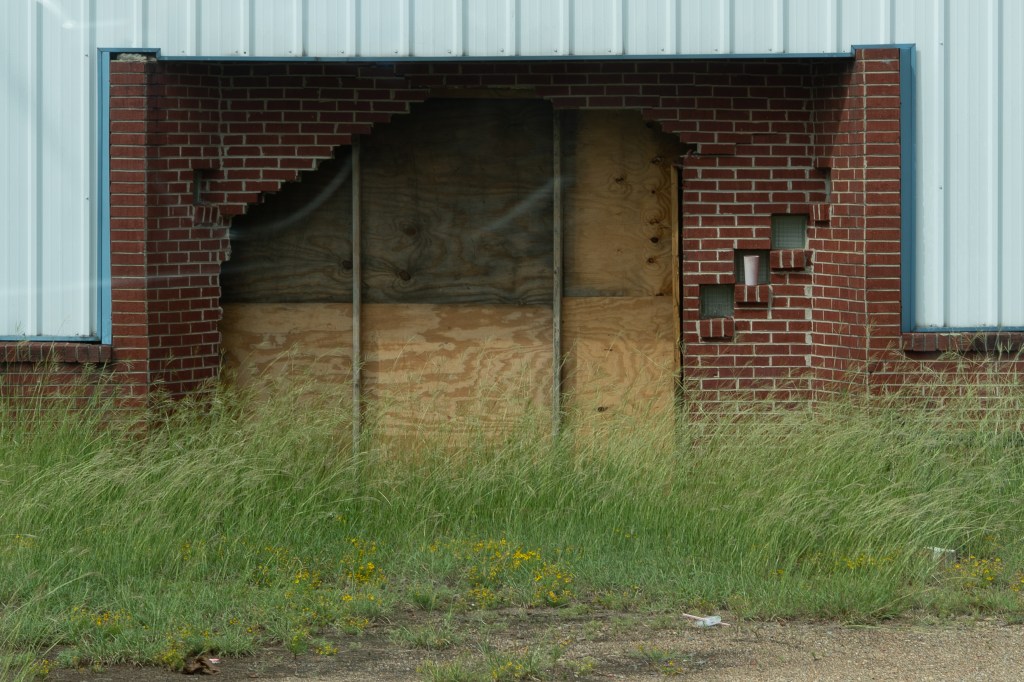
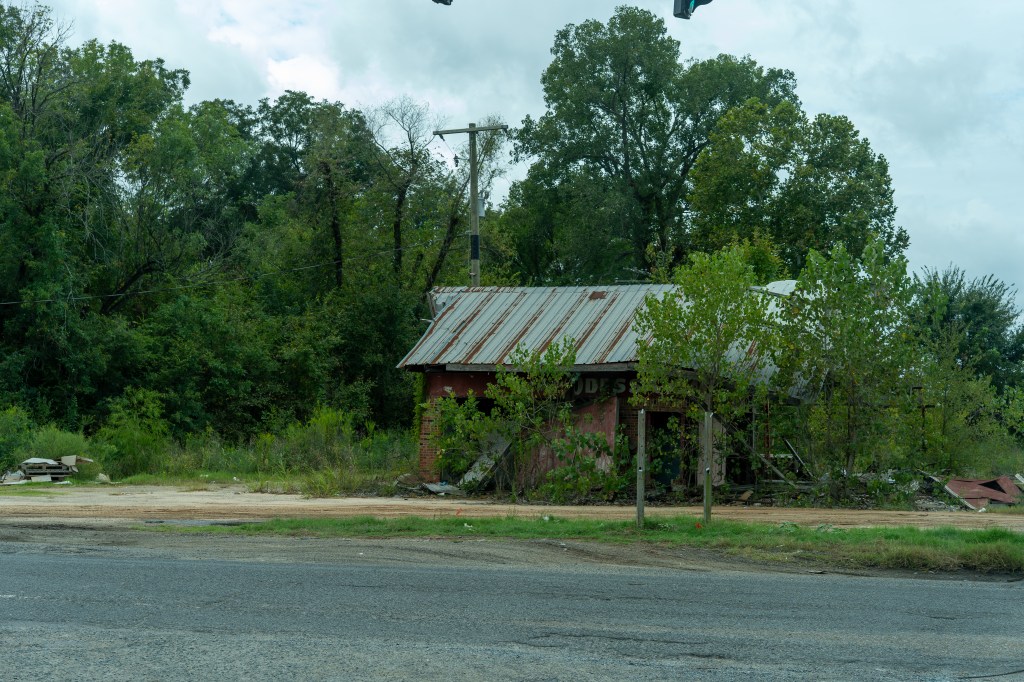
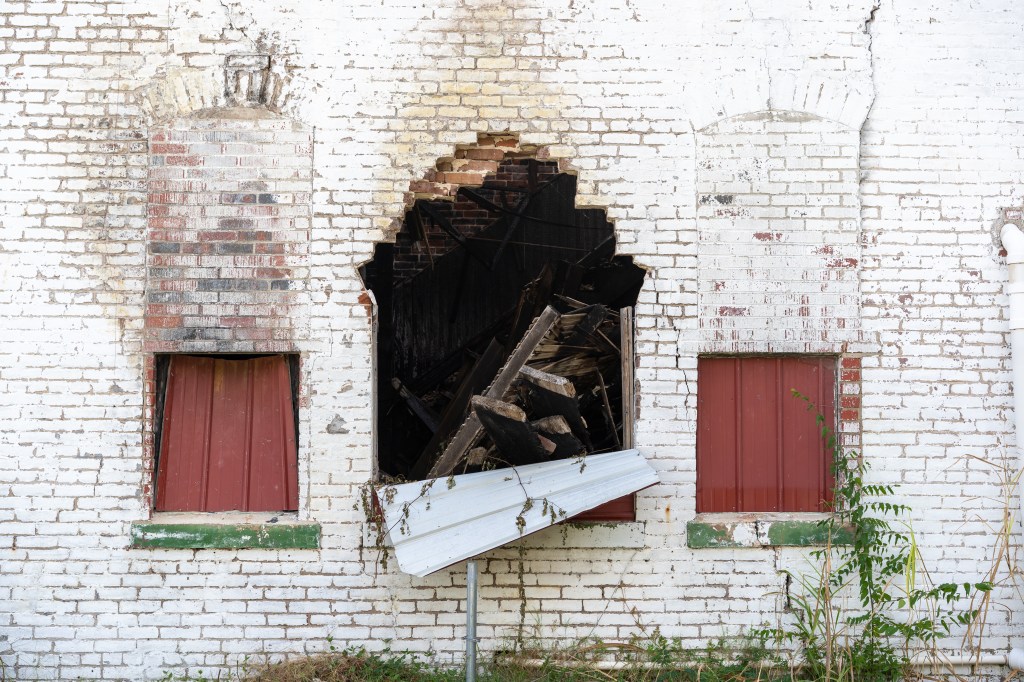
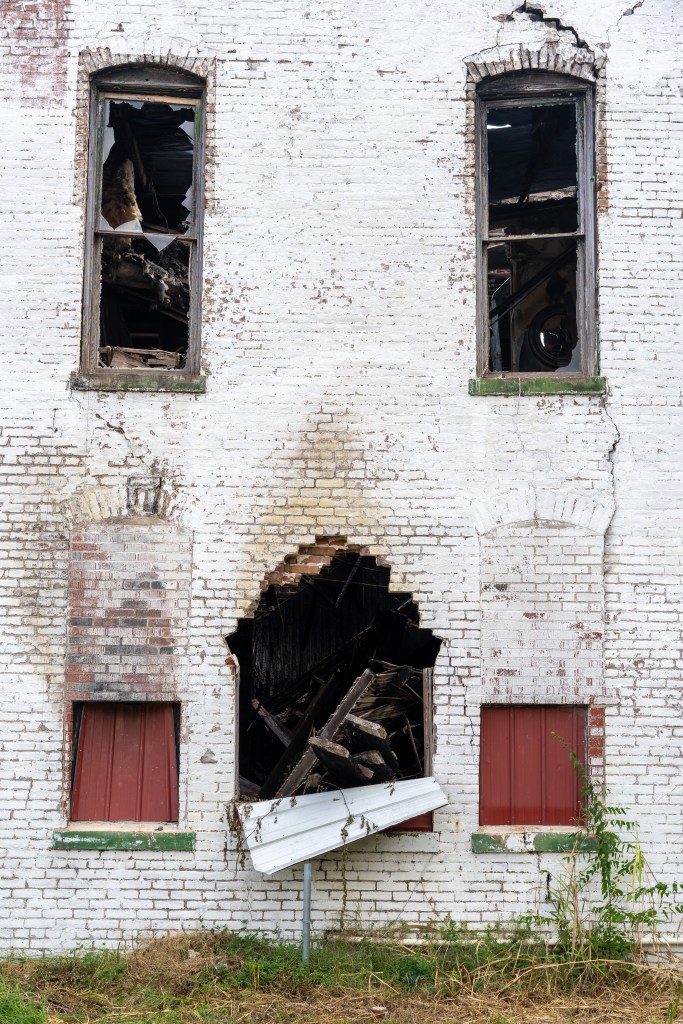
I get to travel a lot for my job. So I take my camera along for drive-by photography. It seems to me that the economy in Louisiana moves East and West along I-20 and I-10. And I live in Central Louisiana. One of the recurring themes in these photographs is decaying buildings. I don’t go out of the way to find them, I have to go out of my why to find new construction. One of the things I like to imagine is what these buildings were like in their prime, with people bustling in an out of them. What kind of clothes did they wear? How did they talk? What did they eat for lunch?
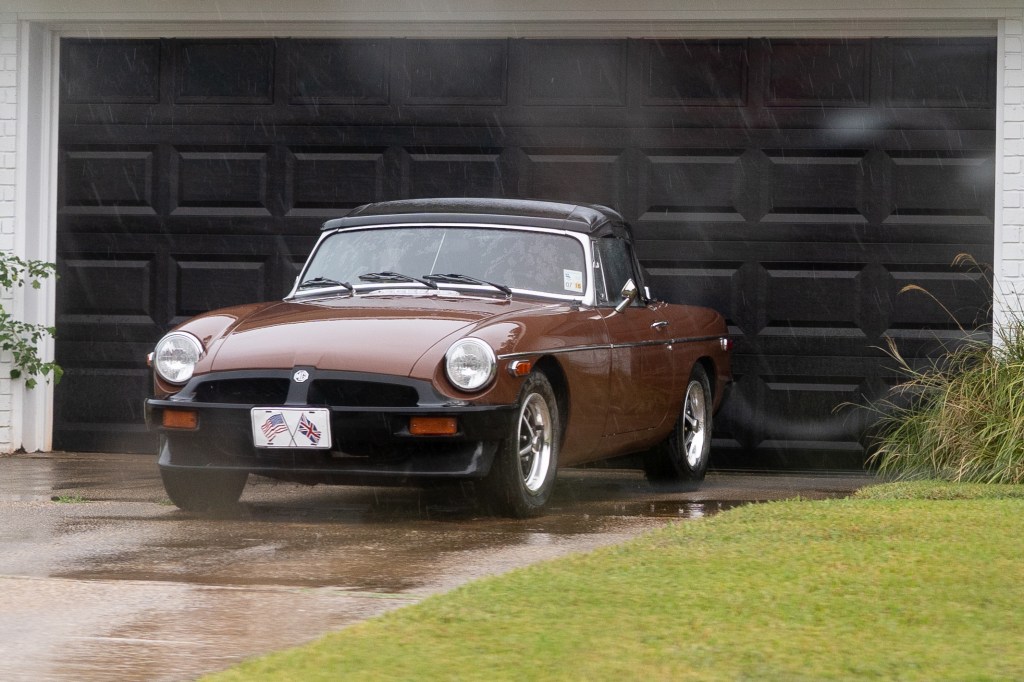
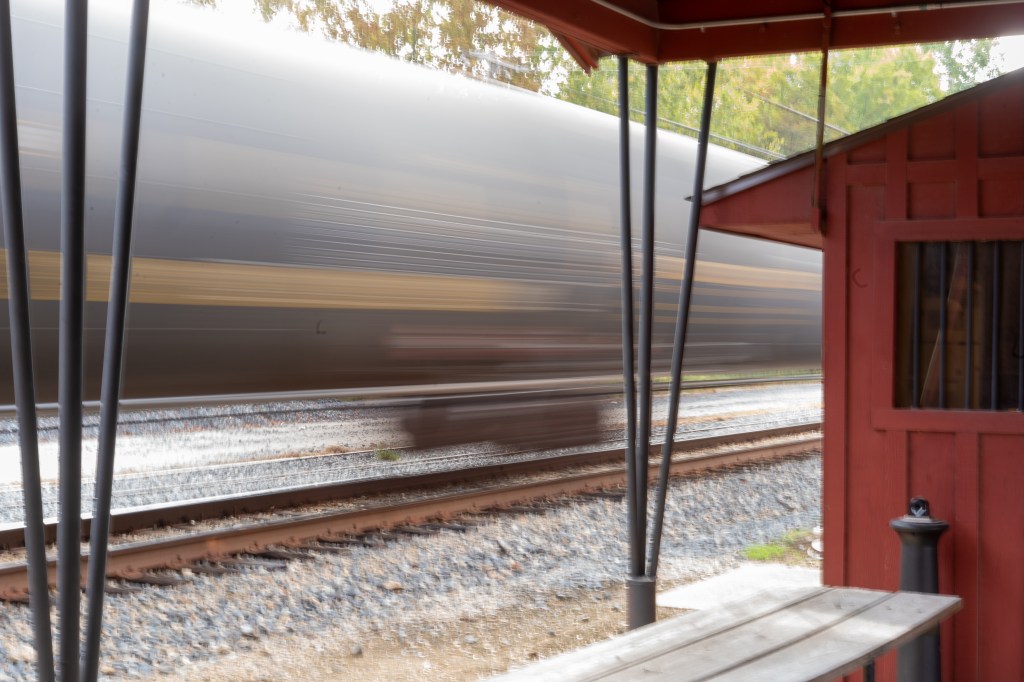
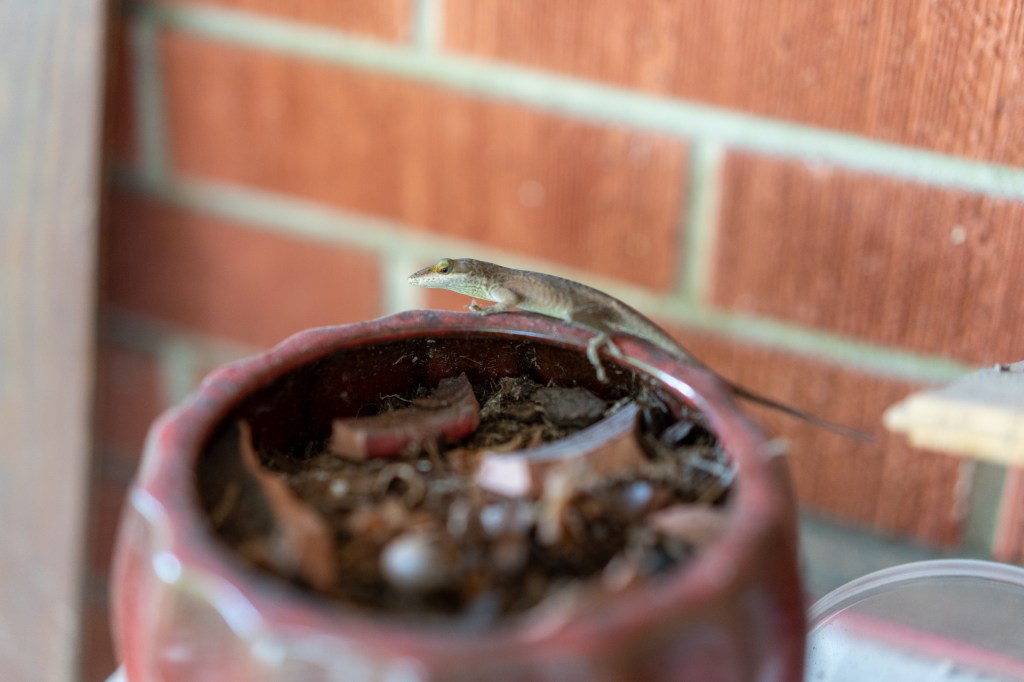
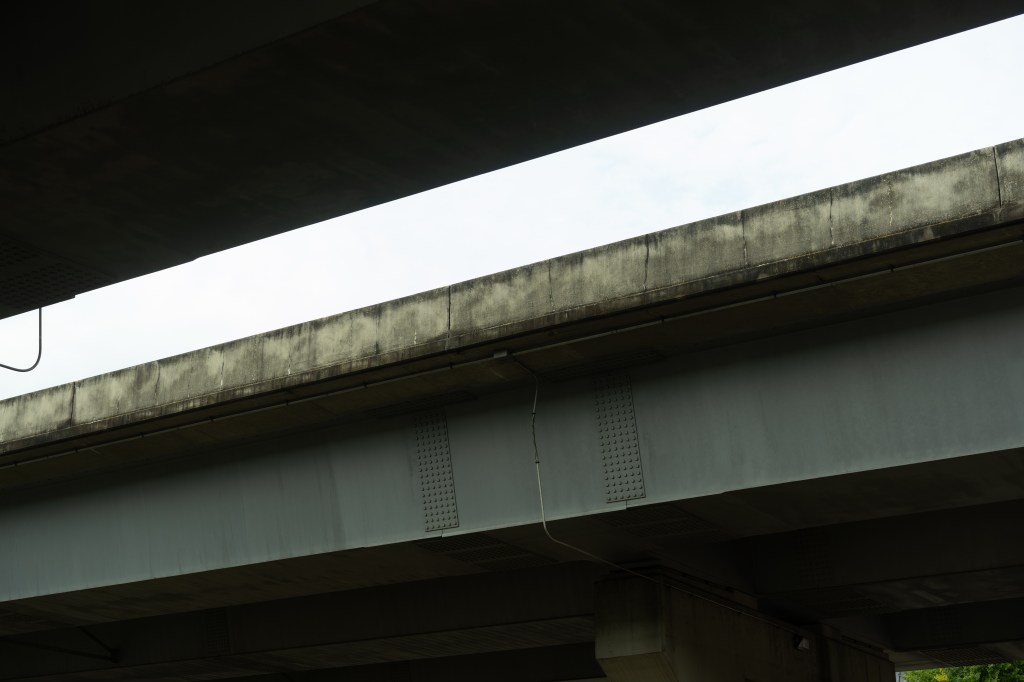
I imagine this was once a thriving little grocery store. The painting makes the pain worse for me: It is fake.I thought this man was interesting. He was shuffling material from one medical building to another across the street. The crack in my windshield somehow makes this picture better. The kind of obscure photograph that you imagine a special agent gets on those old detective radio shows.Cows have a special place in my heart.“These cars always reminded me of fighter planes.” That’s what the man driving one told me once at a gas station 20 years ago. His was green though.I wonder what kind of art is produced here. I like that old chair.Something about the colors on this building speaks to me.It was exhilarating being this close to a train.This is probably my favorite picture from this week. I love this time of the morning. I imagine this is a scene from a book that you can’t put down.I love these little lizards. Anything that eats bugs can hang around my house.Name the title of the book that this could be the dust jacket for. That’s the kind of thing I think about when I am composing a shot. Another good cover for a book about a haunted house.
This is my 200th article for what began in 2016 as Mostly From Memory, a blog where I started sharing short essays on my memories from growing up in a small town in Alabama. Since the statute of limitations has not run out on a few events, I am kind of out of material for the childhood stuff unless I want to run the risk of getting sued. Or I could start making stuff up. Which is how I think that some authors get into fiction. You take a piece of story that really happened, but you change the names of the people and move the location to somewhere far off like Pell City, Alabama, and describe some of the characters as prettier or uglier than they really were and add some extra details like an embezzling scheme, a murder, and some romance or dragons to spice up the plot a little bit. You know, just like cooking. You begin with a chicken breast—that’s the part that really happened—but it could really hurt someone if you serve it raw. The fiction part comes in with how you decide to present it: grilled, fried, boiled, fricasseed… And a good cook can make just about anything palatable, if not spectacular.
I haven’t gotten into fiction yet, but I have branched out and written about a lot of topics like grief, obituaries, music, biographical sketches, and social and cultural constructs, and how to overcome them. It is this sort of material that I am drawn to write about.
This makes me ask the question, has my writing style changed? I think it has changed in the same way that a person ages. If a man is still talking and behaving like a 20 year old at 40 then I think you would agree that something is off. And when a 40 year old takes measures to alter their physical features to appear 20, whether people pretend along with them or not, we all know that it is fake. I feel that my writing has aged with me.
And maybe my readers have come and gone just like friends in different in different stages of life. I may have lost some of my readers when my material shifted, and that is understandable. Just like when you take the last bicycle ride with your neighbor who is getting his driver’s license the next week. You’re still friends, but he is going places you can’t go now. And you spend less time together. Then when you get your license, you’ll probably go to different places than he went. And you meet new people who are less interested in your past than they are your future.
I did a lot of looking back when I first started writing. I felt the need to put some of those oral stories into writing. I am glad I did because I didn’t realize how quickly my sources would move on without warning to a place that I can’t go yet, taking their oral stories with them. I have been looking inward a lot of my recent material. But I am trying to practice looking out.
I think I am beginning to understand why older people say less.
If you have been with me since the beginning, thank you. You may not have noticed the shift because you’ve grown with me. But if you are an occasional reader, you may have noticed changes just like your great-aunt noticed when she only saw you twice a year at Easter and Christmas. And I guess that is what I want to talk about today: I really just want to write articles that make people want to think about things that matter.
I think people matter. I think how you treat people matters. I think motives and attitude matters. I think education matters. I think that morals matter. I think that mental health matters. I think that physical health matters.
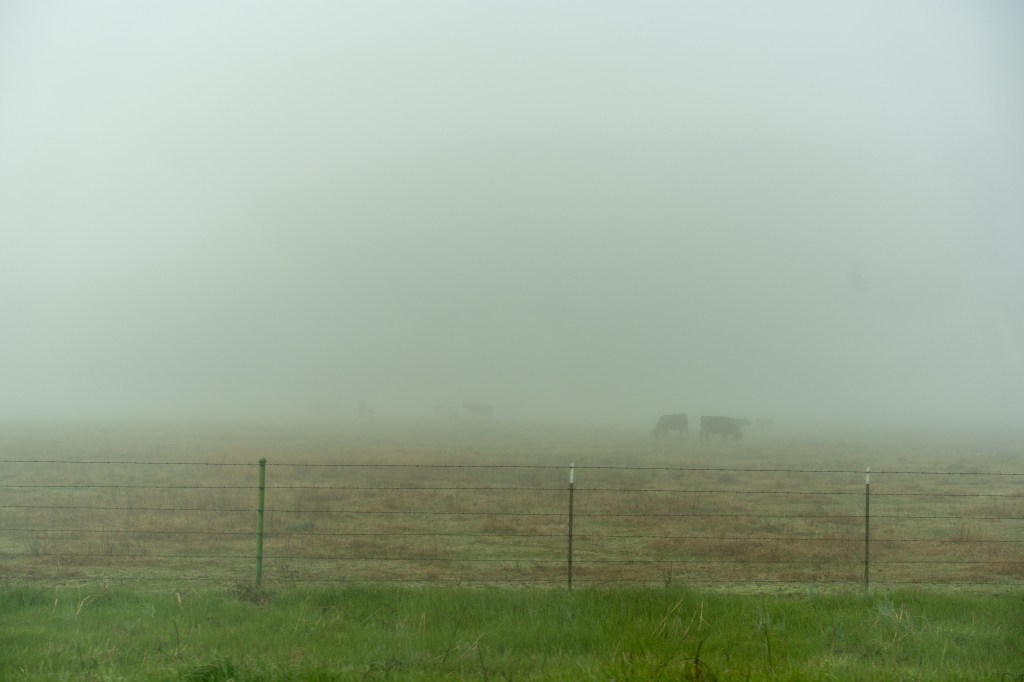
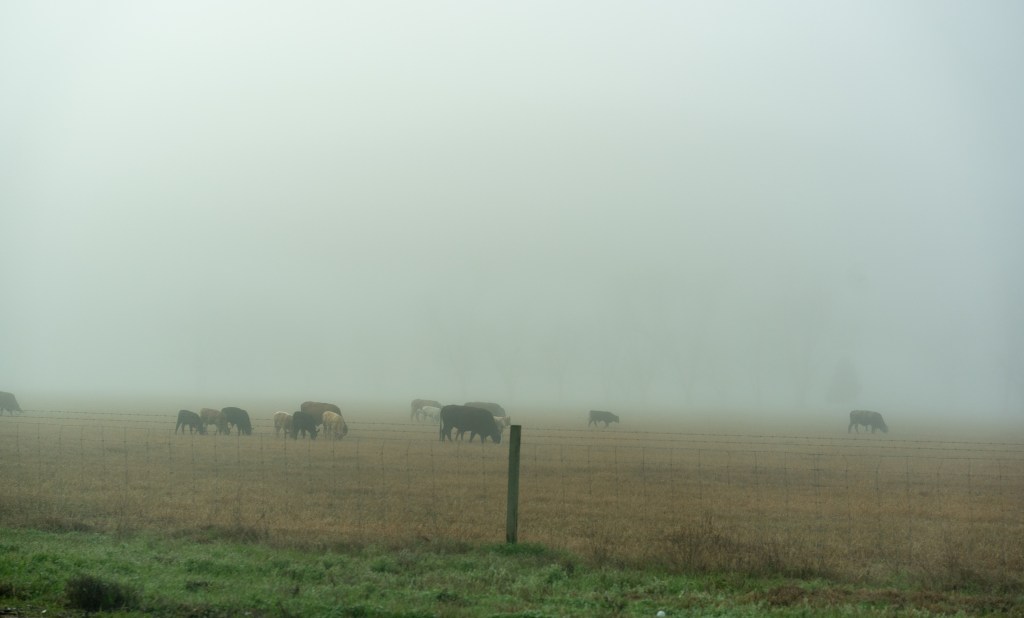
I had to drive in the fog this week. I’m not talking about the kind of patchy fog you drive through while you’re crossing a bridge and then you are back in the sunshine. No. I drove for two and half hours through the kind of fog in which Edgar Allan Poe set all of his stories.
I had to drive in the fog this week. I’m not talking about the kind of patchy fog you drive through while you’re crossing a bridge and then you are back in the sunshine. No. I drove for two and a half hours through the kind of fog in which Edgar Allan Poe set all of his stories. At least that’s the thick fog that I imagine when I read him. So naturally, I decided to do some drive-by photography. I love a good foggy morning; it makes me feel like Sherlock Holmes. A damp haze like this gives me a craving for a good mystery. For whatever reason, fog pulls on my creative nature. I was feeling pretty inspired and artistic in this dreamy landscape until I passed a big chicken truck that had turned over in the ditch just outside of Natchitoches. That wreck halted my daydreaming and caused me to slow down and give my undivided attention to the road, at least for a little while. Then I began to wonder if any of those chickens made their escape into the mist. I hope they did. I love a good escape story as much as I love a foggy morning. Maybe they took up with the herons in the swamp.
As much as the fog tugs on my imagination, I’m glad that it isn’t foggy all of the time. It can be stressful when you cannot see very far ahead of you. I imagine that’s what happened to that poor truck driver. He probably had to take evasive action to avoid killing someone he only saw at the last split second. Who knows?
The wrecked truck reminded me of something I learned about as a teenager following the progress of Operation Iraqi Freedom in the newspaper; The Fog of War. Originally a German term, it describes how the chaos of battle brings confusion and situational uncertainty to soldiers—and even top brass—who often become disoriented and are unsure of what to do next. I have never been in combat, but I have been in a lot of fog, and I can appreciate the analogy. My cousin Mark got disoriented in the fog on the Coosa River once during a fishing tournament. He navigated his bass boat by GPS right up out of the river and into the woods. I think the problem with disorientation is you don’t know you are disoriented until it is too late.
The vicissitudes of life can put us in a fog. The beauty of that fog and the creativity that it inspires is hardly ever seen in the moment except by the rare longsighted optimists, or the visionaries who are gifts to humanity. The rest of us only see the beauty in hindsight-that is if we make it through. There have been a few-and thank God only a few-truly foggy patches in my life. Times when you can only see as far as the next step and you aren’t fully sure of that; when you have all but lost direction; and when the mist has nearly halted any progress you thought you were making. It may take a while, but eventually we can look back and see the beauty of those times. And, with a twinkle in our eye and compassion in our voice, even recall them with joy and hope, and tell about them to someone going through their own fog.
We are often tossed and driven on the restless seas of time
Somber skies and howling tempests oft succeed the bright sunshine
But in that land of perfect day, when the mist has rolled away
We will understand it better by and by
This fog the other day covered a large swath of Louisiana. A friend who was working on the other side of the State that morning was telling me how foggy it was for him too. I’m glad I wasn’t in it alone. Eventually the fog “burnt off” as he put it, and it turned out to be a bright sunny day. But I’m glad I got these pictures. I didn’t want you to think I was exaggerating.
I think that it is healthy to have hobbies or areas of interest.
I just finished reading A Hunter’s Fireside Book: Tales of Dogs, Ducks, Birds & Guns by Gene Hill. If you were not aware, I am not a hunter, but I appreciate good writing no matter the subject-within reason of course. Good writing can make even the most boring pastime seem interesting. While I don’t necessarily think hunting boring, I do think Gene Hill was a good writer. And I really enjoyed the book. This book was a collection of columns he wrote for various outdoor magazines in the 60s and 70s. I can understand how readers felt when they got a new magazine and turned straight to where they knew his column could be found. He finished his career as full-time columnist for Field & Stream magazine. He died in 1997. All of this reminded me of how much magazines used to be a part of my life.
Zach had a big pile of second hand Field & Stream magazines that he procured from the thrift store. I used to read them too, and I didn’t really care for hunting or fishing then either. But the stories were interesting. And so were the ads. We’d stare at those rifles. Or think of how much fun we could have with one of those 6 wheeled amphibious ATVs in the tiny black and white ad spots in the very back of the magazine.
There was another author that wrote a lot for Field & Stream, Patrick McManus. We had some of his books, but those second hand magazines from his era would’ve been worn out a long time before they could be found by a country boy at a thrift store.
Every once in a while Mom would buy us a bunch of National Geographic magazines from the thrift store or a yard sale. We even had a subscription on and off throughout my life. I loved those old magazines. The pictures were so interesting that you wanted to read the articles. I still want to go to see some of the places that I discovered reading those old yellow magazines; Angkor Wat, Easter Island, New Guinea, Hong Kong, India…Steve McCurry and Rudyard Kipling have taken me to India so many times that I would like to go in person some day. The advertisements in National Geographic were quite a bit different than the ads in Field & Stream. I distinctly remember the Rolex (specifically the Milgauss) and Canon ads. It was also interesting to see ads for new cars that you had only ever known as old.
Mom subscribed to Traditional Home. Those ads made me realize that we were in fact, poor. But I loved looking at the floor plans of those high dollar houses. That magazine also gave me an appreciation for interior design. It is hard to condense 15 years of reading a decorating and design magazine into a single sentence or even paragraph other than to say that poor design choices still bother me.
I guess the only guitar magazine that I have ever subscribed to was Premier Guitar. For the longest time I liked them because they never had people on the cover, just guitars. That changed when BB King died. I have stopped subscribing because I think the editor is a smart alec. Even so, whenever a new guitar student asked me a question about say, what a phaser pedal does, I have to work hard to keep from giving them a 5 page report with works cited and audio clips because they really want a brief AI answer, not a research paper, or even a magazine article.
I think that it is healthy to have hobbies or areas of interest.
Magazines were how I discovered a lot of things, like how to identify a quality piece of furniture. And where I learned a lot of guitar and gardening techniques. I started eating honey and gorgonzola cheese on crackers because I read it in a magazine. I learned how to intonate guitars and marinate grouse in magazines. I still haven’t marinated any grouse though, but I can intonate your guitar for $45 if you’re in the Jena area.
Some magazines would print corrections from previous articles. I liked that. I like it when things are made right. It also was a good reminder that real people worked to put together the magazine. I also liked that more than likely a reader caught the mistake. Sometimes a magazine would post a letter from a reader and it was as interesting to read as one of the regular staff writers. What a cool career writing for a magazine would be.
Superman could’ve picked any job he wanted as a cover, but he picked journalism.
I suppose that some people still subscribe to magazines, but I’m not sure who they are. I imagine that your social media algorithm is a good representation of what your magazine rack might’ve looked like 40 years ago. One nice thing about that is information is more readily available. I’m not sure that social media can quite replicate the feeling of seeing a magazine in the mailbox.
This year I read Reflections on the Revolution in France by Edmund Burke. I was initially intrigued by this work because I was on a French Revolution kick brought on by reading through A Tale of TwoCities yet again. What I found was I became far more interested in the writing style of the author than the subject material. This mastery of the English language is also what makes me, and countless others, Dickensian disciples. Mr. Burke writes a series of letters to a “French Friend.” Thankfully his friend could read English. As the title implies, these letters are his well thought out reflections on the French Revolution, an event that he watched unfold. The reflections were published and widely read during Mr. Burke’s lifetime. If you study political science today, you will become familiar with Edmond Burke as a political theorist. But I think he ought to be studied for his formal writing style.
How often have you had a conversation with someone and after it is over you find yourself wanting to edit what you said? It happens to me quite often. It is much easier for me to craft a clear response if I can write it. I am far more likely to choose appropriate words when given the luxury of reflection. With discipline and that most valuable resource time, I believe that anyone can put their deepest thoughts and feeling into written words. And people used to make this a habit in the form of diaries, journals, and letters to actual people.
Why do emails feel so stuffy and written letters seem so personal?
Although I keep a journal, and if you use your imagination I suppose you can call this blog-what an ugly word- and form of journalism, I cannot remember the last time I wrote someone a letter. For that I am a bit ashamed. At the same time I cannot remember the last time I received a letter. Most of our communication with friends today is done via text messages, FaceTime, and decreasingly for my generation, phone calls. All of these forms of communication lack the forethought and planning that a personal letter requires.
Even so, I believe that words fitly written are mere practice for words fitly spoken. As I said before, anyone can write if given time and inspiration, but it takes a truly gifted communicator to bring forth a fitly spoken word in real time. Words are powerful. Maybe this is why public speaking is a common fear.
A word fitly spoken is like apples of gold in pictures of silver. Proverbs 25:11
I am a long way away from where I want to be as an in person communicator. For that matter, I am a long way from where I want to be as a writer. But I am practicing. Thank you for allowing me to practice with you today.











 Mostly From Memory