Phrasing

Maybe he meant, Young man you don’t understand how good you really got it.

Do you remember when you were in high school and the whole English class had to take turns reading Shakespeare’s Macbeth out loud? Our teacher assigned a different cast for each scene so we could all get a chance to experience public speaking anxiety. You never knew when it was your turn; you just waited in agony; your only consolation was how bad your classmates were doing. Everyone was saying the right words, but hardly anyone was really confident in their understanding of the text, despite any confidence they pretended to have in pronunciation. They were simply words without meaning: noise. It would’ve been painful to endure if we weren’t so clueless. I have a feeling that some of us thought we were doing a good job, but I don’t think anyone in my class went on to pursue an acting career. As bad as it was, I still enjoy hearing people read out loud.

I can hear us now just droning on…

Macbeth: If we should fail?

Lady Macbeth: -We fail?

But screw your courage to the sticking place

And we’ll not fail.

Now think for a minute of the old man you used to see at the grocery store—it helps if you had a job at a little grocery store while you were in high school—who had worked as a mechanic for 50 years and had to drop out of middle school to help out on the farm. He couldn’t pass an English class if his life depended on it, but it didn’t really matter; even with atrocious grammar and a vocabulary half consisting of words that could not be found in the dictionary, he could still create a sentence that would stay with you for 20 years because he knew exactly what he was talking about.

“How you doing today Mr. Wallace?”

“I’m doing fine, and you?”

“Pretty good.”

“Pretty good hard to beat.”

Pretty good hard to beat has been incorporated into my language. It may seem just like words on paper-or a screen-but it was the way he said it that let you know there was a lot more meaning that went into that sentence. Maybe he meant, Young man you don’t understand how good you really got it. I think about that old man whenever I chance to use this phrase. Whatever he may have intended, it certainly resonated with me.

That is what we call in music phrasing. Phrasing is how a musician puts a sequence of notes together into a musical thought, and how they interpret written music. It is the reason that Blues musicians could limit their musical vocabulary to the 5 note pentatonic scale and make people cry. It is why folk music can be so simple in its form, but still able to make us recall memories of places we’ve never been and times in which we never lived. And the same reason that beginner musicians sound like beginner musicians: their phrasing is off somehow. They may be playing the right notes-even reading the right notes from a master composer-but still unable to convey the real meaning of what the composer was trying to say.

The blues is feeling good about feeling bad.

Phrasing is more than having a nice voice, or tone. But I imagine that won’t hurt, but I’m not convinced it helps all the time either. It doesn’t matter how nice your voice is if you don’t have anything to say. Or if you are only going to regurgitate words that came from someone else’s heart.

It took me a while to really appreciate Shakespeare, and the closest I have come to understanding it was to see a play performed by actors who understood it at least better than me. I took Sarah to Blackfriars Theatre in Staunton, VA to see a All’s Well That Ends Well and Two Gentlemen of Verona. It was a far cry from bending over the text book following along as your buddy in class-who had never read a book for pleasure in his life and barely had a grasp on 21st century American English-stumble through his assigned lines without the faintest idea of the plot. Those Blackfriars performances have stuck with me and I would like to go back again some day.

Phrasing isn’t any one thing, but a host of subtle things like tone, dynamics, timing, space, and feel. These are all musical terms that could each have their own textbook and university course. So whether speaking or playing and instrument, how do you learn to phrase well? For a start, I think it is important to know what you want to say. For a musician, the most important part of phrasing is to get emotionally involved with the music. I think the best way to do that is to pay attention to the lyrics. And that means you need to understand the lyrics. People can tell when you don’t know what you are talking about. You don’t have to master the language of music-or the English language for that matter- to say something that will connect with a listener, but you do need to master your vocabulary, no matter its size. You don’t want to sound like someone who picked a random $40 word out of a dictionary and tried to force it into a $15 vocabulary. It will stick out like a Ferrari in a trailer park. If you want to build your vocabulary you need to read good stories-and listen to good music. A well written novel has the power to increase your emotional intelligence. Good readers understand empathy.

Even a fool, when he holdeth his peace, is counted wise: and he that shutteth his lips is esteemed a man of understanding. Proverbs 17:28

If you want your words to carry weight, don’t waste them.

Spanish

In 2020 I listened to the audiobook version of Don Quixote by Miguel Cervantes. I chose that book because it was included in my subscription to Audible and I didn’t have to use any of my precious credits. It turned out to be hilarious. I really appreciated how the 400 year old humor still made me laugh out loud today. It really made me think If the book was that funny in English, how funny was it in Spanish? It is because of this literary masterpiece and too many other books to name about the Spanish conquest of Mexico, pre-Columbian America, and Mesoamerican civilization that I decided to download the DuoLingo app and start learning Spanish. My Mom died that summer and I found studying Spanish a welcome distraction. And by Thanksgiving I became determined to make studying Spanish a part of my daily activity. That was over 1,000 days ago.

Some days I feel like I haven’t learned any Spanish at all. I am sure I would be further along if I was forced to speak in Spanish every day instead of doing the simple grammar exercises. I get the same feeling sometimes about guitar. To put things in perspective I flip the guitar over and try to play a few chords left handed and it makes me feel better about how far I have come. I have done this so much over the years that I am starting to get good playing left handed. With Spanish there are a couple of similar motivation reminders: I can understand spoken and written Spanish far better than I can speak it.

The other day I was at our church’s Fall Festival Fellowship standing around the grill with a bilingual brother and two Spanish speakers. We were eating grilled corn on the cob and they were jabbering away in Spanish. I wasn’t really paying attention to what they were saying until one of the Spanish speakers started talking about eating iguanas. It dawned on me that I was comprehending more or their Spanish conversation than I was not. “Iguana con leche de coco…es muy buena.”

La iguana es el pollo de los árboles

The most rewarding thing about learning Spanish has been being able to communicate with people who still only speak Spanish. Even though I still feel pretty vulnerable because I have to take my time forming my thoughts. There is something wonderfully exhilarating about communication.

Studying Spanish has also allowed me to see and hear English in a different perspective. Because of its silent letters, irregular verbs, and borrowed words from other languages, English is a difficult language to learn for a non-native speaker. You probably even know native speakers of English that still do not speak it well. Language, whether native or foreign, is a skill and must be honed. Studying Spanish has made me want to be a better English speaker.

A person’s vocabulary is a reflection of the books they have read.

There are some things in Spanish that just make sense. Like having punctuation at the beginning of a sentence, letters that only have one sound, accent marks that do not get ignored, and I almost hate to say it, adjectives after the noun instead of before.

I am a long way from writing in Spanish as well or as quickly as I can in English. But I still practice on my wife. When I think about writers like Joseph Conrad, who wrote in English, a language foreign to him, I am encouraged that some day I will be able to express myself in Spanish on such a level.

Children That Talk to Adults

I love all children. Round up a choir of them to sing before the offering at church and you are guaranteed all of the cash in my wallet. I love to hear children play. Even when I have to step in and act like I don’t like it when they get rambunctious- because that’s what parents are supposed to do, and so they won’t tear the house or the church down- I love that too. Children have unbridled energy.

“He just needs a tiller.”

Perry Wells in reference to a hyperactive child.

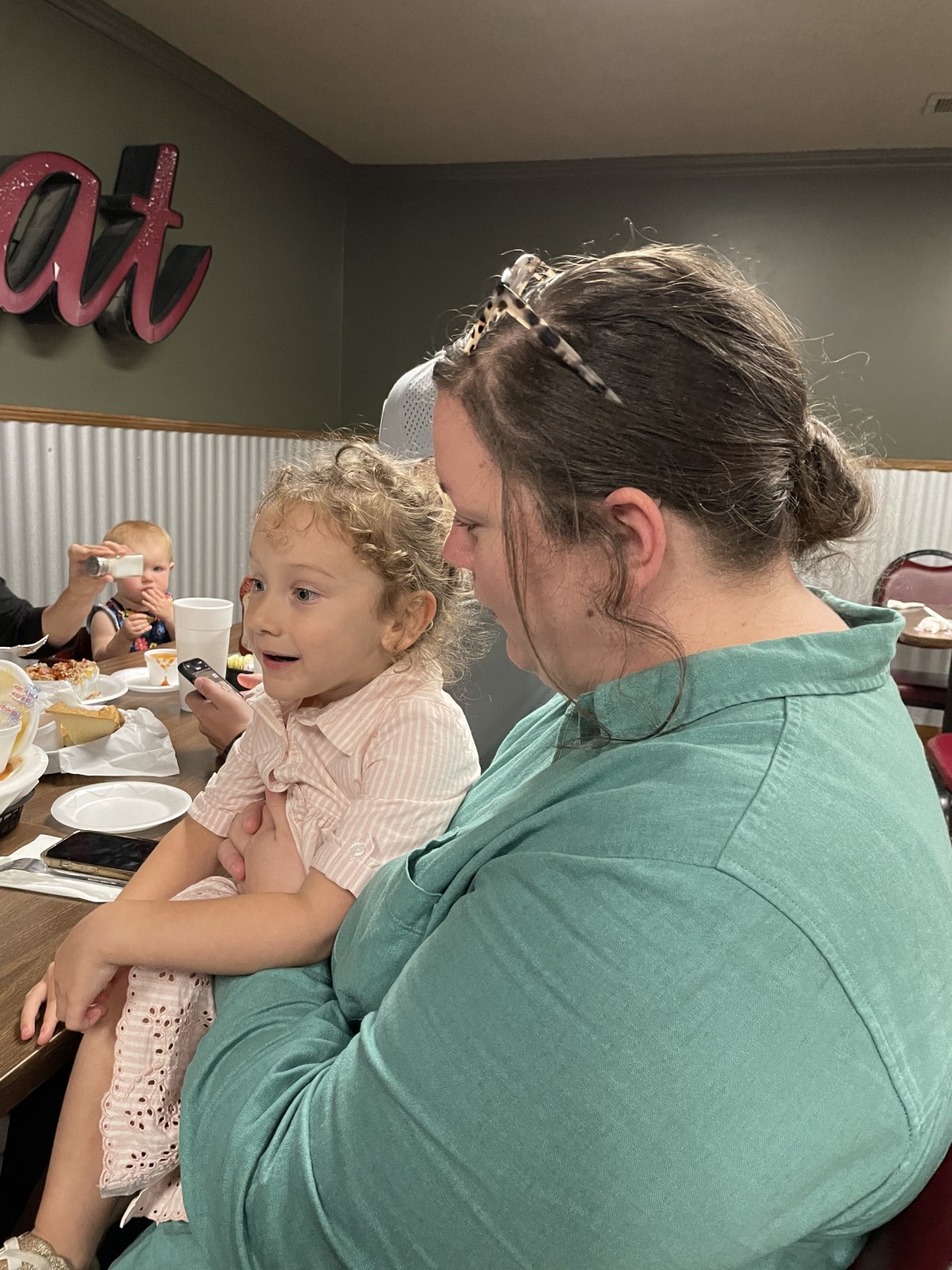
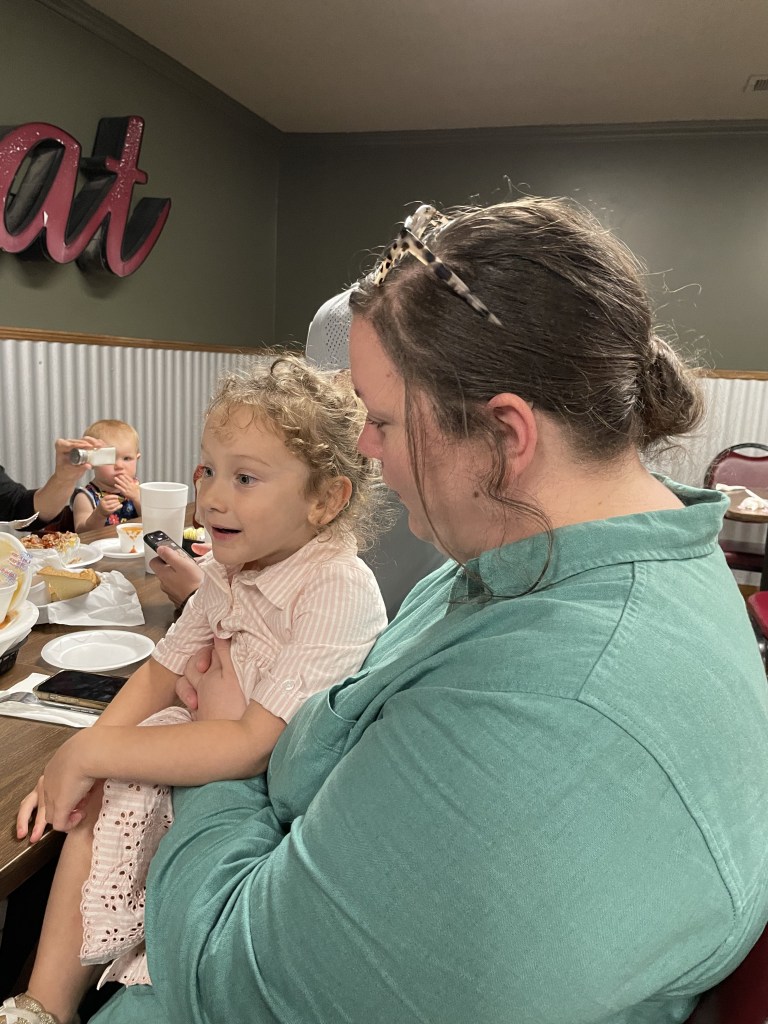
I especially love when children carry on a conversation with an adult. I think this is something I picked up from Dad. He loved talking to kids. Not in the baby talk way, but in the same way he talked to everybody.

Dad asked my cousin Kyle about his first week of kindergarten.

“Well Uncle Perry, there’s some boys in my class and there’s some girls in my class. And I’m one of the boys.” I am not sure they are still teaching this these days. But it is still a good lesson to learn.

Children have an interesting way of putting their thoughts into words. Or using language. Or “Playing with language” as linguist David Crystal puts it. When you have a limited vocabulary you have to improvise sometimes. I love it when children make up useful words. For a while Miriam called the flyswatter a fly-smacker. If the made up word is good enough then adults will likely adopt it. I have adopted fishing-wand.

Children are also practical. I once asked a child where he liked to eat pizza. “At the table.” He replied. The made up words and innocent logic are just two of the things that make a child’s conversation rich. There is an honesty and directness that children possess in communication that many adults have lost long ago. Speaking with children reminds us of that.

If I may be vulnerable, children who do not “speak when spoken to” get on my nerves. At the same time, I will not reprimand my child if some creepy adult is trying to talk to them. But, I was raised that it was rude to not speak when spoken to, and I will not remove that landmark.

I have noticed that you have to earn the trust of some children. It may take a while before a child isn’t afraid of you. After all, I’m a big loud man and that may be intimidating to a child.

I feel like my brother was born grown. Dad said that Zach always wanted to be with the adults as a child. As an adult he is equally good at talking to people and to children. He is as good as Dad was at talking to the little fellows.

If you want to be a good communicator it really helps if you genuinely love people.

I think that learning how to speak to adults is an important life skill. A lot of business gets handled through conversations. Perhaps young children that can hold a conversation with an adult are more prepared to handle that business when they become adults. I don’t know. But I wonder about these things when I talk to little children. What will this child do when they grow up? What natural propensity is this child already displaying? Does this child know how to have a conversation?

I hope you get to talk with a child soon.

The Southern Simile

Do you have a favorite Southern saying?

You could hardly call me a well traveled man. I have been to Washington D.C. though, and that’s got to count for something. In the course of my limited travels I have taken note that Southerners, especially those who have traveled less than even me, are unique communicators. They have ways of describing things that are marvelously effective. In short, Southerners are masters of simile. 

For instance, “Heavy as a widow’s heart”. Instead of giving an exact measurement, you get an idea of something with an unfathomable weight that also speaks to your emotions. Most of the Southern story tellers I know have enough of these pithy descriptions to sink a ship. It’s usually this aspect of their tales that draw the greatest reaction from a listener. I’ve done my best to curate a short list of my favorite similes to help those who might want to exercise the poetic nature of language.

-Ugly as pootin’ in church. It doesn’t get much uglier than that.

-Mean as a snake.

Mean as a striped lizard. Be sure to pronounce striped with two syllables.

-Broke as a convict.

-High as a cat’s tail.

-Nervous as a cat in a room full of rockers.

-Colder than a mother-in-law’s love. To be fair, my Mother-in-law is great.

-Cold as a well rope.

-Hot as blue blazes.

-Crooked as a dog’s leg.

-Naked as a jay bird.

Strong as half an acre of garlic.

Tough as woodpecker lips.

-Goofy as an eight day clock.

Crazy as an outhouse rat.

-Poor as Job’s turkey.

-Wild as a team of goats. This is something that you say about children.

-Screaming like a coon hunter.

Slow as molasses.

-Rough as a cob. Takes on a new meaning given the fact that corn cobs were once used as toilet paper.

Hang in there like a hair in a biscuit. 

-Dark as a sack of black cats. 

Pretty as a pair of new shoes.

This is by no means an exhaustive list of similes, they sometimes only come to me when I need them. I’m sure some are coming to you right now and I’d like to hear them.

Thank you for reading. If it made you laugh, or cry, or remember someone that you love please share this with a friend. -Zane Wells

Support

Your patronage is greatly appreciated.

$5.00