The Cows Are Out

I saw these calves out of the fence this morning.

I saw these calves out of the fence this morning. And I just felt like I needed to tell someone. It seemed like the responsible thing to do. So I’m tell you since I don’t know who owns these cows. In fact, I don’t even know anybody that lives on the road where I saw them. I didn’t grow up in this town.

I imagine that whoever owns the cows will take care of the situation. Promptly. It might be a nuisance to have to stop what they are in the middle of doing and go try to round up loose calves. But this is probably not their first rodeo. And they’ll probably get the cows back in the fence and mend the fence right away.

This wasn’t the last time I caught these two yearlings out of the fence.

Things like that get taken care of quickly on the farm. I doubt there will be a meeting with all of the department heads to see whether it is a real problem or not and who will take responsibility. Or follow up departmental meetings to see who will be assigned to an interdepartmental special task force team. And no third meeting with the reluctantly volunteered staff to develop a plan of action. I bet just one man and a sack of feed took care of this issue.

Not all problems are this simple. Yet I am afraid that we often make a more complicated solution for problems that are even less important than cows being out.

Radio Kid

I’m not out to defend parents who allow the iPad or the Television to “babysit” their children. I’m here to talk to you about the radio.

You hear the term iPad kids these days. Or children who learned how to operate iPads before they learned to speak. Consequently, they develop an addiction to this device. It doesn’t seem to be a term of endearment, but rather a derogatory term. These iPad kids don’t have a clue about how the real word is. I remember hearing the same kind of language when I was a kid but attached to Television. All these kids know how to do is watch TV. When I was a kid we were out riding bikes and throwing rocks at trains. I suppose every generation in many ways thinks that the following generation doesn’t have sense enough to “pour pee out of a boot” as my Dad used to say. And out of convenience perhaps we humans site the most recently adopted technology as the cause for a child’s …well a child’s natural childish behavior. I’m not out to defend parents who allow the iPad or the Television to “babysit” their children. I’m here to talk to you about the radio.

I was a radio kid amongst a bunch of television kids. We didn’t have a TV in our home. In the 90s this was unique. I’m not even sure if TV is still a relevant medium for entertainment, so it may no longer be strange to not have a TV today. But we did have a radio, and I liked to listen to it.

The AM/FM receiver, turn-table, and tape deck were all one and the same for me. The noise came out of the same source: The Radio.

Records

I think my earliest memory of recorded music was from the record player. We had a record of The Drifters singing Charlie Brown. I remember listening to that a lot. And dancing in the living room. We also had a Justin Wilson record I guarantee. Gram had a lot more records than we did. My favorite was the Disney Robin Hood record. It skipped on Friar Tuck saying No, but there’s somebody who will be very disappointed if you don’t come, don’t come, don’t come, don’t come… Gram would have to come and fix the needle so we could get on with the story.

I don’t remember many more records in particular that I had such a strong attachment to-excepting that there was a lot of country music. The old stuff like Hank Williams and Jim Reeves. I remember the audible artifacts of that old vinyl. The pleasant white noise and the occasional crackle and pop of the needle bouncing over debris. It is still a pleasant noise to me.

Tapes

Someone always had to load a record for me, but I was able to figure out the tape deck by myself. I listened to a lot of preaching tapes on the radio. One of my favorites was a Bro. Mahuron preaching at Alabama Camp Meeting. I kind of feel like that lightning bug that got caught in the ceiling fan. I am delighted to be here. He also told a story about playing baseball with Fred Blosser. He was a big ole boy, he had to hit a home run to get a base hit. I would request this preaching tape-especially on car rides-not for the theological substance of the sermon, but for these humorous preliminary remarks and sermon illustrations. Then I would settle in for a pleasant nap.

I got a Johnny Horton tape for Christmas when I was about seven years old. They probably bought it just for The Battle of New Orleans, but I ended up liking Whispering Pines, Comanche, and Sink The Bismarck just as much. It really took me a long time to realize that there were other genres of music besides country. I am slowly coming to terms with how much of my musical foundation is this early post-war country music. I still appreciate the storytelling aspect of real country music. And maybe that is why the guitar has always had a stronger pull on me than the piano.

Mom bought me a Merle Haggard tape at Food World one time. This is what I hear when someone plays a Telecaster. This was electric country. With electric bass that faked an airplane on Fighting Side of Me. Hearing these musicians create sound effects with their instruments made a lasting impression on me and shaped the way I interpret music.

AM Radio

Dad listened to a lot of AM radio in the truck. Mainly Sports Radio 690 WJOX-Birmingham! Skip Carey would call the Braves broadcast on this channel. It’s a high pop-fly foul into the stands, and a fan from Del Rio, Texas makes the catch! We’d listen to those games while we were in the hayfield with the truck windows down and the radio up. That’s when The Braves were going to the World Series in the 90s. There was also a radio show with two former basketball coaches-one from Auburn, one from Alabama-called Sonny and Wimp. Wimp and Sonny, one thinks he’s smart, one thinks he’s funny, They used to be coaches they used to have clout, do they really know what they’re talking about? And another show with a man named Herb Winches that Dad listened to pretty regular. It was all sports so I really wasn’t paying attention. I did get a kick out of the commercials though. The original Budweiser frogs and lizards were funny to me. The Real Men of Genius Bud Light commercials were also funny. It made alcohol seem like something you can laugh about. What a dangerous idea.

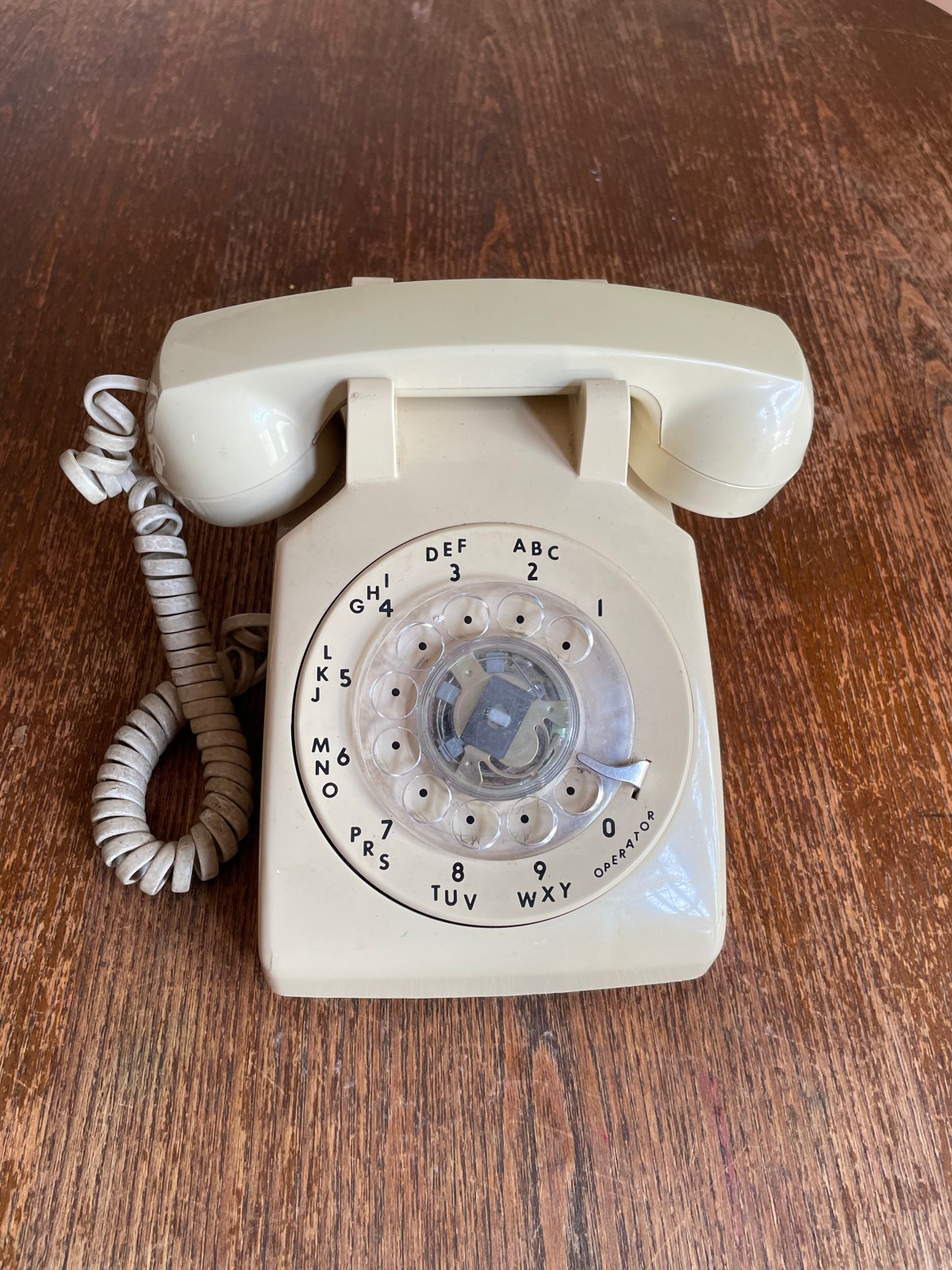
Dad used to say, “Boy you know that must have had some fun making this commercial!” One of his favorites was the Southern LINC cellular telephone commercials. Earl, a fictitious Southern LINC customer, told how Southern LINC had allowed him to expanded his business.

Thanks to you I’m branching out…Just the thought of it makes me shivery, Earl’s Septic Tank Repair, and Flower Delivery.

There was also a jewelry store somewhere in Birmingham that had a commercial where lovesick men would call in and ask for advice from a motherly character named Deadre. Talk to Deadre Darlin’. I still laugh about that. It was so funny that my cousin Kim named her dog Deadre. Gram run over that dog while backing out of the driveway. She heard it yell, then accidentally run over it again as she pulled back into the driveway. Poor Deadre.

Talk Radio was the forefather to PodCasts. The appeal of Talk Radio, at least for me, was that it was live. And they would take callers. Just ordinary people could call in and talk on the radio. This is the kind of entertainment that cannot be scripted. Even if you don’t like sports, you’d probably appreciate the drunk people who called in on the radio. Herb Winches took a drunk caller once who started out talking about some relevant sports topic and he got overwhelmed and just started saying You know, you good at what you do Herb. Dad laughed about this for months.

AM Radio had a distinct sound to me, and because of this I found it hard to listen to music on AM Radio. I now realize that there is less information coming through on AM than FM, so some frequencies are missing in the music. This is probably why audiophiles are willing to spend $50,000 on hi-fi stereo systems to listen to their record collections. So I never experimented much with AM Radio outside of listening to it with Dad.

FM Radio

I did experiment with FM Radio a lot. One of the first radio stations I remember hearing was Oldies 106.9. At that time they were playing everything from Elvis and Roy Orbison, to Motown and British Invasion. I remember hearing Love Me Do by The Beatles and being mesmerized by the harmonica sound. Dad told me the story of Delbert McClinton teaching John Lennon to play the harmonica. I didn’t realize that this was the music of rebellion in the 1960s. To me it was just like they were marketing it on the radio Feel Good Music.

We also listened to the Christian station out of Birmingham, 93.7 WDJC. Specifically The Dixie Gospel Caravan. Which was the evening Southern Gospel program. I used to love the song, I’ve Got a Feeling Everything’s Gonna Be Alright. This program was mainly Southern Gospel quartet music. And I imagined the bass singer as a face in the wall singing. That can’t be a real person. I also imagined the high tenor as tall and thin. I had a hard time telling the different quartet groups apart because the sound was so similar to me. And that is one of the reasons that I still don’t relish quartet music. Maybe I reached my quota of quartet music by the age of 9. Who knows?

I must confess, aside from The Dixie Gospel Caravan, I listened to the Oldies and Classic Country stations a lot more than I did the daytime contemporary offerings from WDJC. So there is a large gap in my Christian music canon. This is sometimes embarrassing to me when someone-usually a minister-wants me to remember-or even worse play-a Christian song from the 1980s which I have never heard. Or they ask me about a particular Southern Gospel Quartet. Did you used to listen to The Anointed Spoonbill Singers? No, Brother. I listened to The Beatles, The Rolling Stones, Sam Cooke, and Marvin Gaye though. I ain’t saying it’s right, I’m just saying it’s the truth.

When I started learning guitar I would sit by the radio and try to play along with the Classic Rock station. For hours. The radio taught me how to play guitar. I still prefer to try to work out a song guitar in hand while I listen before I resort to the sheet music.

Public Radio

At some point during my teenage years I was introduced to Public Radio. It fueled my curiosity about classical music and introduced me to opera. For years I listened to NPR’s World of Opera while I was cutting the church grass every Saturday. Public radio also had some cool shows on Saturday’s too. Car Talk, What a classic show. I still shift my manual transmission truck into reverse when I park because of Car Talk. I also enjoyed A Prairie Home Companion with Garrison Keillor. Which was a variety show sort in the style of Jack Benny or Phil Harris. Keillor’s show served up a healthy dose of Americana music. Which is to say a thick soup of gospel, bluegrass, country, blues, and swing. And it was live.

One of the strangest shows I remember was Hearts of Space, an electronic-new-age-ambient-music program. It featured artists like Klaus Schulze and focused heavily on synthesizers. My Mom didn’t like that show. Even though I didn’t fully understand it, I liked it. I didn’t know how those sounds were being created and I just accepted that it was with computers. I have learned a lot about synthesizers since first hearing Hearts of Space.

When I lived in Virginia I discovered The Big Broadcast with Ed Walker. This was my introduction to the golden age of radio shows from the 1930s-1950s. Ed was blind, and he made me wonder how much those old radio shows must have meant to someone who couldn’t see. I listened to that show until he died. I still listen to vintage radio shows on the Old Time Radio app with Wesley, but it isn’t the same without Ed introducing them.

Today

I suppose that you could find everything today on an iPad that I found on the radio, if you look in the right place. That’s just the thing though: the iPad is a very visual medium. While kids may still be listening, they are doing a lot of looking. And who can say what they are looking at? Radio and Television were pretty rigid in their programming. There was a time when you had to be good to be on the Radio. You may have just had to be good looking to be on Television. But now, anyone with a pulse can start a YouTube channel. And they don’t have to worry about getting dropped by a sponsor or advertisers because many people don’t make one red cent on YouTube but still churn out mindless videos of just about anything you can imagine. I think about this sort of thing when I see a child glued to an iPad. Time will tell how these children will turn out. I think they’ll be a lot like the Television kids. Which I don’t know if I have done a great job communicating with for most of my life.

I can’t remember the last time I turned on FM radio. I grew weary of the commercials long ago. And many of my favorite show hosts are now passed on. The Radio changed on me. But I still listen to something every day. In that sense I will always be a Radio Kid.

Salt Life

Bumper stickers are a mystery to me. You would think that you could tell a lot about about a person by what kind of bumper stickers they have, but really you can only tell that they are bumper sticker people. And that is the mystery for me: is this bumper sticker accurate? I’ve always thought it would be funny to put bumper stickers on the vehicles of unsuspecting Wal-Mart shoppers at random. But I cannot bring myself to act upon these low juvenile thoughts. Although it does prove the point that a sticker does not necessarily define an individual. It is simply a label that has been applied by the driver. Or perhaps by hooligans in the Wal-Mart parking lot. You can label a jar of peanut butter chicken noodle soup or hominy but it will just be mislabeled peanut butter.

The label that I am most suspicious of is Salt Life. Especially if I see it on a car a long way from the beach. I have a hard time reconciling Salt Life bumper stickers and Tennessee license plates. How much of the Salt Life can this person really be living? People that are indeed living the Salt Life are probably on boats-or golf carts- and certainly not sitting in rush hour traffic seven hours from the coast. But we as people feel like that the bigger the sticker the more true it is. You’ll see a whole back window of a truck letting everyone know that the driver of this Silverado in Fort Payne, AL is living the Salt Life.

When I see a vehicle with a Salt Life sticker I usually make up a story for that driver. And then I imagine that story as a bumper sticker in place of Salt Life.

I went to the beach on vacation in 2016 and we chartered a fishing boat and I caught the biggest fish in my life and I really enjoyed my trip.

I go to Gulf Shores every year for this conference at work and I think it would be cool to live there.

I go fishing every year in Pensacola with my cousins and that is the only real fun thing that I do since my divorce.

I went to Panama City for my Senior Trip last year.

I am thinking about launching my own bumper sticker enterprise: Realist Bumper Stickers. Among other things we will offer a more accurate alternative to Salt Life. It is going to say: I Wish I Lived On The Coast. Alas, they probably wouldn’t sell. Bumper stickers are not the media of facts, but of ideals. We put them on our cars to in an effort to convince ourselves that things are not as they are but as they could be.

How to Acquire Taste

Have you ever wondered what it takes to acquire a taste? People are always eating weird stuff and telling you how good it is and then you work up the nerve and taste it and it tastes exactly how you thought it would taste: nasty. I tried Goat Head Soup once and it was as bad as it sounds but better than it smelled. My friends-who had grown up eating it- were just wearing it out, laughing at me. They had acquired a taste for this through early introduction. When you’ve grown up eating something weird all of your life you don’t know it is weird.

Its good if you like it.

Bo

Fried chick livers and gizzards was the first acquired taste for an odd food by early introduction for me. I don’t remember not liking them, or even realizing that most people don’t like them. I still wonder why a lot of people don’t like them. I just remember having them from time to time and Dad being real excited. If you put enough ketchup on anything fried you can make it taste good. But now I genuinely enjoy eating chicken livers, even though I know it is like eating the oil filter out of a car. And part of that is nostalgia. I eat chicken livers and I am transported back to the old kitchen and I can hear the sizzling iron skillet and the happy voices interrupted by bursts of laughter.

Sometimes nostalgia will make you acquire a taste for a dish that was always around but you never ate as a child. This happed to me with sauerkraut. I never really bothered with sauerkraut as a kid and my parents never tried to force it on me. But it was around quite a bit. I just ate the ribs, pork-chops, or weenies that were usually cooked in sauerkraut. I rarely if ever, just went in for a big bite of nothing but kraut. I think I was out of high school when I first helped Nonna make some sauerkraut in the churn. Uncle Freddy used to help her. I remember him sitting on the hearth and packing the cabbage into the churn with the wooden dasher that Nonna would get on to us grandkids for playing with. He was recently gone. I think that is why I wanted to help her. Here was a recipe and ritual that I felt like I need to learn. It turned out to be fairly simple. I don’t know how y’all’s family made sauerkraut but Nonna just used cabbage, salt, and water. You grate the cabbage as fine as you like and then layer it in the churn, packing it down with that wooden thing and salting each layer. Then you cover the top layer with a few whole cabbage leaves and make sure it is covered with water. Then you set it in the well-house to rot for a few weeks. After it is sufficiently fermented you can it. Then you eat it. If you have a taste for it.

There is no accounting for taste.

After helping make the sauerkraut, I really wanted to like it just out of nostalgia. So I tried it again with an open mind. I don’t remember if I liked it right away but I pretended that I did until I didn’t have to pretend any more. Sauerkraut is the gateway dish to acquiring strong taste. Or is it coleslaw? If you can learn to like coleslaw, then you can learn to like kraut. If you learn to like kraut you can learn to like kimchi. If you can like kimchi, you can like just about anything.

I’m not sure if this is what the Koreans intended, but I like kimchi on my hot dogs.

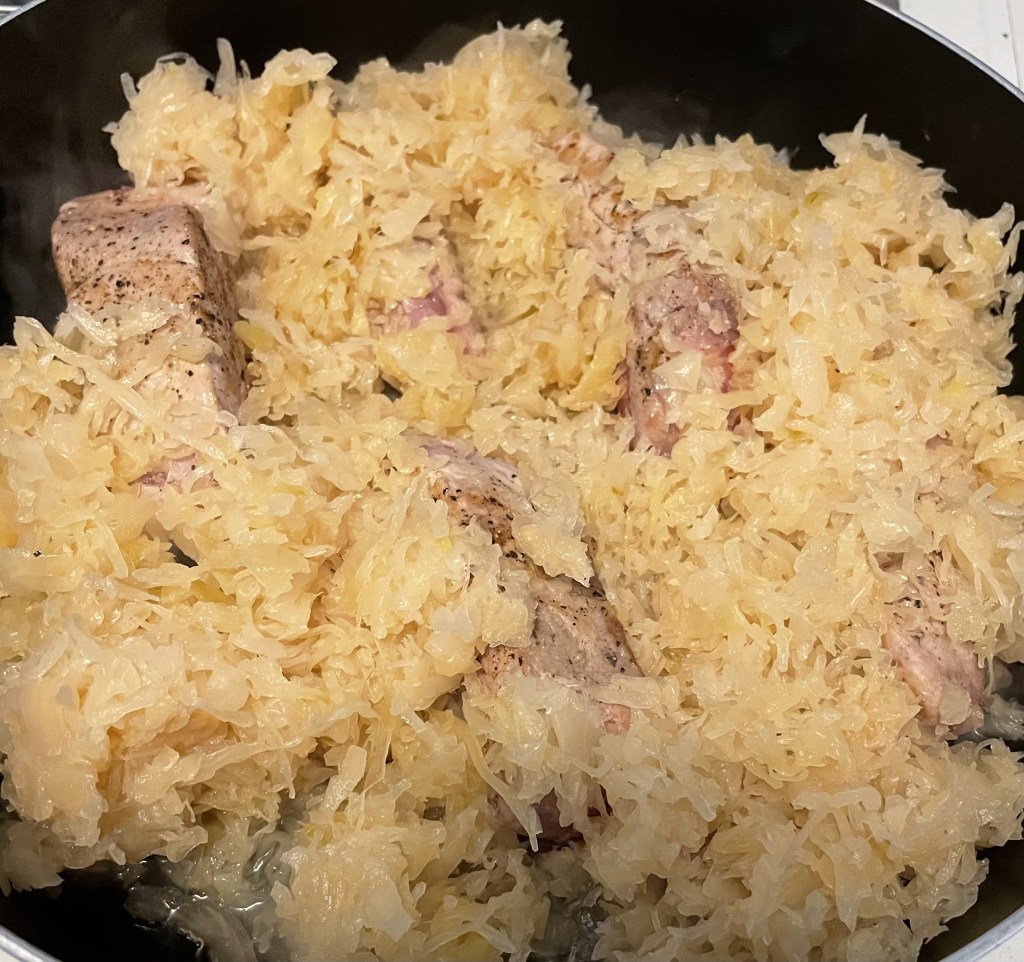
If you want to acquire a taste for sauerkraut, I suggest that you try ribs and kraut. Which was one of Nonna’s frequent dishes. Braise some ribs in a large skillet-make sure you season them however you like. Then once you have the ribs seared on each side you pour a whole jar of kraut in the skillet and then rinse the jar and add that water as well, you don’t want waste any of that kraut essence. Then you cover and let those ribs simmer in that kraut until they are done. Then you eat everything. And honey them is some of the best ribs you’ll ever have. That’s what Nonna-who had also been present at all of the family barbecues where dozens of hogs gave their life for our holiday weekends and I once made myself sick eating barbecued ribs-told me when I asked her about the recipe for ribs and kraut. This is one of my favorite dishes. And I may not like it more than barbecue ribs, but I like it as much.

Ribs and Kraut. I could eat some right now.

You can also acquire a taste for something just because you are feeling adventurous. If you want to like bleu cheese try it on a Ritz cracker with a little drizzle of honey. This is the kind of thing that rich people serve at Christmas parties. Or people like me just eat at their office desk.

You can logically and accidentally acquire a taste. Sardines are a good example of this. If you want to like sardines, you have to first get serious about eating healthy and exercising. Then you’ll start doing a lot of research about foods that are good for you and all that nonsense and you’ll soon discover how healthy sardines are for you. And you’ll get a can of sardines just to try not because of how they may taste, but because you know that they are good for you. And you’ll close your eyes to eat them, and realize that they aren’t half as bad as you thought they would be. Then you keep eating them because you’re on a diet, and the next thing you know you have acquired a taste.

O taste and see that the Lord is good: blessed is the man that trusteth in him. Psalm 34:8

Some things cannot be described or explained, they just have to be experienced to be understood.

I have lost culinary credibility due to my many acquired tastes and now some of my closest friends no longer trust my food recommendations. This is simply the high price of have a refined palette. It isn’t easy be cultured among a bunch of friends with the taste preferences of prepubescent cave men. I used to be just as picky as them though. Until one day I was hungry. I was visiting my brother at college and for dinner they served chicken fettuccine alfredo with mushrooms. And there were a lot more mushrooms that chicken. But because I was genuinely stomach growling hungry I just ate those mushrooms like I had been eating them professionally for years. And I liked them. And I still like them. Even so, if they’d have been serving pork brains and eggs I’d’ve probably acquired a taste for them that day.

My mom used to tell us this story when we said we were hungry and then refused whatever she offered. “You aren’t really hungry” she would say. Then we’d hear it again.

When I was a little girl I was at Fat Momma’s house-or was it Aunt Dale’s? I wish Mom was here to tell it again.

“I’m hungry.”

“I’ll make you a tomato sandwich.”

“I don’t like tomatoes.”

real hunger doesn’t take a break…

“I’m hungry.”

“Baby all I have is a tomato sandwich.”

“…Ok. I’ll try one.”

Then Mom would tell us how good that tomato sandwich was and how she still loved tomato sandwiches.

The full soul loatheth an honeycomb; but to the hungry soul every bitter thing is sweet. Proverbs 27:7

Thanks for reading! I’m fixing to go make an egg salad and anchovy sandwich.

Communication: Implicit & Explicit.

“I know we’re not supposed to bully people, but that works with me. I have been inspired to make life changes because someone talked rough to me. I hate it when people don’t tell me something plain. I feel like I’m being lied to if they afraid to say something because they think it may hurt my feelings. That doesn’t help.” This is what a young man told me recently. And I have been thinking about it a lot since then. Thinking deep.

He was being genuine in his desire for explicit understanding and straightforward verbal communication. Say exactly what you mean. Please don’t make me guess. Essentially, he told about some miscommunications that he had with someone with powerful influence in his life who it seemed prefers implicit communication. Although I am not sure that he realized that the person he was frustrated with was probably equally-if not more- frustrated with him. Instead the young man most likely entirely missed the implicit communication-the subtle nonverbal cues-and perceived the economic verbal communication as dishonesty. At the heart of this problem is a mismatch between high and low context communication.

Americans, in general, are low context communicators. We principally communicate with words. We like clear instructions and contracts. If you are an American you may be thinking well duh Zane, how else am I supposed to communicate?

Actions speak louder than words but not nearly as often.

Mark Twain

A high context communication culture like the Japanese, would depend heavily on implicit, nonverbal communication like body language, tone of voice, and especially silence in order to understand the message. High context communication cultures rely on a shared background of beliefs and principles-sort of reminds me of the church-and place a special importance on relationship in communication. The level of relationship they share with a person will have tremendous bearing on the level of communication. In contrast low context cultures are willing to enter into 30 year contracts with total strangers.

In my college courses, there was an emphasis on this being a cultural characteristic. Asian, Latin American, Mediterranean, and Middle-Eastern cultures tend to prefer high context communication. The whole reason that this was important to learn is because there is often profound misunderstanding in the business world between these cultures and low context communication cultures found in Europe and North America. Since this material was covered in more than one class it leads me to believe that this is a very real issue. Indeed it was manifested in my conversation with a frustrated young man.

I want to emphasize that this is true in general; and like any generalization or stereotype, there are exceptions. Low context communicators can be found in high context cultures and vice versa. As I was studying this material in college I found myself relating more to the high context than the low context communicators. Perhaps our young man would find himself in the low context camp.

What should we do about this problem of mismatched explicit and implicit communication?

Jesus spoke in parables to the multitude, but spoke plainly to his disciples. This means that the disciples heard both implicit and explicit communication from God.

Matthew 13 is a great example of this. I encourage you to read the whole chapter, then reread it in sections pausing to reflect after each section. Then reread the whole chapter. I want to focus on this one portion though that outlines the issue at hand.

Matthew 13:10-17 And the disciples came, and said unto him, Why speakest thou unto them in parables? He answered and said unto them, Because it is given unto you to know the mysteries of the kingdom of heaven, but to them it is not given. For whosoever hath, to him shall be given, and he shall have more abundance: but whosoever hath not, from him shall be taken away even that he hath. Therefore speak I to them in parables: because they seeing see not; and hearing they hear not, neither do they understand. And in them is fulfilled the prophecy of Esaias, which saith, By hearing ye shall hear, and shall not understand; and seeing ye shall see, and shall not perceive: For this people’s heart is waxed gross, and their ears are dull of hearing, and their eyes they have closed; lest at any time they should see with their eyes and hear with their ears, and should understand with their heart, and should be converted, and I should heal them. But blessed are your eyes, for they see: and your ears, for they hear. For verily I say unto you, That many prophets and righteous men have desired to see those things which ye see, and have not seen them; and to hear those things which ye hear, and have not heard them.

This section falls between the Parable of the sower and the explanation of the parable of the sower. It is Jesus’s answer to his disciple’s question Why don’t you just tell these people explicitly what you mean? Jesus essentially answers that he used parables to give these people the option of hearing, seeing, understanding, and being converted and healed.

Jesus did speak explicitly to his disciples in private. I find it interesting that he often gave correction via explicit communication.

Matthew 16:23 But he turned, and said unto Peter, Get thee behind me, Satan: thou art an offence unto me: for thou savourest not the things that be of God, but those that be of men.

Jesus openly and explicitly rebuked Peter. You have to really be a true disciple of someone for them to call you Satan and you not get offended.

John 14:9 Jesus saith unto him, Have I been so long time with you, and yet hast thou not known me, Philip? he that hath seen me hath seen the Father; and how sayest thou then, Show us the Father?

You can almost hear the frustration in Jesus’s explicit response to Phillip’s question. Phillip, how long have you been my disciple and you don’t know that I am the Mighty God, The everlasting Father, The Prince of Peace (Isaiah 9:6)…don’t remember that I and my father are one (John 10:30)?

I really believe that you have to want it to receive implicit communication.

Proverbs 1:1-6 The proverbs of Solomon the son of David, king of Israel; To know wisdom and instruction; to perceive the words of understanding; To receive the instruction of wisdom, justice, and judgment, and equity; To give subtilty to the simple, to the young man knowledge and discretion. A wise man will hear, and will increase learning; and a man of understanding shall attain unto wise counsels: To understand a proverb, and the interpretation; the words of the wise, and their dark sayings.

Subtilty and discretion will help you know the difference between dark sayings and deception.

In order to receive the instruction of wisdom, justice, and judgment, and equitysubtilty and discretion from the Book of Proverbs you are going to have to read it. And reread it. With open ears. Fast and slow. Pausing and reflecting. Meditating. And you’ll also have to practice what you’ve read.

Broken

It may not work, but I am going to do my best to fix it.

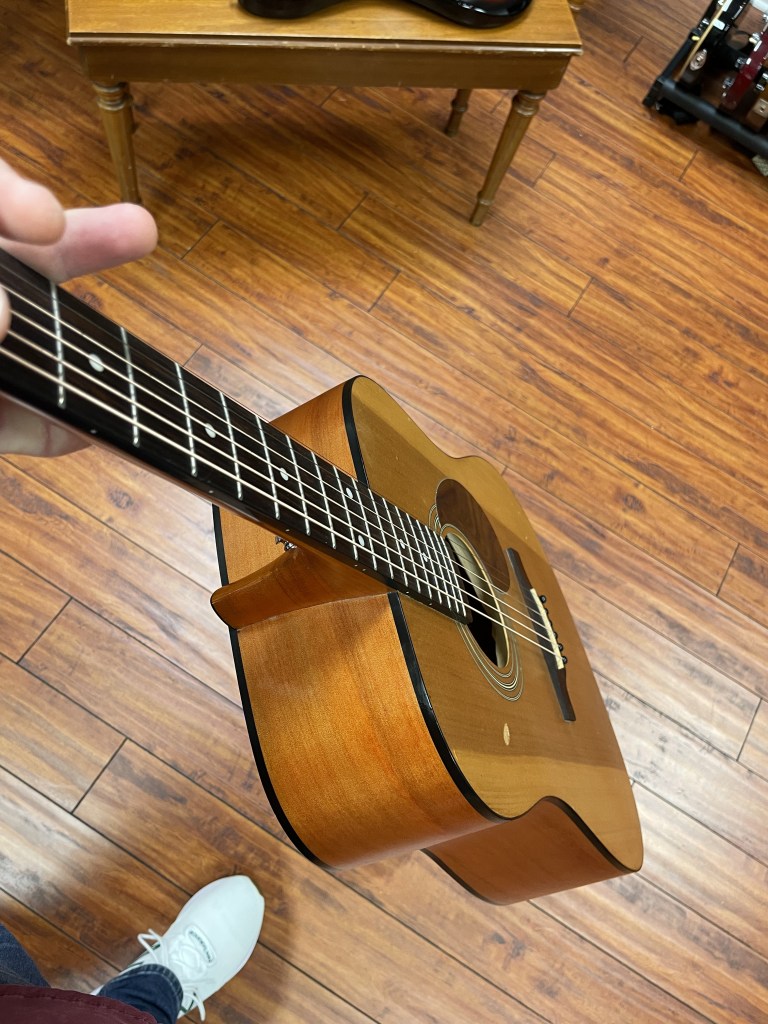
“This guitar is broken!” I said in exasperation to the young man I was helping move across town.

“You can have it.” He said, looking nonchalantly at the tired old instrument with a large crack in the heel of the neck. I laid it in the back of my truck like a wounded soldier amongst the mirrors and pictures wrapped in moving blankets. This guitar had been neglected if not abused. I winced as I thought back to things that I had not cared for properly as a child.

I took the guitar home and surgically removed the dirty strings and cleaned it thoroughly. Under the light of my work bench I could see that the crack wasn’t all the way through, but still substantial enough to make the guitar unplayable. I felt like the doctor when they say things like, It may not work, but I am going to do my best to fix it.

I inserted wood glue into the crack with a needle and syringe and clamped the body and neck down to the work bench to hold tension on the crack. This will only hurt for a little bit. Then I turned out the lights and didn’t look at it for three days. When I finally came back to it I could still see a black line where I probably didn’t clean the crack sufficiently, but the joint felt solid. Now I just needed some strings. Before I took the time to take a trip to the Guitar Dungeon, I happened to be at a friend’s house as he was changing his guitar strings. I noticed that he had an interesting string removal ritual. I usually clip my old strings-which have been played to death, black with grime and riddled with divots and dents- with a pair of wire cutters, and then to avoid a finger injury from the sharp string end under tension, I unwrap the bit still attached to the tuning post with a pair of pliers. He was taking his time and unwinding the string gently from the tuning post, so the entire string was still intact. Then he carefully placed each string in a neat little line, as if he too could still feel the life pulsing in those sparkly bits of metal, just waiting to be touched so they could burst forth singing. It works out nicely because the strings could be reused if you break one of the new ones. He did poke his finger with a sharp string end and there was a bit of bleeding. As he took the last string off he tied the whole bundle in a single knot. That’s when I asked him if I could have them. And he obliged. I have a hard time throwing some things away. Or seeing things thrown away. And those strings had been watching me like a puppy at the pound.

The next day I put the used strings on the old broken guitar and gave each another chance at life. I decided to leave the guitar tuned down a whole step, because I wasn’t sure if it could handle the tension of standard tuning. I held my breath as I got the last string tuned, then I cautiously inspected the crack. It was still solid. I played an F chord-not the first choice of most guitar players. And not the easiest chord to play in standard tuning. But we weren’t in standard tuning, and the F chord seemed so natural now and it rang out beautifully, deep and rich.

I have wondered what to do with this instrument brought back from the gates of death. I can’t in good conscience sell it. Because it was a gift, and also because I feel like I need to stay close to it in case in needs further repair. And maybe no one would want to pay for a broken instrument. This instrument has already served its time in the heavy hands of a careless owner. It now needs the gentle touch of a seasoned musician. Someone who has lived enough to know what pain feels like. I feel like I want to keep this resurrected instrument where I can see it every day and be reminded of the many second chances that I have been given. I want to be able to pick it up and make sweet music with something that came so near being cast off.

A bruised reed shall he not break, and the smoking flax shall he not quench: he shall bring forth judgment unto truth. Isaiah 42:3

Controlled Burn

I still get the itch to set the yard on fire.

“Is this a controlled burn?” The volunteer fireman asked my dad as he looked out across the kudzu patch with flames leaping halfway up the ancient pecan tree.

“Does it look like a controlled burn? Don’t drive on my new field lines!” My dad replied.

I still get the itch to set the yard on fire. It has been welling up in me since the last church men’s cookout we had. We have kind of given up on calling it a men’s campout since most of the men swore off camping after that year it rained all night. I guess not everyone is cut out for roughing it. So we have resigned to having a big fire at the church and eating until we can barely stay awake and then driving back home. Or staying up all night, but we have the option. This past year though something interesting happened that gave me the fire itch like I have never experienced.

We had just gotten the fire started good where all the folks on the highway in front of the church could start blowing the horn, wishing that they were a part of something so exciting, when all of the sudden here comes the volunteer fire department in one of their trucks, sirens a wailing. We watched him go by on the highway but were surprised when he pulled into the church parking lot. It was only one fireman. Now that I think back, I’m not sure he was a real fireman because he didn’t have a uniform. That would also explain his behavior that followed. He said something about receiving a call about an out of control fire and then that [REDACTED] proceeded to unroll a firehose and thoroughly dowse our campfire. I wanted to say a lot of things and do a few more, but I let Pastor do the talking because I didn’t feel like it was the best time to give the younger boys a vocabulary lesson. I’m not sure what pastor told him, but he didn’t listen.

Volunteer work; it just doesn’t pay.

So there we were; the men and the boys just sitting around the dripping firewood. Like we all just found out that Santa Claus ain’t real, and the person that told us had run over our dog and run off with our girlfriend. We were in a bad way. The only thing that really matters about the men’s cookout is the fire, and now we didn’t have one. You could see it on every face from the boys fresh out of diapers to the grey headed retirees: pure disappointment. We were downcast. Something had to be done.

I waited until I was pretty sure that the hasty volunteer had made it all the way back to the fire station before I said, “$10 to the boy that gets this fire started again.” You’d have thought I said $100,000,000 by the way those boys got after it. I wasn’t really concerned about the fireman coming back, but I wanted to waste his whole evening if he decided to. It took the eager boys about five minutes to get the fire rekindled, and just like that, morale was restored.

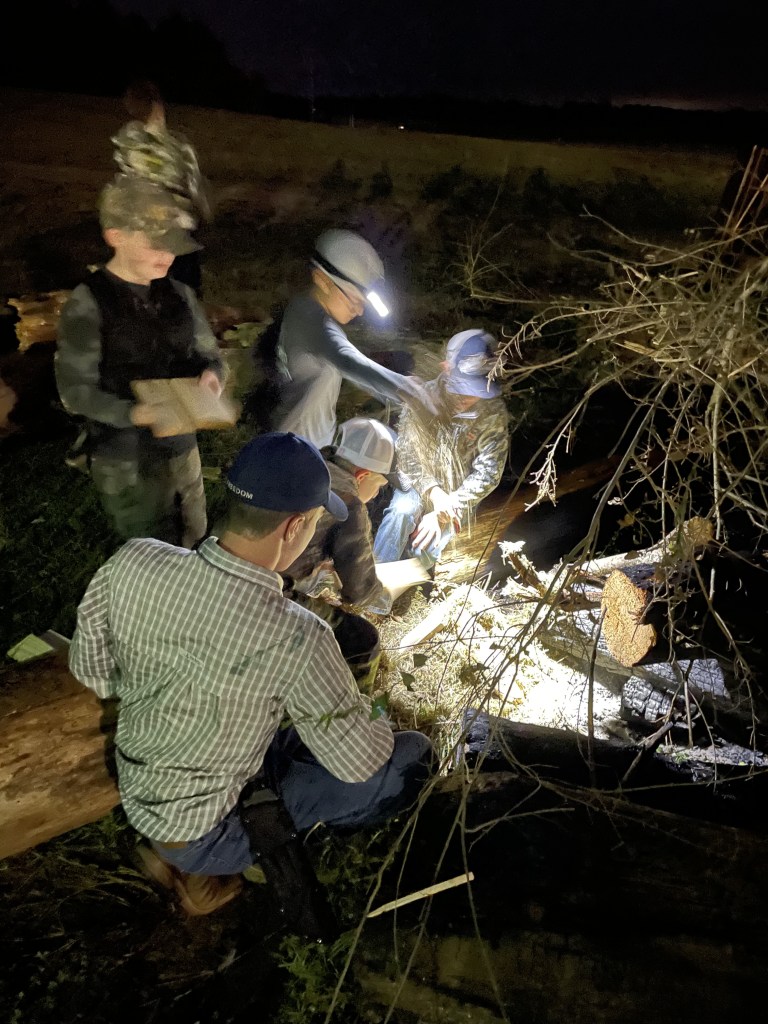
The boys getting the fire restarted.

I have been wanting to burn something bad since then. So I set the yard on fire this week. It was glorious. My dad would’ve enjoyed watching it slowly burn off the dead grass from last year. It was the perfect day to set the yard on fire.

There are not many things as satisfying to me as burning the yard.

When I told my friend that I was going to burn the yard he asked me, “How do you keep the fire from spreading?”

I didn’t really have a good answer for that. You can’t really control a fire. You can pretend like you are controlling it, and that may make you feel better, but I suppose if the fire wants to burn something then you can’t really stop it. Any time you set a fire, you are risking it burning a lot more than you had intended. In my case this week, it didn’t burn all of what I intended. I was less in control of the fire than the wind. But I still stood there coughing in the smoke with a shovel and brazen confidence.

The horseleach hath two daughters, crying, Give, give. There are three things that are never satisfied, yea, four things say not, It is enough: The grave; and the barren womb; the earth that is not filled with water; and the fire that saith not, It is enough. Proverbs 30:15-16

After I got the fire stopped where I felt was sufficient, one of my friends called me and said, “Man is everything ok? Looks like your yard caught on fire.”

I just told him it was a controlled burn.

Dog Walker

I went for a walk at my brother’s house while visiting him for Thanksgiving. I picked up a stick out of a brush pile on the side of the road. It just feels right to walk with a stick. And the last time I went on this walk a dog bit me. I would not describe myself as a dog person. No sooner had I picked up the stick a dog came running towards me. I was ready for it. But when I saw the dog cower down and still continue to crawl to me, like a servant bowing before a king, I lowered my scepter. I mean my stick. Still a bit unsure I decided to just tell the dog to go home and continue on my walk. The dog did not go home, but trotted along side of me. I concluded that if a dog was going to be this agreeable I would welcome a companion on this walk. After all, the thing hadn’t even barked.

The first time a car slowed down to pass me I didn’t even think about the dog. It was not my dog, why should I care if the thing was run over and killed?

So on we walked, the dog darting back and forth across the road, wandering into yards, and occasionally glancing over at me. Once it stopped and growled a low growl at a house sitting close to the road. I couldn’t see what he was growling at, but I took a good look at the house in case the dog was trying to communicate some important information to me.

The next car that came along I felt that I should return the favor and keep the dog out of the road. I don’t remember cars slowing down that much for just a person walking on the side of the road.

I made it all the way to the highway and I was about to turn back. I felt it was my responsibility to tell the dog it was time to go back home. He kept right on following me as I headed back the way we came.

About halfway back a group of three little white and black dogs came running and barking at us. Growling and snapping at Rover. We’d come this far together I felt I needed to call him something. I raised my stick and broke up the little ruckus.

The dog followed me all the way home today. And I hope we can do this again tomorrow.

The Art of Listening

Whether or not you are a musician, how good of a listener are you?

I have worked with a lot of musicians over the years. Most of them have been church musicians that learned to play by ear. This does not always mean that they cannot read sheet music, or lack a strong understanding of music theory. It usually simply means that they do not sight read traditional musical notation in real time. I only know a few people that can sight read sheet music. And they are fantastic musicians. The rest of us have to study traditional sheet music in order to play it.

There is no shame in being a musician who plays by ear. There are even a lot of advantages. For instance when someone has a good enough ear they can listen to a song once and be able to play it. This is also our greatest handicap; many times we need to have heard a song before we can play it. The danger comes when we think that we are good enough to stop listening.

Many master musicians have spent years practicing ear training. Remember when you were learning your multiplication tables or when you were first introduced to Algebra? You may have struggled to even understand the concepts and the thought of being able to do these complicated formulas in your head seemed out of reach. But after practice you can probably now do simple math and even Algebra mentally and it feels natural. This is also true for music. For most ordinary humans it takes practice to be able to identify intervals, find your vocal part, or pick out a melody or chord progression. But ear training immerses you into the language of music and after a while things start to make perfect sense.

“Listen!”

This is what my Dad would say from behind a book whenever one of us kids was making too much noise. We would quieten down and strain as if we could hear. Hear what? I never know exactly what we were listening for. Was he about to say something? If we tried hard enough could we hear the book he was reading playing out in his head? It took me a long time to realize that he was simply telling us to be quiet. I catch myself telling my kids the same thing these days.

Whether or not you are a musician, how good of a listener are you? Listening is so much more than a musical skill. At the very least listening is half of communication. Listening is a vital ingredient in healthy relationships. It becomes even more important when we understand that faith comes by hearing.

So then faith cometh by hearing, and hearing by the word of God.

Romans 10:17

Whenever I take those learning style tests I always score high on a preference for auditory learning. I believe this is accurate. I really enjoy listening to audiobooks. I can recall things better when I give my undivided attention to auditory information. I think that is what makes someone a good listener, the ability to give their undivided attention.

How do you listen to music? Do you like it in the background or full blast?

When I was a teenager listening to music was a ritual. Digital music off of the internet via Napster and Limewire was in full swing, but I always felt the computer speakers sounded weak. I preferred to buy my music in compact disc form from the music section at Wal-Mart. I would bring the unopened CD home, carefully peel the cellophane and stickers off, and insert the disc into my three CD player stereo. I would listen to the whole album straight through in one sitting without any repeats or skips. Doing nothing but listening with my undivided attention. I still think this is the best way to listen to music.

I have a hard time listening to background music. I would rather listen to background silence than barely audible mosquito music. I am drawn to focus on the music and when it is too quiet any disruption seems amplified.

All of this has me thinking about things that inhibit being a good listener.

I tend to get distracted by noise. I have a hard time going to restaurants if the music is too loud, or if there are a bunch of TVs playing different programs. It is very difficult for me to have a conversation while there is music playing. The worst thing is when there are two songs playing at one time. I sometimes wonder if that makes me a bad listener. Perhaps it means I am susceptible to distractions. To some extent I do not have control over external noise.

I can control internal noise. Have you ever been listening to someone talk only to realize that you have no idea what they are talking about because you were thinking about something else? We call this spacing out, or zoning out. If used properly, the ability tune everything out and focus your attention on your thoughts is a valuable skill. But an inability to control your thoughts can also make you a poor listener. It becomes a matter of will. Will you listen to what this person is saying or will you let your mind wonder?

Your attitude is largely controlled by your will and is another internal factor that can an inhibit and an enhance listening. Imagine the worst political figure that you can. If you are like me, you will have a hard time listening to that person say anything. There is an internal block that keeps us from being open to people that we do not trust. Have you ever noticed in political debates that people are always interrupting one another? There is not a lot of listening going on. What we have here is a failure to communicate. There are many deep issues in this example, but a lot hinges on being unwilling to listen.

As musicians, if we really claim to play by ear, then we should understand the importance of listening. We must constantly practice active listening. We must listen to the song to learn what to play. We must listen to the music director for instruction. We must listen to the other musicians in order to play together and not simply at the same time, like two political candidates arguing over one another. This also applies to relationships.

He that hath an ear, let him hear what the Spirit saith unto the churches.

Revelation 2:29;3:6;3:13,22

I read something interesting this week in This Is Your Brain On Music by Daniel Levitin. Pitch, loudness, and sound in general are purely psychological phenomena. All of these perceptions are just how our brain interprets air pressure. You literally cannot hear without an ear. This has really been heavy on my mind.

I hope that we can all be better listeners.

Open For Business

There aren’t many things that I have done that have been more fulfilling than teaching music.

My parents bought me my first guitar. I kind of forced them into it by signing up for guitar class at school. I didn’t learn a whole lot about playing guitar in that class, but I got a refresher on music theory. Eventually a proper flat-picker wandering into our church and showed me how to read tabs and chord diagrams, the major scale, how to play Bluegrass rhythm in G, and one Tony Rice lick before he told me, “I can’t show you anything else. If you really want to learn you will.”

In one sense, being told it is time to sink or swim really motivated me to learn. Conversely, I still had so much to learn and I had to learn it the hard way. Not having a teacher forced me to be a scholar. Learning how to learn on your own is what teachers really mean when they say you need to study. I have been studying guitar for over twenty years. As the physicians say, I am a practicing musician.

Learning to play guitar did wonders for my self confidence as a teenager. As an adult it still amazes me that I can play. This skill has also opened significant doors in my life.

Earlier this year the Lord delivered me from my one hour commute to work. The first things I did was start teaching guitar lessons again. There aren’t many things that I have done that have been more fulfilling than teaching music.

Get something in your life that God can bless.

Pastor Jeremy Wilbanks

Pastor has been saying that a lot lately to the church. It is one of the reasons that I wanted to start teaching again. I also feel like I need to put some of things I have learned while studying business in college into practice. Most significantly, I feel a responsibility to help musicians avoid having to learn the hard way. And God is blessing it.

Here are the answers to some of the frequent questions I get asked about learning guitar.

Should I start out on acoustic or electric? Choose the one that you want to play. You won’t be motivated to practice the acoustic if you really want to play electric.

What age do they need to be to learn? The youngest that I have successfully taught was seven. As long as they can pay attention and have enough hand strength to fret a note I can work with them.

Am I too old to learn? You are never too old to learn.

So if you or anyone you know is interested in learning guitar or bass guitar please send them my way.

zanewells@yahoo.com