The Secret Society of Bald Men

I have noticed over the last few years that my hair is thinning. That is a less painful way of saying that I am going bald.

“We need to get haircuts this week Wes.”

“Yeah. Those couple of strands of hair in the front look weird on you.”

“Oh yeah? What do you think I should do?”

“Well it may take some getting used to, but maybe The Bro. Sutton.”

Let me tell you about Bro. Sutton’s hair: He’s bald. Not just any bald, but shiny bald on top, with hair still around the sides. You know the haircut. This is how my own flesh and blood sees my hairline. He’s not the only one though.

That’s me. Before I make excuses about the lighting, let’s be honest that my hairline is almost level with my ear.

Leviticus 13: 40 And the man whose hair is fallen off his head, he is bald; yet is he clean. 41 And he that hath his hair fallen off from the part of his head toward his face, he is forehead bald: yet is he clean.

I’m glad that God decided to include this scripture in the Bible.

There is a brotherhood of bald men with secret handshakes, passwords, and I don’t know what all. You have probably noticed the familiarity bald men share with each other. Even total strangers give a nod to each other as if to say we’re in this together. The problem is they have begun to mistake me as a member.

I have noticed over the last few years that my hair is thinning. That is a less painful way of saying that I am going bald. I didn’t notice that y’all noticed though. But you did and probably a long time before I did. But people are kind and they didn’t say anything. Or maybe they thought that I noticed too. Let me tell you, it sneaks up on you. I haven’t been to the barber shop in almost a decade, so maybe my barber would’ve mentioned it.

It has progressed to the point that I have been approached about joining The Secret Society of Bald Men. Last week I met with two sitting members of the Society. They were men that have taken a higher order within the dark organization. I could tell because they were not only bald, but their heads were completely shaved. I can remember the younger one before he joined. That means the last time I saw him he still had hair. Kind of. His hair used to look like a rooster tail glued to a volleyball. Now he looks like Stone Cold Steve Austin.

“You should do it.” They older one said, trying to pressure me into shaving my head.

“You’ve got a nice shaped head. It will look good.” The younger one chimed in.

“I’ll do it for you. Lets do it tonight!” The older one followed up with a wild grin.

“Y’all almost convinced me. Let me wait for a more convenient season.” I told them.

Hair is the only thing a bald man sees when he walks into a room.

-Zach Wells

Integrity: that’s really why I am thinking about joining the Secret Society of Bald Men. The men that I met had an epiphany at some point-probably after they saw a picture of themselves-said “I’m tired of living a lie! I’m just going to be bald.”

I keep trying to convince my wife that buzzing my hair will look good. I’m not talking about shaving it down to skinhead level, but just so close that I don’t have to comb it. Or try to comb it over. She hasn’t been persuaded yet.

All the men that I have known that shaved their heads did it without their wives permission or consent. Which is something else that appeals to me. I enjoy giving Sarah a good surprise every once in a while.

Nobody looks at a man with a combover and thinks I’d like to try that. But when I see a man that has taken the plunge and shaved his head I see a man that has come to terms with his baldness and won. And that is inspiring.

Radio Kid

I’m not out to defend parents who allow the iPad or the Television to “babysit” their children. I’m here to talk to you about the radio.

You hear the term iPad kids these days. Or children who learned how to operate iPads before they learned to speak. Consequently, they develop an addiction to this device. It doesn’t seem to be a term of endearment, but rather a derogatory term. These iPad kids don’t have a clue about how the real word is. I remember hearing the same kind of language when I was a kid but attached to Television. All these kids know how to do is watch TV. When I was a kid we were out riding bikes and throwing rocks at trains. I suppose every generation in many ways thinks that the following generation doesn’t have sense enough to “pour pee out of a boot” as my Dad used to say. And out of convenience perhaps we humans site the most recently adopted technology as the cause for a child’s …well a child’s natural childish behavior. I’m not out to defend parents who allow the iPad or the Television to “babysit” their children. I’m here to talk to you about the radio.

I was a radio kid amongst a bunch of television kids. We didn’t have a TV in our home. In the 90s this was unique. I’m not even sure if TV is still a relevant medium for entertainment, so it may no longer be strange to not have a TV today. But we did have a radio, and I liked to listen to it.

The AM/FM receiver, turn-table, and tape deck were all one and the same for me. The noise came out of the same source: The Radio.

Records

I think my earliest memory of recorded music was from the record player. We had a record of The Drifters singing Charlie Brown. I remember listening to that a lot. And dancing in the living room. We also had a Justin Wilson record I guarantee. Gram had a lot more records than we did. My favorite was the Disney Robin Hood record. It skipped on Friar Tuck saying No, but there’s somebody who will be very disappointed if you don’t come, don’t come, don’t come, don’t come… Gram would have to come and fix the needle so we could get on with the story.

I don’t remember many more records in particular that I had such a strong attachment to-excepting that there was a lot of country music. The old stuff like Hank Williams and Jim Reeves. I remember the audible artifacts of that old vinyl. The pleasant white noise and the occasional crackle and pop of the needle bouncing over debris. It is still a pleasant noise to me.

Tapes

Someone always had to load a record for me, but I was able to figure out the tape deck by myself. I listened to a lot of preaching tapes on the radio. One of my favorites was a Bro. Mahuron preaching at Alabama Camp Meeting. I kind of feel like that lightning bug that got caught in the ceiling fan. I am delighted to be here. He also told a story about playing baseball with Fred Blosser. He was a big ole boy, he had to hit a home run to get a base hit. I would request this preaching tape-especially on car rides-not for the theological substance of the sermon, but for these humorous preliminary remarks and sermon illustrations. Then I would settle in for a pleasant nap.

I got a Johnny Horton tape for Christmas when I was about seven years old. They probably bought it just for The Battle of New Orleans, but I ended up liking Whispering Pines, Comanche, and Sink The Bismarck just as much. It really took me a long time to realize that there were other genres of music besides country. I am slowly coming to terms with how much of my musical foundation is this early post-war country music. I still appreciate the storytelling aspect of real country music. And maybe that is why the guitar has always had a stronger pull on me than the piano.

Mom bought me a Merle Haggard tape at Food World one time. This is what I hear when someone plays a Telecaster. This was electric country. With electric bass that faked an airplane on Fighting Side of Me. Hearing these musicians create sound effects with their instruments made a lasting impression on me and shaped the way I interpret music.

AM Radio

Dad listened to a lot of AM radio in the truck. Mainly Sports Radio 690 WJOX-Birmingham! Skip Carey would call the Braves broadcast on this channel. It’s a high pop-fly foul into the stands, and a fan from Del Rio, Texas makes the catch! We’d listen to those games while we were in the hayfield with the truck windows down and the radio up. That’s when The Braves were going to the World Series in the 90s. There was also a radio show with two former basketball coaches-one from Auburn, one from Alabama-called Sonny and Wimp. Wimp and Sonny, one thinks he’s smart, one thinks he’s funny, They used to be coaches they used to have clout, do they really know what they’re talking about? And another show with a man named Herb Winches that Dad listened to pretty regular. It was all sports so I really wasn’t paying attention. I did get a kick out of the commercials though. The original Budweiser frogs and lizards were funny to me. The Real Men of Genius Bud Light commercials were also funny. It made alcohol seem like something you can laugh about. What a dangerous idea.

Dad used to say, “Boy you know that must have had some fun making this commercial!” One of his favorites was the Southern LINC cellular telephone commercials. Earl, a fictitious Southern LINC customer, told how Southern LINC had allowed him to expanded his business.

Thanks to you I’m branching out…Just the thought of it makes me shivery, Earl’s Septic Tank Repair, and Flower Delivery.

There was also a jewelry store somewhere in Birmingham that had a commercial where lovesick men would call in and ask for advice from a motherly character named Deadre. Talk to Deadre Darlin’. I still laugh about that. It was so funny that my cousin Kim named her dog Deadre. Gram run over that dog while backing out of the driveway. She heard it yell, then accidentally run over it again as she pulled back into the driveway. Poor Deadre.

Talk Radio was the forefather to PodCasts. The appeal of Talk Radio, at least for me, was that it was live. And they would take callers. Just ordinary people could call in and talk on the radio. This is the kind of entertainment that cannot be scripted. Even if you don’t like sports, you’d probably appreciate the drunk people who called in on the radio. Herb Winches took a drunk caller once who started out talking about some relevant sports topic and he got overwhelmed and just started saying You know, you good at what you do Herb. Dad laughed about this for months.

AM Radio had a distinct sound to me, and because of this I found it hard to listen to music on AM Radio. I now realize that there is less information coming through on AM than FM, so some frequencies are missing in the music. This is probably why audiophiles are willing to spend $50,000 on hi-fi stereo systems to listen to their record collections. So I never experimented much with AM Radio outside of listening to it with Dad.

FM Radio

I did experiment with FM Radio a lot. One of the first radio stations I remember hearing was Oldies 106.9. At that time they were playing everything from Elvis and Roy Orbison, to Motown and British Invasion. I remember hearing Love Me Do by The Beatles and being mesmerized by the harmonica sound. Dad told me the story of Delbert McClinton teaching John Lennon to play the harmonica. I didn’t realize that this was the music of rebellion in the 1960s. To me it was just like they were marketing it on the radio Feel Good Music.

We also listened to the Christian station out of Birmingham, 93.7 WDJC. Specifically The Dixie Gospel Caravan. Which was the evening Southern Gospel program. I used to love the song, I’ve Got a Feeling Everything’s Gonna Be Alright. This program was mainly Southern Gospel quartet music. And I imagined the bass singer as a face in the wall singing. That can’t be a real person. I also imagined the high tenor as tall and thin. I had a hard time telling the different quartet groups apart because the sound was so similar to me. And that is one of the reasons that I still don’t relish quartet music. Maybe I reached my quota of quartet music by the age of 9. Who knows?

I must confess, aside from The Dixie Gospel Caravan, I listened to the Oldies and Classic Country stations a lot more than I did the daytime contemporary offerings from WDJC. So there is a large gap in my Christian music canon. This is sometimes embarrassing to me when someone-usually a minister-wants me to remember-or even worse play-a Christian song from the 1980s which I have never heard. Or they ask me about a particular Southern Gospel Quartet. Did you used to listen to The Anointed Spoonbill Singers? No, Brother. I listened to The Beatles, The Rolling Stones, Sam Cooke, and Marvin Gaye though. I ain’t saying it’s right, I’m just saying it’s the truth.

When I started learning guitar I would sit by the radio and try to play along with the Classic Rock station. For hours. The radio taught me how to play guitar. I still prefer to try to work out a song guitar in hand while I listen before I resort to the sheet music.

Public Radio

At some point during my teenage years I was introduced to Public Radio. It fueled my curiosity about classical music and introduced me to opera. For years I listened to NPR’s World of Opera while I was cutting the church grass every Saturday. Public radio also had some cool shows on Saturday’s too. Car Talk, What a classic show. I still shift my manual transmission truck into reverse when I park because of Car Talk. I also enjoyed A Prairie Home Companion with Garrison Keillor. Which was a variety show sort in the style of Jack Benny or Phil Harris. Keillor’s show served up a healthy dose of Americana music. Which is to say a thick soup of gospel, bluegrass, country, blues, and swing. And it was live.

One of the strangest shows I remember was Hearts of Space, an electronic-new-age-ambient-music program. It featured artists like Klaus Schulze and focused heavily on synthesizers. My Mom didn’t like that show. Even though I didn’t fully understand it, I liked it. I didn’t know how those sounds were being created and I just accepted that it was with computers. I have learned a lot about synthesizers since first hearing Hearts of Space.

When I lived in Virginia I discovered The Big Broadcast with Ed Walker. This was my introduction to the golden age of radio shows from the 1930s-1950s. Ed was blind, and he made me wonder how much those old radio shows must have meant to someone who couldn’t see. I listened to that show until he died. I still listen to vintage radio shows on the Old Time Radio app with Wesley, but it isn’t the same without Ed introducing them.

Today

I suppose that you could find everything today on an iPad that I found on the radio, if you look in the right place. That’s just the thing though: the iPad is a very visual medium. While kids may still be listening, they are doing a lot of looking. And who can say what they are looking at? Radio and Television were pretty rigid in their programming. There was a time when you had to be good to be on the Radio. You may have just had to be good looking to be on Television. But now, anyone with a pulse can start a YouTube channel. And they don’t have to worry about getting dropped by a sponsor or advertisers because many people don’t make one red cent on YouTube but still churn out mindless videos of just about anything you can imagine. I think about this sort of thing when I see a child glued to an iPad. Time will tell how these children will turn out. I think they’ll be a lot like the Television kids. Which I don’t know if I have done a great job communicating with for most of my life.

I can’t remember the last time I turned on FM radio. I grew weary of the commercials long ago. And many of my favorite show hosts are now passed on. The Radio changed on me. But I still listen to something every day. In that sense I will always be a Radio Kid.


Rich People Things

Rich people sometimes have the dog on the Christmas Card. That’s another one of the things that they have in common with rednecks.

What would you do if you were rich? I mean so rich that you could eat slow food anytime you wanted. If I were rich and famous I’d only drink ice cold Topo-Chico in glass bottles. I’d wear a brand new pair of socks to church every service. Rich people can do things like that. I’d probably get a gold tooth too. Not right in the front, but off to the side where you could still see it but only when I smiled. That’s so I could stay modest. I would smile a lot though. And have a pair of crocodile skin cowboy boots. I’d drive a big old Cadillac with a pair of longhorns on the front.

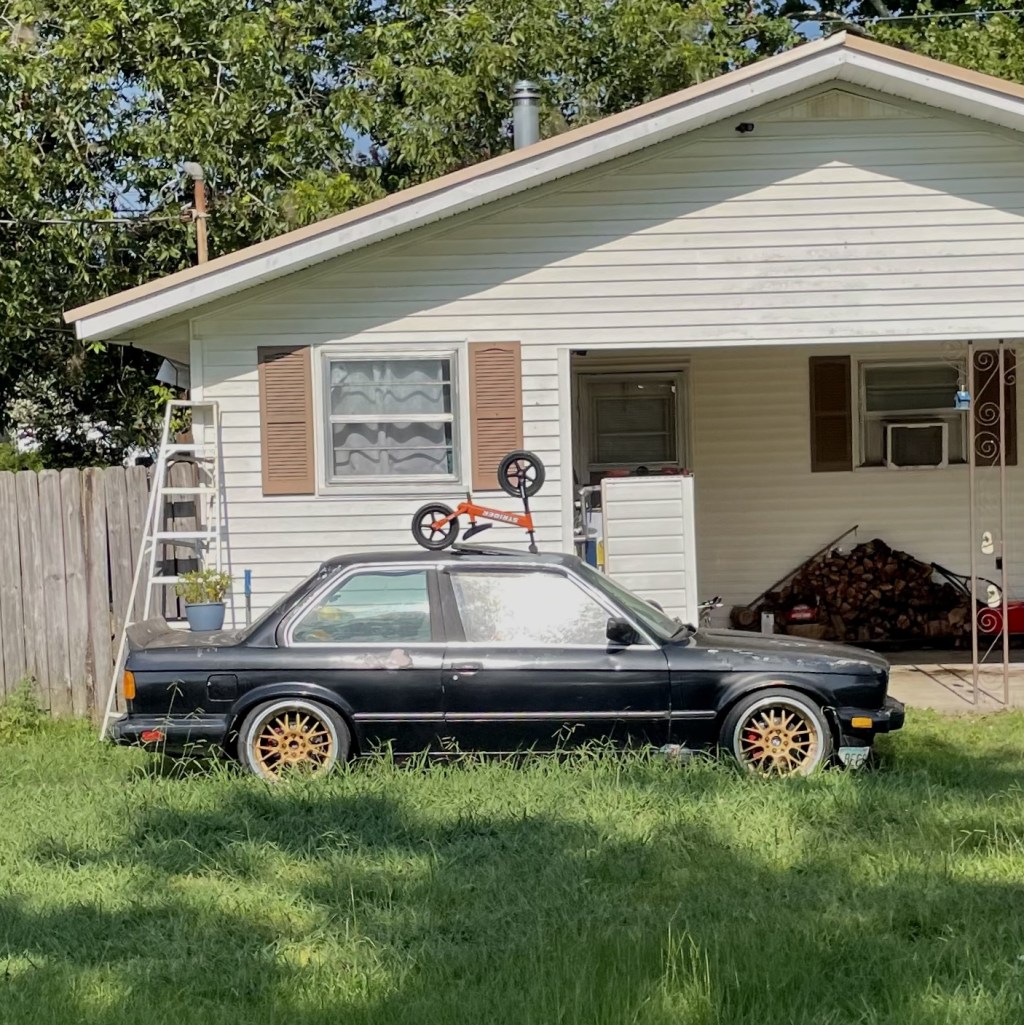
I sometimes struggle to know if people are rich or not. Not that it is really any of my business, but I wonder just the same. I often get rich people and rednecks confused. For instance rich people and rednecks both have lots of cars. But rich people will have a garage, and the rednecks just park their cars all over the yard. And the rich people cars all run.

I met some rich people that had a swimming pool in the ground with a fence and everything. That’s how I knew in my eight year old mind that they were rich. But rednecks sometimes have swimming pools too, but its usually in the front yard. Or in the backyard surrounded by all the cars with busted windows and engines that don’t start.

Some folks have got it all.

Rich people sometimes have the dog on the Christmas Card. That’s another one of the many things that they have in common with rednecks. The dog might have a different name though, like Beaumont, or Charlemagne. That’s a rich people dog name. Sassy is a redneck dog name. Also, rich people sometimes take their dog to the vet for no reason.

“The clothes make the man. Naked people have little or no influence on society.”

Mark Twain

Rich people and rednecks both like to go to the beach. When they don’t have a lot of clothes on its hard to tell them apart. I am neither rich nor a redneck so I don’t go to the beach that often. Which means I don’t have any tips for telling them apart at the beach. Wesley said that Rich people “Have a big ole tent, or something, and nice chairs. And a condo. At the beach.” He’s been to the beach a lot more than I have. I didn’t ask him about rednecks at the beach.

Some other ways to spot rich people is to go to the local airport. Not the big commercial airport at the closest big city, but the little rinky-dink municipal airport. The people who own airplanes are rich. Rednecks don’t typically have airplanes. I think I’d have me an airplane if I was rich. I’d paint teeth and eyeballs on the nose like they did back in WWII. I’d get a leather jacket and a big long white scarf for flying.

All the happiness in the world can’t buy you money.”

I would like to be rich, but I don’t really want to quit shopping at thrift stores. So I don’t really want to be filthy rich, just regular rich. If I came into money real sudden like, I think I would keep shopping at thrift stores so I could keep my cover since it is sometimes hard to tell rich people from rednecks anyway. Even if I was rich, people would see me at the thrift store and think, “He ain’t rich. He’s just another redneck.” It would also help me practice modesty. I wouldn’t smile when I went in there.

When I recall my biggest life decisions, money has not been the principle influence. For instance, having children is not necessarily a wise financial decision. But you don’t really worry about money when you decide to have a child. There is a stronger force than money at play. Moving without a job is not a wise financial decision. But money doesn’t get to make all of the decisions for me. This is probably why I am not a rich man. Money is not the only currency in life. I just read the book Creative Confidence by Tom and David Kelley and I really liked an illustration that the authors often use when making decisions. A see-saw, or balance, with a heart on one side and a dollar sign on the other. To paraphrase the author, the money is almost always easier to measure, the heart-the unquantifiable values, relationships, sense of calling, principles, and intuition- takes a little more time. The message is clear, money is not the only thing that should be considered when making decisions.

This blog for example; the motivation to write does not come from money. Or extrinsic motivation as I learned in college. There is another, stronger source of intrinsic motivation that compels me to write. It is the desire to connect on an unseen level with a reader. The urge to communicate an idea that will provoke deep personal insight in hopes that they can see themselves more clearly. There is the need of going out of one’s self that motivates me to write. This is not to say that I couldn’t be motivated by money to write. I have written on commission and gratefully cashed the check. But if I am honest with myself, I have never felt that any of my best efforts have come from being given an assignment. I have felt this way since a child in art class. I suppose that all creative people wrestle with the tension between creating what they want and getting paid to create what someone else wants. There is also the question of does anyone else want what I want to create? That can only be answered after the thing is created.

On my wedding day my father-in-law gave me some of the best advice I ever received about money. “Don’t ever fight about money.” At the time it was almost like saying, “Don’t fight about nothing.” This is a principle that my wife and I still share in our personal finances.

Money has always been a chore to me. I am getting better at doing chores the older I get. I have some friends that look at money differently than I do. And I am trying to learn from them. They can’t help but make money. Its fun to them. It is not a chore at all, but something that just comes natural. At the same time, they seemed to not be controlled by it. I have observed other people, extremely wealthy people-filthy rich people-be destitute when it comes to personal relationships. Billionaires who are vicious about money yet who are in poverty when it come to love. Cold blooded killers to quote a friend who has met more of them than me. When I take a closer look at their lives, it is pretty clear that these people do not have the same values as me.

Faith, and not money, is the currency of God’s economy.

II Timothy 6:6 But godliness with contentment is great gain. 7 For we brought nothing into this world, and it is certain we can carry nothing out. 8 And having food and raiment let us be therewith content. 9 But they that will be rich fall into temptation and a snare, and into many foolish and hurtful lusts, which drown men in destruction and perdition.

But they that will be rich. I am reminded of Rudyard Kipling’s The Man Who Would Be King. I won’t spoil it for you, but if you have read it then you know what I’m talking about. I’m also reminded of someone else that said I will be like the most High. What you commit your will to has profound consequences.

I am less concerned with being rich and more focused on doing something in life that matters. Furthermore, I think it is more important to God that what I do with my life matters. Fortunately God delights in blessing his children and this includes, but is not limited to, financial blessings. With this in mind, If I were regular rich I doubt I would drink more Topo-Chico than I do now. I would take care of quite a few church projects though.

Spanish

In 2020 I listened to the audiobook version of Don Quixote by Miguel Cervantes. I chose that book because it was included in my subscription to Audible and I didn’t have to use any of my precious credits. It turned out to be hilarious. I really appreciated how the 400 year old humor still made me laugh out loud today. It really made me think If the book was that funny in English, how funny was it in Spanish? It is because of this literary masterpiece and too many other books to name about the Spanish conquest of Mexico, pre-Columbian America, and Mesoamerican civilization that I decided to download the DuoLingo app and start learning Spanish. My Mom died that summer and I found studying Spanish a welcome distraction. And by Thanksgiving I became determined to make studying Spanish a part of my daily activity. That was over 1,000 days ago.

Some days I feel like I haven’t learned any Spanish at all. I am sure I would be further along if I was forced to speak in Spanish every day instead of doing the simple grammar exercises. I get the same feeling sometimes about guitar. To put things in perspective I flip the guitar over and try to play a few chords left handed and it makes me feel better about how far I have come. I have done this so much over the years that I am starting to get good playing left handed. With Spanish there are a couple of similar motivation reminders: I can understand spoken and written Spanish far better than I can speak it.

The other day I was at our church’s Fall Festival Fellowship standing around the grill with a bilingual brother and two Spanish speakers. We were eating grilled corn on the cob and they were jabbering away in Spanish. I wasn’t really paying attention to what they were saying until one of the Spanish speakers started talking about eating iguanas. It dawned on me that I was comprehending more or their Spanish conversation than I was not. “Iguana con leche de coco…es muy buena.”

La iguana es el pollo de los árboles

The most rewarding thing about learning Spanish has been being able to communicate with people who still only speak Spanish. Even though I still feel pretty vulnerable because I have to take my time forming my thoughts. There is something wonderfully exhilarating about communication.

Studying Spanish has also allowed me to see and hear English in a different perspective. Because of its silent letters, irregular verbs, and borrowed words from other languages, English is a difficult language to learn for a non-native speaker. You probably even know native speakers of English that still do not speak it well. Language, whether native or foreign, is a skill and must be honed. Studying Spanish has made me want to be a better English speaker.

A person’s vocabulary is a reflection of the books they have read.

There are some things in Spanish that just make sense. Like having punctuation at the beginning of a sentence, letters that only have one sound, accent marks that do not get ignored, and I almost hate to say it, adjectives after the noun instead of before.

I am a long way from writing in Spanish as well or as quickly as I can in English. But I still practice on my wife. When I think about writers like Joseph Conrad, who wrote in English, a language foreign to him, I am encouraged that some day I will be able to express myself in Spanish on such a level.

Which Guitar Should I Buy for My Student?

As a guitar teacher, I get this question a lot. In fact I got this question while writing this article. My conscience will not allow me to give a quick answer. It is kind of like asking a chef-who likes just about everything- what meal should I eat? Well it depends on what you are in the mood for. Do you like onions? Do you like spicy food? Those kind of questions will help a chef narrow down your selection. That analogy works great because everyone eats. However, beginner guitar players don’t really know what they like yet. They may not even know what there is to like. On top of that, we’re not even sure that they are going to want to keep playing. I can recommend a great guitar, but are parents willing to pay that much money without knowing if the child will stick with it? I am attempting to answer this question because it will not go away.

Perhaps a better question is will this guitar help them learn?

If I had to write an equation for learning to play the guitar it would maybe look like this:

Ti+TG=P.

  • T=Time spent practicing
  • G=Guitar
  • i=Instruction
  • P=Proficiency

I would think that G and i would be numbers between 0 and 1. For T let 1 equal one hour. If the quality of your instruction and your guitar is good, then you will learn faster than if they are poor. But time spent practicing is the most important variable in this equation. I want to make this point crystal clear.

In short, the quality of the guitar will help a student learn. It would be very hard to express the quality of a great guitar over a poor guitar in a number. In reality, most guitars would fall between .5-.8, or perhaps an even smaller margin.

I welcome any math instructors to critique this equation or point me to an existing, more accurate equation. I am open to instruction.

This article is to address the guitar variable question. Spending more money on a guitar will increase the guitar’s quality to a point, then the gains are marginal. To make things easier, I would like to place guitars into three categories: Beginner, Player, and Professional.

Beginner Guitars

Beginner guitars are typically priced anywhere from $100-300. These guitars are mass produced with affordable materials. Quality control in manufacturing is considerably higher than it was 40 years ago, so most guitars in this category are going to be well built for the price. Playability issues manifest themselves in these guitars through lack of set-up. A poorly cut nut, no intonation adjustments, sharp fret edges and high action; all of these issues can be addressed with basic guitar maintenance which a complete beginner guitar player will lack.

I have pulled a brand new guitar out of the box in this category and had to spend an hour adjusting things before I was able to get the guitar to play in tune. This is my biggest complaint with beginner guitars. A student may not yet realize that a guitar is out of tune. An out of tune instrument will limit a student in three primary ways: by impeding ear training, more time will be spent tuning than practicing, and frustration from fighting an instrument.

In short, most cheap guitars will need work just to stay in tune. Teaching guitar maintenance is important, but it may not be inspiring. A guitar that will not stay in tune will be harder to play. If I must be pressed to recommend a beginner guitar I would go with a Squier Affinity Series Telecaster of Stratocaster. My first guitar was a Squier Affinity Strat that came with a little amplifier. I still have the guitar. And because I have done a bit of regular maintenance-and installed a set of Schaller tuners that are worth more than the guitar-this little guitar stays in tune nicely and I play it often at home.

Player Guitars

A player guitar is going to be $400-900. I would define a player guitar as a guitar that a guitar player would use to play a live performance in front of people. This would be an instrument that would be reliable, comfortable, and would also sound great. These guitars are going to stay in tune much better than beginner guitars.

If I had to recommend a guitar for a student in this price range it would be any guitar from the Paul Reed Smith SE line. I think that they are an excellent value. I have really been impressed with how consistent the quality of these guitars are. I have played the higher end PRS guitars, and while they are outstanding, the SE line feels and sounds just as good to me. I play one of these and it competes with the next category.

Professional Guitars

Professional guitars are just that, the kind of guitars that professional musicians play. A few years ago these started around $1,500, but inflation has pushed that number closer to the $2,000 entry threshold. The first professional guitar that I ever got to play live was a James Tyler Classic. It made such an impression on me that I saved money for years and sold a bunch of gear before I could afford a Suhr Classic Pro-I still can’t afford a James Tyler. It was like I had been driving used Honda Accords with transmission issues for years and I finally got to drive a Ferrari. Professional guitars are that much different than player grade. I once played my Suhr all night at a youth conference in Tulsa, OK, put it in the gig bag, flew to DFW then to DCA, drove an hour home, pulled it out of the case the next day and it was still in tune. To put that in perspective, I have a Gibson guitar that I have to tune after every song.

I do not recommend professional guitars to beginner students simply because they are so expensive. I also think it is important for players to develop their preference for sound, feel, and aesthetics through years of playing. By the time a student is good enough to warrant spending this kind of money, they better know what they are looking for in an instrument. That is part of the fun of learning guitar.

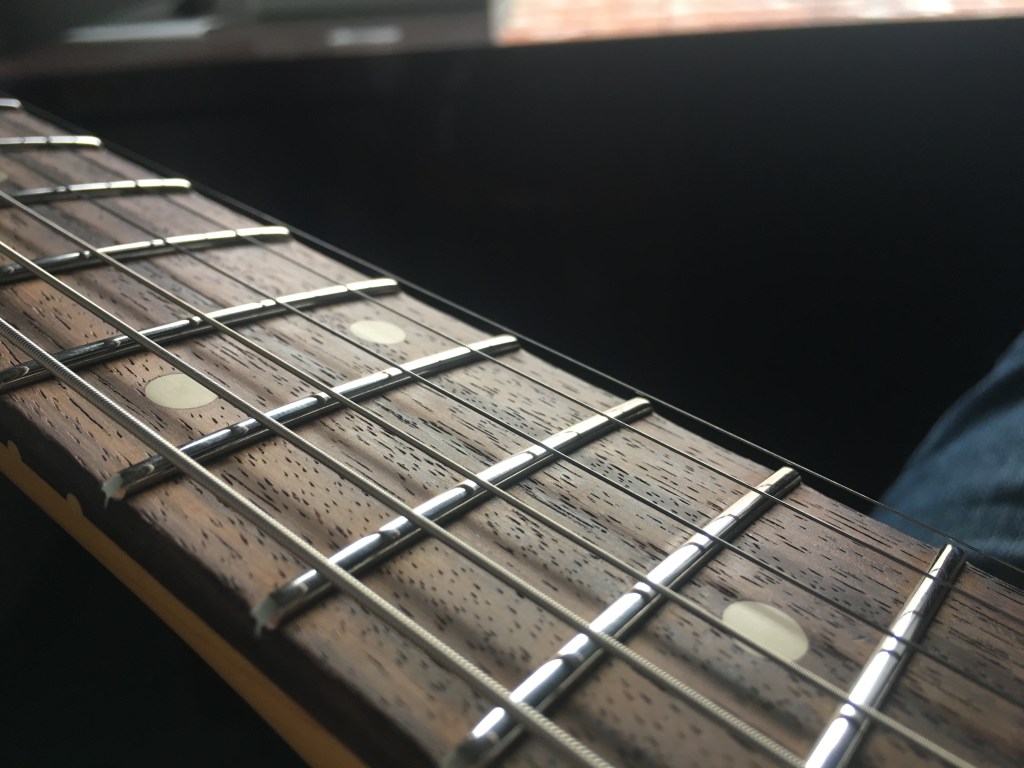
Professional Guitars usually have impeccable fretwork.

Amps

So far, I have focused solely on electric guitar. This is because most of my current students are far more interested in electric guitar than acoustic guitar. We cannot talk about electric guitar and not mention amplifiers. Amplifiers are more important to the sound than the guitar is. You could place amplifier in the same beginner, player, and professional categories. I will simplify and just talk about player amplifiers.

I recommend a Fender Blues Junior for a student who is wanting to take the guitar seriously. At $450 this amp will be useful for years to come and will retain value on the secondary market. This amp is going to be far more responsive to a players touch than the amplifiers that come in beginner packs.

You can get great guitar amplifiers on the used market. I check Facebook Marketplace and pawn shops pretty regular for deals like this. Look for a Vox AC-15, a Peavey Classic, an Orange Rocker, or a Fender Blues Junior. The Boss Katana is also a great value.

Amp Simulators

In today’s digital world, we now have available to us computers that simulate amplifiers. Companies like Line6 pioneered amp simulation 25 years ago and it has gotten progressively better with time. The nice thing about amp simulators is you can practice with just headphones. I prefer a real amp over an amp simulator, but I do use simulation to teach my online lessons. Marvin Gaye said it best, Ain’t Nothing Like The Real Thing Baby. The important thing is that you understand that the amp-or amp simulation- is a necessary part of the electric guitar equation.

I have been impressed with the Line6 Helix, Kemper Profiler, and Universal Audio Ruby if you need a recommendation from me. Boss just released an amp simulator pedal that is probably the best value I have seen in a while: The Boss IR-2.

Conclusion

The first question that we need to answer is What is your budget?

If you are bound to the $200-300 range then the Squier Affinity Strat Pack is your best option. Everything you need to get started-guitar maintenance not included. As your budget increases your options also increase, especially if you shop on the used market. I have found some great deals on Reverb.com. Sweetwater and Guitar Center also have used sites.

If your student is committed to playing and willing to fight the tuning issues, a cheap guitar and a nice amp is my preference over a cheap amp and nice guitar.

To my regular readers,

We will return to our regularly scheduled rambling next week.

Books of 2023

I was cutting my hair this week and some of the pieces of hair stuck to the scissors. So I turned the water on and just washed it down the sink. I was instantly transported back to my childhood living room with various members of the family sprawled out on every available piece of furniture and the floor. Each lounger with their own unique piece of literature. The Sunday Comics, a National Geographic Magazine, a novel from 1902, an Encyclopedia. There was “The Reading Chair”, one of the only pieces of furniture that Mom ever bought brand new. It had an ottoman, a side table and lamp. This chair must be surrendered to an adult. The same rule applied to the couch. This fixture that allowed the most seating was most commonly yielded to Dad, who occupied his territory in the supine recumbent position. There was no noise save for the steady rustle of turning pages, and the occasional internal laughter that manifested itself often in shaking and catching of breath. It was not uncommon for a reader to address the entire household with an impromptu reading of a passage selected for the edification of he that hath an ear.

“Archeologist find intact hair on a 3,000 year old mummy.” Dad read from his text.

“Y’all quit washing hair down the drain.” He gave the practical application and then slipped back into his silent reading.

I smiled and decided to not wash any more hair down the drain as I recalled this scene.

So they read in the book in the law of God distinctly, and gave the sense, and caused them to understand the reading. Nehemiah 8:8

I still enjoy reading. I still believe that it is important. I have a habit of reading my favorite books again and this year I reread Treasure Island by Robert Louis Stevenson, A Tale of Two Cities by Charles Dickens, and Hie To The Hunters by Jesse Stuart. I also enjoy audiobooks.

Sometimes you need to read something to just escape the present tasks that are pressing in upon you. So you choose to read something light and entertaining. Then there are books that truly challenge your thinking, cause deep introspection, bring fresh ideas, and promote a positive change in your life. This is the kind literature that I am interested in reading. Here are some books that I read this year that fall into that category.

Atomic Habits by James Clear

I am late to the party on reading this best seller. To say that I was inspired by this book is a gross understatement. I am persuaded that our daily habits have the power to shape our identity. I strongly recommend this book. The one takeaway that I would like to share from this book is concept of identity based thinking. You can think your way into a new behavior and vice versa.

Mr. Clear also references a book called Talent is Overrated, which provides research that supports the importance of practice over natural propensity toward a task. I have noticed this over the years with children that may quickly grasp the concept of guitar or a piano, but that alone is not sufficient to make them a master. There is no avoiding practice. The practicers usually advance.

This is Your Brain on Music: The Science of a Human Obsession by Daniel J. Levitin

I am fascinated by the brain. I enjoyed my psychology course in college so much that I would have changed my major but I did not want to lose my scholarship to study business. Levitin is a neuroscientist and musician. He writes that music in the brain almost behaves like a language. For example, you use one part of your brain to play music, and a different part of your brain to speak English. What is interesting to me is that you must use a third part of your brain when you put musical concepts into English. This explains why some people can play an instrument but struggle to tell someone else how to play. Or why someone may speak English and Spanish but have a hard time teaching one or the other.

This book convinced me of the importance of early music education. Whether or not a child becomes a great musician is not the issue, although early music education will certainly work in their favor toward mastery. More significantly is that children who took early music lessons scored better in other subjects as well. In short learning music makes you a better learner.

This book is continuing to challenge and inspire my thinking and musicianship. It has also prompted me to seek out and listen to How Music and Mathematics Relate by David Kung and Bach and the High Baroque by David Greenberg. Both of these are from the Great Courses series offered by the Teaching Company. I highly recommend This is Your Brain on Music to every musician.

Reflections on the Revolution in France by Edmund Burke

Unless you have a firm grasp on the history of the French Revolution as well as English history, you will be totally lost if you pick this book up. Mr. Burke was writing to his contemporaries about current events now two centuries removed. This book made the list because Edmund Burke makes me want to be a better writer. I will warn you that his rhetoric may seem boring or stuffy to many modern readers, but I found myself not only agreeing with him-he was pretty accurate about The French Revolution-but admiring his writing style. It made me question my writing style. Am I consistent? Am I clear and coherent? What would make someone want to read something I wrote?

I don’t have all the answers to these questions but I did ask ChatGPT to describe the writing style of zanewells.com.

The writing style of Zane Wells is characterized by its thoughtful, reflective tone and his ability to seamlessly blend humor and introspection. The website’s content often explores complex or abstract topics, but does so in a way that is accessible and engaging to a broad audience. The author’s prose is typically well-crafted and evocative, employing vivid imagery and sensory detail to bring his ideas to life. Additionally, the writing is often marked by a sense of curiosity and wonder, with the author frequently expressing awe and appreciation for the natural world and the mysteries of human experience. Overall, the writing style of Zane Wells is distinctive and memorable, reflecting a deep sense of thoughtfulness and an abiding sense of wonder about the world around us.

Not quite Edmund Burke, but I’ll take it.

The Great Debate by Yuval Levin

I read this book because I wanted to know more about Edmund Burke. Levin addresses the question of why there is clear division of major political, moral, and social issues between the American Left and Right. For example, if someone is pro-gun rights they’ll probably be also be pro-life. Levin endeavors to get to the heart of why these generalizations or stereotypes ring true. At the foundation we find the argument between the liberal Thomas Payne and the conservative Edmund Burke. Levin proposes that what someone thinks about the origins of human government-God ordained, or human ordained-has a profound impact on what they think about many of the current issues today.

I have read Common Sense by Thomas Payne as an adult and a teenage student in AP American History. I can appreciate that he wrote in a manner that was accessible to uneducated people and no one can deny his influence on the American Revolution. Yet the more I study about his concepts of human government the less I agree with him. This is not to say that I fully agree with Edmund Burke on every issue. I can say that this book was very thought provoking and I will probably read it again in a couple of years. And I encourage every American to read this book.

Surely You’re Joking Mr. Feynman by Richard P. Feynman

This was recommended by Audible because of a string of audiobooks I had listened to about the Manhattan Project, in which Feynman played an important role. Aside from hearing his name, I wasn’t really sure who Richard Feynman was. This is essentially his autobiography. I learned to appreciate his sense of humor. I found myself laughing out loud at some of Mr. Feynman’s experiences. If you remotely enjoy physics, the Manhattan Project, or good storytelling, then you will enjoy this book.

A key takeaway from this book is The Feynman Technique, a method of independent learning.

  • Choose a concept to learn
  • Teach it to yourself or someone else
  • Return to the source material if you get stuck
  • Simplify your explanations and create analogies

After I finished this audiobook I pulled up a few of his lectures on YouTube and was impressed by his manner of teaching. I also learned a little bit about Physics. I recalled some of my favorite teachers throughout my academic journey. The best teachers loved their subject material, but they also had a strong sense of connection with the student.

I recommend this book to all of my teacher friends.

American Prometheus: The Triumph and Tragedy of J. Robert Oppenheimer by Kai Bird, Martin J. Sherwin

I have been eyeing this book for a while since you cannot discuss the Manhattan Project without discussing J. Robert Oppenheimer. This Pulitzer Prize winning biography is able to go into such fine detail because this man’s life was closely scrutinized and documented by the FBI. This work left me with a deep sense of the cruelty of politics.

To read the biographies of great men is to take a close look at their lives and in doing so take a broad look at world history during their lifetime. In seeing J. Robert Oppenheimer we see World War II, the dawn of the atomic age, the birth of the Cold War, and American politics of the mid 20th century.

The life of J. Robert Oppenheimer makes me not want to hold any grudges.

Genghis Khan and the Making of the Modern World by Jack Weatherford

Genghis Khan is a singular example of one man who changed the world. He may not have been a good man, but he was a great man. The lasting impact of the Mongol Empire that followed him can still be felt in the world today. I’m not sure that I want to glean any character traits from Genghis Khan, but I did find his history very intriguing. I was also inspired to begin trying to fill in the substantial gap in my understanding of Asian history. If you read this book and enjoy it, you will probably also want to check out Barbarian Empires of the Steppes by Kenneth W. Harl from the Teaching Company.

Words Fitly Spoken

This year I read Reflections on the Revolution in France by Edmund Burke. I was initially intrigued by this work because I was on a French Revolution kick brought on by reading through A Tale of Two Cities yet again. What I found was I became far more interested in the writing style of the author than the subject material. This mastery of the English language is also what makes me, and countless others, Dickensian disciples. Mr. Burke writes a series of letters to a “French Friend.” Thankfully his friend could read English. As the title implies, these letters are his well thought out reflections on the French Revolution, an event that he watched unfold. The reflections were published and widely read during Mr. Burke’s lifetime. If you study political science today, you will become familiar with Edmond Burke as a political theorist. But I think he ought to be studied for his formal writing style.

How often have you had a conversation with someone and after it is over you find yourself wanting to edit what you said? It happens to me quite often. It is much easier for me to craft a clear response if I can write it. I am far more likely to choose appropriate words when given the luxury of reflection. With discipline and that most valuable resource time, I believe that anyone can put their deepest thoughts and feeling into written words. And people used to make this a habit in the form of diaries, journals, and letters to actual people.

Why do emails feel so stuffy and written letters seem so personal?

Although I keep a journal, and if you use your imagination I suppose you can call this blog-what an ugly word- and form of journalism, I cannot remember the last time I wrote someone a letter. For that I am a bit ashamed. At the same time I cannot remember the last time I received a letter. Most of our communication with friends today is done via text messages, FaceTime, and decreasingly for my generation, phone calls. All of these forms of communication lack the forethought and planning that a personal letter requires.

Even so, I believe that words fitly written are mere practice for words fitly spoken. As I said before, anyone can write if given time and inspiration, but it takes a truly gifted communicator to bring forth a fitly spoken word in real time. Words are powerful. Maybe this is why public speaking is a common fear.

A word fitly spoken is like apples of gold in pictures of silver. Proverbs 25:11

I am a long way away from where I want to be as an in person communicator. For that matter, I am a long way from where I want to be as a writer. But I am practicing. Thank you for allowing me to practice with you today.

The Spirit of Ignorance

Poverty has many roots, but the taproot is ignorance.

Lyndon B. Johnson

Ignorance simply means the lack of knowledge or information. If you pause to reflect on how many books are in your local library, or better yet how much information is on the internet (64+zetabytes) you can begin to see how much there is to know that you don’t know. You may become overwhelmed with how ignorant you are. Before you get caught up feeling bad about this it is important to understand that it takes people a lifetime of study to become masters in a single field. That is why we call a particular branch of knowledge a discipline. A microbiologist may be an expert on cyanobacteria but have virtually no understanding of group theory, the Battle of Tours, or even how an internal combustion engine works. Even the immortal Sherlock Holmes baffled Dr. Watson with his ignorance of heliocentric motion because it was outside of his desired field of study. It is safe to say that we are all ignorant of many things, and that is perfectly acceptable in most cases. You’ll probably be fine if you do not understand game theory, statistics, or the psychoacoustics. But If you do take some time to study these topics I believe that your life will be enriched by this knowledge. That is the wonderful thing about learning, it is the only way to deliver you from ignorance.

Through wisdom is an house builded; and by understanding it is established: And by knowledge shall the chambers be filled with all precious and pleasant riches. Proverbs 24:2-4

To reject knowledge or instruction in our ignorant state is a dangerous folly, and to prefer ignorance over understanding is the root of the Spirit of Ignorance. I grew up in a small community where most of the people were working class. I didn’t know many people that had gone to college, I’m sure they were there, but I just didn’t know them. There was an extremely gifted young man a few grades ahead of me that was simultaneously revered and ridiculed by his peers for his remarkable intelligence. On one hand they were proud to know someone who was so smart, on the other hand he was unable to get them to embrace learning for themselves and in that regard they failed to understand him and considered him a freak of nature rather than an a disciplined independent learner. He graduated with high honors and went on to study at a prestigious university and never came back. This is what happens in small communities, all the smart kids end up moving away. Sociologists call this phenomenon Brain Drain and after a few generations it takes a tremendous toll on rural areas. What is left is a perfect breeding ground for the Spirit of Ignorance.

My people are destroyed for lack of knowledge: because thou hast rejected knowledge, I will also reject thee… Hosea 4:6

Ignorance can be deeply rooted, but often manifests itself as pride. People may feel personally attacked when their ignorance is confronted. No one enjoys being told that they are doing something wrong, or they don’t know what they are talking about, especially if they have been doing it for a long time.

Sometimes when people say they have done something for 20 years what they really mean is they have have repeated one year’s experience 20 times.

Dr. Nathaniel Wilson

This is one of the principle ways that the Spirit of Ignorance can be defeated: unlearning what you thought was true. When someone’s understanding is built upon fallacy, or false preconceptions, these must be confronted before any real learning can happen. I am reminded of Galileo’s conflict with the Catholic church over heliocentric motion. The Catholic church was in predicament because it was confronted with evidence contrary to its doctrine on heavenly bodies. The Catholic church failed in its response to Galileo and rather chose willful ignorance. Furthermore it waited over 400 years to fumble an opportunity at an apology.

“Experience keeps a dear school, but fools will learn in no other, and scarce in that.”

Poor Richard’s Almanack, Benjamin Franklin

There is a strong possibility that I will face a new concept, or a better way, that may challenge what I have always done or thought. I cannot afford to be hard-headed, or stiff-necked to borrow a Bible term when in these opportunities. Neither can I ignore them. Ignorance contains the root word ignore. To ignore something takes a conscious decision. This is the essence of the Spirit of Ignorance: ignoring truth.

It was important to the Apostle Paul that we would not be ignorant on certain topics or doctrine. I would not have you ignorant… There are a few people in my life that when I hear them talk, teach, or preach I get a strong sense that they too alongside of Paul are at war against the Spirit of Ignorance. And they make me want to join in the fight.

Out of Tune

Have you ever wondered why guitars have frets and violins do not? I didn’t think so. I guess I better tell you what a fret is now. A fret is a thin strip of metal that runs perpendicular to the strings on a guitar. In theory it makes it easier to play a correct note. On a fretless instrument you have to rely in your ear and not a fret to play the correct note.

I do not own a violin but I spent a little time with one in my first round of college. I kept asking the wrong questions. Where is C? I should have asked, What does C sound like? I have come a long way since then on guitar. And I am beginning to understand why the concert music world did not respect the guitar until players like Andreas Segovia and Julian Bream paved the way for classical guitar in the twentieth century. I suppose I might as well tell you now that the guitar is out of tune. Or you could say it is equally in and out of tune. And this has bothered me for years.

I discovered this issue as a young player when I realized that guitars need regular maintenance. You need to tune a guitar’s open strings every time you play, but occasionally you have to check the guitars intonation. That means you make sure that the guitar is in tune at the 12th fret octave as well as the open string. If it is flat at the octave you can adjust the guitar’s bridge to make the string shorter and therefore sharpen the pitch. You lengthen the string to flatten it if the pitch is sharp at the octave. But there is a mathematical problem with tuning that is highlighted on fretted instruments: you can either have the octaves in tune, or the Fifths in tune, but not both. (Fifths are the fifth degree of the major scale and are the foundation of western music.) I did not have this information all of those years ago, I just noticed that I could never get the tuning perfect. And I thought there was something wrong with my instrument. It turns out it was not my guitar, but the whole tuning system in general. The piano suffers from the same problem.

I am tuning an octave on this old piano by ear. When you play two frequencies that do not match, say 400 hertz and 445 hertz, you can hear the difference of 5 hertz as a thumping sound called beats. You should be able to hear the beats disappear as the octave is brought in tune.

There have been a number of attempts made to deal with this issue over the past thousand or so years. Various temperaments, or tuning systems have been developed to to mitigate the Pythagorean Comma, or tuning gap. Apparently Pythagorus- yes that Pythagorus from your geometry class- wrestled with this issue.

Now that we have the tuning system worked out people only want to write four chord pop songs.

Enter the guitar around 500 years ago. I’d like to think that a prototypical guitar player invented the guitar. He was probably aware of the tuning issues, and thought, What if I just put these frets on the neck, make everything straight, and hope for the best? Guitar players are infamous for not being able to read music. Maybe he put frets on the fingerboard because he was tired of guessing where to put his fingers. Maybe he didn’t want to memorize notes but was happy to play patterns. At any rate guitars have been using equal temperament tuning since the renaissance and pianos waited to adopt it until right after the Boer Wars. And I think that’s why the guitar didn’t start gaining notoriety until the 1930s. Equal temperament tuning compromises the fifths in each key so the instrument can play fairly in tune across all the keys. This is why I have never been able to tune my guitar to my idealists standards. That brings me a small amount of psychological pain. But I have fallen in love with the guitar and I believe we can work our differences out.

Imagine now if this tuning phenomenon did not plague musicians and instrument makers. What if we could have the octaves and the fifths in tune? I don’t think that music would be what it is today. Part of the beauty of music is figuring out what works and what doesn’t. If everything was perfect there would be no dissonance, and how could we write music about pain and suffering without dissonance? J.S. Bach wrote his masterpiece The Well Tempered Clavier on an imperfect instrument. He wrote a piece of music in every key for the Harpsichord or Clavichord. These are stringed keyboard instruments that predated the piano. The genius of these pieces are the notes that he avoids because the well tempered tuning system still had some major dissonance issues. This piece is still studied today by aspiring pianists.

Think about this: more than likely, all of the piano music that you have ever heard in your whole life has not been in tune.

I suppose every good story needs a moral. Life is not always perfect. It can be frustrating to find the perfect balance because there may be no perfect balance. You just have to do the best that you can do with what you have. And often that ends up being the most beautiful thing anyway.

Compliments

Are you better at giving or receiving compliments?

I imagine that most people like to have nice things said about them. Especially the Words of Affirmation people. I never remember exactly what my love language is because I never finished reading that book. There wasn’t enough plot for me. However, I have always enjoyed complimenting people. Although my sister-in-law, sister, and even my wife sometimes tell me that I am not very good at it. They say things like, I never know if you are being nice or making fun of me.

Compliments are like bubble gum, its ok to chew on them for a while, just don’t swallow them.

For instance a generic compliment to one of them might sound something like this, “I like that dress.” That is boring, and easily forgotten. To give a good compliment you have to imagine that your 3rd grade teacher is grading you on your effort. “I like that dress” is at best average. It lacks creativity and inspiration. Now try something like, “That dress reminds me of some curtains I saw at a museum exhibit about Japanese textiles.” See how that is more memorable? Some thought went into that. But even my best efforts get responses like Zane, no woman wants to hear that her clothes look like curtains.

Death and life are in the power of the tongue: and they that love it shall eat the fruit thereof.

Proverbs 18:21

Maybe I am not very good at giving compliments but I really do try because I believe in the power of words. I believe that words can be a source of inspiration. I believe that words can set a person’s mind in the right direction. This is why I feel compelled to write. But maintaining a blog in the era of the reel to sometimes feels like a lost cause. I must admit that I occasionally wonder if my energy is being wasted. And it is difficult to find inspiration to write when you are questioning whether what you are doing matters.

And then I’ll meet a real live person who has read my blog and they will compliment me on my writing and it inspires me so much that I stay up until 2:45am writing run on sentences because I am drawing inspiration from the power of their words.

Let me back up a little bit. I know that people read my blog because the website tells me these kinds of things. But it uses numbers and I have always thought that numbers were so impersonal. So meeting a reader in person gives me a clearer context for the numbers.

Whenever someone approaches me to tell me that they read my blog I feel incredibly vulnerable. I usually write in isolation so to me it feels like I am merely putting thoughts into words as a mental exercise. Some of the essays that have reached the most people were really not intended for entertainment but were my way of grieving. Many of the things I have written are simply thoughts that will not leave me alone and I only get peace when I release them to the outside world. There is something cathartic about reaching into the infinite and grabbing hold of something and wrestling it into the finite so that others can view it.

I also feel that since no one saw me write it that no one knows that I wrote it. I take refuge in this assumed anonymity. Furthermore, because I feel like that what I write already exists in a perfect form in the infinite, I can only take a small amount of responsibility for making it finite. These personal psychological constructs give me a false sense that no one really reads anything I write.

Whenever you read someones work you get an insight into their mind. In a sense you become familiar with the deepest part of that person. As the reader you also enjoy a sense of real anonymity in relation to the author. This is why I always feel vulnerable when I meet with someone who is a fan of my work because I feel like they can read my mind, but I cannot read theirs. But I can see it in their eyes if they really have read. Maybe they cried with me. Maybe they have the same questions that I do. Maybe they too used to go swimming in the creek with the town drunk when they were kids.

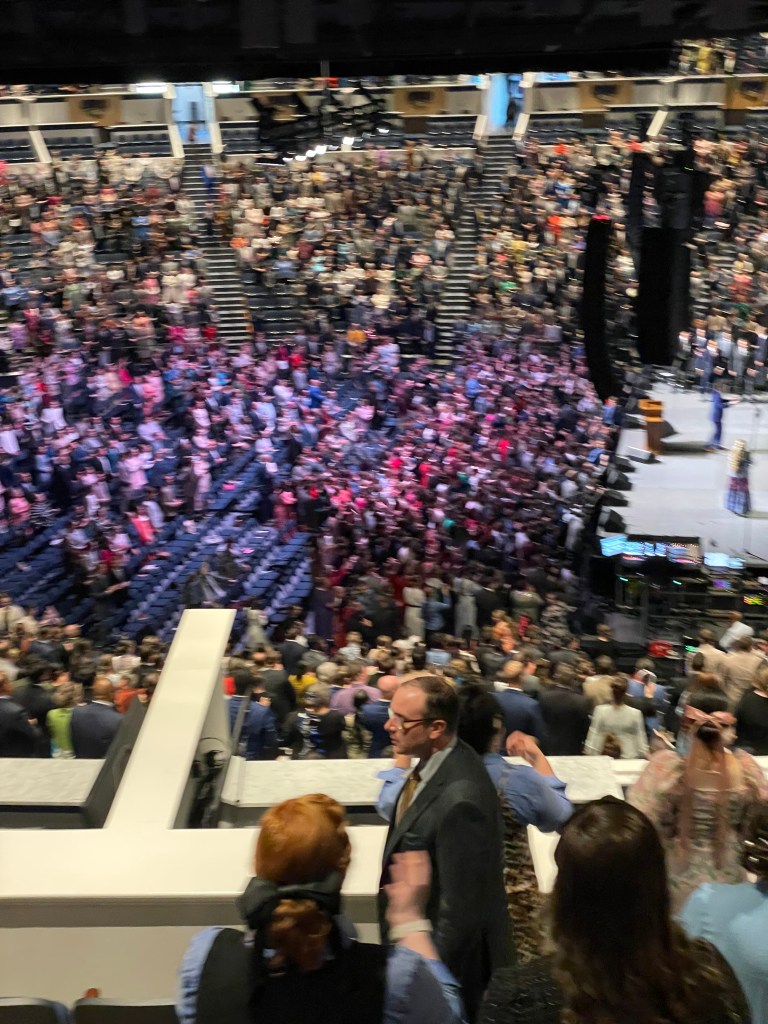
It happened to me last night as I was walking out of the conference center here in Pigeon Forge, TN. They took me by surprise.

“Brother Wells I read your blog and I love your style of writing.”

Whenever something like this happens I just say “Thank you!” But I try to say it in italics because I really mean it and I am otherwise speechless. I always think of something nice to say or questions that I should have asked hours later.

Then they said, “I feel like I know you.” This may be one of the highest compliments I have received on my writing. Complimenting someone involves a going out of yourself in much the same way that writing does. Saying something has the power of putting your thoughts into words and transferring them into someone else’s mind. And you may never know how much your words may help someone.