Neighbor, How Big is Your World?

I grew up in a small town, but for most of my adult life I’ve lived and worked in suburban areas. Having experienced both, I now live in the tension of wanting the business of a city and the quietness of the country. I imagine you could draw lines and each side could argue until Kingdom Come-I’m not trying to do that today- but I am going to endeavor to expose some aspects of human nature common to every one of us, but I tend to notice more in rural areas. Perhaps because it is hard to be anonymous in a small town where character and actions seem to be magnified. This is not an indictment of small town life, nor an endorsement of city life, but an honest attempt at addressing selfishness.

We have a couple of interesting words for selfish thinking: egocentrism-that is, the world revolves around me, and ethnocentrism-the world revolves around people like me. In a small town, it is easy to forget-or never even realize-that there is a world, indeed a much bigger world, beyond the city limits, or property lines. No matter how big the town, a small world is the breeding ground for self-centered thinking.

More people live in the city of Delhi, India than in the whole state of Texas.

I heard a lot about worldview in college. It was good for me, a country boy from central Alabama to learn things like American football is not even in the top 10 most popular sports in the world. That not everyone is an American. It challenged my worldview when I made friends with people who grew up in foreign places like Canada, Mexico, Thailand, Jamaica, South Africa, and California.

Jesus addresses egocentrism and ethnocentrism in the parable of the Good Samaritan. When we ask Who is my neighbor? We are asking, How big does my world really have to be?

Luke 10:25 And, behold, a certain lawyer stood up, and tempted him, saying, Master, what shall I do to inherit eternal life?

26 He said unto him, What is written in the law? how readest thou?

27 And he answering said, Thou shalt love the Lord thy God with all thy heart, and with all thy soul, and with all thy strength, and with all thy mind; and thy neighbour as thyself.

28 And he said unto him, Thou hast answered right: this do, and thou shalt live.

29 But he, willing to justify himself, said unto Jesus, And who is my neighbour?

More can be said of the story of the Good Samaritan than I am capable of writing. It is the story of humanity and I implore you to read it. The fall of man has left us in a cruel world, half dead, without help, until an outsider came along and saved us. Jesus did not have to show us mercy, but that is what neighbors do.

Luke 10:36 Which now of these three, thinkest thou, was neighbour unto him that fell among the thieves?

37 And he said, He that shewed mercy on him. Then said Jesus unto him, Go, and do thou likewise.

When I was a little boy I thought that my only neighbors were Rob and Karen, my next door neighbors. But there was a man in our church that challenged that mindset in the manner that he greeted people: “Howdy neighbor.” I remember my Dad preaching a message about this using the above text. I think about this whenever I read this portion of scripture. With a child’s understanding I began to realize every human on the planet is my neighbor.

This kind of broader thinking is often limited by human constructs that manifest as national pride, political ideologies, regional traditions, and even things as simple as sports team preference. It is hard for many people to break out of these constructs and see other people as humans, much less neighbors.

How we view and treat other people is linked to eternal life.

It is a question that we will be unable to avoid in the judgement: How big was your world?

Matthew 25:34 Then shall the King say unto them on his right hand, Come, ye blessed of my Father, inherit the kingdom prepared for you from the foundation of the world:

35 For I was an hungred, and ye gave me meat: I was thirsty, and ye gave me drink: I was a stranger, and ye took me in:

36 Naked, and ye clothed me: I was sick, and ye visited me: I was in prison, and ye came unto me.

37 Then shall the righteous answer him, saying, Lord, when saw we thee an hungred, and fed thee? or thirsty, and gave thee drink?

38 When saw we thee a stranger, and took thee in? or naked, and clothed thee?

39 Or when saw we thee sick, or in prison, and came unto thee?

40 And the King shall answer and say unto them, Verily I say unto you, Inasmuch as ye have done it unto one of the least of these my brethren, ye have done it unto me.

Available Music

“Give me a guitar lesson Dad.” Hollynn demanded earlier this week. So I sat her on my lap and showed her the difference between a downstroke and an upstroke. We then had to back up and learn how to hold the pick. I’m not sure if there is a right way or a wrong way to hold a pick. Maybe there is just a faster or slower way. Or a more accurate way.

I didn’t get into all of that, I just showed her how to hold the pick to make the strokes easier for her. I didn’t show her how to make guitar face though. That comes natural with concentration.

I had a student calling the pick a “chip” the other day. That was a first for me.

It was a nice to see her show interest in the guitar, although she does tell me this quite often, “Let’s look at guitars on your phone Dad.” Maybe she’ll end up playing, it is hard to know. I certainly won’t discourage it.

How do you know if your child is going to stick with an instrument? This is the kind of question that parents are really asking when they ask for guitar recommendations. It is an economic question, will I get a return on my investment, or will this be money blown? Do parents ask those questions when they are shopping for video game consoles?

Yo Yo Ma, one of the most recognizable classical musicians in the world and possibly the only cellist that many can even name, didn’t arrive at the cello until he sampled the violin and the piano. I have also witnessed parents force an instrument on a child and the child never fully embrace it.

Whether or not she will play guitar or not doesn’t really matter, but the important thing right now is she has access to the guitar. I think it is good to make a lot of things available to children: books, art supplies, and musical instruments.

When I was her age, the guitar was not available to me. I was allowed the occasional glimpse at my Dan Dan’s old guitar. It was like visiting a museum: look, but don’t touch. It was purchased for him very dearly by my Gram back in the 70s, and he babied it until he died. After that, the guitar transitioned from a musical instrument into an heirloom.

I understand that feeling of wanting to take care of an instrument, especially if it cost a lot of money. I once picked up my unlatched guitar case after youth service, and my Martin fell out onto the floor with a kerang and a sickening crack. I quickly surveyed the damage: a severe case of case bite—where the guitar finish is marred by the metal latches that protrude along the edge of the case. I was sick to my stomach for weeks every time I looked at the case that I was too afraid to open.

I don’t let the kids wail on a few of my more valuable guitars without supervision from me, but I do let them play on them. There are other guitars just laying around the house that anyone is free to pick up and plink around on. We keep an eye out for any used musical instruments at thrift stores and yard sales for this purpose and view it as an investment in our children’s music education. I believe that Hollynn’s request for a guitar lesson is a direct result of familiarity with the instrument. For her whole life guitars have been a part of the furniture in our home.

She just had another lesson. It only lasted about three minutes, but she did show some improvement in her fine motor skills. If that is the most she gets out of guitar lessons then I think buying that old guitar at the thrift store for $7 was money well spent.

I have a drum student who doesn’t even own a set of drums. Fortunately, he lives very close to the church, where drums are available. I think he’ll end up owning a set pretty soon at the rate that he is catching on. I am sure that his parents fully understand the risk of buying an expensive set of drums on the chance that he will learn, especially if neither one of them knows how to teach him. And that brings us back to the question, How do I know if my child is going to stick with an instrument? The answer is, you don’t. But they will have a much slimmer chance if you don’t make instruments available.

It is our goal to create an atmosphere of learning at home. Creative play and curiosity are some of the most natural ways to learn. So buy that old thrift store keyboard and don’t treat it too precious when the child explores on it.

Train up a child in the way he should go: and when he is old, he will not depart from it. Proverbs 22:6 KJV

Train up a child in the way he should go [teaching him to seek God’s wisdom and will for his abilities and talents], Even when he is old he will not depart from it. Proverbs 22:6 AMP

If you have a child showing interest in music lessons and are unsure where to start, contact me at zanewells@yahoo.com for a free consultation.

Fog

I had to drive in the fog this week. I’m not talking about the kind of patchy fog you drive through while you’re crossing a bridge and then you are back in the sunshine. No. I drove for two and half hours through the kind of fog in which Edgar Allan Poe set all of his stories.

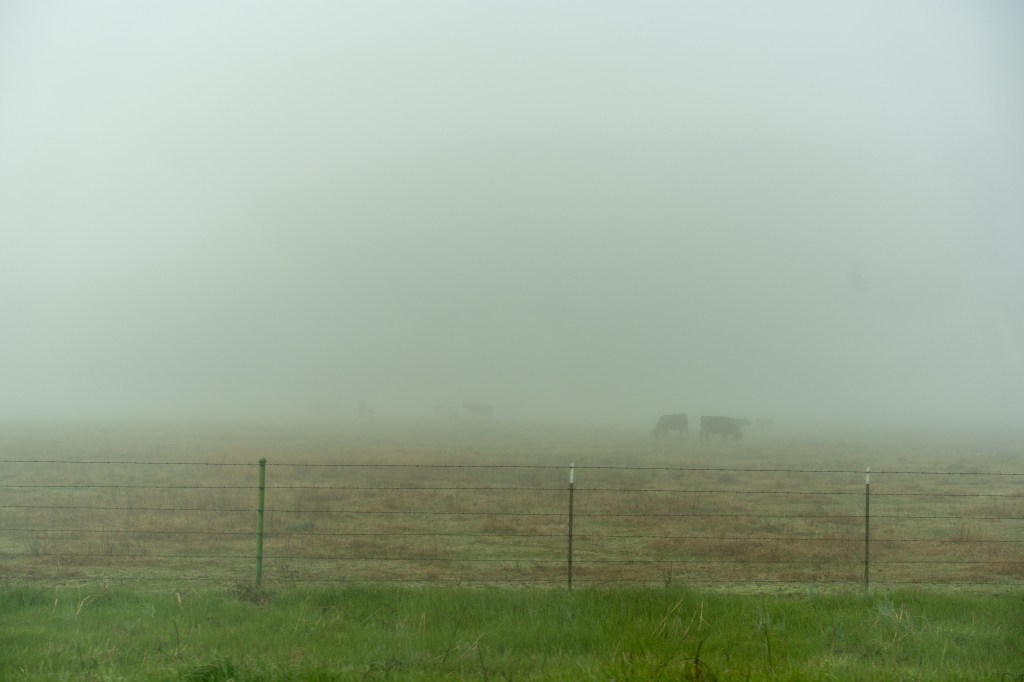
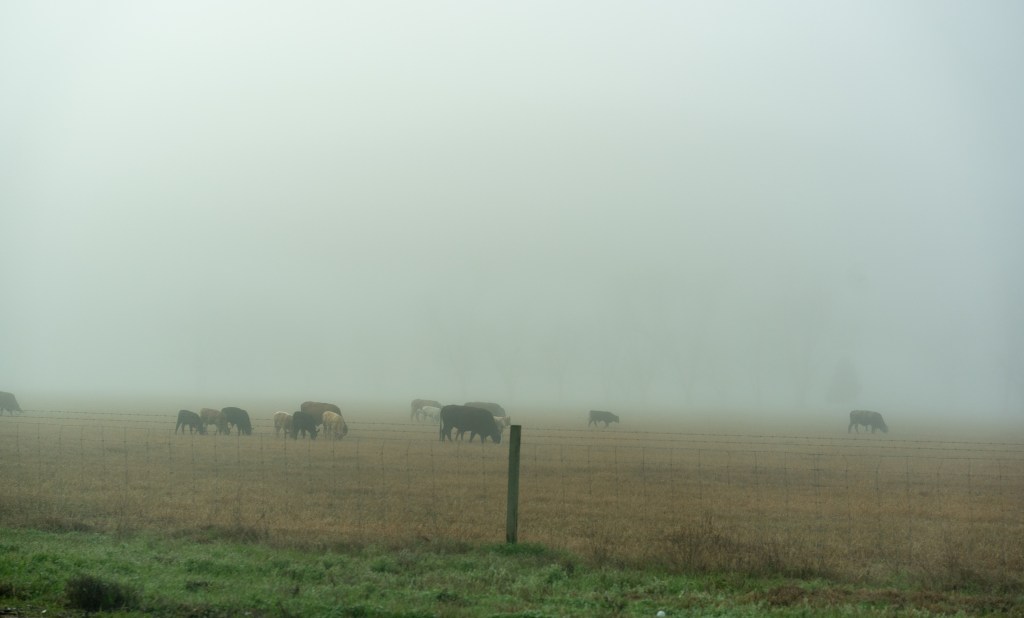
I had to drive in the fog this week. I’m not talking about the kind of patchy fog you drive through while you’re crossing a bridge and then you are back in the sunshine. No. I drove for two and a half hours through the kind of fog in which Edgar Allan Poe set all of his stories. At least that’s the thick fog that I imagine when I read him. So naturally, I decided to do some drive-by photography. I love a good foggy morning; it makes me feel like Sherlock Holmes. A damp haze like this gives me a craving for a good mystery. For whatever reason, fog pulls on my creative nature. I was feeling pretty inspired and artistic in this dreamy landscape until I passed a big chicken truck that had turned over in the ditch just outside of Natchitoches. That wreck halted my daydreaming and caused me to slow down and give my undivided attention to the road, at least for a little while. Then I began to wonder if any of those chickens made their escape into the mist. I hope they did. I love a good escape story as much as I love a foggy morning. Maybe they took up with the herons in the swamp.

As much as the fog tugs on my imagination, I’m glad that it isn’t foggy all of the time. It can be stressful when you cannot see very far ahead of you. I imagine that’s what happened to that poor truck driver. He probably had to take evasive action to avoid killing someone he only saw at the last split second. Who knows?

The wrecked truck reminded me of something I learned about as a teenager following the progress of Operation Iraqi Freedom in the newspaper; The Fog of War. Originally a German term, it describes how the chaos of battle brings confusion and situational uncertainty to soldiers—and even top brass—who often become disoriented and are unsure of what to do next. I have never been in combat, but I have been in a lot of fog, and I can appreciate the analogy. My cousin Mark got disoriented in the fog on the Coosa River once during a fishing tournament. He navigated his bass boat by GPS right up out of the river and into the woods. I think the problem with disorientation is you don’t know you are disoriented until it is too late.

The vicissitudes of life can put us in a fog. The beauty of that fog and the creativity that it inspires is hardly ever seen in the moment except by the rare longsighted optimists, or the visionaries who are gifts to humanity. The rest of us only see the beauty in hindsight-that is if we make it through. There have been a few-and thank God only a few-truly foggy patches in my life. Times when you can only see as far as the next step and you aren’t fully sure of that; when you have all but lost direction; and when the mist has nearly halted any progress you thought you were making. It may take a while, but eventually we can look back and see the beauty of those times. And, with a twinkle in our eye and compassion in our voice, even recall them with joy and hope, and tell about them to someone going through their own fog.

We are often tossed and driven on the restless seas of time

Somber skies and howling tempests oft succeed the bright sunshine

But in that land of perfect day, when the mist has rolled away

We will understand it better by and by

This fog the other day covered a large swath of Louisiana. A friend who was working on the other side of the State that morning was telling me how foggy it was for him too. I’m glad I wasn’t in it alone. Eventually the fog “burnt off” as he put it, and it turned out to be a bright sunny day. But I’m glad I got these pictures. I didn’t want you to think I was exaggerating.

All Quiet on Pew Number Five

There was a wedding at church on Saturday.

There was a wedding at church on Saturday. The kind without all the fuss of rehearsal dinners. Or rehearsals. Or the hassle of getting a hotel room. No frivolity, just a simple wedding like I remembered when I was a kid, with cake and punch in the church foyer. I really like these kind of weddings.

As my family sat in the pew on the Bride’s side waiting for the wedding to start, I noticed that it was uncommonly quiet for our church. Even the children were whispering. At least some of them. You can almost hear what your neighbors are thinking when it is that quiet. But that is what the Bride wanted, no filler music that didn’t mean anything. Just one song to walk in with.

Silence makes some people uncomfortable. And uncomfortable people make the rest of us uncomfortable. But I like quiet places. A lot more than I like canned mosquito music that nobody asked to listen to, or TV noise. I like to be able to hear the ticking of my watch. I like to hear the birds singing outside. Most of all I like being able to hear myself think.

“Quiet as a church? If had a car that sounded like my church, I wouldn’t drive it out of the driveway.”

-Tom Trimble

As I sat there on the pew, hardly daring to whisper, I thought about how much racket I normally make at church. I have blown three speakers while playing guitar at church. Now I’m not proud of that, because it was expensive, but probably some of the loudest moments in my life were at church. But there we were, sitting on the pew trying not breath too heavily so as not to disturb the quiet. It was so peaceful. I think I’ll slip up there again soon when no one is there and just listen to the silence.

Magazines

I think that it is healthy to have hobbies or areas of interest.

I just finished reading A Hunter’s Fireside Book: Tales of Dogs, Ducks, Birds & Guns by Gene Hill. If you were not aware, I am not a hunter, but I appreciate good writing no matter the subject-within reason of course. Good writing can make even the most boring pastime seem interesting. While I don’t necessarily think hunting boring, I do think Gene Hill was a good writer. And I really enjoyed the book. This book was a collection of columns he wrote for various outdoor magazines in the 60s and 70s. I can understand how readers felt when they got a new magazine and turned straight to where they knew his column could be found. He finished his career as full-time columnist for Field & Stream magazine. He died in 1997. All of this reminded me of how much magazines used to be a part of my life.

Zach had a big pile of second hand Field & Stream magazines that he procured from the thrift store. I used to read them too, and I didn’t really care for hunting or fishing then either. But the stories were interesting. And so were the ads. We’d stare at those rifles. Or think of how much fun we could have with one of those 6 wheeled amphibious ATVs in the tiny black and white ad spots in the very back of the magazine.

There was another author that wrote a lot for Field & Stream, Patrick McManus. We had some of his books, but those second hand magazines from his era would’ve been worn out a long time before they could be found by a country boy at a thrift store.

Every once in a while Mom would buy us a bunch of National Geographic magazines from the thrift store or a yard sale. We even had a subscription on and off throughout my life. I loved those old magazines. The pictures were so interesting that you wanted to read the articles. I still want to go to see some of the places that I discovered reading those old yellow magazines; Angkor Wat, Easter Island, New Guinea, Hong Kong, India…Steve McCurry and Rudyard Kipling have taken me to India so many times that I would like to go in person some day. The advertisements in National Geographic were quite a bit different than the ads in Field & Stream. I distinctly remember the Rolex (specifically the Milgauss) and Canon ads. It was also interesting to see ads for new cars that you had only ever known as old.

I think that it is healthy to have hobbies or areas of interest.

Mom subscribed to Traditional Home. Those ads made me realize that we were in fact, poor. But I loved looking at the floor plans of those high dollar houses. That magazine also gave me an appreciation for interior design. It is hard to condense 15 years of reading a decorating and design magazine into a single sentence or even paragraph other than to say that poor design choices still bother me.

I guess the only guitar magazine that I have ever subscribed to was Premier Guitar. For the longest time I liked them because they never had people on the cover, just guitars. That changed when BB King died. I have stopped subscribing because I think the editor is a smart alec. Even so, whenever a new guitar student asked me a question about say, what a phaser pedal does, I have to work hard to keep from giving them a 5 page report with works cited and audio clips because they really want a brief AI answer, not a research paper, or even a magazine article.

I think that it is healthy to have hobbies or areas of interest.

Magazines were how I discovered a lot of things, like how to identify a quality piece of furniture. And where I learned a lot of guitar and gardening techniques. I started eating honey and gorgonzola cheese on crackers because I read it in a magazine. I learned how to intonate guitars and marinate grouse in magazines. I still haven’t marinated any grouse though, but I can intonate your guitar for $45 if you’re in the Jena area.

Some magazines would print corrections from previous articles. I liked that. I like it when things are made right. It also was a good reminder that real people worked to put together the magazine. I also liked that more than likely a reader caught the mistake. Sometimes a magazine would post a letter from a reader and it was as interesting to read as one of the regular staff writers. What a cool career writing for a magazine would be.

Superman could’ve picked any job he wanted as a cover, but he picked journalism.

I suppose that some people still subscribe to magazines, but I’m not sure who they are. I imagine that your social media algorithm is a good representation of what your magazine rack might’ve looked like 40 years ago. One nice thing about that is information is more readily available. I’m not sure that social media can quite replicate the feeling of seeing a magazine in the mailbox.

Some Thoughts on Truth

Resisting the truth is what keeps many conflicts alive.

While I was working my way through college I noticed a phenomenon that happened with alarming frequency. Things that I had been taught in high school as fact were now being challenged and subjected to heavy source criticism.

Post-truth: relating to or denoting circumstances in which objective facts are less influential in shaping public opinion than appeals to emotion and personal belief.

It was the Oxford Dictionaries word of the year in 2016.

“Never have human societies known so much…but agreed so little about what they collectively know.”

Dan Kahan, psychology and law professor

It is safe to say that we live in a post-truth society. What does this mean for the Church? As Christians we are people who are very concerned with truth and how we view truth is a matter of grave importance. This is in no way an exhaustive work, but a mere peering into mirrored surface of the profound pool of truth.

Truth can be known.

Jesus said in John 8:31 “…And ye shall know the truth, and the truth shall make you free.”

You cannot know a lie. Neither do lies bring freedom. You can only believe a lie.

But truth is knowable. It is stable foundation that can built upon. When everything is falling apart in your life you can cling to something that you know is true.

You can know this today: There is a God who loves you.

Truth must be purchased.

While there is some truth that can be immediately transmitted into our knowledge, truth must be purchased; sought out. You have to get it for yourself, not just because some body told you.

Buy the truth, and sell it not; also wisdom, and instruction, and understanding. Proverbs 23:23

In order to be purchased, truth must be valued. You will not purchase something that you do not think is valuable. Lies can also be purchased. What people value determines the market. Truth is precious. It is rare. Lies have no value. Unfortunately, many unsuspecting-or rather undiscerning-people have been sold so many lies at immense costs.

What you value matters to God. The highest level of value is love. If you do not love truth, God will hide it from you.

II Thessalonians 2:8-12 And then shall that Wicked be revealed, whom the Lord shall consume with the spirit of his mouth, and shall destroy with the brightness of his coming: Even him, whose coming is after the working of Satan with all power and signs and lying wonders, And with all deceivableness of unrighteousness in them that perish; because they received not the love of the truth, that they might be saved. And for this cause God shall send them strong delusion, that they should believe a lie: That they all might be damned who believed not the truth, but had pleasure in unrighteousness.

Truth Demands a Response.

Response to truth is reflected in behavior. When truth is resisted corrupt behavior is manifested.

II Timothy 3:1 This know also, that in the last days perilous times shall come. For men shall be lovers of their own selves, covetous, boasters, proud, blasphemers, disobedient to parents, unthankful, unholy, without natural affection, trucebreakers, false accusers, incontinent, fierce, despisers of those that are good, traitors, heady, highminded, lovers of pleasures more than lovers of God; Having a form of godliness, but denying the power thereof: from such turn away. For of this sort are they which creep into houses, and lead captive silly women laden with sins, led away with divers lusts, Ever learning, and never able to come to the knowledge of the truth. Now as Jannes and Jambres withstood Moses, so do these also resist the truth: men of corrupt minds, reprobate concerning the faith.

Truth will always be resisted, and as time draws near to the end, it will be resisted more. People will always try to hide the truth, and it will be reflected in their fruit.

Truth is Liberating.

John 8:31 “…And ye shall know the truth, and the truth shall make you free.”

With truth comes a freedom that nothing else can bring. Hiding the truth breeds fear. There is nothing to fear when you can tell the truth.

If you tell the truth, you won’t have to worry about someone else telling it.

New Beginnings

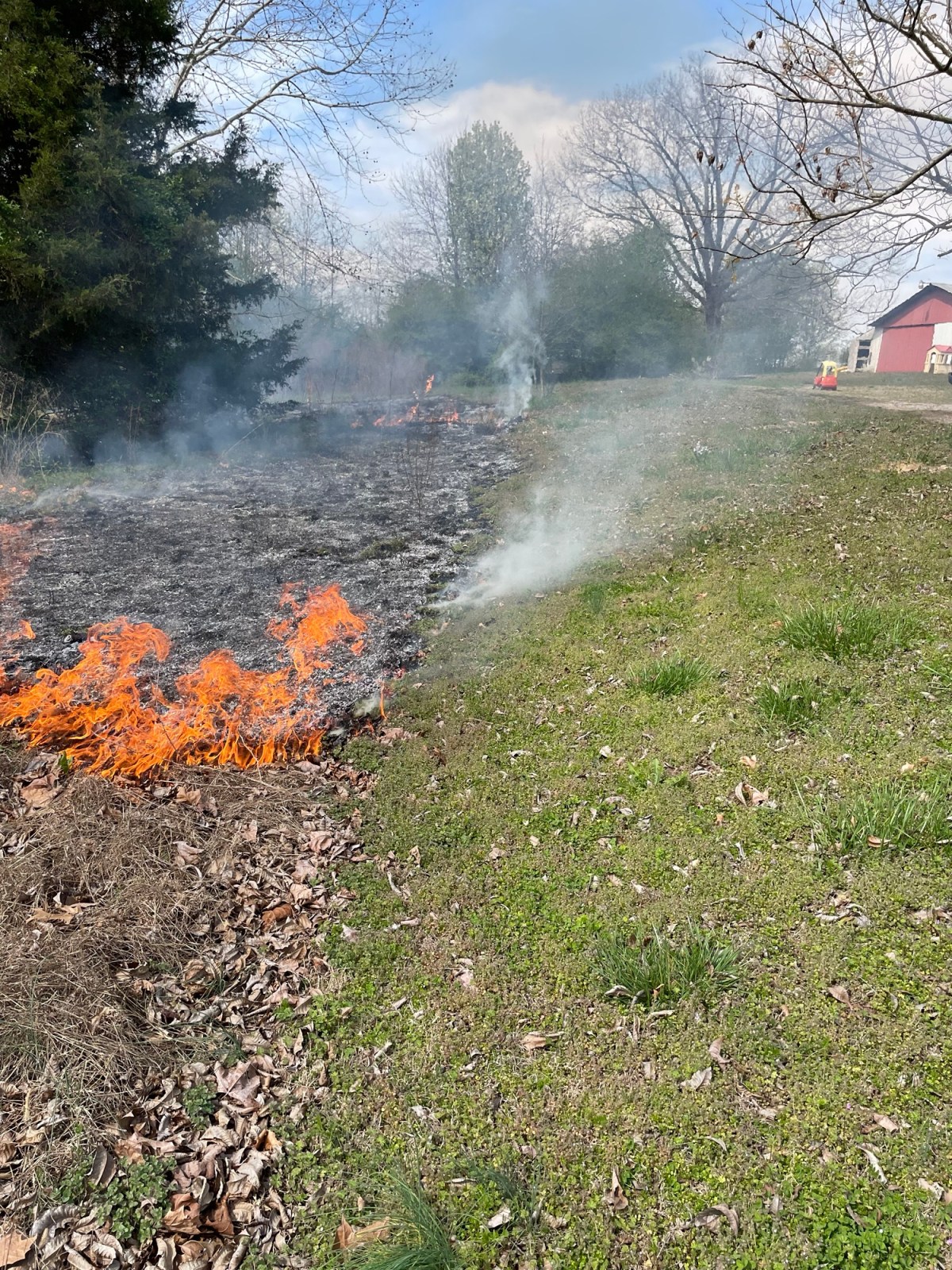
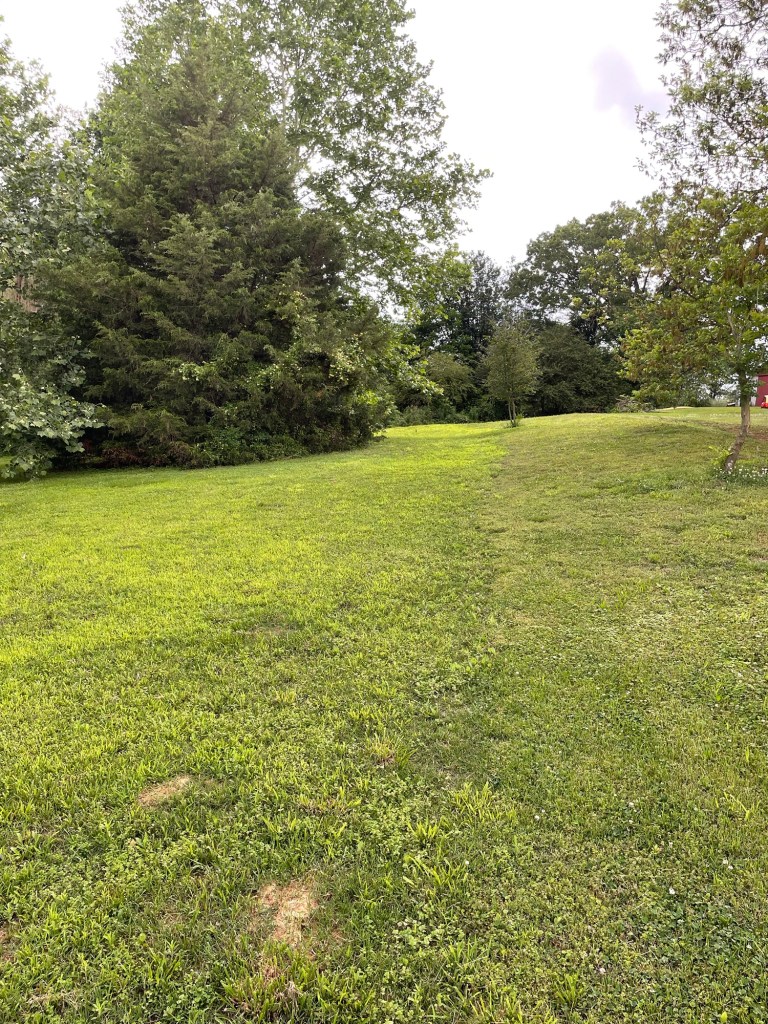
I burnt off half of my yard earlier this year. Because I did not want to mow it, I allowed the brush to grow up to the point where I could not mow it. While it is not the only way to tidy up a yard, burning is perhaps the best way to begin a clean start. It is a conflicting feeling to watch the fire take over the yard. The flames will not selectively burn just the overgrown, stubborn weeds that have begun to harden into pithy stalks, it also consumes the tender grass. And then there is the waiting. And in the waiting the questions. How long will this lay waste in ashes? Will it come back?

It does come back. And better.

During The Fire.
After The Fire.

This is a follow up to Controlled Burn.

Rev. Oliver Murray

I got the news this week that Bro. Murray had passed on. He was my childhood pastor. The man that baptized me in the horse trough on an Alabama September night in 1994.

I remember him driving to my house in the middle of the night to pray for me when I was about three years old. I was running a fever, probably giving my Mom fits, and I guess I wasn’t having any of that pray over the phone nonsense, I wanted the real thing. But he came and prayed for me and I promptly went to sleep, so I am told. He was a man of faith and a prayerful man.

When I think about Bro. Murray I think of a couple of songs that he loved to sing: Learning to Lean, and Reach Out and Touch the Lord as He Goes By.

We may not have had a lot of music at that little church, just Sis. Vivian and an upright Kimball Piano, but I guess just about everyone could sing on key. Something extraordinary that I took for granted. And Bro. Murray sang well. He had a rich baritone voice. A man’s voice.

As I sit here reminiscing about being a little lad at church I can hear his voice…

Learning to LeanLearning to Lean, I’m learning to Lean on Jesus…finding more power than I’ve ever dreamed, learning to lean on Jesus.

I’ll probably always hear his voice in that song. And that is comforting.

Gas Station Food

“I hope this the one that got them free boudins today.” The man holding the door for me said as I stepped into the gas station. You say boudin just like it’s spelled boo-dan. I didn’t know him from Adam’s house cat, and I wasn’t planning to even go inside but the pump didn’t print my receipt, but he had me asking the same question: what about them free boudins? I like gas station food. I’m not talking about Funyons and a Grapico, or anything you get off the shelves-I like that too-I’m talking about the food that they have by the counter. That rotating pizza in that little glass display case always always makes me stop and have an internal dialogue: To eat or not to eat, that is the question: Whether ’tis nobler in the mind to suffer the slings and arrows of outrageous hunger, or to take arms against the sea of cravings and and by opposing end them…To eat, perchance to snack-ay there’s the rub…

Here is the man finding out that this was not the day for free boudins.

One of the reasons I started cycling is I got into the habit of getting a pork tenderloin biscuit at the gas station on the way to work.

I’m used to gas station pizza, biscuits, and the crockpot full of boiled peanuts, but since I have relocated to Louisiana I realize that many people here take gas station food seriously. They even have jargon for it: “Hotbox.” Maybe that’s what it is called everywhere, but I also know another definition for that term.

Admittedly, the gas station food I grew up around often tasted a little like compromise with an aftertaste of regret. That is not the case in the Central Louisiana region. I will not go so far as to say it is healthy, but how often do healthy and good really coexist, especially in the context of food? We could probably square up with one another on deciding whether the food is good-there is no accounting for taste- but I think would all have to agree that the food is consistently hot, which is more than I can say about many fast food restaurants.

My brother has lived in Louisiana so long that he prefers the gas station fried chicken over Popeye’s and KFC. I’m not sure if he has gone native enough to believe that it is better than Cane’s or Chick-Fil-A, but we don’t have a Cane’s or a Chick-Fil-A within 30 minutes of where we live. I tried that gas station chicken the other day for the first time-Krispy Krunchy Chicken-and it is hard to argue with how good it is. They are in gas stations all around this area.

Did you know that Louisiana is in the Diabetes Belt?

“I had one of the best fried pork chops I’ve ever had in my life the other day at a gas station in the ghetto in Delhi.”-Joe Bowen

I’m not really sure if we’re supposed to say ghetto in 2024, but the next time I’m in Delhi I’ll look for that gas station.

These Hotboxes have caused me to ask some serious questions about fast food: Why should I pay a premium for cold food and poor service? I don’t mind waiting on hot fries, but why would I pay to wait for cold fries? Most of the gas stations will whip you up a fresh batch of fries, boudin balls, chicken, or whatever you want if you don’t mind waiting. I think the biggest question is whether fast food is worth the money in today’s economy. That is a serious question when you are feeding a family of five.

I understand that people don’t make Central Louisiana a vacation destination. But the next time you are “passing through”, don’t be afraid to try some gas station food. It’s going to be a lot better than you think.

Look at that country fried steak!

Those little meat pies are really good.

Fiddlesticks

It was my grandmother’s most often used expletive. She only used it in frustration. Like when you’re pouring oil out of a frying pan into a glass jar through a strainer to use later and you spill the oil everywhere; that’s a proper time to say fiddlesticks! There was always a tinge of resignation in her voice when she said it, as if it was declaration of surrender to the task that had just outmaneuvered her.

Inevitably there would be someone standing by who saw the humor in the situation, and they would laugh. Gram would laugh too. No sense in staying upset all day over something silly.

Mom’s favorite wooden cuss-word was “Cat Hair!”

Apparently, people have been using fiddlesticks in this way since the 18th century. Whenever she said it I would imagine someone knocking over a bucket of violin bows. Have you ever priced a violin bow? Or I would visualize a couple of bows crossed above Gram’s head like some musical coat of arms. Or perhaps a barrage of fiddlesticks raining down on her. It is funny what you think as a child.

I had always assumed that a fiddlestick was the bow of the violin, and that is the original definition. But fiddlesticks is also what you call a pair of sticks that a second person plays on the strings of a violin to add percussion to a fiddle tune. It is quite common in Cajun fiddle tunes. But I didn’t grow up listening to Cajun folk music, much less seeing people play it. I was reminded of this word-and Gram- today because I saw someone playing the fiddlesticks in this video.