Old Men

I want to be an old man one day. I want to drive a squeaky clean pickup truck to meet my friends for breakfast at Jack’s at 5:30 in the morning. I’ll eat a steak biscuit unless the bologna biscuits are on sale. We’ll sit at the round table and laugh about the good old days when gas was only .89¢ when we started driving. When a stranger walks in we’ll ask if anybody knows him. And if they don’t, we’ll get to know him. We’ll have nicknames for all the little kids because we might not remember their real names. That will endear them to us. After breakfast we will piddle in our gardens, or go horse trade old guitars and guns.

I met a man yesterday who was 98 years old. He drove himself to the Council on Aging. I’m not sure if he came to hear me sing, or if he just came out of habit because old men have routines. But he stayed and talked to me in the atmosphere that lingers after the songs are over but everyone remains quiet, intently listening. He was still sharp in his mind. That’s the kind of old man I want to be.

I met another old man that cycled 100 miles when he turned 90. A spry old sinewy man, tough as woodpecker lips-that is the kind of thing that old men say. I hope to be a fit old man. Not the kind that wears shorts so everyone has to look their old nasty bird legs. There are some things in life a man ought not have to look at.

I want to be an old man that can tell a good story. Can’t nobody tell a story like an old man. And I might start carrying around little candies to hand out at church for children in case my eyebrows scare them.

I just lost one of my favorite old men, Bro. Boney. I wasn’t expecting it, and I’m still not over it. He was one the kind of old men that shook everyone’s hand at the church. He did that with purpose. He had a way of making people feel like they belonged there. He’d been coming to Thanksgiving with my family for the past few years. He’d sing snatches of those old hymns and I’d accompany on the guitar in the corner until our wives would calm us down. One year the power went out, so we couldn’t be ignored. Everyone joined in and sang along. It was a good night.

One year he brought a BB Gun to the church while we cooked a bunch of turkey breasts for Thanksgiving. It was something that you would expect an 8 year old boy to do, but there he was, the oldest man present, plinking away at cans. I just thought that was hilarious. I kept this picture as his contact picture on my phone. I always have the hardest time deleting contacts of friends that have died.

The hoary head is a crown of glory, if it be found in the way of righteousness. Proverbs 16:31

Old men are a blessing, otherwise God would not have cursed the house of Eli by denying them old men.

Wherefore the Lord God of Israel saith, I said indeed that thy house, and the house of thy father, should walk before me for ever: but now the Lord saith, Be it far from me; for them that honour me I will honour, and they that despise me shall be lightly esteemed. Behold, the days come, that I will cut off thine arm, and the arm of thy father’s house, that there shall not be an old man in thine house. And thou shalt see an enemy in my habitation, in all the wealth which God shall give Israel: and there shall not be an old man in thine house for ever. And the man of thine, whom I shall not cut off from mine altar, shall be to consume thine eyes, and to grieve thine heart: and all the increase of thine house shall die in the flower of their age. I Samuel 2:30-33

I want to be the kind of old man that young men want to get next to in the prayer room before church. The kind of old man that makes children laugh. That gives good gifts. That speaks the truth in love. That cares. That loves the same woman for decades and raises godly children.

I guess the best way to be the kind of old man you want to be is to be the kind of young man you ought to be.

Is ‘at You Earl?

There was a time when Hardee’s had a marketing campaign for a Monster Burger, and it worked on Dad and me. So we drove down to Childersburg, Alabama to our nearest Hardees to have one. I can remember the booth we were sitting in was near the front which gave a commanding view of the entire restaurant. You could see the counter and the kitchen beyond, as well as the dining room all the way back to the bathroom. As we set there eating our big old cheeseburgers, and just generally enjoying our fine dining experience, the side door opened. A voice from the kitchen called out: “Is ‘at you Earl?”

It was Earl, a slovenly dark-haired young man reporting for duty. He confirmed this with a mumbled reply. Then braced himself as a volley of admonishments was hurled his way. It was a woman’s voice, clearly his manager. She was not berating as I recall, but smooth and comical. It seemed like she had been working on Earl for a while.

Where you been Earl? Tuck your shirt in Earl. Did you wash your hands Earl? Where is your Apron Earl? You didn’t comb your hair Earl? Go to the bathroom and get yourself together. Be somebody Earl.

Earl was having a rough day. Being audience to this scene brought an immense amount of joy to my Dad.

“Poor Earl just ain’t got it together does he?”

He recalled this episode for nearly the rest of his life. “Is ‘at you Earl?” became something that he would say to me from then on.

My Dad wanted us to have the experience of working with the general public. Principally, so we would know how to treat people. And to know how to behave when you have been mistreated. Maybe that manager was the first person that ever took time to try to help Earl.

I always think about Earl when I see a Hardee’s. I think about a high school teenager getting their first experience in the workforce. Maybe for the first time in their life they are having do things that were never taught at home. Like tucking their shirt. And being somebody.

Photos of The Week: September 27th, 2025

These are the photographs I took this week.

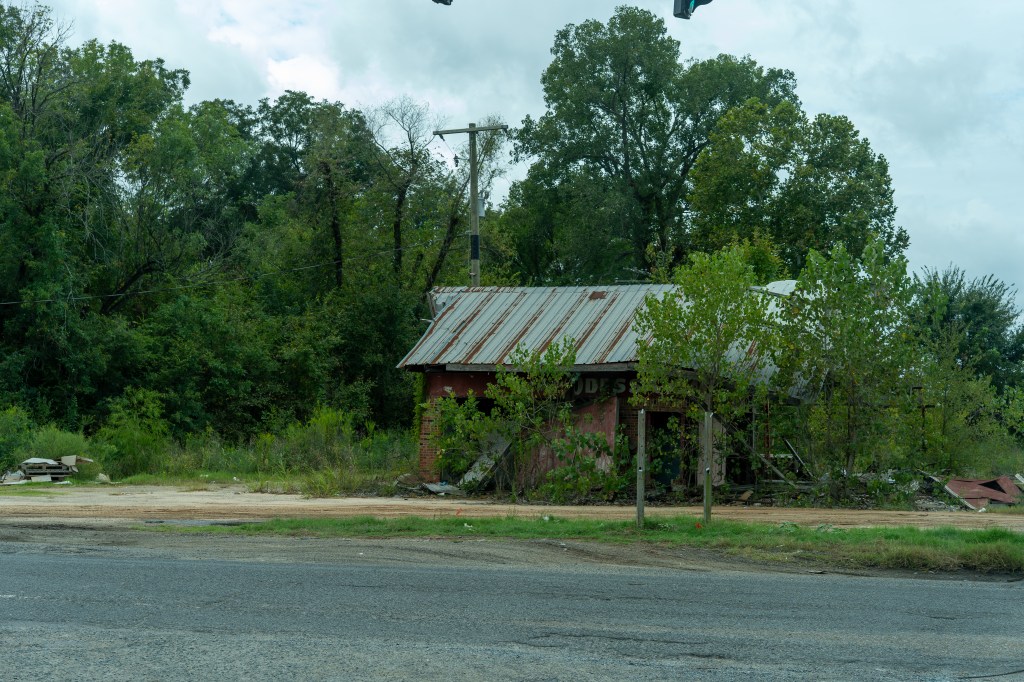
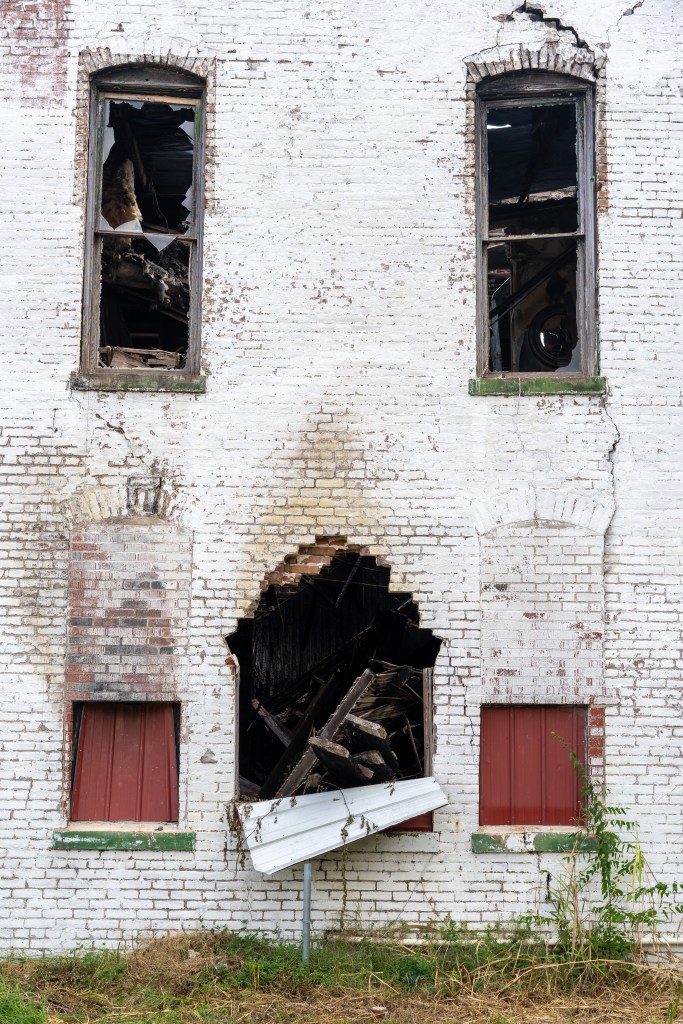
I get to travel a lot for my job. So I take my camera along for drive-by photography. It seems to me that the economy in Louisiana moves East and West along I-20 and I-10. And I live in Central Louisiana. One of the recurring themes in these photographs is decaying buildings. I don’t go out of the way to find them, I have to go out of my why to find new construction. One of the things I like to imagine is what these buildings were like in their prime, with people bustling in an out of them. What kind of clothes did they wear? How did they talk? What did they eat for lunch?

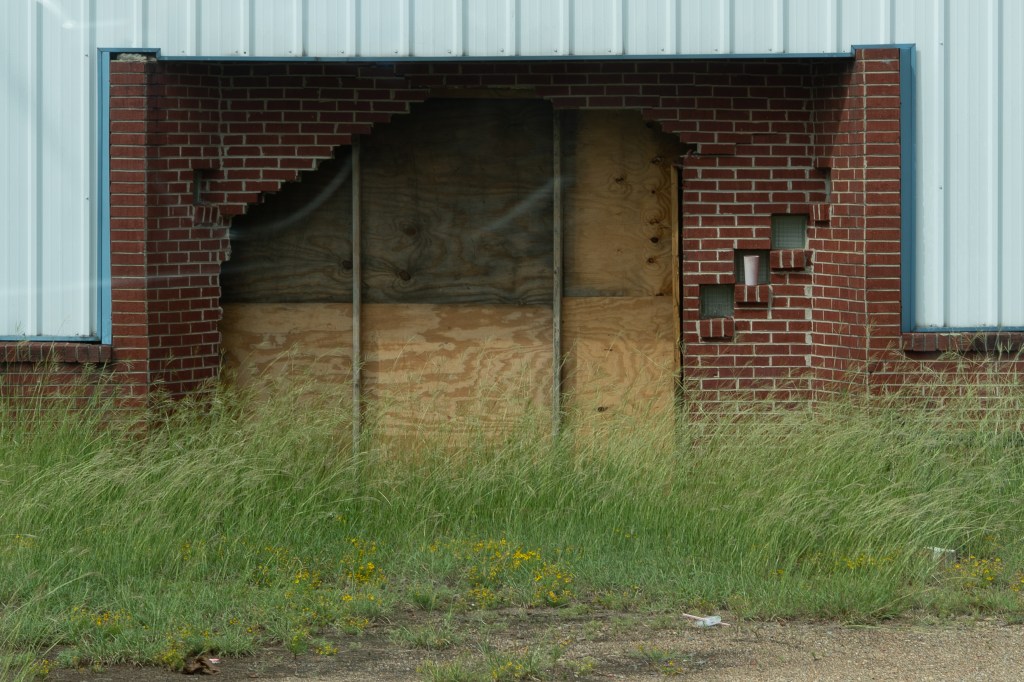
I imagine this was once a thriving little grocery store. The painting makes the pain worse for me: It is fake.
I thought this man was interesting. He was shuffling material from one medical building to another across the street.
The crack in my windshield somehow makes this picture better. The kind of obscure photograph that you imagine a special agent gets on those old detective radio shows.
Cows have a special place in my heart.
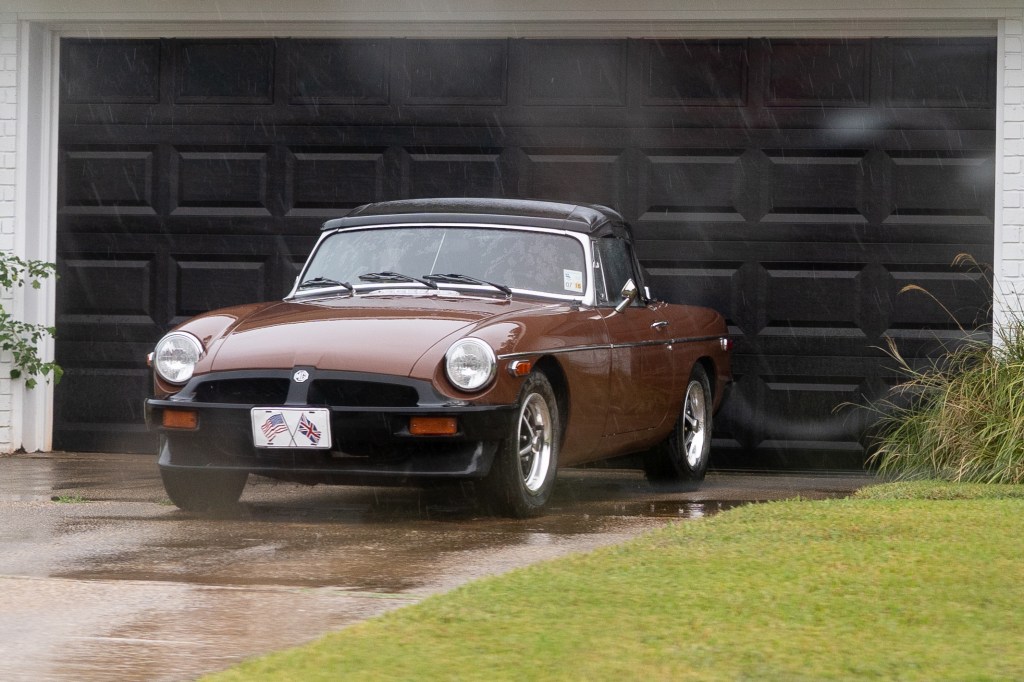
“These cars always reminded me of fighter planes.” That’s what the man driving one told me once at a gas station 20 years ago. His was green though.
I wonder what kind of art is produced here. I like that old chair.
Something about the colors on this building speaks to me.
It was exhilarating being this close to a train.
This is probably my favorite picture from this week. I love this time of the morning. I imagine this is a scene from a book that you can’t put down.
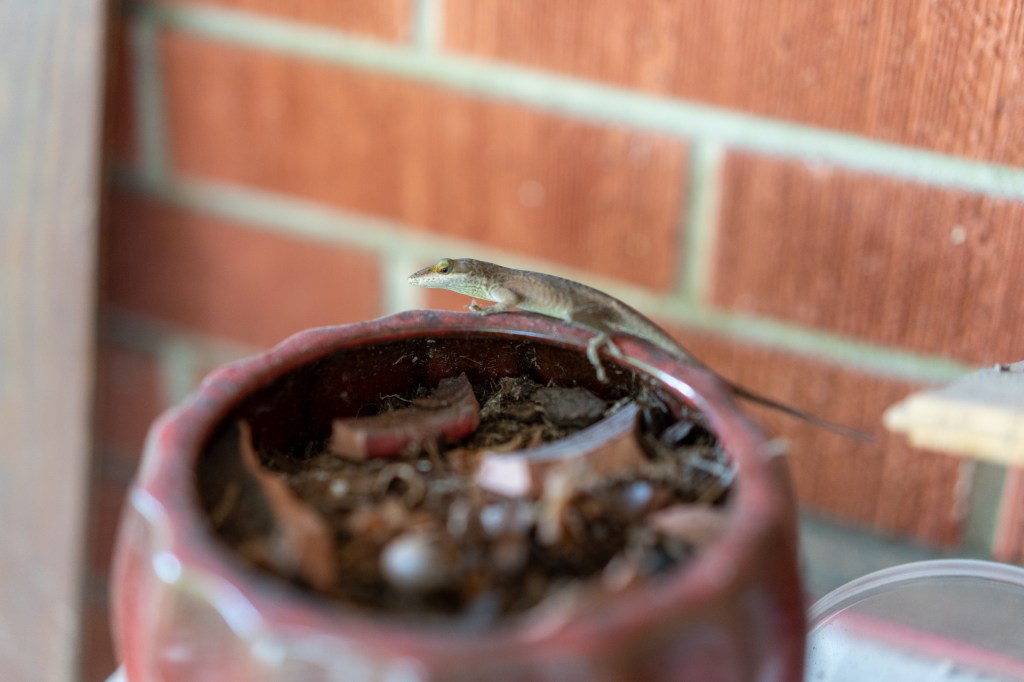
I love these little lizards. Anything that eats bugs can hang around my house.
Name the title of the book that this could be the dust jacket for. That’s the kind of thing I think about when I am composing a shot.
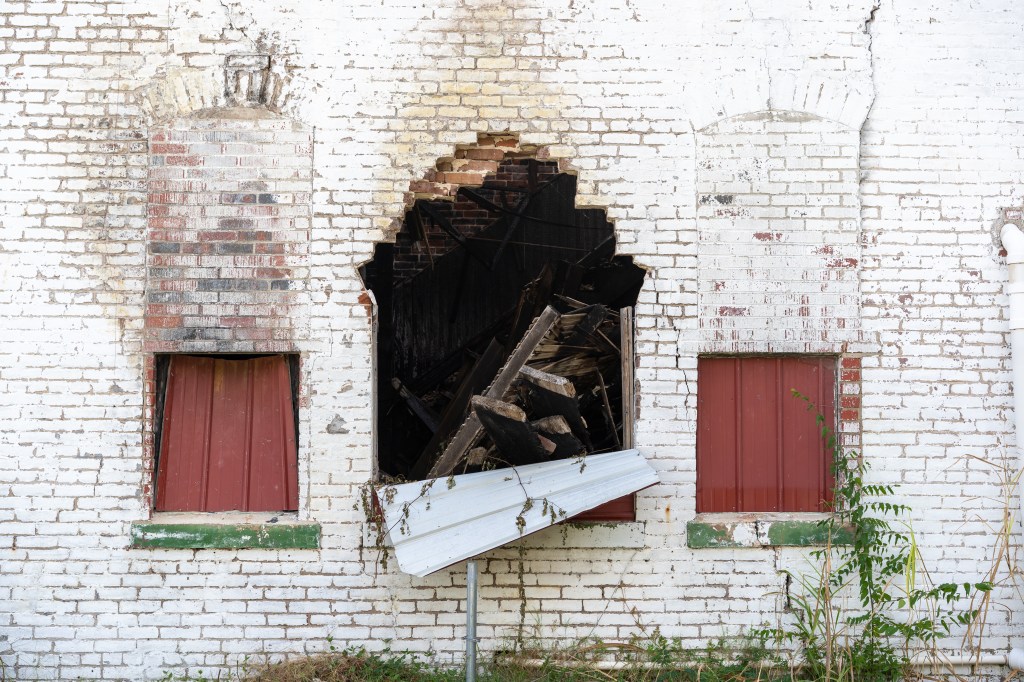
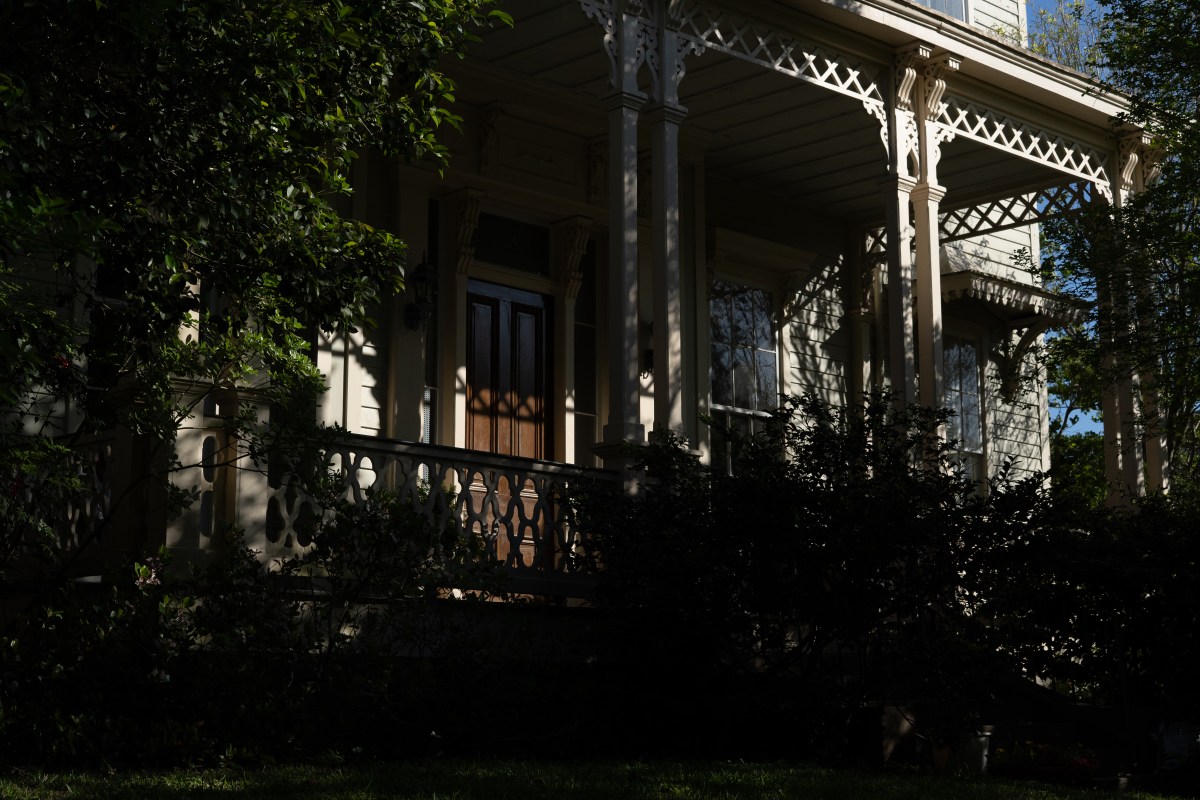
Another good cover for a book about a haunted house.

Phrasing

Maybe he meant, Young man you don’t understand how good you really got it.

Do you remember when you were in high school and the whole English class had to take turns reading Shakespeare’s Macbeth out loud? Our teacher assigned a different cast for each scene so we could all get a chance to experience public speaking anxiety. You never knew when it was your turn; you just waited in agony; your only consolation was how bad your classmates were doing. Everyone was saying the right words, but hardly anyone was really confident in their understanding of the text, despite any confidence they pretended to have in pronunciation. They were simply words without meaning: noise. It would’ve been painful to endure if we weren’t so clueless. I have a feeling that some of us thought we were doing a good job, but I don’t think anyone in my class went on to pursue an acting career. As bad as it was, I still enjoy hearing people read out loud.

I can hear us now just droning on…

Macbeth: If we should fail?

Lady Macbeth: -We fail?

But screw your courage to the sticking place

And we’ll not fail.

Now think for a minute of the old man you used to see at the grocery store—it helps if you had a job at a little grocery store while you were in high school—who had worked as a mechanic for 50 years and had to drop out of middle school to help out on the farm. He couldn’t pass an English class if his life depended on it, but it didn’t really matter; even with atrocious grammar and a vocabulary half consisting of words that could not be found in the dictionary, he could still create a sentence that would stay with you for 20 years because he knew exactly what he was talking about.

“How you doing today Mr. Wallace?”

“I’m doing fine, and you?”

“Pretty good.”

“Pretty good hard to beat.”

Pretty good hard to beat has been incorporated into my language. It may seem just like words on paper-or a screen-but it was the way he said it that let you know there was a lot more meaning that went into that sentence. Maybe he meant, Young man you don’t understand how good you really got it. I think about that old man whenever I chance to use this phrase. Whatever he may have intended, it certainly resonated with me.

That is what we call in music phrasing. Phrasing is how a musician puts a sequence of notes together into a musical thought, and how they interpret written music. It is the reason that Blues musicians could limit their musical vocabulary to the 5 note pentatonic scale and make people cry. It is why folk music can be so simple in its form, but still able to make us recall memories of places we’ve never been and times in which we never lived. And the same reason that beginner musicians sound like beginner musicians: their phrasing is off somehow. They may be playing the right notes-even reading the right notes from a master composer-but still unable to convey the real meaning of what the composer was trying to say.

The blues is feeling good about feeling bad.

Phrasing is more than having a nice voice, or tone. But I imagine that won’t hurt, but I’m not convinced it helps all the time either. It doesn’t matter how nice your voice is if you don’t have anything to say. Or if you are only going to regurgitate words that came from someone else’s heart.

It took me a while to really appreciate Shakespeare, and the closest I have come to understanding it was to see a play performed by actors who understood it at least better than me. I took Sarah to Blackfriars Theatre in Staunton, VA to see a All’s Well That Ends Well and Two Gentlemen of Verona. It was a far cry from bending over the text book following along as your buddy in class-who had never read a book for pleasure in his life and barely had a grasp on 21st century American English-stumble through his assigned lines without the faintest idea of the plot. Those Blackfriars performances have stuck with me and I would like to go back again some day.

Phrasing isn’t any one thing, but a host of subtle things like tone, dynamics, timing, space, and feel. These are all musical terms that could each have their own textbook and university course. So whether speaking or playing and instrument, how do you learn to phrase well? For a start, I think it is important to know what you want to say. For a musician, the most important part of phrasing is to get emotionally involved with the music. I think the best way to do that is to pay attention to the lyrics. And that means you need to understand the lyrics. People can tell when you don’t know what you are talking about. You don’t have to master the language of music-or the English language for that matter- to say something that will connect with a listener, but you do need to master your vocabulary, no matter its size. You don’t want to sound like someone who picked a random $40 word out of a dictionary and tried to force it into a $15 vocabulary. It will stick out like a Ferrari in a trailer park. If you want to build your vocabulary you need to read good stories-and listen to good music. A well written novel has the power to increase your emotional intelligence. Good readers understand empathy.

Even a fool, when he holdeth his peace, is counted wise: and he that shutteth his lips is esteemed a man of understanding. Proverbs 17:28

If you want your words to carry weight, don’t waste them.

200: A Milestone in Writing

This is my 200th article for what began in 2016 as Mostly From Memory, a blog where I started sharing short essays on my memories from growing up in a small town in Alabama. Since the statute of limitations has not run out on a few events, I am kind of out of material for the childhood stuff unless I want to run the risk of getting sued. Or I could start making stuff up. Which is how I think that some authors get into fiction. You take a piece of story that really happened, but you change the names of the people and move the location to somewhere far off like Pell City, Alabama, and describe some of the characters as prettier or uglier than they really were and add some extra details like an embezzling scheme, a murder, and some romance or dragons to spice up the plot a little bit. You know, just like cooking. You begin with a chicken breast—that’s the part that really happened—but it could really hurt someone if you serve it raw. The fiction part comes in with how you decide to present it: grilled, fried, boiled, fricasseed… And a good cook can make just about anything palatable, if not spectacular.

I haven’t gotten into fiction yet, but I have branched out and written about a lot of topics like grief, obituaries, music, biographical sketches, and social and cultural constructs, and how to overcome them. It is this sort of material that I am drawn to write about.

This makes me ask the question, has my writing style changed? I think it has changed in the same way that a person ages. If a man is still talking and behaving like a 20 year old at 40 then I think you would agree that something is off. And when a 40 year old takes measures to alter their physical features to appear 20, whether people pretend along with them or not, we all know that it is fake. I feel that my writing has aged with me.

And maybe my readers have come and gone just like friends in different in different stages of life. I may have lost some of my readers when my material shifted, and that is understandable. Just like when you take the last bicycle ride with your neighbor who is getting his driver’s license the next week. You’re still friends, but he is going places you can’t go now. And you spend less time together. Then when you get your license, you’ll probably go to different places than he went. And you meet new people who are less interested in your past than they are your future.

I did a lot of looking back when I first started writing. I felt the need to put some of those oral stories into writing. I am glad I did because I didn’t realize how quickly my sources would move on without warning to a place that I can’t go yet, taking their oral stories with them. I have been looking inward a lot of my recent material. But I am trying to practice looking out.

I think I am beginning to understand why older people say less.

If you have been with me since the beginning, thank you. You may not have noticed the shift because you’ve grown with me. But if you are an occasional reader, you may have noticed changes just like your great-aunt noticed when she only saw you twice a year at Easter and Christmas. And I guess that is what I want to talk about today: I really just want to write articles that make people want to think about things that matter.

I think people matter. I think how you treat people matters. I think motives and attitude matters. I think education matters. I think that morals matter. I think that mental health matters. I think that physical health matters.

Above all, I think truth matters.

Dementia

“Mr. Zane, that little old lady back there doesn’t even know her name. All she does is mumble, but she just sang I Saw The Light along with you.”

I have been blessed with a unique opportunity to sing at the nursing home as a part of my job. I have lost count of how many nursing homes I have visited. One of the most interesting and moving experiences I have had so far is singing in the memory care units. The memory care units I have visited have been in assisted living centers, not nursing homes, and are for residents who are dealing with memory loss due to Alzheimers or dementia. These units are usually locked down so the residents won’t wonder off and get lost. As I am being escorted through the halls, the workers always try to mentally prepare me for what I might expect as they punch in secret codes that take us deep into heart of the building. They don’t realize that that kind of stuff doesn’t bother me. I’ve probably been to more nursing homes than they have, and even preached at the Methodist church. I always keep my eyes closed while I’m singing anyway.

I’m not a licensed music therapist, but I have seen the power of music first hand. When the director of the unit walks up bawling after a concert and says things like, I’ve never seen that man talk before after the man just talked to me for three minutes. Or There is a little old lady back there that doesn’t even know her name. All she does is mumble, but she just sang I Saw The Light along with you. This kind of thing happens often. I cannot tell you what these people are diagnosed with, but I can tell you that there is a moment when the light comes on in their eyes. And it is a moving experience.

I often leave from these brief concerts thinking about those people, locked up in a wing of some multimillion dollar facility. Each person represents a heart wrenching story of children coming to grips with a parent whose mental state has deteriorated to an unrecognizable point. When did the children notice? Did their parent, who once possessed a sharp intellect and a profound pool of wisdom become foggy in their memory and erratic in judgment? Was there a sudden change in personality from a caring and compassionate nurturer to a mean and selfish miser, or was the change gradual? At what point did a brother call a sister and say, I think something is going on with Dad? And I wonder about perhaps the hardest conversation of all, Dad, we’re concerned about you, I think we need to get you some help.

I imagine a lot of that depends on the state of the relationship between children and parents. Disfunction, strained relationships, and estrangement is the sad reality for many families, and would make an already extremely difficult situation nearly impossible to navigate.

I have talked to quite a few people who have had this experience with a parent. They tell me that looking back they could remember odd changes in behavior from years before that now made sense. They talk about the parent leaving long before the body expired. And the sense of relief after their parents’ death, accompanied by a slight sense of guilt for being relieved. They also speak of the relief of knowing that the unkind words spoken to them were the disease and not the parent.

These are all the things I think about when I tune up my guitar in a memory care unit. I look for that light to come on. I try to sing a wide variety of hymns and gospel songs in hopes that one of them will resonate with a lingering memory behind a set of blank eyes. I also am painfully aware that I may not be able to reach someone if they have no memories of any of these spiritual songs. Or maybe the music has already died and there is no recalling them.

I sing anyway. I never know who is listening.

Magazines

I think that it is healthy to have hobbies or areas of interest.

I just finished reading A Hunter’s Fireside Book: Tales of Dogs, Ducks, Birds & Guns by Gene Hill. If you were not aware, I am not a hunter, but I appreciate good writing no matter the subject-within reason of course. Good writing can make even the most boring pastime seem interesting. While I don’t necessarily think hunting boring, I do think Gene Hill was a good writer. And I really enjoyed the book. This book was a collection of columns he wrote for various outdoor magazines in the 60s and 70s. I can understand how readers felt when they got a new magazine and turned straight to where they knew his column could be found. He finished his career as full-time columnist for Field & Stream magazine. He died in 1997. All of this reminded me of how much magazines used to be a part of my life.

Zach had a big pile of second hand Field & Stream magazines that he procured from the thrift store. I used to read them too, and I didn’t really care for hunting or fishing then either. But the stories were interesting. And so were the ads. We’d stare at those rifles. Or think of how much fun we could have with one of those 6 wheeled amphibious ATVs in the tiny black and white ad spots in the very back of the magazine.

There was another author that wrote a lot for Field & Stream, Patrick McManus. We had some of his books, but those second hand magazines from his era would’ve been worn out a long time before they could be found by a country boy at a thrift store.

Every once in a while Mom would buy us a bunch of National Geographic magazines from the thrift store or a yard sale. We even had a subscription on and off throughout my life. I loved those old magazines. The pictures were so interesting that you wanted to read the articles. I still want to go to see some of the places that I discovered reading those old yellow magazines; Angkor Wat, Easter Island, New Guinea, Hong Kong, India…Steve McCurry and Rudyard Kipling have taken me to India so many times that I would like to go in person some day. The advertisements in National Geographic were quite a bit different than the ads in Field & Stream. I distinctly remember the Rolex (specifically the Milgauss) and Canon ads. It was also interesting to see ads for new cars that you had only ever known as old.

I think that it is healthy to have hobbies or areas of interest.

Mom subscribed to Traditional Home. Those ads made me realize that we were in fact, poor. But I loved looking at the floor plans of those high dollar houses. That magazine also gave me an appreciation for interior design. It is hard to condense 15 years of reading a decorating and design magazine into a single sentence or even paragraph other than to say that poor design choices still bother me.

I guess the only guitar magazine that I have ever subscribed to was Premier Guitar. For the longest time I liked them because they never had people on the cover, just guitars. That changed when BB King died. I have stopped subscribing because I think the editor is a smart alec. Even so, whenever a new guitar student asked me a question about say, what a phaser pedal does, I have to work hard to keep from giving them a 5 page report with works cited and audio clips because they really want a brief AI answer, not a research paper, or even a magazine article.

I think that it is healthy to have hobbies or areas of interest.

Magazines were how I discovered a lot of things, like how to identify a quality piece of furniture. And where I learned a lot of guitar and gardening techniques. I started eating honey and gorgonzola cheese on crackers because I read it in a magazine. I learned how to intonate guitars and marinate grouse in magazines. I still haven’t marinated any grouse though, but I can intonate your guitar for $45 if you’re in the Jena area.

Some magazines would print corrections from previous articles. I liked that. I like it when things are made right. It also was a good reminder that real people worked to put together the magazine. I also liked that more than likely a reader caught the mistake. Sometimes a magazine would post a letter from a reader and it was as interesting to read as one of the regular staff writers. What a cool career writing for a magazine would be.

Superman could’ve picked any job he wanted as a cover, but he picked journalism.

I suppose that some people still subscribe to magazines, but I’m not sure who they are. I imagine that your social media algorithm is a good representation of what your magazine rack might’ve looked like 40 years ago. One nice thing about that is information is more readily available. I’m not sure that social media can quite replicate the feeling of seeing a magazine in the mailbox.

Fiddlesticks

It was my grandmother’s most often used expletive. She only used it in frustration. Like when you’re pouring oil out of a frying pan into a glass jar through a strainer to use later and you spill the oil everywhere; that’s a proper time to say fiddlesticks! There was always a tinge of resignation in her voice when she said it, as if it was declaration of surrender to the task that had just outmaneuvered her.

Inevitably there would be someone standing by who saw the humor in the situation, and they would laugh. Gram would laugh too. No sense in staying upset all day over something silly.

Mom’s favorite wooden cuss-word was “Cat Hair!”

Apparently, people have been using fiddlesticks in this way since the 18th century. Whenever she said it I would imagine someone knocking over a bucket of violin bows. Have you ever priced a violin bow? Or I would visualize a couple of bows crossed above Gram’s head like some musical coat of arms. Or perhaps a barrage of fiddlesticks raining down on her. It is funny what you think as a child.

I had always assumed that a fiddlestick was the bow of the violin, and that is the original definition. But fiddlesticks is also what you call a pair of sticks that a second person plays on the strings of a violin to add percussion to a fiddle tune. It is quite common in Cajun fiddle tunes. But I didn’t grow up listening to Cajun folk music, much less seeing people play it. I was reminded of this word-and Gram- today because I saw someone playing the fiddlesticks in this video.

Clapping: Your First Lesson in Rhythm

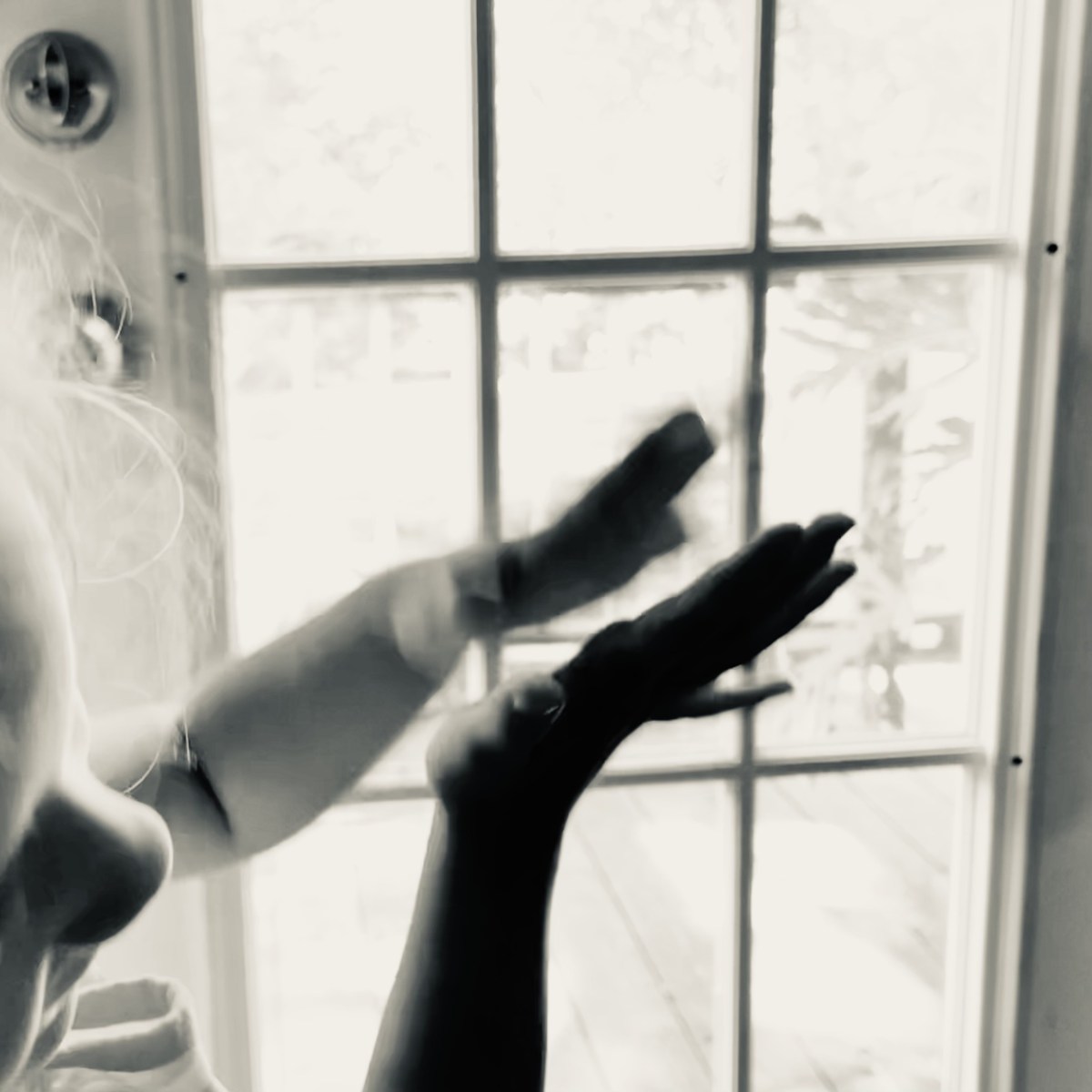
I have a little nephew and all he knows how to do is fill up diapers and clap.

O clap your hands, all ye people; shout unto God with the voice of triumph. Psalm 47:1

Did you grow up around live music? If so you probably clapped along, and probably never had to be taught how to clap. Its one of the first things you ever did. I have a little nephew and all he knows how to do is fill up diapers and clap. Its just in us naturally and most of us never even think about it.

Every once in a while I get to lead worship and I like to sing old songs. You know; country songs. Duple meter hillbilly gospel music. You can call me nostalgic and you’ll probably be right, but I also once had a kid rap at Youth Camp. You can’t please all of the people all of the time. Anyway, whenever I lead one of the these old upbeat gospel songs out of the hymnal there is usually one or two people that clap opposite of everyone else. And it makes it hard on me. Here I am, not really a singer but giving it all I got trying not to blow an artery while singing in the rafters, hoping to remember to give signs to the poor praise singers who are not hillbillies, and somebody is clapping off beat.

“Bluegrass is based upon a complex rhythm scheme called the boom-chuck boom-chuck. We kindly ask that you do not clap on the boom, only on the chuck.” -David Crowder

I feel like this man Crowder is speaking from the frustration of leading a song with a group of audience members who do not agree on where the clap feels right. And that is what I am here to talk about: How do you feel time?

Sincerely, I do not expect every audience member to be a musician and I wouldn’t discourage anyone from clapping in praise, whether they are in time with the music or not. This subject is interesting to me because time/feel is one of the things that makes music unique.

The “Boom-Chuck” rhythm that Mr. Crowder is referencing is the down beat (boom) and the back beat (chuck). In a bluegrass band the boom would be the stand up bass, and the chuck the mandolin. This eventually manifested itself in the drum kit with the kick drum playing the boom and the snare drum playing the chuck. So when Chuck Berry sang “Its got a back beat you can’t lose it” in Rock and Roll Music he was talking about the snare providing the back beat.

I was shown as a child, by a host of witnesses now passed on, to clap on the back beat. I didn’t grow up with a drum kit in church, which is where I did all my clapping to music. The clapping congregation were the timekeepers in my little church. I am sure I would’ve gotten in trouble from Mom for purposefully clapping on the down beat at church. And honestly, I have to bite the inside of my lip and furrow my brows like I am doing long division just to be able to clap “wrong”. Not because I can’t bring myself to do it, but because it is unnatural to me. But that is the musical tradition and environment that I was raised in.

When I got to Gateway College of Evangelism and joined the choir I was surprised to learn that even some of those blonde-headed, blue-eyed, midwestern yankees with funny German last names were just learning for the very first time in choir practice that you clapped with the snare drum in Gospel music. I thought man these people are backwards. Looking back though, Polka and Bluegrass musical traditions feel time very differently and emphasize different beats. And you might get odd looks for clapping on the back beat at Polka or Klezmer concerts. (I may be wrong about that, I have never been to either, but a lot of Polka is in 2/4 and puts strong emphasis on the downbeat. Klezmer music often has more elaborate clapping schemes compared to the simple backbeat.)

My Uncle Melvin believes that all this rhythm stuff we are talking about is made up, especially the part where you can count. I thought he was joking but after I talked to him about it I think he is being genuine. Maybe he represents a large swath of people who have no idea what I am writing about. I kind of doubt it though. I believe that many of you, especially if you grew up in a church that encouraged clapping, or around live music in general, will have a natural desire to move or clap when you feel a song. It is how you feel that song that is fascinating to me.

I made this video to demonstrate this topic. I said something in it that I want to set straight.

“There’s nothing worse than trying to lead worship with a group of people that are not in agreement on where to clap.”

That is not true. No one clapping is far worse. Clapping is an act of praise. Fortunately we are not being graded by The Almighty on how good our rhythm is. It doesn’t even have to be rhythmic. He’s happy with noise.

Make a joyful noise unto the Lord, all the earth: make a loud noise, and rejoice, and sing praise. Psalm 98:4

The Secret Society of Bald Men

I have noticed over the last few years that my hair is thinning. That is a less painful way of saying that I am going bald.

“We need to get haircuts this week Wes.”

“Yeah. Those couple of strands of hair in the front look weird on you.”

“Oh yeah? What do you think I should do?”

“Well it may take some getting used to, but maybe The Bro. Sutton.”

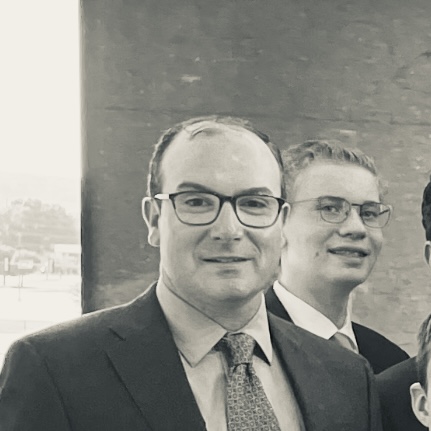
Let me tell you about Bro. Sutton’s hair: He’s bald. Not just any bald, but shiny bald on top, with hair still around the sides. You know the haircut. This is how my own flesh and blood sees my hairline. He’s not the only one though.

That’s me. Before I make excuses about the lighting, let’s be honest that my hairline is almost level with my ear.

Leviticus 13: 40 And the man whose hair is fallen off his head, he is bald; yet is he clean. 41 And he that hath his hair fallen off from the part of his head toward his face, he is forehead bald: yet is he clean.

I’m glad that God decided to include this scripture in the Bible.

There is a brotherhood of bald men with secret handshakes, passwords, and I don’t know what all. You have probably noticed the familiarity bald men share with each other. Even total strangers give a nod to each other as if to say we’re in this together. The problem is they have begun to mistake me as a member.

I have noticed over the last few years that my hair is thinning. That is a less painful way of saying that I am going bald. I didn’t notice that y’all noticed though. But you did and probably a long time before I did. But people are kind and they didn’t say anything. Or maybe they thought that I noticed too. Let me tell you, it sneaks up on you. I haven’t been to the barber shop in almost a decade, so maybe my barber would’ve mentioned it.

It has progressed to the point that I have been approached about joining The Secret Society of Bald Men. Last week I met with two sitting members of the Society. They were men that have taken a higher order within the dark organization. I could tell because they were not only bald, but their heads were completely shaved. I can remember the younger one before he joined. That means the last time I saw him he still had hair. Kind of. His hair used to look like a rooster tail glued to a volleyball. Now he looks like Stone Cold Steve Austin.

“You should do it.” They older one said, trying to pressure me into shaving my head.

“You’ve got a nice shaped head. It will look good.” The younger one chimed in.

“I’ll do it for you. Lets do it tonight!” The older one followed up with a wild grin.

“Y’all almost convinced me. Let me wait for a more convenient season.” I told them.

Hair is the only thing a bald man sees when he walks into a room.

-Zach Wells

Integrity: that’s really why I am thinking about joining the Secret Society of Bald Men. The men that I met had an epiphany at some point-probably after they saw a picture of themselves-said “I’m tired of living a lie! I’m just going to be bald.”

I keep trying to convince my wife that buzzing my hair will look good. I’m not talking about shaving it down to skinhead level, but just so close that I don’t have to comb it. Or try to comb it over. She hasn’t been persuaded yet.

All the men that I have known that shaved their heads did it without their wives permission or consent. Which is something else that appeals to me. I enjoy giving Sarah a good surprise every once in a while.

Nobody looks at a man with a combover and thinks I’d like to try that. But when I see a man that has taken the plunge and shaved his head I see a man that has come to terms with his baldness and won. And that is inspiring.