Out of Tune

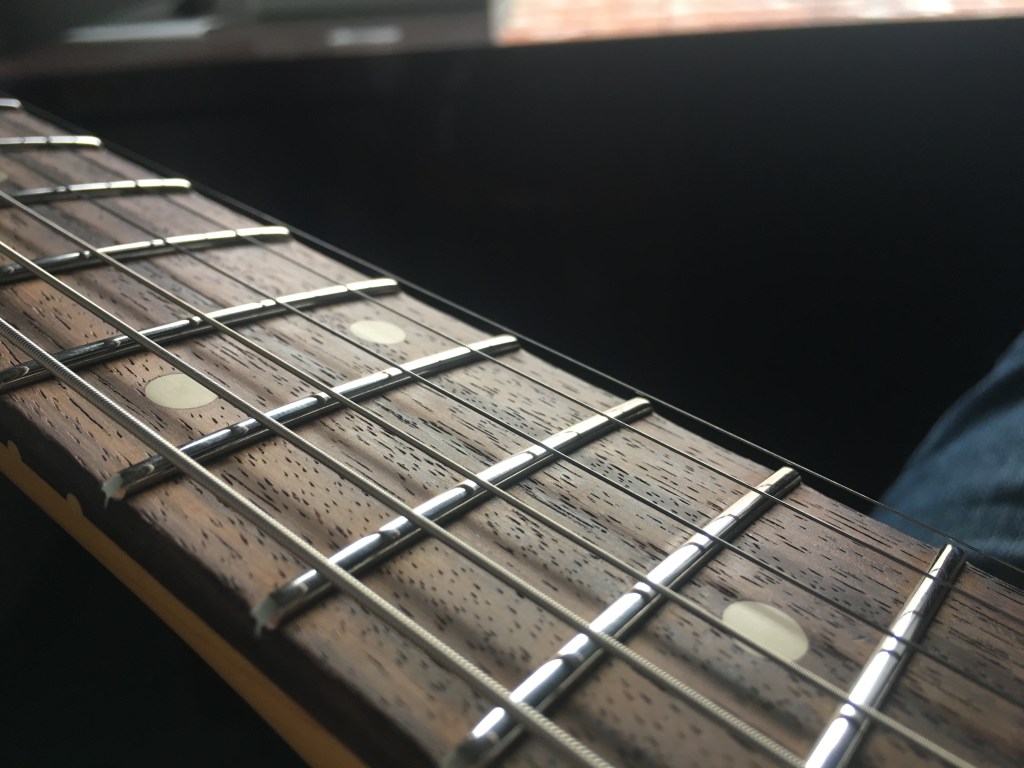
Have you ever wondered why guitars have frets and violins do not? I didn’t think so. I guess I better tell you what a fret is now. A fret is a thin strip of metal that runs perpendicular to the strings on a guitar. In theory it makes it easier to play a correct note. On a fretless instrument you have to rely in your ear and not a fret to play the correct note.
I do not own a violin but I spent a little time with one in my first round of college. I kept asking the wrong questions. Where is C? I should have asked, What does C sound like? I have come a long way since then on guitar. And I am beginning to understand why the concert music world did not respect the guitar until players like Andreas Segovia and Julian Bream paved the way for classical guitar in the twentieth century. I suppose I might as well tell you now that the guitar is out of tune. Or you could say it is equally in and out of tune. And this has bothered me for years.

I discovered this issue as a young player when I realized that guitars need regular maintenance. You need to tune a guitar’s open strings every time you play, but occasionally you have to check the guitars intonation. That means you make sure that the guitar is in tune at the 12th fret octave as well as the open string. If it is flat at the octave you can adjust the guitar’s bridge to make the string shorter and therefore sharpen the pitch. You lengthen the string to flatten it if the pitch is sharp at the octave. But there is a mathematical problem with tuning that is highlighted on fretted instruments: you can either have the octaves in tune, or the Fifths in tune, but not both. (Fifths are the fifth degree of the major scale and are the foundation of western music.) I did not have this information all of those years ago, I just noticed that I could never get the tuning perfect. And I thought there was something wrong with my instrument. It turns out it was not my guitar, but the whole tuning system in general. The piano suffers from the same problem.

I am tuning an octave on this old piano by ear. When you play two frequencies that do not match, say 400 hertz and 445 hertz, you can hear the difference of 5 hertz as a thumping sound called beats. You should be able to hear the beats disappear as the octave is brought in tune.

There have been a number of attempts made to deal with this issue over the past thousand or so years. Various temperaments, or tuning systems have been developed to to mitigate the Pythagorean Comma, or tuning gap. Apparently Pythagorus- yes that Pythagorus from your geometry class- wrestled with this issue.

Now that we have the tuning system worked out people only want to write four chord pop songs.

Enter the guitar around 500 years ago. I’d like to think that a prototypical guitar player invented the guitar. He was probably aware of the tuning issues, and thought, What if I just put these frets on the neck, make everything straight, and hope for the best? Guitar players are infamous for not being able to read music. Maybe he put frets on the fingerboard because he was tired of guessing where to put his fingers. Maybe he didn’t want to memorize notes but was happy to play patterns. At any rate guitars have been using equal temperament tuning since the renaissance and pianos waited to adopt it until right after the Boer Wars. And I think that’s why the guitar didn’t start gaining notoriety until the 1930s. Equal temperament tuning compromises the fifths in each key so the instrument can play fairly in tune across all the keys. This is why I have never been able to tune my guitar to my idealists standards. That brings me a small amount of psychological pain. But I have fallen in love with the guitar and I believe we can work our differences out.

Imagine now if this tuning phenomenon did not plague musicians and instrument makers. What if we could have the octaves and the fifths in tune? I don’t think that music would be what it is today. Part of the beauty of music is figuring out what works and what doesn’t. If everything was perfect there would be no dissonance, and how could we write music about pain and suffering without dissonance? J.S. Bach wrote his masterpiece The Well Tempered Clavier on an imperfect instrument. He wrote a piece of music in every key for the Harpsichord or Clavichord. These are stringed keyboard instruments that predated the piano. The genius of these pieces are the notes that he avoids because the well tempered tuning system still had some major dissonance issues. This piece is still studied today by aspiring pianists.

Think about this: more than likely, all of the piano music that you have ever heard in your whole life has not been in tune.

I suppose every good story needs a moral. Life is not always perfect. It can be frustrating to find the perfect balance because there may be no perfect balance. You just have to do the best that you can do with what you have. And often that ends up being the most beautiful thing anyway.
Loss of a Coworker

Getting to know people who are not like me has always been one of my favorite aspects of working with the public and attending public school.

Coworkers are people that you may not have anything in common with the except that you both work at the same place. So you end up building a special relationship with someone that you ordinarily would not have made friends with. Getting to know people who are not like me has always been one of my favorite aspects of working with the public and attending public school.

Losing a coworker is a strange feeling. I remember Dad losing a coworker to cancer when I was just a lad. I think his name was Ed White. Dad had visited him a few times while he was in the hospital. I remember how he would tell Mom how the visits went. I don’t have anyone to verify this-they are all dead-but I am fairly certain that Ed White paid the hospital bill when my sister was born. Mom and Dad went to the funeral without us kids. We didn’t know all of the details but we could tell by Dad’s countenance that it was not a time to be rowdy at the house.

“Paul passed away this morning.”

I got this text a couple of weeks ago from my boss at my former State job. I only saw him once or twice a month for the years that I worked there. But I talked to him on the phone quite often. He was one of our field officers and spent most of his time covering a large part of east Alabama. It was always a welcome diversion whenever one of these officers dropped into to see the people like me who hardly left the office. Those officers all had the best stories.

He carried a cane. He would walk by and smack that cane on my desktop and say things like:

“You’re fired.”

“You’re working too hard, take a break.”

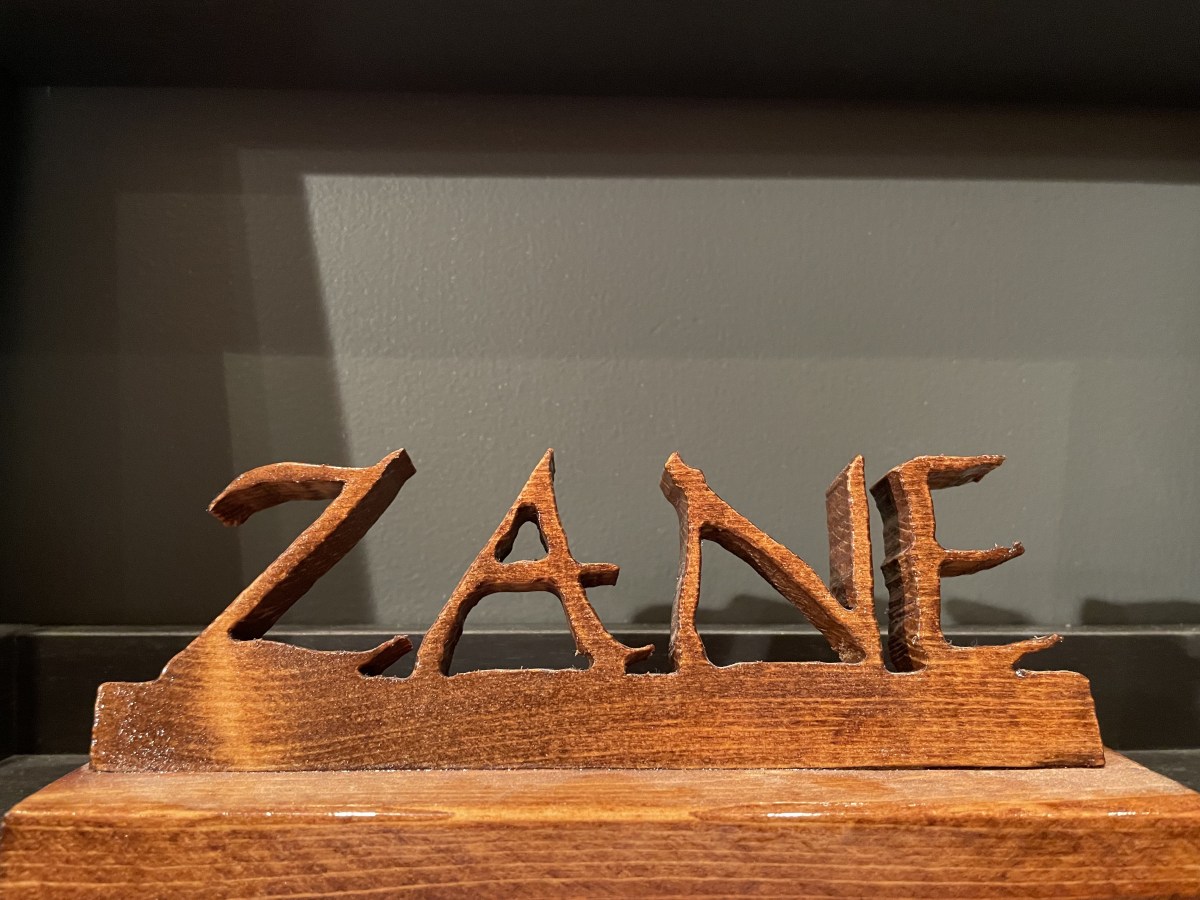
He was good at saying nice things in an abrasive tone of voice. He was also a very giving person. My first week or so at work he made me a wooden stand with my name. I still have it in my new office. It means a little more to me now. One day he brought me a bunch of metal straws. At first I thought, what in the world am I going to do with these? But they have been in constant use since I brought them home to the kids. Recently I have gained a deeper appreciation for these straws since I have slipped into the habit of drinking milkshakes nearly everyday.

Paul had served in more than one branch of the military and was a veteran of Iraqi Freedom. This may be where he picked up the cane. After he retired from the military he landed the gig with the State and that’s where I met him. He retired in the last year or so because his health. He had been fighting cancer. God I hate cancer. Paul was indeed a character. He made me want to be a better gift giver.

The first coworker that I ever lost was named Chavelo. Although I think that was his nickname. His real name was Isabel. I had never heard a man named Isabel, but I was so much older then, I’m younger than that now. He was from El Salvador and he introduced me to papusas. He would share them for breakfast. We were working for a man up in our church who owned a commercial lawn care business. We all went to church together. I was the truck driver and chief weed-eater operater, Cecil-another Alabamian-and Chavelo drove the big mowers. Neither one of them spoke proper English. And now that I think of it, I don’t think they even tried to talk to each other, they just each talked to me.

Chavelo told me that he had worked on a dairy farm in El Salvador.

“Tha macheen dat meelk da cow. It bad por da cow chitty. We meelk by hand.” He made a squeezing motion. I’m not sure what I was supposed to do with this information, but it has brought me a lot of joy over the years.

As we drove from job to job, Cecil would point out houses that he had sanded the floors in. The two would interrupt each other to talk to me. It was so entertaining.

“You see that bank right there Brother Zane?” Cecil asked one day.

“Yes.” I said, not fully paying attention as I navigated the truck and trailer through the streets that had been designed for horses and carriages.

“Somebody robbed that bank with a banana!”

“What?” I asked incredulously, now fully paying attention.

“It was a chocolate covered banana.” Cecil replied. I’m not sure of the veracity of this story, but I know for certain that Cecil believed it. I really hope it is true because I want to believe it too.

That’s what it was like working with these two. They were both old enough to be my grandad. I did a lot of laughing back then. That’s what the best coworkers do, they make you laugh.

Chavelo was sick one week for a few days, and when he returned I noticed that his eyes were yellow. After a month I began to noticed that his upper belly was protruding. He was not an overweight man by any means and this protrusion turned out to be bloating from liver cancer. I noticed the same symptom in Paul a while back. Chavelo went down hill pretty quick. I went to see him a few times while he was on his deathbed to pray for him.

“It’s no good Brother Zane.” He burst into tears one day. I cried too.

When he died they asked me to speak at the funeral. That was the first time I had ever spoken at a funeral and also the first time that I had ever spoken with a translator. I said something along these lines.

Chavelo and I had a language barrier, but not a communication block. We couldn’t always understand each other’s words, but we understood each other’s thoughts. Love transcends language. Chavelo was always sharing and we were always laughing. That connection was worth more than words could explain.

I sometimes think of Chavelo when I get discouraged while trying to learn Spanish. Chavelo helped me understand that speaking English is not the only sign of intelligence.

Eventually I got a job with Parks & Recreation and left the mowing industry. I was sitting at my desk one day and I got a phone call on my personal phone. I didn’t recognize the number so I didn’t answer. It is one of the biggest regrets I have. Pastor Dillon was out of the country so that’s probably why they called me. When I finally checked the message I was gutted.

“Cecil has had an mowing accident and he didn’t make it. Please call us.” It was from one of Cecil’s family members.

When they described the hill that he had been mowing when his mower flipped over on him I knew exactly where they were talking about. It was steep and tall. I never liked mowing on it myself.

Two things changed in me after Cecil died. I still answer the phone even if I don’t recognize the number. This does mean that I talk to a lot of people in Kolkuta, India, but I don’t mind. I also don’t play around with zero-turn mowers and I don’t feel bad telling people, “Hey man, you need a roll-bar on that thing.”

When I got the text about Paul it brought back a lot of memories for me. God and Death are no respecters of persons. I don’t know if this has helped anyone, but it has helped me.

Compliments

Are you better at giving or receiving compliments?

I imagine that most people like to have nice things said about them. Especially the Words of Affirmation people. I never remember exactly what my love language is because I never finished reading that book. There wasn’t enough plot for me. However, I have always enjoyed complimenting people. Although my sister-in-law, sister, and even my wife sometimes tell me that I am not very good at it. They say things like, I never know if you are being nice or making fun of me.

Compliments are like bubble gum, its ok to chew on them for a while, just don’t swallow them.

For instance a generic compliment to one of them might sound something like this, “I like that dress.” That is boring, and easily forgotten. To give a good compliment you have to imagine that your 3rd grade teacher is grading you on your effort. “I like that dress” is at best average. It lacks creativity and inspiration. Now try something like, “That dress reminds me of some curtains I saw at a museum exhibit about Japanese textiles.” See how that is more memorable? Some thought went into that. But even my best efforts get responses like Zane, no woman wants to hear that her clothes look like curtains.

Death and life are in the power of the tongue: and they that love it shall eat the fruit thereof.

Proverbs 18:21

Maybe I am not very good at giving compliments but I really do try because I believe in the power of words. I believe that words can be a source of inspiration. I believe that words can set a person’s mind in the right direction. This is why I feel compelled to write. But maintaining a blog in the era of the reel to sometimes feels like a lost cause. I must admit that I occasionally wonder if my energy is being wasted. And it is difficult to find inspiration to write when you are questioning whether what you are doing matters.

And then I’ll meet a real live person who has read my blog and they will compliment me on my writing and it inspires me so much that I stay up until 2:45am writing run on sentences because I am drawing inspiration from the power of their words.

Let me back up a little bit. I know that people read my blog because the website tells me these kinds of things. But it uses numbers and I have always thought that numbers were so impersonal. So meeting a reader in person gives me a clearer context for the numbers.

Whenever someone approaches me to tell me that they read my blog I feel incredibly vulnerable. I usually write in isolation so to me it feels like I am merely putting thoughts into words as a mental exercise. Some of the essays that have reached the most people were really not intended for entertainment but were my way of grieving. Many of the things I have written are simply thoughts that will not leave me alone and I only get peace when I release them to the outside world. There is something cathartic about reaching into the infinite and grabbing hold of something and wrestling it into the finite so that others can view it.

I also feel that since no one saw me write it that no one knows that I wrote it. I take refuge in this assumed anonymity. Furthermore, because I feel like that what I write already exists in a perfect form in the infinite, I can only take a small amount of responsibility for making it finite. These personal psychological constructs give me a false sense that no one really reads anything I write.

Whenever you read someones work you get an insight into their mind. In a sense you become familiar with the deepest part of that person. As the reader you also enjoy a sense of real anonymity in relation to the author. This is why I always feel vulnerable when I meet with someone who is a fan of my work because I feel like they can read my mind, but I cannot read theirs. But I can see it in their eyes if they really have read. Maybe they cried with me. Maybe they have the same questions that I do. Maybe they too used to go swimming in the creek with the town drunk when they were kids.

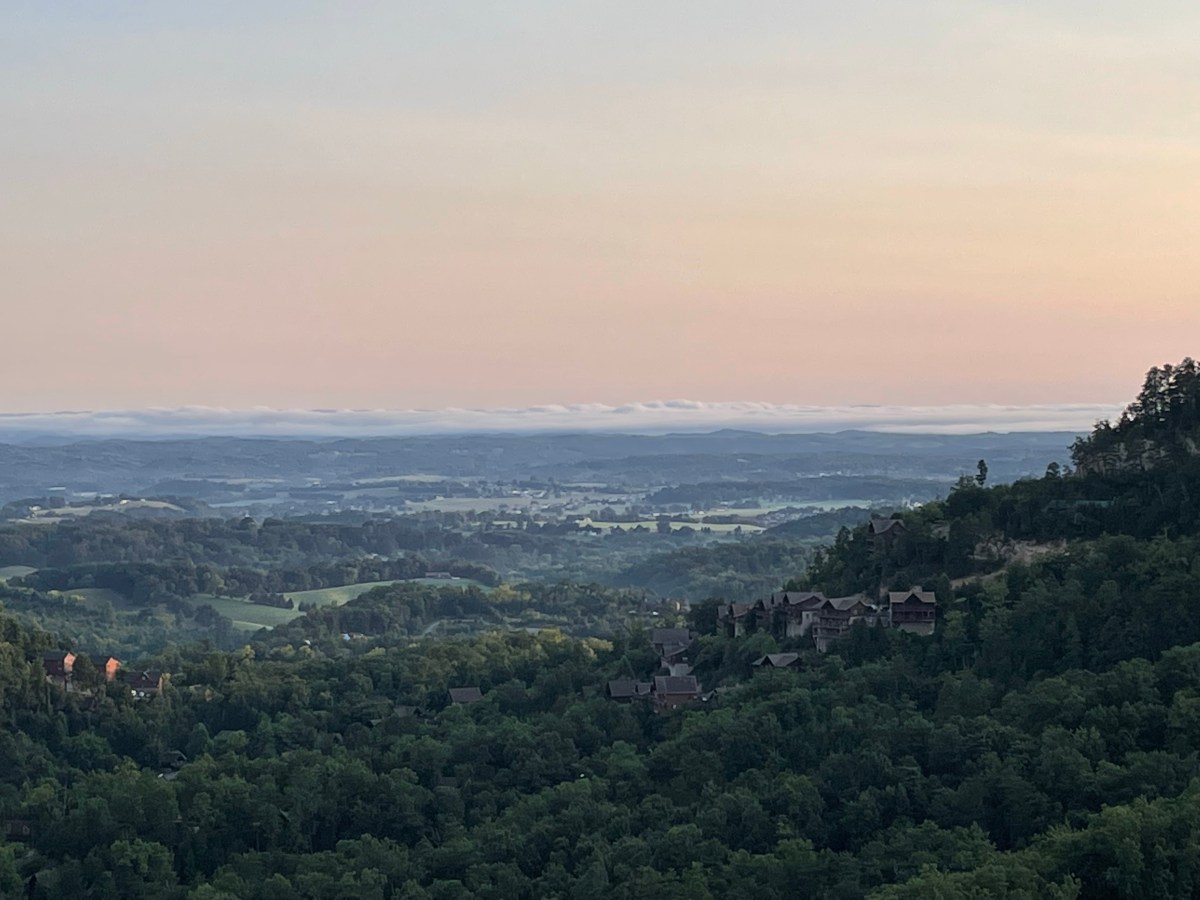
It happened to me last night as I was walking out of the conference center here in Pigeon Forge, TN. They took me by surprise.

“Brother Wells I read your blog and I love your style of writing.”

Whenever something like this happens I just say “Thank you!” But I try to say it in italics because I really mean it and I am otherwise speechless. I always think of something nice to say or questions that I should have asked hours later.

Then they said, “I feel like I know you.” This may be one of the highest compliments I have received on my writing. Complimenting someone involves a going out of yourself in much the same way that writing does. Saying something has the power of putting your thoughts into words and transferring them into someone else’s mind. And you may never know how much your words may help someone.

Irregular Hours

Even when things were not busy in the office, we pretend they are and look busy.

For the better part of 15 years I have worked the rigid hours prescribed by HR departments of the County and State governments that employed me. 40 hour weeks. 1 hour lunch breaks. 15 minute breaks. Even when things were not busy in the office, we pretend they are and look busy. This is one of the reasons why I started writing. I had to fake being busy. Looking back, my supervisors were pretending to be busy by being concerned that I looked busy. Nobody really verbalizes this phenomenon at work, but everyone understands it.

At my most recent State job, we decided that we would try out four ten hour shifts. The idea was we were too busy answering phone calls during business hours to get any work done. So if we could have a few hours each day to work without the phone ringing we could get the work done. And have an extra day off.

After I made it through the allotted trial period, and consequently the busiest season of the year, I realized that the four ten hour shift was too taxing on my energy when I included my one hour commute and trying to do some important things every day. So I decided to switch back to five eight hour shifts.

I was talking to my coworker about how glad I was to switch back. The conversation went something like this.

“I am glad that I switched back to five eights. leaving the house at 5am and getting home at 6pm was wearing me out. But I might switch back next busy season.”

“They probably won’t let you.”

“Why not?”

“Because that would be too much like making your own schedule and they don’t want that.”

This conversation rattled me. For years I had wanted a job with regular predictable hours and now I had one. I had hated showing up to work to check the schedule and seeing that some boneheaded manager had me working on a church night. Or worse, being sent home because they were cutting hours. Now here I was working like a borrowed mule for three months out of the year, never seeing an end to the work. Then for nine months doing 15 hours of work per week and pretending to look busy for the other 25 hours. I wondered how productive I could be if I in fact did make my own schedule.

It was not long after this that I left that job. No hard feelings. No bitterness. No parting shots. But this conversation helped me make the decision to leave. When I was offered a new job one of the most attractive aspects was that I would indeed make my own schedule. So now I work irregular hours. And it is one of the best things that has ever happened to me.

I never could make any money. I was always too busy working.

Perry Wells

The Kind of Person I Want to Be

Loving people is something that is hard to fake.

I took a group of Young People to Youth Camp a couple of weeks ago. I am just now getting over the jet lag from staying up until 3am every morning. If everyone had as much fun as I did then I think we could call it a smashing success. We had to convince a couple of them that it would have a good time if they went. Some times it takes years before I can talk someone into trying something new. But even the Hobbits who left the Shire this week seemed to have a great time.

I noticed a young man at camp who had the peculiar characteristic of being endearing to everyone he spoke with. What makes people like this so magnetic? They are not necessarily popular because they are cool, although I guess you could say that many of them are cool. And maybe that is the only way we know how describe them because it is hard to articulate what they really are. It is more that cool. Not all cool people make folks feel good about themselves. These are popular because they make people feel special. They make you feel like that they sincerely care about you.

I have this ongoing quest with a dear friend to crack the code behind being the kind of person that I am trying to write about. A person you makes other people feel special. There is a question about whether or not this quality can be learned, or is it a gift that you either have or you don’t. I tend to think, or at least hope, that it can be developed. I believe that to be this kind of person, an endearing person, you really have to love people. Loving people is something that is hard to fake. Not that people cannot be faked into believe that you love them. But if you don’t love people, faking it is not going to be enjoyable. And it will be obvious to most of us. People can sense fake. People do not like fake.

Loving people is something that we are commanded to do. So that strengthens my hope that it can be learned.

There was a man in the book of Acts named Joses, but the everyone called him Barnabas. Barnabas means the Son of Consolation. When you give someone consolation, you make them feel better. It could also be translated Son of Encouragement. I just imagine that Barnabas had the kind of characteristics that I noticed last week. This is the man that connected with the newly converted Paul and introduced him to the Apostles. What was that conversation like? He was the pastor of the church in Antioch, where they were first called Christians. There is a strong chance that many of the congregants had relatives who were murdered at Saul’s orders. Barnabas believed in the young John Mark even after Paul lost confidence with him. Barnabas also understood sacrificial giving

There are a few people in my life that have played the roll of Barnabas in that they make me want to be better at everything that really matters. This is the kind of person I really want to be.

Identity

“Well Uncle Perry, there are some girls in my class and there are some boys in my class. And I’m one of the boys.”

My Dad had a special way of talking to children. He didn’t believe in baby talk. He talked to preschoolers the same way he would talk to the postman, or the President of the United States. You had to be a real imbecile- a word I hear in Perry Wells’ voice- for him to not want to talk to you. In a way I have inherited this characteristic. I guess you could say it is part of my identity.

Dad was really good at it. He was able to have conversations with children and children can say some profound things. Dad asked my cousin Kyle what he learned on the first day of Kindergarten.

“Well Uncle Perry, there are some girls in my class and there are some boys in my class. And I’m one of the boys.”

And we laughed. But Dad said, “That’s good! That’s a real important thing to learn.”

Identity is the fact of being who or what a person or thing is. I have been thinking a lot about identity lately. I believe that it is important to have a strong understanding of who you are. If someone does not not have a strong understanding of the fact of who they are, they become extremely vulnerable to someone else imposing a false identity upon them.

This is a very ancient and evil practice. Hananiah, Mishael, and Azariah were handpicked because They were Children in whom was no blemish, but well favoured, and skilful in all wisdom, and cunning in knowledge, and understanding science, and such as had ability in them to stand in the king’s palace, and whom they might teach the learning and the tongue of the Chaldeans.
‭‭Daniel‬ ‭1‬:‭4‬ ‭KJV‬‬

It is no coincidence that one of the first things that happened was the boys got a new name. The world empires of antiquity, especially The Babylonian and Persian empires, were able to maintain their vast land holdings by allowing the conquered people to have their own local rulers. These Hebrew boys were brought to Babylon to adopt Babylonian customs and culture and possibly become administrative leaders in the empire. This was exactly what happened to Daniel.

The second definition for identity is the characteristics determining who or what a person or thing is. Babylon tried to strategically change the characteristics of these captive boys. I’m not sure if it happened at once or was a process, but Babylon changed their location, diet, name, education, and possibly their sexual identity. We kind of skipped over the eunuch definition in Sunday School, but there is a strong likelihood that these Hebrew boys were made eunuchs. If they were eunuchs it only strengthens the point that Babylon was unsuccessful in shaking off the true identity of Hananiah, Mishael, and Azariah. They refused the king’s food, and most significantly they refused the king’s god. If you have never read their story you can find it in the book of Daniel.

An identity crises is a period of uncertainty or confusion in a person’s life. It seems that exploring your identity is a growing trend these days. I have recognized that there is a powerful force that expects people-especially young people-to question their identity, as well as everything else. And sadly it led to a sea of confusion. And God is not the author of confusion.

But what if you have a strong understanding of who you are, and you do not like you who are? Furthermore you do not like what, we’ll just say Babylon has to offer. I firmly believe that identity can be changed for the better.

Therefore if any man be in Christ, he is a new creature: old things are passed away; behold, all things are become new.
‭‭2 Corinthians‬ ‭5‬:‭17‬ ‭KJV‬‬

Identity is a central theme in the greatest story ever told. Everyone who got a name change in the Bible had a spiritual encounter. Abraham, the Father of the Faithful, received a name change from the Lord. Abram to Abraham. Jacob to Israel. Simon to Peter. Saul to Paul. Zane to Jesus. When you are baptized in Jesus’ Name you take on his name. It is part of becoming a new creature.

For as many of you as have been baptized into Christ have put on Christ.
‭‭Galatians‬ ‭3‬:‭27‬ ‭KJV‬‬

Built to Last

From my research it is easy to see that some people are more interested in camera gear than they are in photography.

There is an old farm place that I pass on my cycling route. They tore the house down a while back and all that is left is the front porch still surrounded by the flowers that somebody probably planted decades ago. It was built to last, that old porch. I wonder how many conversations took place on that porch. How many naps were taken on the front porch swing? Did they have an old church pew on that porch like we did? Or an old milk can? I finally stopped and took a picture of it. The photograph didn’t turn out like I wanted. I blame my phone. I am not the biggest fan of the wide angle focal lengths that my iPhone camera offers. Or maybe I’m a perfectionist. But it is better than nothing.

I have been contemplating purchasing a digital camera. I don’t always jump on the band wagon for new technology until I’m sure it is here to stay. That’s why I’m still driving a pickup with manual transmission. It is painfully apparent that digital photography has firmly established itself and besides that I still have a drawer full of rolls of undeveloped film. So for the last few weeks I have been diligently researching digital cameras. And since it has been a bit overwhelming I wanted to share that burden with you.

From my research it is easy to see that some people are more interested in camera gear than they are in photography. There are people who have built careers on reviewing cameras, but their pictures fail to spark any inspiration. I have also noticed this phenomenon in the guitar market. There are collectors and there are players. I have met quite a few people who have truly spectacular guitars, amps, and effects, but are very comfortable telling you that they are not serious musicians and may only know a handful of chords. I have never really understood these people. I like to play my guitars. Then there are incredible musicians who either cannot afford an instrument that is worthy of their level of mastery, or they just simply do not care about gear. People are fascinating.

I have tried to keep this in mind while searching for the right camera for me. I just want to take pictures with a proper camera and not my iPhone. I also don’t want to have to dig through a bunch of digital menus on a screen. But the camera companies do not make it this simple. The product that I am looking for probably doesn’t exist. I want a digital camera that is just like an old 35mm film camera, with only ISO, Shutter Speed, and Aperture as manual controls. Instead they offer a bunch of different options that I do not fully understand. It’s like I have been happy driving my Ford Model T and now I am shopping for electric car, but I am getting stressed out choosing because I’m not exactly sure why I need Bluetooth connectivity.

I do this ever few years, research camera gear. And ever few years the market has completely shifted. Electronic things are not built to last and this really bothers me. Planned obsolescence is a factor in driving the electronics market. So there is a disconnect between me and the camera companies. While they are busy offering new color science, more megapixels, higher ISO, and faster autofocus, I am really drawn to things that stand the test of time. This is why have always balked at buying a digital camera and I am using an SLR from 1984.

In spite of my tendency towards nostalgia, I am still searching for a digital camera. I have come to the conclusion that composition matters more than technical specifications. If you can’t take a good picture on an iPhone, you probably won’t do much better on a fancy mirrorless digital camera although the image quality-which is not to be mistaken with quality of composition-will be better. Ultimately, a camera is a tool. I am hoping I can look past the marketing sugar-coating and find a workhorse that will help me get the job done. And hopefully the work will last.

Names I’ve Been Called: Volume II

Today is my last day at work with the State of Alabama. I will miss the people, but I will not miss the phone. This job has involved a lot of answering the phone and having the same conversation with different people every day. It is always pleasant to talk to someone who has mastered professional phone etiquette. But it is more entertaining to talk to the unprofessional callers. Have you ever been serenaded through the phone by a drunk plumber playing the guitar? I have.

Something I have noticed at this agency is that the people who really have their act together found all of the answers to their questions on the FAQ section of the website. Everybody else called to ask me their questions and they were never really ready for the answers.

“Give me just a second, I got to find a pen.”

“Hold on, I’m driving, let me pull over.”

“Can you e-mail me that? I ain’t got nothing to write with.”

My parents named me Zane after the dentist turned western novelist Zane Gray. I realize that this name has grown in popularity in subsequent generations, but not many of my peers share my name. Couple this with speaking through the phone and it is understandable that people mishear my name. To be clear, it doesn’t bother me when people get my name wrong over the phone. I gotten so used to it over the years that I have made a game of it. I have been updating an Excel spreadsheet titled Names I’ve Been Called since December 2018 and I wanted to share it with y’all. I omitted all of the cuss words.

I should have included Buddy and Boss. I’m not sure why people in this particular industry have adopted those two nick names. For the record I prefer Shane over Buddy.

  • Bande
  • Bill
  • Chad
  • Chaim
  • Dan
  • David
  • DeWayne
  • Gene
  • George
  • Ian
  • Jay
  • Jimmy
  • Josh
  • Kyle
  • Lloyd
  • Sam
  • Shay
  • Vane
  • Vann
  • Wayne
  • Zang
  • Zen
  • Blaine (2)
  • Dean (2)
  • Sane (2)
  • Sean (2)
  • Jay (4)
  • Jane (5)
  • Lane (6)
  • Zach (6)
  • Dane (30)
  • James (34)
  • Shane (93)

I made a similar list a while back that you can read here.

Fair

Frankly, it wasn’t much different from where I grew up. A dot on the map with no hope of moving out, and no reason to move in.

I came back from college in December after one semester. I was back home with my parents while I prepared to move to Virginia in March of 2006. It was during this short window of time that Dad and I made several trips to Waveland, MS to help rebuild a church that was leveled by the fury of Hurricane Katrina. On our way back from one of these exhausting forays we stopped somewhere between Mobile and Montgomery and ate at Subway.

“Dad, we are in the mouth-breathing South right now.” I observed as we watched some of the clientele approach the Subway counter. We chuckled a bit. Frankly, it wasn’t much different from where I grew up. A dot on the map with no hope of moving out, and no reason to move in.

This turned our conversation toward Virginia. How it might be different. How it might be the same.

He wasn’t finished with his sandwich when he dropped his napkin on the table and exclaimed through tears of frustration and pain. “Son it ain’t fair! I’ve raised you and Zach and tried my best to get y’all to do God’s will, and now He’s taking you both away from me.” And it wasn’t fair. And I didn’t have an answer for him.

I got a phone call this morning at 7:20am from a dear friend who I haven’t seen since my Dad’s funeral. He asked if I remembered something that my Dad said right before he died.

It was around the time when I begin to realize that God was not going to heal my Dad. And maybe Zach was feeling the same way when in tears of frustration and pain he told Dad, “This is not fair.” And it wasn’t fair.

Dad replied, “Son, God’s not running a fair, he’s running a kingdom.”

Yes. I remember.

God is not fair! It is an old complaint. But it feels so fresh when you are the one hurting.

Yet ye say, The way of the Lord is not equal. Hear now, O house of Israel; Is not my way equal? are not your ways unequal? Ezekiel 18:25

God is just.

There are a lot of things about the Kingdom of God that run counter to our human ideals of fairness.

For whosoever hath, to him shall be given, and he shall have more abundance: but whosoever hath not, from him shall be taken away even that he hath. Matthew 13:12

So the last shall be first, and the first last: for many be called, but few chosen. Matthew 20:16

I hope that this comforts someone today. I encourage you to read these scriptures in their full context.

A Rock in The Stream

It is time to pick a new plan for reading my Bible through again. This year I chose a chronological plan because it helps me with a lot of questions I had as a kid who was very curious about history. For 2022 I did one of those plans where you get three chapters of Old Testament, some verses from Psalms, a couple of Proverbs, and a chapter from the New Testament. It was nice to get a variety every day, but I missed the feeling of moving from Malachi to the Matthew after you have been reading about how fed up God was with generation after backsliding generation then suddenly- to use a Bible word- there is hope!

“The flattening of language is a flattening of meaning. Language which is not taut with a sense of its own significance, which is apologetic in its desire to be acceptable to a modern consciousness, language in other words which submits to its audience, rather than instructing, informing, moving, challenging and even entertaining them, is no longer a language which can carry the freight the Bible requires. It has, in short, lost all authority.”

Adam Nicolson, God’s Secretaries.

As an English-speaking Christian who is gravely concerned with Truth, I use the King James Version as my Bible. I do like to cross reference other versions like the Amplified. If for nothing but its literary value, I prefer the King James Version. Even so, I always ask myself if I should read a different version for my daily reading plan. The conversation this year went like this.

Are you going to read the King James Version again? Yes. Why? I think I’m starting to get a grip on it.

This internal interrogation reminded me of something that Sarah recently showed me in one of the books on our bookshelf. It was something that my grandfather Tinker Reynolds wrote. He was constantly writing on everything. He would turn books sides ways and write in the margin.

“Most of our hard heads can never absorb the beautiful wisdom and knowledge as it flows by. Like a rock in a clean spring branch if taken out of the stream to lie in the sun will be dry and hot so soon. But as The (Lord God, Jesus) is forever flowing we do not have to ever be moved out of the stream and we may not be able to absorb it all, but we can stay fresh in it. Besides, if one could absorb it all there would the stream cease to flow to touch others, it is so soothing to me I want to pass it on to others. If I only had knowledge I would be forced to converse with fools and illeterates, and to a fool you couldn’t impart knowledge. Oh to think that Jesus our Lord will sit down in our chamber and talk to us and is so glad to give us his wisdom, but will also stop with a drunkard on the edge of the gutter and tell him I love you too. So glad to be like that rock in the creek, still in the flow.

Tinker

That’s really how I feel about reading the Bible. I want to stay fresh in it daily.