Old Men

I want to be an old man one day. I want to drive a squeaky clean pickup truck to meet my friends for breakfast at Jack’s at 5:30 in the morning. I’ll eat a steak biscuit unless the bologna biscuits are on sale. We’ll sit at the round table and laugh about the good old days when gas was only .89¢ when we started driving. When a stranger walks in we’ll ask if anybody knows him. And if they don’t, we’ll get to know him. We’ll have nicknames for all the little kids because we might not remember their real names. That will endear them to us. After breakfast we will piddle in our gardens, or go horse trade old guitars and guns.

I met a man yesterday who was 98 years old. He drove himself to the Council on Aging. I’m not sure if he came to hear me sing, or if he just came out of habit because old men have routines. But he stayed and talked to me in the atmosphere that lingers after the songs are over but everyone remains quiet, intently listening. He was still sharp in his mind. That’s the kind of old man I want to be.

I met another old man that cycled 100 miles when he turned 90. A spry old sinewy man, tough as woodpecker lips-that is the kind of thing that old men say. I hope to be a fit old man. Not the kind that wears shorts so everyone has to look their old nasty bird legs. There are some things in life a man ought not have to look at.

I want to be an old man that can tell a good story. Can’t nobody tell a story like an old man. And I might start carrying around little candies to hand out at church for children in case my eyebrows scare them.

I just lost one of my favorite old men, Bro. Boney. I wasn’t expecting it, and I’m still not over it. He was one the kind of old men that shook everyone’s hand at the church. He did that with purpose. He had a way of making people feel like they belonged there. He’d been coming to Thanksgiving with my family for the past few years. He’d sing snatches of those old hymns and I’d accompany on the guitar in the corner until our wives would calm us down. One year the power went out, so we couldn’t be ignored. Everyone joined in and sang along. It was a good night.

One year he brought a BB Gun to the church while we cooked a bunch of turkey breasts for Thanksgiving. It was something that you would expect an 8 year old boy to do, but there he was, the oldest man present, plinking away at cans. I just thought that was hilarious. I kept this picture as his contact picture on my phone. I always have the hardest time deleting contacts of friends that have died.

The hoary head is a crown of glory, if it be found in the way of righteousness. Proverbs 16:31

Old men are a blessing, otherwise God would not have cursed the house of Eli by denying them old men.

Wherefore the Lord God of Israel saith, I said indeed that thy house, and the house of thy father, should walk before me for ever: but now the Lord saith, Be it far from me; for them that honour me I will honour, and they that despise me shall be lightly esteemed. Behold, the days come, that I will cut off thine arm, and the arm of thy father’s house, that there shall not be an old man in thine house. And thou shalt see an enemy in my habitation, in all the wealth which God shall give Israel: and there shall not be an old man in thine house for ever. And the man of thine, whom I shall not cut off from mine altar, shall be to consume thine eyes, and to grieve thine heart: and all the increase of thine house shall die in the flower of their age. I Samuel 2:30-33

I want to be the kind of old man that young men want to get next to in the prayer room before church. The kind of old man that makes children laugh. That gives good gifts. That speaks the truth in love. That cares. That loves the same woman for decades and raises godly children.

I guess the best way to be the kind of old man you want to be is to be the kind of young man you ought to be.


200: A Milestone in Writing

This is my 200th article for what began in 2016 as Mostly From Memory, a blog where I started sharing short essays on my memories from growing up in a small town in Alabama. Since the statute of limitations has not run out on a few events, I am kind of out of material for the childhood stuff unless I want to run the risk of getting sued. Or I could start making stuff up. Which is how I think that some authors get into fiction. You take a piece of story that really happened, but you change the names of the people and move the location to somewhere far off like Pell City, Alabama, and describe some of the characters as prettier or uglier than they really were and add some extra details like an embezzling scheme, a murder, and some romance or dragons to spice up the plot a little bit. You know, just like cooking. You begin with a chicken breast—that’s the part that really happened—but it could really hurt someone if you serve it raw. The fiction part comes in with how you decide to present it: grilled, fried, boiled, fricasseed… And a good cook can make just about anything palatable, if not spectacular.

I haven’t gotten into fiction yet, but I have branched out and written about a lot of topics like grief, obituaries, music, biographical sketches, and social and cultural constructs, and how to overcome them. It is this sort of material that I am drawn to write about.

This makes me ask the question, has my writing style changed? I think it has changed in the same way that a person ages. If a man is still talking and behaving like a 20 year old at 40 then I think you would agree that something is off. And when a 40 year old takes measures to alter their physical features to appear 20, whether people pretend along with them or not, we all know that it is fake. I feel that my writing has aged with me.

And maybe my readers have come and gone just like friends in different in different stages of life. I may have lost some of my readers when my material shifted, and that is understandable. Just like when you take the last bicycle ride with your neighbor who is getting his driver’s license the next week. You’re still friends, but he is going places you can’t go now. And you spend less time together. Then when you get your license, you’ll probably go to different places than he went. And you meet new people who are less interested in your past than they are your future.

I did a lot of looking back when I first started writing. I felt the need to put some of those oral stories into writing. I am glad I did because I didn’t realize how quickly my sources would move on without warning to a place that I can’t go yet, taking their oral stories with them. I have been looking inward a lot of my recent material. But I am trying to practice looking out.

I think I am beginning to understand why older people say less.

If you have been with me since the beginning, thank you. You may not have noticed the shift because you’ve grown with me. But if you are an occasional reader, you may have noticed changes just like your great-aunt noticed when she only saw you twice a year at Easter and Christmas. And I guess that is what I want to talk about today: I really just want to write articles that make people want to think about things that matter.

I think people matter. I think how you treat people matters. I think motives and attitude matters. I think education matters. I think that morals matter. I think that mental health matters. I think that physical health matters.

Above all, I think truth matters.

All Quiet on Pew Number Five

There was a wedding at church on Saturday.

There was a wedding at church on Saturday. The kind without all the fuss of rehearsal dinners. Or rehearsals. Or the hassle of getting a hotel room. No frivolity, just a simple wedding like I remembered when I was a kid, with cake and punch in the church foyer. I really like these kind of weddings.

As my family sat in the pew on the Bride’s side waiting for the wedding to start, I noticed that it was uncommonly quiet for our church. Even the children were whispering. At least some of them. You can almost hear what your neighbors are thinking when it is that quiet. But that is what the Bride wanted, no filler music that didn’t mean anything. Just one song to walk in with.

Silence makes some people uncomfortable. And uncomfortable people make the rest of us uncomfortable. But I like quiet places. A lot more than I like canned mosquito music that nobody asked to listen to, or TV noise. I like to be able to hear the ticking of my watch. I like to hear the birds singing outside. Most of all I like being able to hear myself think.

“Quiet as a church? If had a car that sounded like my church, I wouldn’t drive it out of the driveway.”

-Tom Trimble

As I sat there on the pew, hardly daring to whisper, I thought about how much racket I normally make at church. I have blown three speakers while playing guitar at church. Now I’m not proud of that, because it was expensive, but probably some of the loudest moments in my life were at church. But there we were, sitting on the pew trying not breath too heavily so as not to disturb the quiet. It was so peaceful. I think I’ll slip up there again soon when no one is there and just listen to the silence.

Some Thoughts on Truth

Resisting the truth is what keeps many conflicts alive.

While I was working my way through college I noticed a phenomenon that happened with alarming frequency. Things that I had been taught in high school as fact were now being challenged and subjected to heavy source criticism.

Post-truth: relating to or denoting circumstances in which objective facts are less influential in shaping public opinion than appeals to emotion and personal belief.

It was the Oxford Dictionaries word of the year in 2016.

“Never have human societies known so much…but agreed so little about what they collectively know.”

Dan Kahan, psychology and law professor

It is safe to say that we live in a post-truth society. What does this mean for the Church? As Christians we are people who are very concerned with truth and how we view truth is a matter of grave importance. This is in no way an exhaustive work, but a mere peering into mirrored surface of the profound pool of truth.

Truth can be known.

Jesus said in John 8:31 “…And ye shall know the truth, and the truth shall make you free.”

You cannot know a lie. Neither do lies bring freedom. You can only believe a lie.

But truth is knowable. It is stable foundation that can built upon. When everything is falling apart in your life you can cling to something that you know is true.

You can know this today: There is a God who loves you.

Truth must be purchased.

While there is some truth that can be immediately transmitted into our knowledge, truth must be purchased; sought out. You have to get it for yourself, not just because some body told you.

Buy the truth, and sell it not; also wisdom, and instruction, and understanding. Proverbs 23:23

In order to be purchased, truth must be valued. You will not purchase something that you do not think is valuable. Lies can also be purchased. What people value determines the market. Truth is precious. It is rare. Lies have no value. Unfortunately, many unsuspecting-or rather undiscerning-people have been sold so many lies at immense costs.

What you value matters to God. The highest level of value is love. If you do not love truth, God will hide it from you.

II Thessalonians 2:8-12 And then shall that Wicked be revealed, whom the Lord shall consume with the spirit of his mouth, and shall destroy with the brightness of his coming: Even him, whose coming is after the working of Satan with all power and signs and lying wonders, And with all deceivableness of unrighteousness in them that perish; because they received not the love of the truth, that they might be saved. And for this cause God shall send them strong delusion, that they should believe a lie: That they all might be damned who believed not the truth, but had pleasure in unrighteousness.

Truth Demands a Response.

Response to truth is reflected in behavior. When truth is resisted corrupt behavior is manifested.

II Timothy 3:1 This know also, that in the last days perilous times shall come. For men shall be lovers of their own selves, covetous, boasters, proud, blasphemers, disobedient to parents, unthankful, unholy, without natural affection, trucebreakers, false accusers, incontinent, fierce, despisers of those that are good, traitors, heady, highminded, lovers of pleasures more than lovers of God; Having a form of godliness, but denying the power thereof: from such turn away. For of this sort are they which creep into houses, and lead captive silly women laden with sins, led away with divers lusts, Ever learning, and never able to come to the knowledge of the truth. Now as Jannes and Jambres withstood Moses, so do these also resist the truth: men of corrupt minds, reprobate concerning the faith.

Truth will always be resisted, and as time draws near to the end, it will be resisted more. People will always try to hide the truth, and it will be reflected in their fruit.

Truth is Liberating.

John 8:31 “…And ye shall know the truth, and the truth shall make you free.”

With truth comes a freedom that nothing else can bring. Hiding the truth breeds fear. There is nothing to fear when you can tell the truth.

If you tell the truth, you won’t have to worry about someone else telling it.

New Beginnings

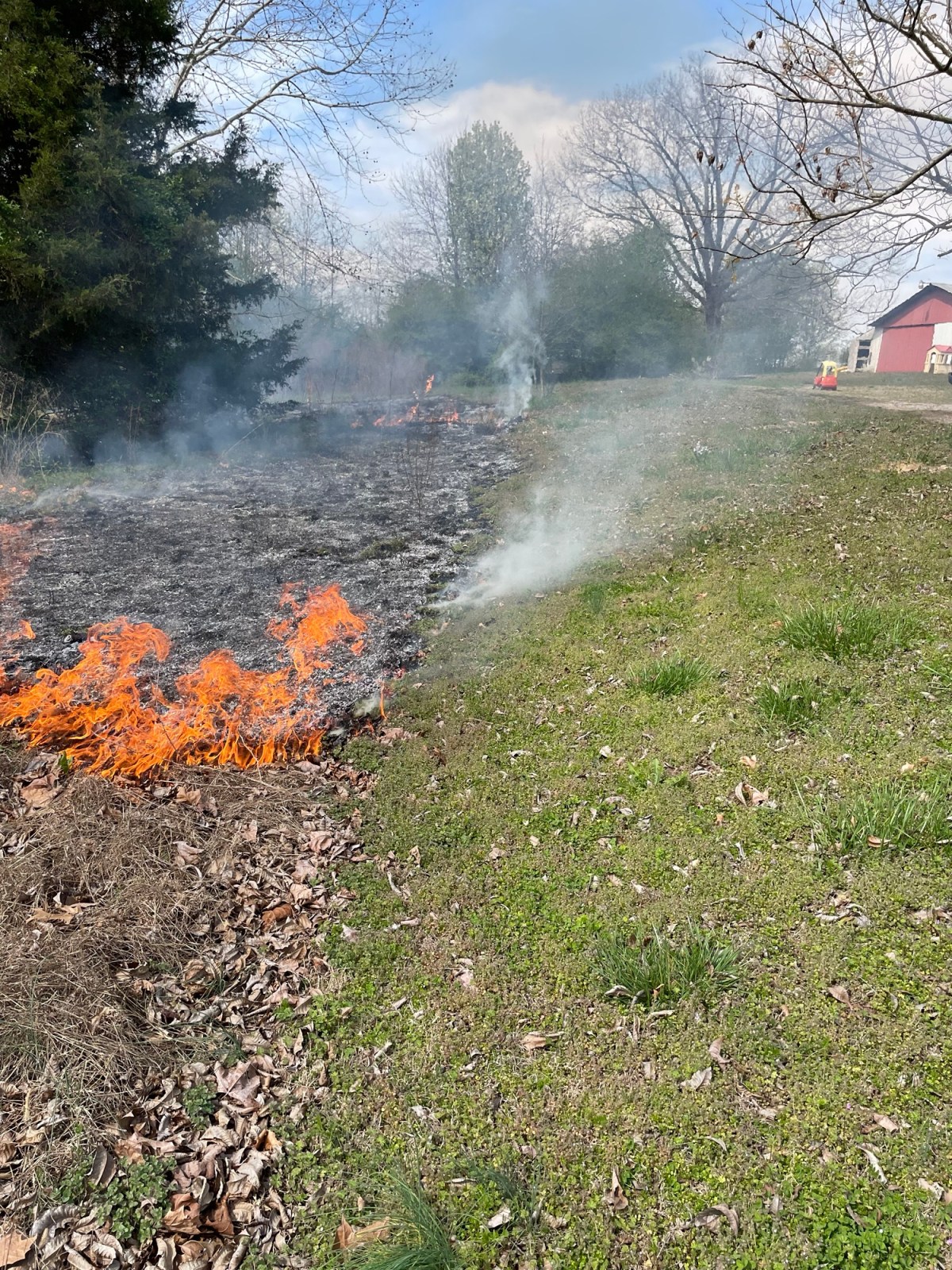
I burnt off half of my yard earlier this year. Because I did not want to mow it, I allowed the brush to grow up to the point where I could not mow it. While it is not the only way to tidy up a yard, burning is perhaps the best way to begin a clean start. It is a conflicting feeling to watch the fire take over the yard. The flames will not selectively burn just the overgrown, stubborn weeds that have begun to harden into pithy stalks, it also consumes the tender grass. And then there is the waiting. And in the waiting the questions. How long will this lay waste in ashes? Will it come back?

It does come back. And better.

During The Fire.
After The Fire.

This is a follow up to Controlled Burn.

How To Write About Grief

I have been working on this draft for almost a year. The fact is, I don’t want to write about grief. I would rather write something that will make you laugh. Laughter, as the scripture says, does good like a medicine. But I feel compelled to write about grief. And reluctance to write about it won’t make it go away anymore than ignoring makes actual grief go away. It is natural to want to avoid anything to do with grief. This is a truth: We cannot avoid the events in life that will bring us grief. Dealing with grief is part of living.

Blessed are they that mourn: for they shall be comforted. Matthew 5:4

Do you remember when you were a little kid and lost your parents at the grocery store because you were not paying attention? Losing your parents as an adult feels the same way except you are little embarrassed about calling out for them. That crying out is grief. I understand that everyone grieves differently. What has helped me has been writing my feelings. Maybe that can help you grieve too.

Stages of grief: denial, anger, bargaining, depression, acceptance.

When an event happens that triggers grief it is natural to feel these emotions, but that doesn’t change the fact that we can often feel embarrassed because we are experiencing them. After all, aren’t we adults who have everything together? Being shocked is an uncomfortable feeling. Especially for us who enjoy stability, quiet, and don’t like change. Denial can make us begin to question things we know are true. Being angry can also be humiliating because we feel like we have lost our self composure. It is where we say things like This is not fair! This is wrong! and we are further frustrated because we know what we are saying is true, but there is nothing we can do about it. Bargaining when you are unstable will usually get you a bad deal. You’ll end to doing something rash or in haste. Depression is a life sucking monster that strangles us to inaction. I’m not a licensed counselor, but I believe that one of the reasons that people end up going to counseling for grief is because they never complete the process but get hung up in one of the stages. Whenever that happens, no matter the stage, bitterness can develop.

Follow peace with all men, and holiness, without which no man shall see the Lord: Looking diligently lest any man fail of the grace of God; lest any root of bitterness springing up trouble you, and thereby many be defiled; Lest there be any fornicator, or profane person, as Esau, who for one morsel of meat sold his birthright. Hebrews 12:14-16

Bitterness is not merely an emotion, it is a parasitic root that gets in your spirit. The things that grow out of this root can’t be dealt with on the surface. Dealing with the surface is like cutting a stubborn hedge down to the ground only to realize that you simply pruned it and now it is destined to grow back even more unruly. Bitterness is a deeply inward issue that not only troubles you, but defiles many around you.

In the case of my Dad I believe I began the grief process as soon as he received the cancer diagnosis. I was shocked and tried to deny it: Cancer was something we heard about other people getting. I was scared to death of cancer as a child. I didn’t know exactly what it was and that made it even scarier. Shock and fear are not the same. I was not afraid when I heard the news, I was paralyzed with shock. I think I walked around numb for a few days.

I don’t remember being angry, but that doesn’t mean I wasn’t. And probably a big part of that is I believe in the power of prayer. I should say that although this article is about how writing about your feelings can help you through grief, it is my ardent conviction that prayer works far better. Prayer is where I did all my bargaining.

I do remember the depression stage. I didn’t want to do anything. I knew there was nothing I could do, yet I felt guilty for not doing anything and not being able to do anything. Whenever I experience depression, I eat. I think I gained 20 or 30 pounds following my Dad’s death.

I reached the acceptance stage one night before he died and while he was still coherent. That’s when I sat down and wrote this article in acceptance of his imminent death. Portrait of a Southern Gentleman, or Things I Learned From My Dad. It is a great comfort to know that he was able to read it. And he was able to brag on me a little bit, which is a source of laughter for me. I can tell you now that when I wrote that article I poured all of my emotions into those words. I cried the whole time. There was something special that happened when I was able to share those words with everyone. To know that someone else was able to experience my grief somehow made the burden lighter.

I will never forget the feeling of release when my Dad finally passed. It was as if I had been walking around carrying a couple of cross ties and somehow they just floated away.

From the end of the earth will I cry unto thee, when my heart is overwhelmed: lead me to the rock that is higher that I. Psalm 61:2

“You need someone to walk with you through the valley of the shadow of death. And when your heart is overwhelmed you will need someone to lead you to the rock, because you can’t find the way yourself.”

I did the same thing when my Mom died but she didn’t get a chance to read it, and knowing this I think allowed me to achieve a greater degree of acceptance.

Since then, I have made writing a part of my grief process. Which seems like an odd thing to say. I never thought about death as a child, but it is a steady growing part of my life now that I look more and more like Alfred and less and less like Bruce Wayne. Writing has helped me grieve the loss kids that were in my youth group-Oh Brandon!, family-Funeral Processions , Dan Theo Wells 1935-2021 , and dear friends- J.L. Parker. Not to mention countless things I have written in my journal.

So how do you write about grief? I think it is important to establish that putting your feelings and thoughts into written words while you are grieving is one of the most honest and genuine expressions of yourself. There should be no pressure to write to impress someone. This is you and your feelings. Putting those thoughts onto paper is a conscious going out of yourself. You have captured and placed in the visible an idea that has been floating around in the invisible. You have conquered that thought, and it can never escape. No one is grading you on content, grammar, or proper punctuation. And you do not have to share it with anyone. No one may ever see it. But it may help to allow a friend to help bear your burden. I know it does for me.

I still miss my parents every day. And I probably always will. I feel strong emotions every once in a while, but never denial, anger, or bargaining, only acceptance, peace, and most often sadness. If it gets bad I’ll go back and read what I wrote when it was still fresh and that helps.

I wish I could’ve talked to my Dad this week, because I am in a new process of grieving. But I already feel better having written this.

Church Clothes: An Essay on Discomfort

Do you remember when you were a little kid and your momma would make you wear really uncomfortable clothes to church?

I’m supposed to be packing my church clothes for a Youth Conference that I am attending later this week, but I am procrastinating. This is what I do when I procrastinate: write essays. This essay is about church clothes. Having been going to church for 37 years-and 9 months before that-I have a long and conflicting relationship with church clothes. I was raised-and firmly believe- that you ought to dress your best when going up to the House of The Lord. Whether that is a pair of cowboy boots and your cleanest blue jeans, or a business suit and tie. This is the rub: I really enjoy looking nice in a suit and whatnot, but I also really enjoy being comfortable. And unless you are just the picture of health with a trim figure like a Greek statue, or have you enough money to pay someone to make you a suit of clothes that fit your exact body proportions, there is a strong chance that your suit is just going to be plain uncomfortable.

I’m not convinced that comfort should be the first priority when dressing for church.

Do you remember when you were a little kid and your momma would make you wear really uncomfortable clothes to church? I remember one Easter having to wear a button up shirt and these teal dress pants. I hated them. I looked like I stepped off of page 37 of a JC Penney catalog from 1992. Not only was I required to endure these clothes all through church, but I wasn’t allowed to change until after the egg hunt at Uncle Dave’s. I still think that is how a lot of people feel about dressing for church.

Most of the time, I do not really pay attention to what other people wear. And from a scientific study I did in college on this topic where I wore the same suit and tie for a solid week to see if anyone would say anything, I don’t think most people pay attention either. But it is hard to not notice when someone feels uncomfortable in their clothes. Especially a suit. I used to look out my window at work down at the courthouse steps and watch young men walk unsure of themselves in an ill-fitting suit to a matter of grave concern. You see uncomfortable people at funerals and weddings, their awkward conversations informed by clothes that they don’t really understand how to behave in.

There is a way to wear a suit like a lawyer or like you have a court date.

Here is a people watching experiment for you to try on a Sunday afternoon: go out to eat at the most crowded restaurant you can find right after church. Better yet, go to a buffet. Try to guess which people went to church and which people just decided to go get some Chinese food. It should be easy to tell by what they are wearing. I made a Bingo card for you to fill out.

Suit
&
T-Shirt
Tucked in PoloElderly couple with matching died hairGold-buttoned blazerHebrew letters on an article of clothing
Penny LoafersSuit
&
Tie
PaisleySun dressChurch Logo T-Shirt
Cowboy
boots
Braided
belt
Child in a sailor suitSeersucker“Praise the Lord!”
Greeting
Bow TieWingtip
shoes
“Production Team”
T-Shirt
SuspendersPleated Khakis
High HeelsWestern
Shirt
ComboverChurch Logo
Hat
Square toed dress shoes

Uncomfortable: that is how dressing for church felt until I started paying attention to girls around about Middle School. It was then that I quit depending on Mom to tie my tie and started wanting to pick out my own suits and dress shoes. I think everyone goes through an identity crisis sometime during Middle School. Being interested in dressing yourself, while not knowing how to dress. The real conflict can be articulated thus: I don’t know what I want to wear, but I know it isn’t what Mom has been choosing. It takes a while to realize that your Mom had pretty good taste. Aside from maybe the teal Easter pants.

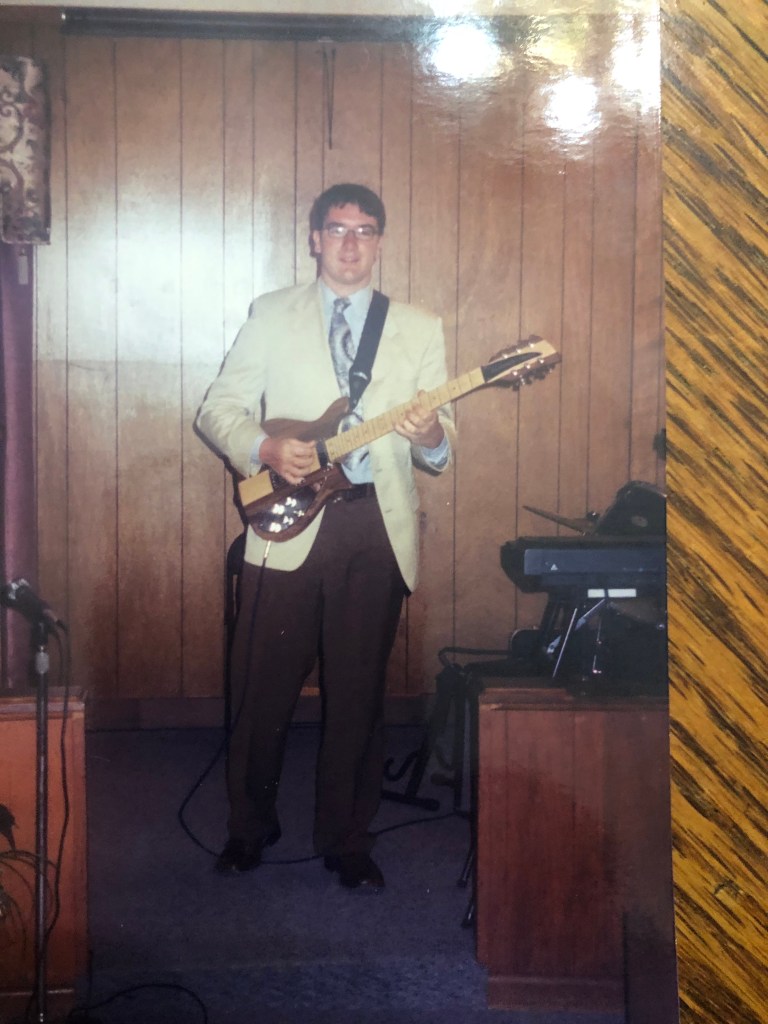
I got these hickory stripe tuxedo pants from Zach. I don’t know if I ever got cooler than that.
I’m less worried about my clothes and more interested in that guitar that I might’ve should’ve kept. Alas, it didn’t sound near as good as it looked. I suppose there is a lesson to be drawn from that.

Fashion is so fickle. When I was a teenager I probably spent far too much money on dress clothes. Trying to be fashionable, or cool. Some of those clothes are cool again, but probably won’t be for long. I will see teenagers this week at PEAK wearing stuff similar to what I wore 25 years ago.

My sartorial ideals have always been too lofty for my meager salary.

It took me a long-a very long-time to figure out exactly what kind of church clothes (or any clothes for that matter) that I wanted to wear. But Today, I feel that I am closest to my real essence when I am wearing a suit and tie. Ultimately, I think I accidentally took less cues from my peers and current fashion trends and more from history while establishing my wardrobe standards. And it happened by seeing old photographs not necessarily related to fashion from say 1962 or 1937 of a men in suits and realizing I would wear that today. When you take this classic approach, you are making a statement: I’m going to wear this and be confident and comfortable no matter what is trendy. This means that you may or may not be in style as the years pass. But what you will be, is established. And possible timeless. And we need more established people.

Well, I have to go pack.

Communication: Implicit & Explicit.

“I know we’re not supposed to bully people, but that works with me. I have been inspired to make life changes because someone talked rough to me. I hate it when people don’t tell me something plain. I feel like I’m being lied to if they afraid to say something because they think it may hurt my feelings. That doesn’t help.” This is what a young man told me recently. And I have been thinking about it a lot since then. Thinking deep.

He was being genuine in his desire for explicit understanding and straightforward verbal communication. Say exactly what you mean. Please don’t make me guess. Essentially, he told about some miscommunications that he had with someone with powerful influence in his life who it seemed prefers implicit communication. Although I am not sure that he realized that the person he was frustrated with was probably equally-if not more- frustrated with him. Instead the young man most likely entirely missed the implicit communication-the subtle nonverbal cues-and perceived the economic verbal communication as dishonesty. At the heart of this problem is a mismatch between high and low context communication.

Americans, in general, are low context communicators. We principally communicate with words. We like clear instructions and contracts. If you are an American you may be thinking well duh Zane, how else am I supposed to communicate?

Actions speak louder than words but not nearly as often.

Mark Twain

A high context communication culture like the Japanese, would depend heavily on implicit, nonverbal communication like body language, tone of voice, and especially silence in order to understand the message. High context communication cultures rely on a shared background of beliefs and principles-sort of reminds me of the church-and place a special importance on relationship in communication. The level of relationship they share with a person will have tremendous bearing on the level of communication. In contrast low context cultures are willing to enter into 30 year contracts with total strangers.

In my college courses, there was an emphasis on this being a cultural characteristic. Asian, Latin American, Mediterranean, and Middle-Eastern cultures tend to prefer high context communication. The whole reason that this was important to learn is because there is often profound misunderstanding in the business world between these cultures and low context communication cultures found in Europe and North America. Since this material was covered in more than one class it leads me to believe that this is a very real issue. Indeed it was manifested in my conversation with a frustrated young man.

I want to emphasize that this is true in general; and like any generalization or stereotype, there are exceptions. Low context communicators can be found in high context cultures and vice versa. As I was studying this material in college I found myself relating more to the high context than the low context communicators. Perhaps our young man would find himself in the low context camp.

What should we do about this problem of mismatched explicit and implicit communication?

Jesus spoke in parables to the multitude, but spoke plainly to his disciples. This means that the disciples heard both implicit and explicit communication from God.

Matthew 13 is a great example of this. I encourage you to read the whole chapter, then reread it in sections pausing to reflect after each section. Then reread the whole chapter. I want to focus on this one portion though that outlines the issue at hand.

Matthew 13:10-17 And the disciples came, and said unto him, Why speakest thou unto them in parables? He answered and said unto them, Because it is given unto you to know the mysteries of the kingdom of heaven, but to them it is not given. For whosoever hath, to him shall be given, and he shall have more abundance: but whosoever hath not, from him shall be taken away even that he hath. Therefore speak I to them in parables: because they seeing see not; and hearing they hear not, neither do they understand. And in them is fulfilled the prophecy of Esaias, which saith, By hearing ye shall hear, and shall not understand; and seeing ye shall see, and shall not perceive: For this people’s heart is waxed gross, and their ears are dull of hearing, and their eyes they have closed; lest at any time they should see with their eyes and hear with their ears, and should understand with their heart, and should be converted, and I should heal them. But blessed are your eyes, for they see: and your ears, for they hear. For verily I say unto you, That many prophets and righteous men have desired to see those things which ye see, and have not seen them; and to hear those things which ye hear, and have not heard them.

This section falls between the Parable of the sower and the explanation of the parable of the sower. It is Jesus’s answer to his disciple’s question Why don’t you just tell these people explicitly what you mean? Jesus essentially answers that he used parables to give these people the option of hearing, seeing, understanding, and being converted and healed.

Jesus did speak explicitly to his disciples in private. I find it interesting that he often gave correction via explicit communication.

Matthew 16:23 But he turned, and said unto Peter, Get thee behind me, Satan: thou art an offence unto me: for thou savourest not the things that be of God, but those that be of men.

Jesus openly and explicitly rebuked Peter. You have to really be a true disciple of someone for them to call you Satan and you not get offended.

John 14:9 Jesus saith unto him, Have I been so long time with you, and yet hast thou not known me, Philip? he that hath seen me hath seen the Father; and how sayest thou then, Show us the Father?

You can almost hear the frustration in Jesus’s explicit response to Phillip’s question. Phillip, how long have you been my disciple and you don’t know that I am the Mighty God, The everlasting Father, The Prince of Peace (Isaiah 9:6)…don’t remember that I and my father are one (John 10:30)?

I really believe that you have to want it to receive implicit communication.

Proverbs 1:1-6 The proverbs of Solomon the son of David, king of Israel; To know wisdom and instruction; to perceive the words of understanding; To receive the instruction of wisdom, justice, and judgment, and equity; To give subtilty to the simple, to the young man knowledge and discretion. A wise man will hear, and will increase learning; and a man of understanding shall attain unto wise counsels: To understand a proverb, and the interpretation; the words of the wise, and their dark sayings.

Subtilty and discretion will help you know the difference between dark sayings and deception.

In order to receive the instruction of wisdom, justice, and judgment, and equitysubtilty and discretion from the Book of Proverbs you are going to have to read it. And reread it. With open ears. Fast and slow. Pausing and reflecting. Meditating. And you’ll also have to practice what you’ve read.

Broken

It may not work, but I am going to do my best to fix it.

“This guitar is broken!” I said in exasperation to the young man I was helping move across town.

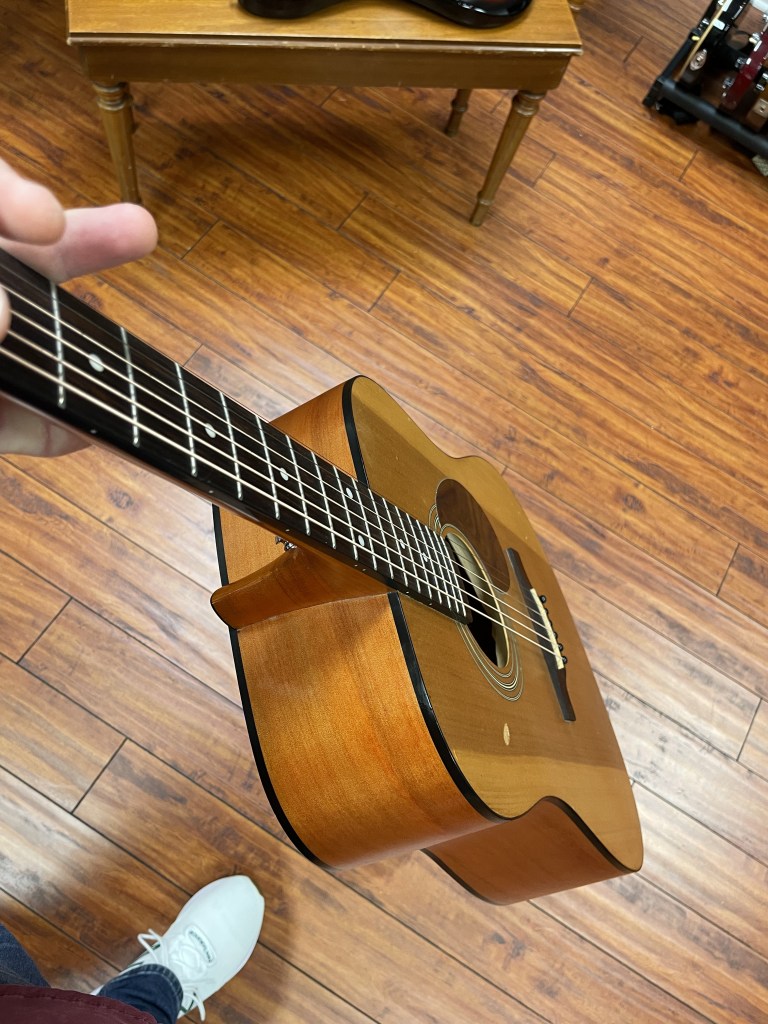
“You can have it.” He said, looking nonchalantly at the tired old instrument with a large crack in the heel of the neck. I laid it in the back of my truck like a wounded soldier amongst the mirrors and pictures wrapped in moving blankets. This guitar had been neglected if not abused. I winced as I thought back to things that I had not cared for properly as a child.

I took the guitar home and surgically removed the dirty strings and cleaned it thoroughly. Under the light of my work bench I could see that the crack wasn’t all the way through, but still substantial enough to make the guitar unplayable. I felt like the doctor when they say things like, It may not work, but I am going to do my best to fix it.

I inserted wood glue into the crack with a needle and syringe and clamped the body and neck down to the work bench to hold tension on the crack. This will only hurt for a little bit. Then I turned out the lights and didn’t look at it for three days. When I finally came back to it I could still see a black line where I probably didn’t clean the crack sufficiently, but the joint felt solid. Now I just needed some strings. Before I took the time to take a trip to the Guitar Dungeon, I happened to be at a friend’s house as he was changing his guitar strings. I noticed that he had an interesting string removal ritual. I usually clip my old strings-which have been played to death, black with grime and riddled with divots and dents- with a pair of wire cutters, and then to avoid a finger injury from the sharp string end under tension, I unwrap the bit still attached to the tuning post with a pair of pliers. He was taking his time and unwinding the string gently from the tuning post, so the entire string was still intact. Then he carefully placed each string in a neat little line, as if he too could still feel the life pulsing in those sparkly bits of metal, just waiting to be touched so they could burst forth singing. It works out nicely because the strings could be reused if you break one of the new ones. He did poke his finger with a sharp string end and there was a bit of bleeding. As he took the last string off he tied the whole bundle in a single knot. That’s when I asked him if I could have them. And he obliged. I have a hard time throwing some things away. Or seeing things thrown away. And those strings had been watching me like a puppy at the pound.

The next day I put the used strings on the old broken guitar and gave each another chance at life. I decided to leave the guitar tuned down a whole step, because I wasn’t sure if it could handle the tension of standard tuning. I held my breath as I got the last string tuned, then I cautiously inspected the crack. It was still solid. I played an F chord-not the first choice of most guitar players. And not the easiest chord to play in standard tuning. But we weren’t in standard tuning, and the F chord seemed so natural now and it rang out beautifully, deep and rich.

I have wondered what to do with this instrument brought back from the gates of death. I can’t in good conscience sell it. Because it was a gift, and also because I feel like I need to stay close to it in case in needs further repair. And maybe no one would want to pay for a broken instrument. This instrument has already served its time in the heavy hands of a careless owner. It now needs the gentle touch of a seasoned musician. Someone who has lived enough to know what pain feels like. I feel like I want to keep this resurrected instrument where I can see it every day and be reminded of the many second chances that I have been given. I want to be able to pick it up and make sweet music with something that came so near being cast off.

A bruised reed shall he not break, and the smoking flax shall he not quench: he shall bring forth judgment unto truth. Isaiah 42:3

Rich People Things

Rich people sometimes have the dog on the Christmas Card. That’s another one of the things that they have in common with rednecks.

What would you do if you were rich? I mean so rich that you could eat slow food anytime you wanted. If I were rich and famous I’d only drink ice cold Topo-Chico in glass bottles. I’d wear a brand new pair of socks to church every service. Rich people can do things like that. I’d probably get a gold tooth too. Not right in the front, but off to the side where you could still see it but only when I smiled. That’s so I could stay modest. I would smile a lot though. And have a pair of crocodile skin cowboy boots. I’d drive a big old Cadillac with a pair of longhorns on the front.

I sometimes struggle to know if people are rich or not. Not that it is really any of my business, but I wonder just the same. I often get rich people and rednecks confused. For instance rich people and rednecks both have lots of cars. But rich people will have a garage, and the rednecks just park their cars all over the yard. And the rich people cars all run.

I met some rich people that had a swimming pool in the ground with a fence and everything. That’s how I knew in my eight year old mind that they were rich. But rednecks sometimes have swimming pools too, but its usually in the front yard. Or in the backyard surrounded by all the cars with busted windows and engines that don’t start.

Some folks have got it all.

Rich people sometimes have the dog on the Christmas Card. That’s another one of the many things that they have in common with rednecks. The dog might have a different name though, like Beaumont, or Charlemagne. That’s a rich people dog name. Sassy is a redneck dog name. Also, rich people sometimes take their dog to the vet for no reason.

“The clothes make the man. Naked people have little or no influence on society.”

Mark Twain

Rich people and rednecks both like to go to the beach. When they don’t have a lot of clothes on its hard to tell them apart. I am neither rich nor a redneck so I don’t go to the beach that often. Which means I don’t have any tips for telling them apart at the beach. Wesley said that Rich people “Have a big ole tent, or something, and nice chairs. And a condo. At the beach.” He’s been to the beach a lot more than I have. I didn’t ask him about rednecks at the beach.

Some other ways to spot rich people is to go to the local airport. Not the big commercial airport at the closest big city, but the little rinky-dink municipal airport. The people who own airplanes are rich. Rednecks don’t typically have airplanes. I think I’d have me an airplane if I was rich. I’d paint teeth and eyeballs on the nose like they did back in WWII. I’d get a leather jacket and a big long white scarf for flying.

All the happiness in the world can’t buy you money.”

I would like to be rich, but I don’t really want to quit shopping at thrift stores. So I don’t really want to be filthy rich, just regular rich. If I came into money real sudden like, I think I would keep shopping at thrift stores so I could keep my cover since it is sometimes hard to tell rich people from rednecks anyway. Even if I was rich, people would see me at the thrift store and think, “He ain’t rich. He’s just another redneck.” It would also help me practice modesty. I wouldn’t smile when I went in there.

When I recall my biggest life decisions, money has not been the principle influence. For instance, having children is not necessarily a wise financial decision. But you don’t really worry about money when you decide to have a child. There is a stronger force than money at play. Moving without a job is not a wise financial decision. But money doesn’t get to make all of the decisions for me. This is probably why I am not a rich man. Money is not the only currency in life. I just read the book Creative Confidence by Tom and David Kelley and I really liked an illustration that the authors often use when making decisions. A see-saw, or balance, with a heart on one side and a dollar sign on the other. To paraphrase the author, the money is almost always easier to measure, the heart-the unquantifiable values, relationships, sense of calling, principles, and intuition- takes a little more time. The message is clear, money is not the only thing that should be considered when making decisions.

This blog for example; the motivation to write does not come from money. Or extrinsic motivation as I learned in college. There is another, stronger source of intrinsic motivation that compels me to write. It is the desire to connect on an unseen level with a reader. The urge to communicate an idea that will provoke deep personal insight in hopes that they can see themselves more clearly. There is the need of going out of one’s self that motivates me to write. This is not to say that I couldn’t be motivated by money to write. I have written on commission and gratefully cashed the check. But if I am honest with myself, I have never felt that any of my best efforts have come from being given an assignment. I have felt this way since a child in art class. I suppose that all creative people wrestle with the tension between creating what they want and getting paid to create what someone else wants. There is also the question of does anyone else want what I want to create? That can only be answered after the thing is created.

On my wedding day my father-in-law gave me some of the best advice I ever received about money. “Don’t ever fight about money.” At the time it was almost like saying, “Don’t fight about nothing.” This is a principle that my wife and I still share in our personal finances.

Money has always been a chore to me. I am getting better at doing chores the older I get. I have some friends that look at money differently than I do. And I am trying to learn from them. They can’t help but make money. Its fun to them. It is not a chore at all, but something that just comes natural. At the same time, they seemed to not be controlled by it. I have observed other people, extremely wealthy people-filthy rich people-be destitute when it comes to personal relationships. Billionaires who are vicious about money yet who are in poverty when it come to love. Cold blooded killers to quote a friend who has met more of them than me. When I take a closer look at their lives, it is pretty clear that these people do not have the same values as me.

Faith, and not money, is the currency of God’s economy.

II Timothy 6:6 But godliness with contentment is great gain. 7 For we brought nothing into this world, and it is certain we can carry nothing out. 8 And having food and raiment let us be therewith content. 9 But they that will be rich fall into temptation and a snare, and into many foolish and hurtful lusts, which drown men in destruction and perdition.

But they that will be rich. I am reminded of Rudyard Kipling’s The Man Who Would Be King. I won’t spoil it for you, but if you have read it then you know what I’m talking about. I’m also reminded of someone else that said I will be like the most High. What you commit your will to has profound consequences.

I am less concerned with being rich and more focused on doing something in life that matters. Furthermore, I think it is more important to God that what I do with my life matters. Fortunately God delights in blessing his children and this includes, but is not limited to, financial blessings. With this in mind, If I were regular rich I doubt I would drink more Topo-Chico than I do now. I would take care of quite a few church projects though.