The Art of Listening

Whether or not you are a musician, how good of a listener are you?

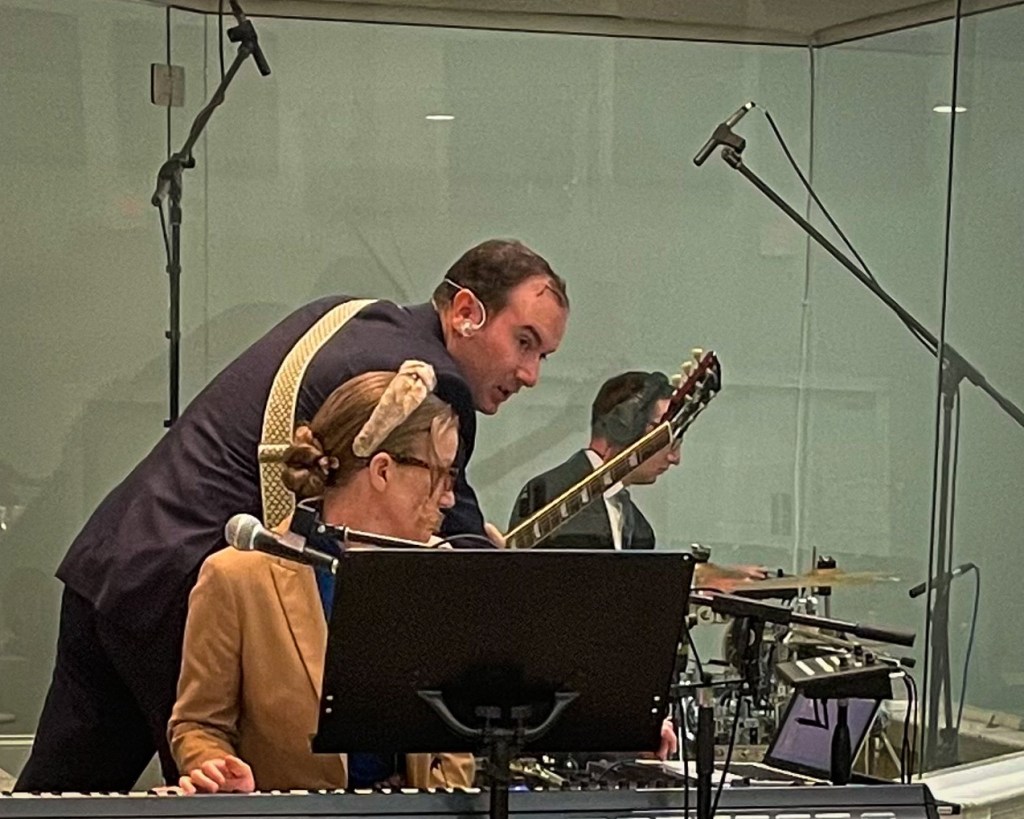
I have worked with a lot of musicians over the years. Most of them have been church musicians that learned to play by ear. This does not always mean that they cannot read sheet music, or lack a strong understanding of music theory. It usually simply means that they do not sight read traditional musical notation in real time. I only know a few people that can sight read sheet music. And they are fantastic musicians. The rest of us have to study traditional sheet music in order to play it.

There is no shame in being a musician who plays by ear. There are even a lot of advantages. For instance when someone has a good enough ear they can listen to a song once and be able to play it. This is also our greatest handicap; many times we need to have heard a song before we can play it. The danger comes when we think that we are good enough to stop listening.

Many master musicians have spent years practicing ear training. Remember when you were learning your multiplication tables or when you were first introduced to Algebra? You may have struggled to even understand the concepts and the thought of being able to do these complicated formulas in your head seemed out of reach. But after practice you can probably now do simple math and even Algebra mentally and it feels natural. This is also true for music. For most ordinary humans it takes practice to be able to identify intervals, find your vocal part, or pick out a melody or chord progression. But ear training immerses you into the language of music and after a while things start to make perfect sense.

“Listen!”

This is what my Dad would say from behind a book whenever one of us kids was making too much noise. We would quieten down and strain as if we could hear. Hear what? I never know exactly what we were listening for. Was he about to say something? If we tried hard enough could we hear the book he was reading playing out in his head? It took me a long time to realize that he was simply telling us to be quiet. I catch myself telling my kids the same thing these days.

Whether or not you are a musician, how good of a listener are you? Listening is so much more than a musical skill. At the very least listening is half of communication. Listening is a vital ingredient in healthy relationships. It becomes even more important when we understand that faith comes by hearing.

So then faith cometh by hearing, and hearing by the word of God.

Romans 10:17

Whenever I take those learning style tests I always score high on a preference for auditory learning. I believe this is accurate. I really enjoy listening to audiobooks. I can recall things better when I give my undivided attention to auditory information. I think that is what makes someone a good listener, the ability to give their undivided attention.

How do you listen to music? Do you like it in the background or full blast?

When I was a teenager listening to music was a ritual. Digital music off of the internet via Napster and Limewire was in full swing, but I always felt the computer speakers sounded weak. I preferred to buy my music in compact disc form from the music section at Wal-Mart. I would bring the unopened CD home, carefully peel the cellophane and stickers off, and insert the disc into my three CD player stereo. I would listen to the whole album straight through in one sitting without any repeats or skips. Doing nothing but listening with my undivided attention. I still think this is the best way to listen to music.

I have a hard time listening to background music. I would rather listen to background silence than barely audible mosquito music. I am drawn to focus on the music and when it is too quiet any disruption seems amplified.

All of this has me thinking about things that inhibit being a good listener.

I tend to get distracted by noise. I have a hard time going to restaurants if the music is too loud, or if there are a bunch of TVs playing different programs. It is very difficult for me to have a conversation while there is music playing. The worst thing is when there are two songs playing at one time. I sometimes wonder if that makes me a bad listener. Perhaps it means I am susceptible to distractions. To some extent I do not have control over external noise.

I can control internal noise. Have you ever been listening to someone talk only to realize that you have no idea what they are talking about because you were thinking about something else? We call this spacing out, or zoning out. If used properly, the ability tune everything out and focus your attention on your thoughts is a valuable skill. But an inability to control your thoughts can also make you a poor listener. It becomes a matter of will. Will you listen to what this person is saying or will you let your mind wonder?

Your attitude is largely controlled by your will and is another internal factor that can an inhibit and an enhance listening. Imagine the worst political figure that you can. If you are like me, you will have a hard time listening to that person say anything. There is an internal block that keeps us from being open to people that we do not trust. Have you ever noticed in political debates that people are always interrupting one another? There is not a lot of listening going on. What we have here is a failure to communicate. There are many deep issues in this example, but a lot hinges on being unwilling to listen.

As musicians, if we really claim to play by ear, then we should understand the importance of listening. We must constantly practice active listening. We must listen to the song to learn what to play. We must listen to the music director for instruction. We must listen to the other musicians in order to play together and not simply at the same time, like two political candidates arguing over one another. This also applies to relationships.

He that hath an ear, let him hear what the Spirit saith unto the churches.

Revelation 2:29;3:6;3:13,22

I read something interesting this week in This Is Your Brain On Music by Daniel Levitin. Pitch, loudness, and sound in general are purely psychological phenomena. All of these perceptions are just how our brain interprets air pressure. You literally cannot hear without an ear. This has really been heavy on my mind.

I hope that we can all be better listeners.

Open For Business

There aren’t many things that I have done that have been more fulfilling than teaching music.

My parents bought me my first guitar. I kind of forced them into it by signing up for guitar class at school. I didn’t learn a whole lot about playing guitar in that class, but I got a refresher on music theory. Eventually a proper flat-picker wandering into our church and showed me how to read tabs and chord diagrams, the major scale, how to play Bluegrass rhythm in G, and one Tony Rice lick before he told me, “I can’t show you anything else. If you really want to learn you will.”

In one sense, being told it is time to sink or swim really motivated me to learn. Conversely, I still had so much to learn and I had to learn it the hard way. Not having a teacher forced me to be a scholar. Learning how to learn on your own is what teachers really mean when they say you need to study. I have been studying guitar for over twenty years. As the physicians say, I am a practicing musician.

Learning to play guitar did wonders for my self confidence as a teenager. As an adult it still amazes me that I can play. This skill has also opened significant doors in my life.

Earlier this year the Lord delivered me from my one hour commute to work. The first things I did was start teaching guitar lessons again. There aren’t many things that I have done that have been more fulfilling than teaching music.

Get something in your life that God can bless.

Pastor Jeremy Wilbanks

Pastor has been saying that a lot lately to the church. It is one of the reasons that I wanted to start teaching again. I also feel like I need to put some of things I have learned while studying business in college into practice. Most significantly, I feel a responsibility to help musicians avoid having to learn the hard way. And God is blessing it.

Here are the answers to some of the frequent questions I get asked about learning guitar.

Should I start out on acoustic or electric? Choose the one that you want to play. You won’t be motivated to practice the acoustic if you really want to play electric.

What age do they need to be to learn? The youngest that I have successfully taught was seven. As long as they can pay attention and have enough hand strength to fret a note I can work with them.

Am I too old to learn? You are never too old to learn.

So if you or anyone you know is interested in learning guitar or bass guitar please send them my way.

zanewells@yahoo.com

Left Behind: Musician Thoughts

What a person prefers about music depends largely on the memories associated with that music, and how broad their musical tastes were while this theoretical window was open.

I was listening to a song this morning on the way in to work. It was Christian Pop and I liked it. It wasn’t the sort of song that I would think to play at church, but it was uplifting nonetheless. Quite often Christian popular music takes its cues from secular pop. The phenomenon of secular-or profane-musical influence on church music has been going on for at least a thousand years. I noticed that the influences on the song I heard this morning sounded a little dated. I checked the release date on the song, and low and behold the song was twenty years old. Two decades. No wonder the influences sounded dated.

There is a theory that each generation thinks that their music was the best. I believe that each person has a window in which their musical tastes are established. What a person prefers about music depends largely on the memories associated with that music, and how broad their musical tastes were while this theoretical window was open. It takes effort to broaden that window and learn to appreciate music that doesn’t fit an individual’s concept of what sounds good. Especially as we get older.

I have seen this theory proved in the two decades that I have been fortunate to play music at church. I have met musicians willing to quit church before they were willing to learn a new type of music. Do you recall about twenty years ago when churches were splitting over traditional versus contemporary music? If you are yet a teenager and cannot recall, I am here to tell you that the Christian pop music that sounds so dated now was powerful enough to split churches.

When you are young it is easy to point your finger at an older generation for not being willing to learn anything new-including music. I have watched older musicians who struggled to keep up with new trends in church music (electric guitars, drums, click tracks, drum loops, synths, etc.): some overcame, some did not. I have also witnessed those who downright refused to learn anything new. It made me realize that staying relevant-this word has been blunted by Christendom- as a seasoned musician will take more than a moderate amount of effort.

On the other hand, seasoned musicians do have the advantage of being able to recognize the influences on modern music. And not all influences are good. Seasoned musicians also have developed a voice on their instrument that usually only comes with years of hard work. Also a seasoned musician’s repertoire is one of their most valuable assets. Having a large catalog of songs goes a long way in picking the right song for the moment. For all that, there is a fear of being left behind as a musician. So what does a musician need to do in order to not be left behind?

I would say the principle thing is to stay in love with music. I have many friends that no longer play an instrument. They will tell you a lot of reasons why they stopped playing, but the underlying cause is that they do not love it anymore. It is hard to play with musicians whose heart is not involved.

I Chronicles 25:6 All these were under the hands of their father for song in the house of the Lord, with cymbals, psalteries, and harps, for the service of the house of God, according to the king's order to Asaph, Jeduthun, and Heman.

7 So the number of them, with their brethren that were instructed in the songs of the Lord, even all that were cunning, was two hundred fourscore and eight.

8 And they cast lots, ward against ward, as well the small as the great, the teacher as the scholar.

I think the pinnacle for a musician is to be chosen for the service in the House of God. In David’s Tabernacle musicians were chosen by lot. Chronicles categorizes them as small or great (young and old), and teachers or scholars (students). I believe that this is still the model for God’s ideal music team. Young and old, teacher and students.

In order for a church’s music team to be healthy there must be a relationship between teachers and students. A teacher must have a commitment to teach and the student must have a commitment to learn. Musicians must never stop learning. When you get to the point where you do not think you need to learn anything new then you will not learn anything new. Conversely, there comes a time when musicians truly become masters of their craft and it is their responsibility to teach the students. When this relationship breaks down then the team becomes dysfunctional. Lazy students will not grow and this holds back the progress of the whole team. Disengaged teachers will cause eager students to seek out other teachers, whether good or bad influences. And what they learn will have a profound effect on the entire congregation. Just ask anyone that remembers all the church splits at the turn of the century.

Identity

“Well Uncle Perry, there are some girls in my class and there are some boys in my class. And I’m one of the boys.”

My Dad had a special way of talking to children. He didn’t believe in baby talk. He talked to preschoolers the same way he would talk to the postman, or the President of the United States. You had to be a real imbecile- a word I hear in Perry Wells’ voice- for him to not want to talk to you. In a way I have inherited this characteristic. I guess you could say it is part of my identity.

Dad was really good at it. He was able to have conversations with children and children can say some profound things. Dad asked my cousin Kyle what he learned on the first day of Kindergarten.

“Well Uncle Perry, there are some girls in my class and there are some boys in my class. And I’m one of the boys.”

And we laughed. But Dad said, “That’s good! That’s a real important thing to learn.”

Identity is the fact of being who or what a person or thing is. I have been thinking a lot about identity lately. I believe that it is important to have a strong understanding of who you are. If someone does not not have a strong understanding of the fact of who they are, they become extremely vulnerable to someone else imposing a false identity upon them.

This is a very ancient and evil practice. Hananiah, Mishael, and Azariah were handpicked because They were Children in whom was no blemish, but well favoured, and skilful in all wisdom, and cunning in knowledge, and understanding science, and such as had ability in them to stand in the king’s palace, and whom they might teach the learning and the tongue of the Chaldeans.
‭‭Daniel‬ ‭1‬:‭4‬ ‭KJV‬‬

It is no coincidence that one of the first things that happened was the boys got a new name. The world empires of antiquity, especially The Babylonian and Persian empires, were able to maintain their vast land holdings by allowing the conquered people to have their own local rulers. These Hebrew boys were brought to Babylon to adopt Babylonian customs and culture and possibly become administrative leaders in the empire. This was exactly what happened to Daniel.

The second definition for identity is the characteristics determining who or what a person or thing is. Babylon tried to strategically change the characteristics of these captive boys. I’m not sure if it happened at once or was a process, but Babylon changed their location, diet, name, education, and possibly their sexual identity. We kind of skipped over the eunuch definition in Sunday School, but there is a strong likelihood that these Hebrew boys were made eunuchs. If they were eunuchs it only strengthens the point that Babylon was unsuccessful in shaking off the true identity of Hananiah, Mishael, and Azariah. They refused the king’s food, and most significantly they refused the king’s god. If you have never read their story you can find it in the book of Daniel.

An identity crises is a period of uncertainty or confusion in a person’s life. It seems that exploring your identity is a growing trend these days. I have recognized that there is a powerful force that expects people-especially young people-to question their identity, as well as everything else. And sadly it led to a sea of confusion. And God is not the author of confusion.

But what if you have a strong understanding of who you are, and you do not like you who are? Furthermore you do not like what, we’ll just say Babylon has to offer. I firmly believe that identity can be changed for the better.

Therefore if any man be in Christ, he is a new creature: old things are passed away; behold, all things are become new.
‭‭2 Corinthians‬ ‭5‬:‭17‬ ‭KJV‬‬

Identity is a central theme in the greatest story ever told. Everyone who got a name change in the Bible had a spiritual encounter. Abraham, the Father of the Faithful, received a name change from the Lord. Abram to Abraham. Jacob to Israel. Simon to Peter. Saul to Paul. Zane to Jesus. When you are baptized in Jesus’ Name you take on his name. It is part of becoming a new creature.

For as many of you as have been baptized into Christ have put on Christ.
‭‭Galatians‬ ‭3‬:‭27‬ ‭KJV‬‬

Built to Last

From my research it is easy to see that some people are more interested in camera gear than they are in photography.

There is an old farm place that I pass on my cycling route. They tore the house down a while back and all that is left is the front porch still surrounded by the flowers that somebody probably planted decades ago. It was built to last, that old porch. I wonder how many conversations took place on that porch. How many naps were taken on the front porch swing? Did they have an old church pew on that porch like we did? Or an old milk can? I finally stopped and took a picture of it. The photograph didn’t turn out like I wanted. I blame my phone. I am not the biggest fan of the wide angle focal lengths that my iPhone camera offers. Or maybe I’m a perfectionist. But it is better than nothing.

I have been contemplating purchasing a digital camera. I don’t always jump on the band wagon for new technology until I’m sure it is here to stay. That’s why I’m still driving a pickup with manual transmission. It is painfully apparent that digital photography has firmly established itself and besides that I still have a drawer full of rolls of undeveloped film. So for the last few weeks I have been diligently researching digital cameras. And since it has been a bit overwhelming I wanted to share that burden with you.

From my research it is easy to see that some people are more interested in camera gear than they are in photography. There are people who have built careers on reviewing cameras, but their pictures fail to spark any inspiration. I have also noticed this phenomenon in the guitar market. There are collectors and there are players. I have met quite a few people who have truly spectacular guitars, amps, and effects, but are very comfortable telling you that they are not serious musicians and may only know a handful of chords. I have never really understood these people. I like to play my guitars. Then there are incredible musicians who either cannot afford an instrument that is worthy of their level of mastery, or they just simply do not care about gear. People are fascinating.

I have tried to keep this in mind while searching for the right camera for me. I just want to take pictures with a proper camera and not my iPhone. I also don’t want to have to dig through a bunch of digital menus on a screen. But the camera companies do not make it this simple. The product that I am looking for probably doesn’t exist. I want a digital camera that is just like an old 35mm film camera, with only ISO, Shutter Speed, and Aperture as manual controls. Instead they offer a bunch of different options that I do not fully understand. It’s like I have been happy driving my Ford Model T and now I am shopping for electric car, but I am getting stressed out choosing because I’m not exactly sure why I need Bluetooth connectivity.

I do this ever few years, research camera gear. And ever few years the market has completely shifted. Electronic things are not built to last and this really bothers me. Planned obsolescence is a factor in driving the electronics market. So there is a disconnect between me and the camera companies. While they are busy offering new color science, more megapixels, higher ISO, and faster autofocus, I am really drawn to things that stand the test of time. This is why have always balked at buying a digital camera and I am using an SLR from 1984.

In spite of my tendency towards nostalgia, I am still searching for a digital camera. I have come to the conclusion that composition matters more than technical specifications. If you can’t take a good picture on an iPhone, you probably won’t do much better on a fancy mirrorless digital camera although the image quality-which is not to be mistaken with quality of composition-will be better. Ultimately, a camera is a tool. I am hoping I can look past the marketing sugar-coating and find a workhorse that will help me get the job done. And hopefully the work will last.

3,909.2

Have you ever failed to reach a goal? Sometimes the feeling of failure is so strong that you struggle to find the courage to begin again. Sometimes almost reaching a goal gives you the motivation to try even harder the next time. I had planned to cycle 4,000 miles in 2022, but I fell short by 90.8 miles. That is one really good day of riding. Or one week of consistent riding. Or somewhere between 2,500-3,500 calories, I’ve never really trusted my burn rate calculations. I did not achieve my goal. No one really wants to hear excuses why I didn’t. But I almost did it.

There are some goals where almost doesn’t cut it. Like finding a good wife. That’s an honorable goal. You don’t want to almost find a good wife. This is a discrete goal, where you either achieve it or you don’t. You don’t almost shoot a deer and expect to feel good about your effort. However, if you have a goal that is on a continuum, a number like 4,000 miles may have been picked arbitrarily because it is a nice round number.

I feel good about almost riding 4,000 miles this year. I think the main reason I can feel good about almost reaching that goal is because it still took a lot of hard work.

By nature I am a list maker. I am constantly making Birthday lists, Christmas lists, to-do lists, wish lists, grocery lists, and inventories of guitar gear. One of the most important and closely followed lists I make is a list of goals for each coming year. A lot of my yearly goals involve doing something every day: reading the Bible, studying Spanish, playing guitar, and cycling. I am a believer in daily habits. It is the daily things that make the big things happen. Although it is interesting when someone does something remarkable in one day, it is the people who are able to be consistent on a daily basis that really impress me.

You would be hard pressed to find an athlete on the planet that could cycle 4,000 miles in a single day. Maybe there is someone who could learn a language in a day, but I have not met them. Most of the people I know who have accomplished remarkable things also tend to be extremely self-disciplined. And I suppose that is one of my biggest goals: to be self-disciplined.

Self-discipline sounds like a a miserable thing to a lot of us. It comes out in our language when we comment on things that take a lot of self-discipline. “Why would you want to do _________? That sounds horrible!”

The Bible is clear that temperance (self-control) is a fruit of the Spirit. And whether you call it self-control, self-discipline, self-restraint, or temperance, it is against our human nature. It just isn’t natural. We need divine help in this area.

But the fruit of the Spirit is love, joy, peace, longsuffering, gentleness, goodness, faith, Meekness, temperance: against such there is no law.
‭‭Galatians‬ ‭5‬:‭22‬-‭23‬

I want to wish everyone a very happy and temperate New Year.

Morning Person

Are you a morning person or do you drink coffee? What is your routine?

I haven’t always been a morning person. Mom would often have to summon me by my full name to get out of bed for school. I have always been a breakfast person though. Maybe some morning people are born, but I believe that more often something makes you into a morning person.

I think I started being a morning person when I was working at Parks & Recreation and I had to be at the school by 6:30am. I was forced to be awake by the feeling of responsibility of running the before school recreation program, knowing that a couple dozen parents were depending on me to be there. But after a while, I just started enjoying being up that early.

There is something special about being awake before the sun comes up. The air smells and feels different in the morning. The atmosphere isn’t clouded with traffic and it is easier to think.

There is a difference between being a morning person and having to be at work early in the morning. If you have ever worked early in the morning you will understand what I mean. Morning people usually have a routine that happens before they even think about going to work. This baffles non-morning people. A morning person’s routine might consist of running a six miles, working in the garden, or even laundry.

Although there is something therapeutic about a morning routine, what I like most about the mornings is the morning sunlight. The kitchen in the house I grew up in faced due East. I can still see the light pouring through the window onto the kitchen table. That’s where much of the human interaction in our home happened. These days I enjoy seeing the sunlight peak over the horizon as I ride my bike through the backroads around my house.

I could tell you about it. I could even show you pictures. But it is really something that you have to experience for yourself. Maybe it will make you into a morning person.

On Time

The art of time management is a very grown up thing. It is ultimately what distinguishes us as adults.

I suppose I have the same self awareness as I did in my earliest memories. But lately I’ve been feeling very grown up.

Perhaps it’s is because I have a mortgage now. A death pledge to pay a lot of money plus interest. There was a time when I would roll my eyes at stuffy grown ups who didn’t know how to loosen up and have fun. Now I wonder when silly young people are going to quit wasting time and get serious about life. I think there is a keener awareness of time that comes with age and gives older people the ability to be sharp and direct with words. I haven’t reached that point yet, but I can see it in the distance.

A lot things that adults have to do are not enjoyable, which is why a lot of people are reluctant to become adults. People who do not choose to evade responsibility are grown up. Responsibility often looks like a father working to provide for a family, a mother taking care of a home, a child taking care of a pet or a toy.

I think the main reason that I am feeling so grown up lately is because I am keenly aware that I cannot do everything that I would like simply because of time.

One of the greatest things about being a grown up is being a master of your own time. One could argue that working a job does not make one a master of their own time. I suppose that may be the case for many people, but I tend to look at time as currency that I can trade for resources to support my family.

The art of time management is a very grown up thing. It is ultimately what distinguishes us as adults. Time is the ultimate responsibility. How someone spends their time defines them. If you don’t believe this ask someone who is doing time.

How we treat time perhaps is more telling of our character than how we spend time. One could hardly deny that the irascible, impatient, reckless driver forcing his way through traffic like a Bull of Bashan has a concept of his own time, but a total disregard for the time, and indeed the life, of others. These people are bound by time, not masters of it. Frankly, they are not grown up.

There is chronological time, which is what most of us think about when we think of time. You can measure chronological time with the steady predictable ticking of a clock. We can think of this kind of time horizontally, like a timeline. And there is kairological time, which cannot be measured with a clock and could be thought of vertically. Heaven often operates on kairological time.

Jesus spoke of “The times and the seasons.” Chronos and Kairos. Acts 1:7

Kairological time is manifest when an unpredictable event comes and unapologetically crashes into chronological time. The birth of Jesus Christ, The Crucifixion, The Resurrection, and The Day of Pentecost are the most significant kairological events in the history of mankind. But kairological events are not limited to these. Every time the Word of God is preached there is potential for a kairological moment. Every time someone is filled with the gift of the Holy Ghost is a kairological moment.

The Apostle Paul wrote to Timothy Preach the word; be instant in season, out of season; reprove, rebuke, exhort with all long suffering and doctrine. II Timothy 4:2.

Instant in season and out of season: Kairos and Chronos.

It is simpler to get a handle on chronological time. The whole world operates on chronological time. And how we handle it defines us as humans. But there is much less awareness of kairological time. The entire Cosmos operates on Kairological time. And how we handle it defines us as spiritual beings.

Funeral Processions

This came as a surprise to me when I moved away as an adult: not everywhere allows funeral processions. Even some places in Alabama have given up on this tradition.

Uncle Barry and Gram made the trip up to Cullman a few Saturdays ago. We ate at my sister’s house and just visited. It was good to see both of them. Uncle Barry was having open heart surgery the next week. He had had a heart attack earlier this year. After they amputated his big toe, they told him that he needed to have open heart surgery, but he wasn’t strong enough to handle it just yet.

I had to struggle to reconcile those words “not strong enough” relating to Uncle Barry. When I was a kid I didn’t think there was anyone stronger in the world. He once picked up a headache ball with one hand. I wasn’t exactly sure what a headache ball was, or how much one weighed. So I imagined it as a wrecking ball used to tear down old buildings, and I gave it the satisfyingly immense weight of 300lbs. A real headache ball weighs at most around 100lbs, and is used to keep the cable on a crane from flying around in the wind.

I watched Uncle Barry lift up Jacob Wray onto the roof the church so Jacob could fetch the keys that he had thrown on the roof. I can still see the panicking women and the grinning men watching the spectacle through the clear church windows.

Before I was born, Uncle Barry and Uncle Tony came over to Dad’s house to help level an ancient building in the back yard. An old neighbor came over to watch the men work because that is what old men do. Uncle Tony, ever the prankster, told the old man that Uncle Barry’s name was Charles Ray. Uncle Barry single handedly lifted up the building so Uncle Tony and Dad could sure up the foundation with cinder blocks.

“Y’all killing Charles Ray!” The old man protested not knowing Uncle Barry’s herculean strength. This saying has survived in our family and is used whenever one person seems to be doing all the work.

Every Christmas Uncle Barry gave me a pocket knife. Even after I was grown he wanted to know what I was carrying. Or maybe he just asked that because he really wanted to show me what he was carrying.

The last thing I did with Uncle Barry was pray with him.

He came through his surgery fine the following Wednesday. I was glad to hear that. I am always amazed at how quickly heart surgery patients bounce back.

But then Friday came. My sister told me early Friday Morning that Uncle Barry didn’t make it. That was July 1st. It is one thing to know that death is imminent and another when death comes suddenly. I am still trying to sort out having seen him laughing and carrying on less than a week before his death.

My Nonna died on July 4th. It took me by surprise, but it shouldn’t have. The last time I went to see her I felt like the little boy that Dad was taking to visit a bedridden relative that I really didn’t know. I was always amazed at how he could carry on a conversation and laugh with someone who was barely awake and incoherent. Now I realize that he was probably saying goodbye to a shell of a person who used to be so full of life. That was Nonna, full of life. And laughter.

She was always laughing. Or rather cackling. I love laughter. I wish I had a laugh track from her house circa 1995. Starring Aunt Shelby, Uncle Ferman, Cindy, Dad, and Nonna. I would listen to often. Who am I kidding? I can hear it right now.

We used to go to Pop & Nonna’s every Monday night and party. They’d be enough food to feed half of Sterrett. We ate everything from chicken and dressing-a dish normal people may only get at Thanksgiving but we might get in August-to humble kraut and weenies. I don’t remember ever really running out of food. My brother said the Lord must’ve helped her. She made some of the best cakes. Twinkie Cake was my favorite.

Nonna had two refrigerators and two freezers. I believe that her and Pop might’ve been hungry as kids and they didn’t want that to ever happen again. Not to them, nor their children or grandchildren.

Nonna was also a card shark. For the first part of my life they, the adults that is, played Hand & Foot, a variation of Canasta. I never played that. But I did play Rook. We played a lot of cards, but there was no gambling. There was never any alcohol either. Nonna sure new how to party.

Nonna died of congestive heart failure. Similar to Uncle Barry, her heart just quit.

“I’m just so tired. I don’t want to take any more medicine.”

So we had two funerals in one week. I have to confess, that I much prefer weddings to funerals. There is never any punch at funerals. And there is a lot of crying at funerals. But there is also a lot of comfort at funerals.

After Uncle Barry’s funeral we rode in funeral procession from Sylacauga to the Vincent City Cemetery, just a kudzu patch and a magnolia tree away from the house I where I was raised. Funeral processions passing right in front of the house was a regular occurrence when I was kid. Just like the passing trailers packed with cotton on their way to the Cotton Gin were normal. Mom and Dad had taught me that it was rude to keep playing when the funeral procession passed.

“You need to stop what you are doing out of respect for the dead.”

This came as a surprise to me when I moved away as an adult: not everywhere allows funeral processions. Even some places in Alabama have given up on this tradition.

I got off my bike and stood at attention in my dirty jeans and sweaty glasses and watched countless funeral processions to that cemetery. Even then I could feel the heaviness of this custom. Uncle Barry’s was the first one to that cemetery I remember riding in. It was really moving to see old men pulled over on the side of the road, standing out in the heat with their hats over their hearts, and shirtless young men who stopped in the middle of weed-eating a fence to show respect for the dead. It made me proud to be from Alabama.

Two deaths in the family in such a short time has caused me to do quite a bit of thinking in last few days. Both of these relatives died of heart disease. Heart disease runs in my family on both sides. I am not a cardiologist, but it also seems like heart disease and good cooking run in the same families.

“Uncle Barry, what did the doctor say you need to do about your heart?” I asked him the last time I saw him.

“Don’t get up over 300lbs. Eat regular.”

“I’ve been eating pretty regular all my life! I should be fine.”

“Naw!” He laughed, “You got to eat right.”

I am earnestly trying to reverse the trend of heart disease and diabetes in my family. It is a noble endeavor, but ultimately it doesn’t matter how healthy you are physically if you are not healthy spiritually when you ride in your final funeral procession.

For bodily exercise profiteth little: but godliness is profitable unto all things, having promise of the life that now is, and of that which is to come.

I Timothy 4:8

Ice Cream

I love ice cream. I once received an emergency haircut after I snuck out of bed to finish off the ice cream. I stuck the empty plastic ice cream bucket over my head and licked the sides. There was no hiding the evidence in my hair the next morning on the way to take Zach to school.

My parents had an old Amana ice cream maker that was louder than three holiness preachers. Like so many other appliances from the 80s, it was brown and tan. I am not sure it came from the factory that loud. When you’re a kid you think broken things are normal, like the refrigerator that won’t stay closed. The noise didn’t ever stop us from partying though. And my parents hardly ever made ice cream without it being a party. After all, what you need to have a party is special food and special people. So by that definition, every night was a party at our house.

I suppose the rackety Amana was better than the hand crank ice cream makers that some of my older friends have told me about. I guess you’ll gladly do whatever it takes to have some ice cream. I imagine you could rig up an exercise bike to an ice cream maker if times were tough and you were smart enough. I bet Creed could do it. Anyway, I’m not thinking about engineering, I’m thinking about ice cream.

Like I was saying, the ice cream machine noise was part of the atmosphere of a party. All the adults would be sitting around the table playing Rook. They yelled anyway, but they had to put in extra effort to raise their voices above the electric motor whining away in the kitchen. The kids probably got away with more mischief since the noise was running interference for them. No one ever said anything about the noise until someone turned the machine off.

“Man that was loud.” Somebody would say as if Jesus had just rebuked the sea and the disciples were marveling at the calm.

They always made vanilla and strawberry. Those were the only flavors I thought homemade ice cream came in. Man was it ever good. Strawberry is probably still my favorite, but ice cream has to be real bad for me to not like it. In Virginia they made Grape-Nuts Ice Cream and acted like it was the best thing ever. If you’re not familiar with Grape-Nuts then you probably don’t know about fried bologna neither. It’s a cereal that poor people used to eat instead of food. Just put a little bit of fine gravel in the vanilla next time you make a batch of homemade ice cream and you’ll get the same texture and maybe a little better taste. It tastes bad because you had to grow up eating it for it to taste good.

To someone out there, homemade ice cream with Grape-Nuts in it will bring back a flood of fond memories. It just didn’t do it for me.

Sis. Beane made some lemon ice cream one time at youth camp. She put it three or four times the amount of lemon flavoring that the recipe called for. Bro. J.L. Parker took a big bite and made a sour face. “Sister, that’s the best I ever tried to eat.”

Dad used to tell us about how Pop would ask him and Uncle Melvin what kind of ice cream they wanted from the store.

“Rocky Road!”

“Chocolate!”

No matter what they asked, Pop always brought back Cherry Vanilla.

Dad would laugh about that story.

It was around the time that he knew he was about to die that Dad asked for some Cherry Vanilla Ice Cream. As many times as he told that story, it was the first time that I ever remember seeing it. One of the last things I saw dad eat was Blue Bell Dutch Chocolate. I fed it it to him. I don’t think I’ll ever be able to eat that flavor again and not think of him.

So I’m thinking about getting an ice cream maker, or seeing if Creed can do the bicycle powered deal. I want to experiment with some different flavors. I think peach ice cream would be good. And apparently they used to make that at Nonna’s, but I just don’t remember it. Or maybe we can use some of these blackberries that grow on the back fence. I mean just about any fruit will be good in ice cream.

“Anything with five cups of sugar in it is bound to be good.”

-Bo

I think I’ll start with strawberry though.