Out of Tune

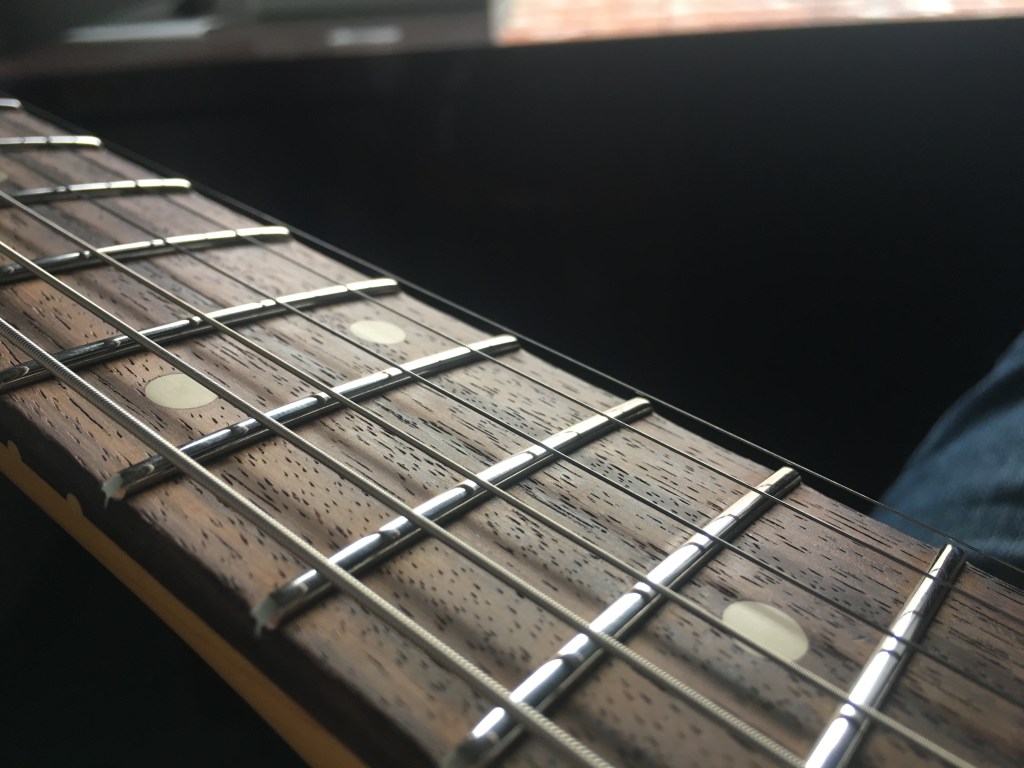
Have you ever wondered why guitars have frets and violins do not? I didn’t think so. I guess I better tell you what a fret is now. A fret is a thin strip of metal that runs perpendicular to the strings on a guitar. In theory it makes it easier to play a correct note. On a fretless instrument you have to rely in your ear and not a fret to play the correct note.
I do not own a violin but I spent a little time with one in my first round of college. I kept asking the wrong questions. Where is C? I should have asked, What does C sound like? I have come a long way since then on guitar. And I am beginning to understand why the concert music world did not respect the guitar until players like Andreas Segovia and Julian Bream paved the way for classical guitar in the twentieth century. I suppose I might as well tell you now that the guitar is out of tune. Or you could say it is equally in and out of tune. And this has bothered me for years.

I discovered this issue as a young player when I realized that guitars need regular maintenance. You need to tune a guitar’s open strings every time you play, but occasionally you have to check the guitars intonation. That means you make sure that the guitar is in tune at the 12th fret octave as well as the open string. If it is flat at the octave you can adjust the guitar’s bridge to make the string shorter and therefore sharpen the pitch. You lengthen the string to flatten it if the pitch is sharp at the octave. But there is a mathematical problem with tuning that is highlighted on fretted instruments: you can either have the octaves in tune, or the Fifths in tune, but not both. (Fifths are the fifth degree of the major scale and are the foundation of western music.) I did not have this information all of those years ago, I just noticed that I could never get the tuning perfect. And I thought there was something wrong with my instrument. It turns out it was not my guitar, but the whole tuning system in general. The piano suffers from the same problem.

I am tuning an octave on this old piano by ear. When you play two frequencies that do not match, say 400 hertz and 445 hertz, you can hear the difference of 5 hertz as a thumping sound called beats. You should be able to hear the beats disappear as the octave is brought in tune.

There have been a number of attempts made to deal with this issue over the past thousand or so years. Various temperaments, or tuning systems have been developed to to mitigate the Pythagorean Comma, or tuning gap. Apparently Pythagorus- yes that Pythagorus from your geometry class- wrestled with this issue.

Now that we have the tuning system worked out people only want to write four chord pop songs.

Enter the guitar around 500 years ago. I’d like to think that a prototypical guitar player invented the guitar. He was probably aware of the tuning issues, and thought, What if I just put these frets on the neck, make everything straight, and hope for the best? Guitar players are infamous for not being able to read music. Maybe he put frets on the fingerboard because he was tired of guessing where to put his fingers. Maybe he didn’t want to memorize notes but was happy to play patterns. At any rate guitars have been using equal temperament tuning since the renaissance and pianos waited to adopt it until right after the Boer Wars. And I think that’s why the guitar didn’t start gaining notoriety until the 1930s. Equal temperament tuning compromises the fifths in each key so the instrument can play fairly in tune across all the keys. This is why I have never been able to tune my guitar to my idealists standards. That brings me a small amount of psychological pain. But I have fallen in love with the guitar and I believe we can work our differences out.

Imagine now if this tuning phenomenon did not plague musicians and instrument makers. What if we could have the octaves and the fifths in tune? I don’t think that music would be what it is today. Part of the beauty of music is figuring out what works and what doesn’t. If everything was perfect there would be no dissonance, and how could we write music about pain and suffering without dissonance? J.S. Bach wrote his masterpiece The Well Tempered Clavier on an imperfect instrument. He wrote a piece of music in every key for the Harpsichord or Clavichord. These are stringed keyboard instruments that predated the piano. The genius of these pieces are the notes that he avoids because the well tempered tuning system still had some major dissonance issues. This piece is still studied today by aspiring pianists.

Think about this: more than likely, all of the piano music that you have ever heard in your whole life has not been in tune.

I suppose every good story needs a moral. Life is not always perfect. It can be frustrating to find the perfect balance because there may be no perfect balance. You just have to do the best that you can do with what you have. And often that ends up being the most beautiful thing anyway.
Names I’ve Been Called: Volume II

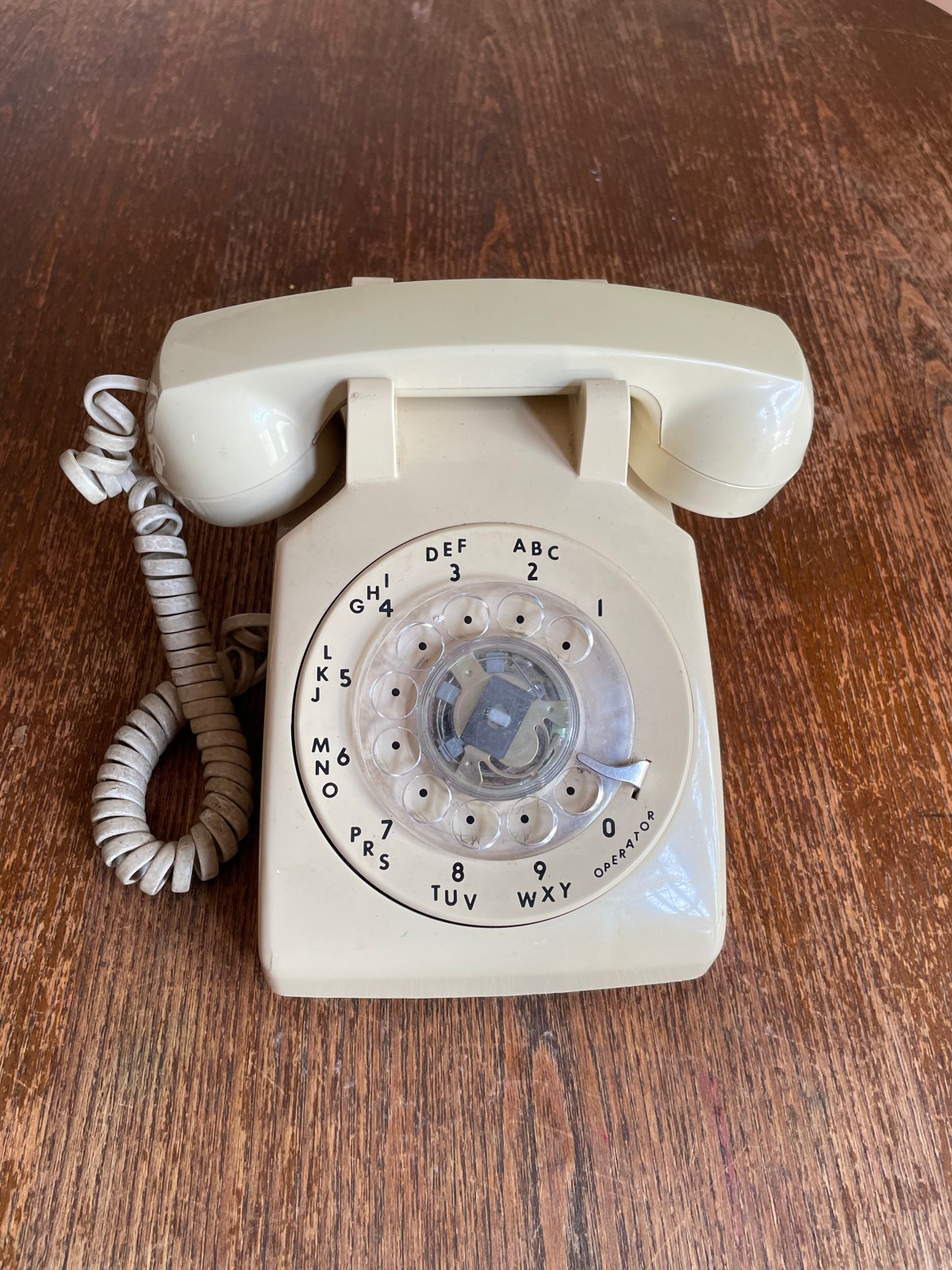
Today is my last day at work with the State of Alabama. I will miss the people, but I will not miss the phone. This job has involved a lot of answering the phone and having the same conversation with different people every day. It is always pleasant to talk to someone who has mastered professional phone etiquette. But it is more entertaining to talk to the unprofessional callers. Have you ever been serenaded through the phone by a drunk plumber playing the guitar? I have.

Something I have noticed at this agency is that the people who really have their act together found all of the answers to their questions on the FAQ section of the website. Everybody else called to ask me their questions and they were never really ready for the answers.

“Give me just a second, I got to find a pen.”

“Hold on, I’m driving, let me pull over.”

“Can you e-mail me that? I ain’t got nothing to write with.”

My parents named me Zane after the dentist turned western novelist Zane Gray. I realize that this name has grown in popularity in subsequent generations, but not many of my peers share my name. Couple this with speaking through the phone and it is understandable that people mishear my name. To be clear, it doesn’t bother me when people get my name wrong over the phone. I gotten so used to it over the years that I have made a game of it. I have been updating an Excel spreadsheet titled Names I’ve Been Called since December 2018 and I wanted to share it with y’all. I omitted all of the cuss words.

I should have included Buddy and Boss. I’m not sure why people in this particular industry have adopted those two nick names. For the record I prefer Shane over Buddy.

  • Bande
  • Bill
  • Chad
  • Chaim
  • Dan
  • David
  • DeWayne
  • Gene
  • George
  • Ian
  • Jay
  • Jimmy
  • Josh
  • Kyle
  • Lloyd
  • Sam
  • Shay
  • Vane
  • Vann
  • Wayne
  • Zang
  • Zen
  • Blaine (2)
  • Dean (2)
  • Sane (2)
  • Sean (2)
  • Jay (4)
  • Jane (5)
  • Lane (6)
  • Zach (6)
  • Dane (30)
  • James (34)
  • Shane (93)

I made a similar list a while back that you can read here.

The Valley of the Shadow of Death

It is the waiting room to eternity and time doesn’t always behave properly because it must yield to a higher authority.

One of the most difficult and strangest places to be emotionally is while you are waiting for a loved one to pass on. The 23rd Psalm calls this place the valley of the shadow of death. It is not an easy place to walk through alone. You’ll need a shepherd. Perhaps you have been there. It is when the doctors do not give you any hope. And the hope that God offers doesn’t always make sense. Nothing really makes sense. On one hand you would never wish for someone to die, but on the other hand there is a realization that death is imminent and you don’t want to see someone suffering. It is the waiting room to eternity and time doesn’t always behave properly because it must yield to a higher authority. Day to day schedules no longer take precedent and you begin to wonder if the clock is accurate because you seem to float in time, suspended in the memories with your loved one. One minute you are bawling your eyes out and the next minute you are crying from laughter. You are not sure how you are supposed to feel. And that is ok.

I think you truly enter into this valley when you know that your loved one is no longer aware of your presence. It hurts.

People pop in and out of the waiting room like characters from another universe. They make you feel better. They bring food and memories. They mourn with you.

A good name is better than precious ointment; and the day of death than the day of one’s birth. It is better to go to the house of mourning, than to go to the house of feasting: for that is the end of all men; and the living will lay it to his heart. Sorrow is better than laughter: for by sadness of the countenance the heart is made better. The heart of the wise is in the house of mourning; but the heart of fools is in the house of mirth. Ecclesiastes 7:1-4

As a younger man I found this a difficult passage of scripture to reconcile with my limited understanding and narrow perception of death. And also life. After a little more hands on experience with loss I now find great comfort in the words of The Preacher in Ecclesiastes.

It is good to mourn. Everyone mourns differently. I tend to write.

3,909.2

Have you ever failed to reach a goal? Sometimes the feeling of failure is so strong that you struggle to find the courage to begin again. Sometimes almost reaching a goal gives you the motivation to try even harder the next time. I had planned to cycle 4,000 miles in 2022, but I fell short by 90.8 miles. That is one really good day of riding. Or one week of consistent riding. Or somewhere between 2,500-3,500 calories, I’ve never really trusted my burn rate calculations. I did not achieve my goal. No one really wants to hear excuses why I didn’t. But I almost did it.

There are some goals where almost doesn’t cut it. Like finding a good wife. That’s an honorable goal. You don’t want to almost find a good wife. This is a discrete goal, where you either achieve it or you don’t. You don’t almost shoot a deer and expect to feel good about your effort. However, if you have a goal that is on a continuum, a number like 4,000 miles may have been picked arbitrarily because it is a nice round number.

I feel good about almost riding 4,000 miles this year. I think the main reason I can feel good about almost reaching that goal is because it still took a lot of hard work.

By nature I am a list maker. I am constantly making Birthday lists, Christmas lists, to-do lists, wish lists, grocery lists, and inventories of guitar gear. One of the most important and closely followed lists I make is a list of goals for each coming year. A lot of my yearly goals involve doing something every day: reading the Bible, studying Spanish, playing guitar, and cycling. I am a believer in daily habits. It is the daily things that make the big things happen. Although it is interesting when someone does something remarkable in one day, it is the people who are able to be consistent on a daily basis that really impress me.

You would be hard pressed to find an athlete on the planet that could cycle 4,000 miles in a single day. Maybe there is someone who could learn a language in a day, but I have not met them. Most of the people I know who have accomplished remarkable things also tend to be extremely self-disciplined. And I suppose that is one of my biggest goals: to be self-disciplined.

Self-discipline sounds like a a miserable thing to a lot of us. It comes out in our language when we comment on things that take a lot of self-discipline. “Why would you want to do _________? That sounds horrible!”

The Bible is clear that temperance (self-control) is a fruit of the Spirit. And whether you call it self-control, self-discipline, self-restraint, or temperance, it is against our human nature. It just isn’t natural. We need divine help in this area.

But the fruit of the Spirit is love, joy, peace, longsuffering, gentleness, goodness, faith, Meekness, temperance: against such there is no law.
‭‭Galatians‬ ‭5‬:‭22‬-‭23‬

I want to wish everyone a very happy and temperate New Year.

Morning Person

Are you a morning person or do you drink coffee? What is your routine?

I haven’t always been a morning person. Mom would often have to summon me by my full name to get out of bed for school. I have always been a breakfast person though. Maybe some morning people are born, but I believe that more often something makes you into a morning person.

I think I started being a morning person when I was working at Parks & Recreation and I had to be at the school by 6:30am. I was forced to be awake by the feeling of responsibility of running the before school recreation program, knowing that a couple dozen parents were depending on me to be there. But after a while, I just started enjoying being up that early.

There is something special about being awake before the sun comes up. The air smells and feels different in the morning. The atmosphere isn’t clouded with traffic and it is easier to think.

There is a difference between being a morning person and having to be at work early in the morning. If you have ever worked early in the morning you will understand what I mean. Morning people usually have a routine that happens before they even think about going to work. This baffles non-morning people. A morning person’s routine might consist of running a six miles, working in the garden, or even laundry.

Although there is something therapeutic about a morning routine, what I like most about the mornings is the morning sunlight. The kitchen in the house I grew up in faced due East. I can still see the light pouring through the window onto the kitchen table. That’s where much of the human interaction in our home happened. These days I enjoy seeing the sunlight peak over the horizon as I ride my bike through the backroads around my house.

I could tell you about it. I could even show you pictures. But it is really something that you have to experience for yourself. Maybe it will make you into a morning person.

Garden Talk

I just want to talk about gardening.

I enjoy listening to people talk about their gardens. Even the hippies. The new age hippies that think the government won’t know where they live if they quit paying the power bill and live out of a converted horse trailer. They will talk on and on about non-GMO milk, free-range green beans and raw, unpasteurized chickens. I am not quite a hippie but I have been using organic toothpaste since the Bush administration. I can appreciate their enthusiasm though. Especially on social media.

I can appreciate anyone’s garden enthusiasm on social media. I genuinely enjoy seeing someone share a picture of their garden. The people that care about gardens, really care. When someone shares a garden picture what I see is a lot of forethought, patience, and hard work.

Who I really like to listen to talk about gardens are the people who have had gardens for fifty or so years.

“Did you get any lids yet? I got enough for 75 quarts of green beans, and 105 quarts of vegetable soup base.”

“If you run that heavy tractor tire between them rows it’ll pack that dirt down hard and won’t no weeds grow in it.”

“I like to put some of that field-kicker on it.”

“I only plant Rattlesnake Pole Beans. Them’s the ones you like.”

I think the retired people have the best looking gardens. They have the kind of time it takes to keep rows neat and tidy. I see these kind of garden’s out in the country while I’m riding my bicycle. It’s as if they are expecting the Garden Inspector General to swing by unannounced and grade their work.

The last two years I’ve had Bro. Art come over and plow up a garden plot that is way too big for me to manage. It usually gets out of hand around mid-July and I feel guilty for letting the weeds overtake it. I don’t want that to happen again this year so I had Bro. Paul come over and plow up a garden plot that is way too big for me to manage.

In an effort to keep our garden as low-maintenance as possible, I didn’t plant any pole beans this year. I think I’ll just plant two crops bunch beans staggered by a couple of week. Sarah did plant one lonely tomato plant, although neither of us eat tomatoes. It just seems like the right thing to do.

Hollynn likes tomatoes though.

I do chuckle a bit when people say they are planting “non-GMO” crops, as if people for thousands of years haven’t been crossbreeding plants to arrive at what we have today. The Native Americans from the Maya all the way up to the Iroquois planted the Three Sisters: corn, beans, and squash. None of these crops are found in the wild, they have to be cultivated. The Three Sisters grow well together; the beans will climb the corn stalk. Meso-Americans were so good at developing this kind of agriculture that the pre-Columbian population could have been as high as 112 million. I don’t plan to grow on that scale anytime soon, but it is fascinating to me. This is the kind of stuff I think about when I look at a garden.

It would be difficult for most of us to pick a favorite vegetable. Except for the potato people. Potatoes is the only vegetable that they even eat. I think I would have to choose green beans, but I would make sure that all the other vegetables knew that I loved them too. My favorite way to eat green beans is sauteed in oil and garlic. Or cooked to death in bacon grease; I’m not particular.

Earlier this week my beans started sprouting. I was so excited. I told my brother thinking he’d be just as excited.

“I feel like I’m talking to my Dad.” He said laughingly.

It is a wonderful feeling to see something shoot up out of the ground from a seed. It is a spiritual experience. One that never gets old. I hope that you all grow record tomatoes this summer and that your beans don’t quit producing until it frosts.

While the earth remaineth, seedtime and harvest, and cold and heat, and summer and winter, and day and not shall not cease. Genesis 8:22

Between Books

There is a certain amount of guilt that comes with giving up on a book.

Sarah can always tell when I start reading a new book that is really good because I’ll stay up past 9:30pm. There is nothing quite like a book that really captivates you. You’ll find yourself thinking about the characters and plot even when you’re not reading. When you finally do finish it there is a bit of sadness because it is over. Then you have to hope that the next book your pick up is as good, but you never know. Sometimes you feel obligated to press on through an uninteresting book. You try to press on, but when a book is boring there is no motivation to read, and instead of staying up to read you close the book and go to sleep. There is a certain amount of guilt that comes with giving up on a book. When you finally make the decision to ditch a bad book you run the risk of going through this whole process again. This is what I call being stuck between books.

I guess now is as good of a time as any to confess that I am a bibliophile. I don’t just love to read, I love books. A book case is the first thing you see when you walk into my home. I love the smell of a century old book. I love the feel and color of old paper with words that were mechanically printed with ink and typeset. My parents bought books not only to read, but to display.

When a book is really good it becomes a part of our family language: an integral part of how we express ourselves.

Being between books demands a decision. We can either reach back for old books that we’ve already read (and there are some books that should be re-read) or we reach forward for the unknown of a new, hoping that we will chance upon a story that will become a part of us. Or we can stop reading.

In a larger sense, we can compare our lives to a series of books. There is romance, love, horror, tragedy, adventure, mystery. There is one exception though, you can’t really re-live any of these books. You cannot start over, but you can start new. And there is still a possibility of getting caught between books.

In life it is sometimes hard to tell when one book ends and another begins, which can make for dangerous transition traps. Thankfully, early on these lines are drawn more clearly for us. We go from Kindergarten to first grade and so on; each school year a new volume in the library of life. Once we graduate we lose the preset beginnings and endings that school provided for us yearly from age five until whenever we stopped our schooling. Because of this, we can all too easily forget the feeling of beginning anew once we become adults, and many people feel the pressure to somehow to make forty year run until retirement with no new fresh starts. In short, it is quite difficult for people to affect a new positive change in their lives-or even recognize a when a change is necessary- without help from an outside force.

As a result people get caught between books in life. Or worse, they continue re-reading a bad book hoping in vain to finish with a different ending, or without a concept of ever finishing. To use Bible language, these people are drifting aimlessly through life “having no hope.”

The basic message of Christianity is repentance. Or making a complete new start with the understanding that the routine that I was in before is no longer an option. It takes a lot of guts to make a new start like that. Jesus Christ said it best:

The law and the prophets were until John: since that time the kingdom of God is preached and every man presseth into it.

Luke 16:16

John came preaching “Repent, for the Kingdom of heaven is at hand.” What an offensive word: Repent. It is still as offensive today as it was then. No one wants to hear that they are doing anything-much less that they are living and thinking-wrong. But the message of Christianity has not changed since the birthday of the church in the book of Acts, and the preaching of the repentance still pricks people in their hearts, or cuts them to their hearts. This kind of preaching demands a decision.

There are many people who see what this kind of change requires and are unwilling to pay that kind of price, and they go away sorrowfully like the rich young ruler.

In fact a lot of “churches” have long ago quit preaching any semblance of conversion, because they also have quit preaching repentance in an effort to be less offensive. These assemblies, or congregations-I’ll not call them churches-offer no hope to people who desperately need a new start.

Therefore if any man be in Christ, he is a new creature: old things are passed away; behold, all things are become new. I Corinthians 5:17

So, what have you been reading?

What I Liked About My Dad

I got a message this week from one of the ladies at church.

Would you mind sharing with me what you liked about your dad, for Father’s Day presentation?

This is the answer I gave her.

I suppose I would be lying if I said I liked everything about my dad. There are the things that he and I share in common that I have to constantly keep in check and I wish I could change. But these kind of things, and more importantly how we deal with them, are a part of what makes up a person’s character. Thankfully, the shortcomings alone of a man are not what define him.

The characteristics that I admire most about my Dad are as follows:

Faithfulness

Most will proclaim every one his own goodness: but a faithful man who can find? Proverbs 20:6

I never wondered where my Dad was. He was faithful to his wife, his family, his church, and his God.

Love

He that spareth his rod hateth his son: but he that loveth him chaseneth him betimes. Proverbs 13:24

Now that I am trying to raise my kids I can relate to the frustration Dad had trying to raise me. I realize now that the driving force behind everything he did was love.

Integrity

The just man walketh in his integrity: his children are blessed after him. Proverbs 20:7

As an adult I realize now how rare integrity is.

Love for Truth

Through wisdom is an house builded; and by understanding it is established: and by knowledge shall the chambers be filled with all precious and pleasant riches. Proverbs 24:3-4

Dad had a deep love for truth. He was always quoting Proverbs 23:23 Buy the truth, and sell it not; also wisdom, and instruction, and understanding.

Communication


A word fitly spoken is like apples of gold in pictures of silver. Proverbs 25:11

Dad may not have necessarily been a powerful orator, but he was an excellent communicator. A critic once accused Mark Twain’s work as water compared to the fine wine of higher literature, mark Twain replied, “But the people drink water.” Dad was a master at the art of conversation. He could talk to anybody.

Maybe this was more than she was wanting, but I have been thinking about Dad more than usual this week and I didn’t want to give her a generic answer.

These are some of the characteristics that I am striving to master in my own life. More importantly, I want to instill them in my children.

About Time

“Doesn’t everything take time and money?”

“I’ve always thought skydiving would be fun. I’ve just never found the time or money to do it.” I said this to a friend who skydives all the time.

“Doesn’t everything take time and money?” He asked.

It is true. You can get a lot of things done when you have a lot of time and money. Everyone may not have the same amount of money, but we all are given the same amount of time. The difference is, if you have a lot of money you can buy other people’s time. When I write it out like that it makes me wonder if I’m selling my time too cheaply.

“What’s time to a pig?”

Sean’s grandfather

I had a conversation recently that on the surface was about organization of a daily routine and getting better sleep. At the core though, this conversation revolved around time. And more specifically, the frustration and guilt over the mismanagement of time. In an effort to help my friend, I shared my thoughts about time. It was nothing new, but I think it helped him. So I’m sharing them with you.

Time is currency. We spend it, waste it, or invest it.

Each of us is given and indefinite amount of this currency made payable only in the present. We can make plans on how to use our time just like we make plans to use our future paychecks. We’re not really sure when our time will run out. And we know that at a single instant everything could change. But we do not like to retain this in our knowledge. If dwelt upon, the uncertainty of time is unnerving.

Boast not thyself of to morrow; for thou knowest not what a day may bring forth.
‭‭Proverbs‬ ‭27:1‬

The gift of time is a great responsibility. If time is indeed currency, or money, I want to get the best deal for my hours and minutes. Perhaps it comes with age or possibly is a byproduct of sheer laziness, but economy of time is very important to me. Let me explain.

I am allotted one hour for lunch. Lunch can cost me the full hour, or I can choose to only pay five minutes for lunch and then have fifty five minutes to spend practicing guitar. If I do this five days a week, that is four hours and thirty five minutes of practice gained.

Currently I have precious time bound in my commute to work. In order to make the most of that nonnegotiable hour in the truck I listen to audiobooks. Which means I can read a book a week on my commute alone. If I adjust the audiobook speed I can sometimes squeeze in two books a week.

There are some times when I’m less concerned about how quickly a task can be completed, or rather how cheaply I was able purchase an activity with my time. Some things are worth however long it takes. I am thinking of the time I invest with my wife and kids. I do not believe that all moments are equal. Five minutes on my lunch break is not worth the same amount as a five minute conversation with my five year old.

Then there are the truly priceless moments of opportunity that can never be regained nor renegotiated. How can we measure their worth? These are the moments of decision in life. It may be possible that they can be anticipated by the wise, although they often go unrecognized by the foolish. These are the moments that if missed will be a source of regret and anguish, if acted upon will be a source of strength and resolve.

So what are you doing with your time? If the Chronological Examiners Board showed up at your door to do an audit could you endure their report?

My prayer for you, dear reader, is that you would take time to address the areas in your life that are of eternal significance. Thank you for your time.

Caroling and Such

Merry Christmas

We used to go Christmas Caroling when I was a kid. A group of us from the church would pile into a trailer filled with hay, wrap up in blankets and drive all over the town surprising elderly people with a few Christmas Songs. It was a lot of fun.

Pop and Marion used to have a couple of Percheron horses, Hawk and Holly. Aside from the occasional parade, I think their sole purpose was to pull Santa Claus in a wagon around Vandiver and Sterrett. Santa Claus would hand out candy to children. If you still believe in Santa Claus I’d like to warn you to skip the next sentence. The last year they did this I’m pretty sure my brother had to be Santa Claus, and he was pretty sulky about it too.

I still like to sing Christmas Carols, without or without a hayride, or hot chocolate to burn your tongue. Every song is better when someone sings it with you. I’m fortunate to have a little songbird for a daughter. This year we sang together at the Christmas Concert at our church, Cornerstone Revival Center. I know my parents would’ve been proud. They’d have loved to be there holding Hollynn while they listening to Miriam lay that vibrato on thick.

I wish I could pull up to your house in a horse drawn wagon and sing you some Christmas Carols, but this is the best I could manage this year. Oh Beautiful Star of Bethlehem.

Merry Christmas from my family to yours.